








Overview
Rwenzori Mountains National Park – Travel Overview
Rwenzori Mountains National Park is one of Uganda’s most spectacular mountain destinations and one of the most rewarding places in East Africa for travelers interested in hiking, trekking and high-altitude wilderness.
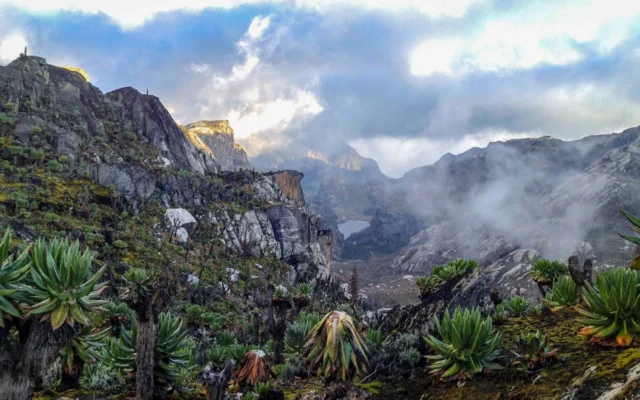
Often referred to as the Mountains of the Moon, the Rwenzori range rises dramatically along Uganda’s western border with the Democratic Republic of Congo. Its landscapes change dramatically with altitude, taking travelers from tropical foothills and montane forests to bamboo zones, giant lobelias, heather-covered slopes and eventually the high alpine environment of the Rwenzori peaks.
The mountains are home to Mount Stanley, whose highest point, Margherita Peak, reaches about 5,109 metres above sea level.
Unlike a conventional wildlife safari, a Rwenzori experience is about moving through the landscape on foot. The reward comes from the scenery, physical challenge, changing vegetation, mountain wildlife and feeling of entering one of Uganda’s most remote natural environments.
The destination is particularly suitable for travelers looking for mountain trekking in Uganda, challenging hikes, nature photography, bird watching and multi-day wilderness adventures.
Where Is Rwenzori Mountains National Park?
Rwenzori Mountains National Park is located in western Uganda, along the country’s border with the Democratic Republic of Congo.
The park covers a large section of the Rwenzori mountain range and lies within the Albertine Rift region.
The nearest major tourism hub is Kasese, which is commonly used as a base for travelers heading toward the Rwenzori trailheads.
The mountains are also relatively close to other major western Uganda destinations, making it possible to combine a Rwenzori trekking experience with destinations such as:
- Queen Elizabeth National Park
- Kibale National Park
- Semuliki National Park
- Fort Portal
- Bwindi Impenetrable National Park
This makes the Rwenzori Mountains particularly useful for travelers who want to combine mountain trekking with wildlife and primate experiences.
Why Are the Rwenzori Mountains Famous?
The Rwenzori Mountains are famous for their dramatic scenery, high-altitude trekking and unique vegetation.
The range is one of Africa’s most important mountain systems and includes some of the continent’s highest peaks.
The Rwenzori experience is particularly famous for:
- Margherita Peak
- Mount Stanley
- Mount Speke
- Mount Baker
- Alpine landscapes
- Giant lobelias
- Giant groundsels
- Montane forests
- Glacial landscapes
- High-altitude trekking
- Albertine Rift biodiversity
The mountains are also culturally and historically significant to the communities living around them.
The Mountains of the Moon
The name Mountains of the Moon has become closely associated with the Rwenzori range.
The description reflects the mountains’ unusual appearance and their long-standing place in geographical and historical accounts of Africa.
Today, the name adds to the mystique of the destination.
Standing above the surrounding landscape, the Rwenzori can appear almost otherworldly, especially when mist and clouds move across the peaks.
For photographers, this combination of mountains, mist, vegetation and changing weather creates constantly changing scenery.
Mount Stanley and Margherita Peak
Mount Stanley is the highest massif in the Rwenzori range.
Its highest summit is Margherita Peak, which rises to approximately 5,109 metres.
Reaching Margherita Peak is a serious mountaineering and trekking achievement.
The route involves multiple days of hiking through different vegetation zones before reaching the high-altitude environment.
At higher elevations, conditions become colder and more demanding, and trekkers may encounter snow, ice and glacial terrain.
Because of the altitude and technical sections of the route, climbing Margherita Peak requires appropriate preparation, equipment, guides and sufficient physical fitness.
Rwenzori Trekking
Trekking is the main reason most travelers visit the Rwenzori Mountains.
Unlike a short day hike, many Rwenzori trekking experiences involve several days in the mountains.
A typical trek may take travelers through different ecological zones, allowing them to experience dramatic changes in vegetation and climate as they gain altitude.
Depending on the route and itinerary, trekkers may encounter:
Montane forest
↓
Bamboo forest
↓
Heather zones
↓
Giant lobelia and giant groundsels
↓
Alpine vegetation
↓
Rock, snow and glacial landscapes
This changing environment is one of the most fascinating aspects of the Rwenzori experience.
Rwenzori Trekking Routes
Different routes can be used to explore the mountains.
The Central Circuit is one of the established trekking approaches and provides access to some of the higher mountain areas.
The Kilembe Route is another important option and is known for its scenic landscapes and approach toward the higher peaks.
The best route depends on:
- Trekking experience
- Fitness
- Number of days available
- Desired altitude
- Interest in reaching a summit
- Weather conditions
Travelers should work with an experienced operator and mountain guides when planning a multi-day trek.
Hiking for Different Experience Levels
Not everyone visiting the Rwenzori needs to climb Margherita Peak.
This is an important point when planning a website destination page.
There are options for travelers who simply want to experience the mountain environment without undertaking a demanding summit climb.
Shorter nature walks and lower-altitude hikes can provide access to:
- Forest
- Mountain streams
- Wildlife
- Birds
- Scenic viewpoints
- Local communities
Longer treks are available for experienced hikers.
The mountain therefore has potential for both casual nature travelers and serious trekkers, although the more challenging routes require considerably more preparation.
Rwenzori Mountain Vegetation Zones
One of the most remarkable aspects of the Rwenzori Mountains is the dramatic change in vegetation with altitude.
Montane Forest
Lower sections of the mountain contain dense forest with trees, vines, mosses and abundant birdlife.
The forest creates a completely different atmosphere from Uganda’s savannah parks.
Bamboo Zone
As the altitude increases, bamboo becomes more prominent.
The vegetation becomes noticeably different as trekkers move deeper into the mountain ecosystem.
Heather Zone
Higher elevations contain giant heathers covered in moss and lichen.
The landscape becomes increasingly unusual and atmospheric.
Giant Lobelias and Groundsels
The high-altitude vegetation is one of the Rwenzori’s most iconic features.
Giant lobelias and groundsels create enormous plant forms that can make the landscape feel almost prehistoric.
For photographers, this is one of the most memorable parts of the trek.
Alpine Zone
At the highest elevations, vegetation becomes sparse and the landscape transitions toward rock, snow and ice.
Wildlife in Rwenzori Mountains National Park
Rwenzori is not primarily a large-mammal safari destination.
Its wildlife experience is focused more on forest species, mountain-adapted animals and birdlife.
Species associated with the park and surrounding ecosystems include:
- Elephants
- Buffaloes
- Bushbucks
- Duikers
- Hyraxes
- Chimpanzees in the wider region
- Various monkey species
- Numerous bird species
Wildlife sightings are not the primary objective of a mountain trek.
Instead, travelers come for the entire ecosystem and the opportunity to observe life adapting to changing elevations.
Bird Watching in the Rwenzori Mountains
The Rwenzori Mountains are important for bird watchers because they form part of the Albertine Rift, one of Africa’s most biologically diverse regions.
The forests support numerous bird species, including Albertine Rift specialists.
Birders can search for:
- Turacos
- Sunbirds
- Flycatchers
- Barbets
- Eagles
- Francolins
- Robins
- Forest specialists
Birding becomes particularly interesting in the lower forest zones where vegetation is denser.
Rwenzori Mountains and the Albertine Rift
The Rwenzori range forms part of the Albertine Rift landscape, an area known for exceptional biological diversity and endemism.
The region contains numerous species found nowhere else or in very few places.
This gives the mountains importance beyond tourism.
Protecting the Rwenzori ecosystem helps preserve:
- Forest habitats
- Water catchments
- Mountain species
- Albertine Rift biodiversity
- Rare plants
- Bird habitats
For nature enthusiasts, this ecological importance adds another dimension to the trekking experience.
Water and Rivers of the Rwenzori
The mountains are an important source of water for surrounding communities and ecosystems.
Rainfall and melting ice contribute to streams and rivers flowing down the mountains.
These water systems support:
- Local communities
- Agriculture
- Forest ecosystems
- Wildlife
- Wetlands
The Rwenzori therefore plays an important environmental role far beyond its mountain peaks.
Cultural Experiences Around the Rwenzori
A trip to the Rwenzori Mountains can also include cultural experiences with communities living around the mountain.
Visitors can learn about:
- Local agriculture
- Traditional food
- Community life
- Mountain livelihoods
- Local history
- Crafts
- Music and dance
Cultural experiences can be particularly valuable before or after a trek because they help travelers understand the communities that depend on the mountain environment.
Accommodation Around Rwenzori Mountains National Park
Accommodation depends heavily on the type of experience you are planning.
Budget Accommodation
Budget travelers can find:
- Guesthouses
- Campsites
- Basic lodges
- Simple accommodation in Kasese and surrounding communities
These are useful for travelers who are spending most of their time hiking.
Mid-Range Accommodation
Mid-range lodges offer a comfortable base before or after trekking.
Facilities may include:
- En-suite rooms
- Restaurants
- Gardens
- Outdoor areas
- Mountain views
Luxury Accommodation
Luxury options are available mainly in the wider western Uganda tourism region rather than deep inside the mountain.
These can include:
- Luxury lodges
- High-quality cottages
- Premium dining
- Scenic views
- Comfortable lounges
- Wellness facilities
For multi-day mountain treks, accommodation inside the trekking routes is generally much more basic than a conventional safari lodge.
Trekkers should therefore understand that mountain huts and camps are part of the adventure, rather than expecting lodge-style accommodation throughout the trek.
How Many Days Do You Need in the Rwenzori Mountains?
The number of days depends entirely on your objective.
One Day
A day hike or nature experience can provide a taste of the lower mountain environment.
Two to Three Days
This is suitable for travelers who want a deeper forest and mountain experience without undertaking a major summit expedition.
Five to Seven Days
Longer trekking routes can take travelers much deeper into the mountains.
Longer Summit Expeditions
Travelers attempting higher peaks such as Margherita Peak should expect a significantly longer and more demanding itinerary.
The exact duration depends on the selected route, acclimatization requirements, weather and trekking objectives.
Best Time to Visit the Rwenzori Mountains
The Rwenzori Mountains can be visited throughout the year, but trekking conditions vary.
The mountain experiences rainfall throughout the year, and weather can change rapidly at higher elevations.
Generally, periods with relatively drier conditions are often preferred for trekking because trails may be less muddy and visibility can be better.
However, weather in the mountains is unpredictable.
Even during traditionally favorable periods, trekkers should be prepared for:
- Rain
- Cold
- Mud
- Fog
- Strong winds
- Rapid weather changes
How Do You Get to Rwenzori Mountains National Park?
Most travelers reach the Rwenzori region by road.
Kasese is an important access point for the mountains.
The journey from Kampala or Entebbe takes several hours, making the destination best incorporated into a wider western Uganda itinerary.
A typical itinerary could follow:
Kampala → Fort Portal → Rwenzori → Queen Elizabeth
or:
Entebbe → Rwenzori → Queen Elizabeth → Bwindi
Travelers can also combine the mountains with Kibale or Semuliki.
Rwenzori and Queen Elizabeth National Park
This is one of the strongest combinations for travelers who want both mountain trekking and wildlife.
Rwenzori provides:
- Mountain trekking
- Alpine landscapes
- Forest
- Giant lobelias
- Mountain scenery
Queen Elizabeth provides:
- Lions
- Elephants
- Buffaloes
- Hippos
- Leopards
- Kazinga Channel
The contrast makes the combination especially attractive.
A traveler can spend several days hiking through the mountains and then move into the savannah for a traditional wildlife safari.
Rwenzori and Kibale National Park
Kibale provides one of Uganda’s strongest chimpanzee experiences.
Combining it with Rwenzori creates an itinerary centered around mountains, forests and primates.
For example:
Days 1–3: Kibale forest and chimpanzee experience
Days 4–8: Rwenzori trekking
This combination works particularly well for active travelers.
Rwenzori and Semuliki National Park
The Rwenzori Mountains and Semuliki National Park are geographically close enough to make an interesting western Uganda combination.
The contrast is particularly impressive:
Rwenzori: high mountains, alpine landscapes and trekking
Semuliki: lowland tropical forest, primates, birds and Sempaya Hot Springs
This allows travelers to experience two dramatically different ecosystems within the same region.
What Should You Pack for a Rwenzori Trek?
Packing correctly is particularly important here.
For a serious multi-day trek, travelers may need:
- Waterproof hiking boots
- Warm layers
- Thermal clothing
- Waterproof jacket
- Waterproof trousers
- Gloves
- Warm hat
- Hiking socks
- Backpack
- Headlamp
- Sleeping bag
- Water bottle
- Trekking poles
- Sunglasses
- Sunscreen
- Insect repellent
- Personal medication
- Basic first-aid supplies
- Camera
- Extra batteries
The exact equipment list depends on the route, season and trekking company.
For high-altitude expeditions, proper equipment is not simply about comfort—it can become an important part of safety.
Fitness and Preparation for Rwenzori Trekking
A serious Rwenzori trek requires preparation.
Travelers should be comfortable with:
- Long walking days
- Uneven terrain
- Steep sections
- Wet conditions
- Cold temperatures
- Carrying a backpack
- Sleeping in basic mountain accommodation
High altitude also introduces another challenge.
Trekkers should follow their guides’ recommendations regarding pacing and acclimatization.
Anyone with concerns about their ability to undertake a demanding high-altitude trek should seek appropriate professional medical advice before traveling.
Is Rwenzori Suitable for Beginners?
Yes—but the type of trek matters.
A beginner can enjoy lower-altitude walks with appropriate guidance.
However, attempting Margherita Peak is a very different undertaking.
Summit expeditions require considerably greater:
- Physical preparation
- Endurance
- Equipment
- Time
- Mountain experience
- Acclimatization
Travelers should choose a route that matches their experience rather than assuming every Rwenzori trek has the same difficulty.
Is Rwenzori a Wildlife Safari Destination?
Not in the conventional sense.
Rwenzori is better described as a mountain trekking and nature destination.
If your main goal is to see lions, elephants, giraffes and large herds of buffaloes, destinations such as Murchison Falls, Queen Elizabeth or Kidepo are more appropriate.
If your goal is:
Mountains + hiking + scenery + unique vegetation + adventure
then Rwenzori is an excellent choice.
This distinction is important when planning a Uganda safari itinerary.
Conservation in Rwenzori Mountains National Park
The Rwenzori Mountains are an important conservation area because they protect high-altitude ecosystems, forests and water catchments.
Conservation helps protect:
- Mountain biodiversity
- Forests
- Alpine vegetation
- Water sources
- Wildlife habitats
- Albertine Rift species
Tourism contributes to conservation through park fees, guiding, accommodation and employment.
Responsible Tourism in the Rwenzori Mountains
Visitors should:
- Follow their guides’ instructions.
- Stay on designated trails.
- Avoid damaging vegetation.
- Carry out all waste.
- Respect local communities.
- Avoid disturbing wildlife.
- Use water responsibly.
- Avoid leaving plastic or other waste in the mountains.
- Respect mountain safety regulations.
On longer treks, responsible waste management becomes particularly important because the mountain environment is fragile.
Why Visit Rwenzori Mountains National Park?
The Rwenzori Mountains offer a side of Uganda that cannot be experienced on a conventional game drive.
Here, the adventure happens on foot.
You move through forests, cross mountain streams, climb through bamboo and heather zones and eventually reach landscapes dominated by giant lobelias, rocks, snow and ice.
The weather can change within minutes.
One moment the mountains may be covered in mist; the next, the clouds can open to reveal enormous peaks rising above the surrounding valleys.
For travelers seeking adventure, the Rwenzori experience can become one of the most memorable parts of a Uganda journey.
And because the mountains can be combined with Queen Elizabeth, Kibale and Semuliki, travelers don’t necessarily have to choose between trekking and a traditional wildlife safari.
The Rwenzori Mountains can simply become another chapter of a much larger Uganda adventure.
Frequently Asked Questions
What are the Rwenzori Mountains famous for?
They are famous for high-altitude trekking, Margherita Peak, Mount Stanley, unique alpine vegetation, glaciers and dramatic mountain scenery.
How high is Margherita Peak?
Margherita Peak reaches approximately 5,109 metres above sea level.
Can beginners hike in the Rwenzori Mountains?
Yes. Shorter and lower-altitude hiking experiences are possible, while summit expeditions require much greater preparation.
How many days do I need for Rwenzori trekking?
It depends on the route. Short experiences can take one to three days, while serious mountain expeditions require considerably longer.
Can I climb Margherita Peak?
Yes, but it requires an appropriate multi-day expedition, experienced guides, proper equipment and adequate physical preparation.
Is Rwenzori good for wildlife viewing?
It is primarily a trekking destination rather than a traditional wildlife safari. Travelers wanting major savannah wildlife should combine it with Queen Elizabeth, Murchison Falls or another wildlife park.
Can I combine Rwenzori with Queen Elizabeth?
Yes. It is one of the strongest combinations for travelers who want both mountain trekking and wildlife viewing.
Can I combine Rwenzori with Kibale?
Yes. This is an excellent option for travelers interested in trekking, forests and chimpanzees.
Where should I stay before a Rwenzori trek?
Kasese and the surrounding area provide accommodation options and are commonly used as bases before trekking.
What should I pack for a Rwenzori trek?
Warm layers, waterproof clothing, good hiking boots, gloves, a hat, hiking socks, a sleeping bag and other mountain equipment are important, particularly for higher-altitude treks.