






Overview
Semuliki National Park – Travel Overview
Semuliki National Park is one of Uganda’s most distinctive wildlife destinations, offering travelers an experience that feels different from the country’s better-known savannah parks.
Located in western Uganda within the Albertine Rift Valley, Semuliki protects a lowland tropical forest ecosystem that is influenced by the forests of Central Africa. The result is an extraordinary mixture of habitats and wildlife, including numerous primates, forest birds, butterflies and mammals.
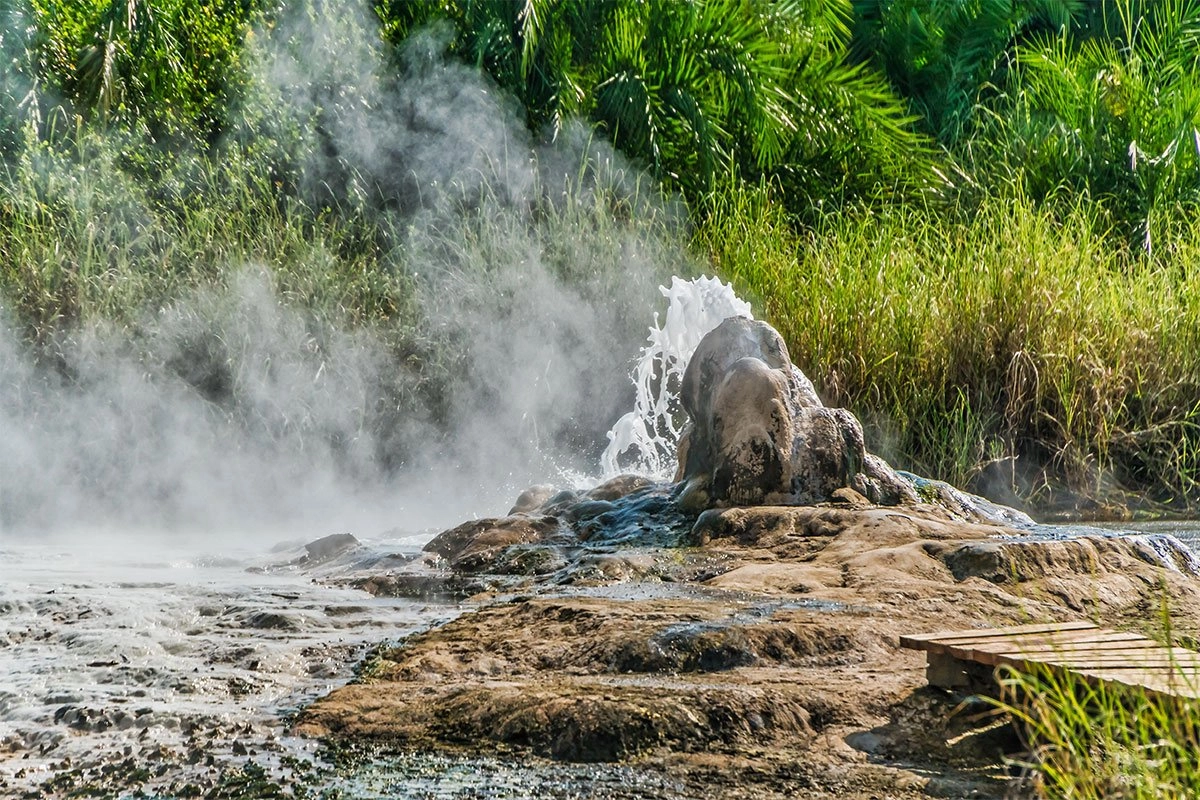
The park is particularly famous for the Sempaya Hot Springs, where visitors can witness geothermal activity in the middle of the forest.
But the hot springs are only part of the attraction.
Semuliki is also an excellent destination for bird watching, primate viewing, forest walks, nature experiences and cultural encounters.
For travelers who want to explore a less-visited side of Uganda, Semuliki provides an opportunity to go beyond the traditional gorilla and savannah safari routes.
Where Is Semuliki National Park?
Semuliki National Park is located in western Uganda, in the Bundibugyo area near the border with the Democratic Republic of Congo.
The park sits within the Albertine Rift and extends along the eastern floor of the Rift Valley.
Its location creates a unique ecological environment.
Unlike Uganda’s higher-elevation mountain forests, Semuliki is a lowland tropical forest, and its vegetation and wildlife reflect its geographical connection with the Congo Basin.
The park is surrounded by dramatic scenery, including the Rwenzori Mountains in the wider region.
Why Is Semuliki National Park Famous?
Semuliki is best known for four major attractions:
Sempaya Hot Springs
Central African forest wildlife
Exceptional birdlife
Primate diversity
The park is especially interesting for travelers who want to explore species and ecosystems that are not commonly encountered in Uganda’s more popular safari destinations.
Its location within the Albertine Rift also gives it significant conservation importance.
Sempaya Hot Springs
The Sempaya Hot Springs are the most famous attraction in Semuliki National Park.
There are two major hot springs known as the male and female hot springs.
The geothermal water emerges from beneath the ground and reaches extremely high temperatures.
Visitors can follow a guided trail through the forest to reach the springs, making the journey itself part of the experience.
The surrounding vegetation, birds and forest atmosphere add to the attraction.
The hot springs provide a fascinating opportunity to observe the geological forces beneath the Earth’s surface while exploring a tropical forest environment.
The Male and Female Hot Springs
The two major geothermal features are traditionally known as the male and female hot springs.
The female spring is particularly well known for its powerful boiling water and steam.
Local traditions and stories are associated with the springs, adding a cultural dimension to the natural attraction.
Visitors should remain within designated areas and follow guide instructions because the water is extremely hot.
Wildlife in Semuliki National Park
Semuliki’s wildlife experience differs considerably from that of Uganda’s savannah parks.
You are not primarily coming here to search for large herds of buffaloes or vast numbers of elephants.
Instead, the park is particularly valuable for forest wildlife and primates.
Species associated with Semuliki include:
- Chimpanzees
- Red-tailed monkeys
- Blue monkeys
- Black-and-white colobus monkeys
- De Brazza’s monkeys
- Grey-cheeked mangabeys
- Vervet monkeys
- Baboons
- Forest elephants
- Buffaloes
- Bushbucks
- Warthogs
- Various smaller forest mammals
Some species are difficult to see because of the dense vegetation.
This makes having an experienced guide particularly valuable.
Primates in Semuliki
One of Semuliki’s biggest attractions is its remarkable primate diversity.
The park supports numerous primate species, making it an excellent destination for travelers interested in monkeys and forest ecology.
Visitors may encounter:
- Red-tailed monkeys
- Blue monkeys
- Black-and-white colobus monkeys
- De Brazza’s monkeys
- Grey-cheeked mangabeys
- Vervet monkeys
- Olive baboons
- Chimpanzees
Each species has different behaviors and habitat preferences.
A forest walk can therefore become a fascinating lesson in primate ecology.
Chimpanzee Tracking in Semuliki
Although Semuliki is not as famous for chimpanzee tourism as Kibale National Park, chimpanzee experiences are part of the wider primate attractions in the region.
Travelers interested specifically in chimpanzees may want to combine Semuliki with Kibale.
Kibale provides one of Uganda’s strongest chimpanzee experiences, while Semuliki adds a different forest ecosystem and its exceptional Central African biodiversity.
Bird Watching in Semuliki
Semuliki is one of Uganda’s most important birding destinations.
Its lowland forest environment supports species that are difficult to find elsewhere in the country.
The park’s geographical position is particularly significant because it contains numerous birds associated with Central African forest ecosystems.
Birders can search for:
- Hornbills
- Turacos
- Kingfishers
- Sunbirds
- Barbets
- Flycatchers
- Forest specialists
- Raptors
- Numerous Albertine Rift species
Semuliki can be particularly rewarding for serious birders because some species are rarely encountered outside this type of habitat.
The Semliki River
The Semliki River is another important feature of the park.
The river flows through the Albertine Rift landscape and forms part of the ecosystem supporting the park’s forests and wetlands.
It also creates habitat for wildlife and birds.
For visitors, the river contributes to the overall scenery and provides another way to understand the relationship between water, forest and wildlife within Semuliki.
Forest Walks in Semuliki
Forest walks are one of the best ways to appreciate the park.
A guided walk allows visitors to slow down and observe the smaller details of the ecosystem.
You may encounter:
- Monkeys
- Birds
- Butterflies
- Forest plants
- Insects
- Animal tracks
- Different tree species
The forest atmosphere itself is part of the experience.
Instead of driving through open savannah, visitors walk beneath a canopy surrounded by sounds from birds, insects and primates.
Nature Experiences in Semuliki
Semuliki is particularly suitable for travelers who enjoy nature interpretation.
A knowledgeable guide can explain:
- Forest ecology
- Wildlife behavior
- Plant species
- Bird calls
- Primate behavior
- Traditional uses of plants
- Geology
- The Albertine Rift ecosystem
This makes the destination particularly valuable for travelers who want an educational safari rather than simply collecting wildlife sightings.
Butterflies and Insects
Semuliki’s tropical forest environment supports a remarkable variety of butterflies and insects.
These smaller creatures are easy to overlook when travelers focus exclusively on large mammals.
For photographers and nature enthusiasts, however, they can provide some excellent opportunities.
The forest’s humidity, vegetation and diverse plant life create ideal conditions for numerous insects.
Cultural Experiences Around Semuliki
Semuliki is surrounded by communities with rich cultural traditions.
Visitors can incorporate cultural experiences into their itinerary to learn more about local lifestyles and the relationship between communities and the forest.
Depending on the experience, travelers may learn about:
- Traditional food
- Local crafts
- Traditional medicine
- Farming
- Forest resources
- Music and dance
- Community history
Cultural tourism can help travelers understand that the landscape around the park is not simply wilderness—it is also home to communities with deep connections to the area.
Batwa Cultural Experiences
The wider Semuliki region is also associated with Batwa communities whose traditional history is closely connected to the forest.
A responsible cultural experience can provide an opportunity to learn about their heritage, traditional knowledge and relationship with the forest.
These experiences should be approached respectfully and should support local communities rather than reducing culture to a staged tourist performance.
Hiking in Semuliki
Semuliki offers hiking and guided walking opportunities through forest environments.
The terrain is generally different from the steep mountain landscapes of Bwindi or Mgahinga.
Instead, travelers can explore lowland forest trails, wetlands and areas surrounding the hot springs.
For visitors who prefer slower exploration, these walks can be one of the most rewarding parts of the park.
Accommodation in Semuliki National Park
Accommodation around Semuliki is more limited than in Uganda’s major tourism hubs, but travelers can still find options across different categories.
Budget Accommodation
Budget travelers can consider:
- Campsites
- Guesthouses
- Simple safari camps
- Basic lodges
These are suitable for travelers who prioritize exploration over luxury.
Mid-Range Accommodation
Mid-range properties provide greater comfort and may offer:
- En-suite rooms
- Restaurants
- Cottages
- Gardens
- Scenic surroundings
Luxury Accommodation
Higher-end accommodation is available in the wider Fort Portal and Semuliki region.
Depending on the property, travelers can find:
- Luxury cottages
- Spacious rooms
- Premium dining
- Scenic views
- Private verandas
- Personalized service
Because accommodation choices are more limited than in places such as Bwindi or Queen Elizabeth, booking ahead is advisable.
How Many Days Do You Need in Semuliki?
A 2- to 3-day stay can provide a good introduction to the park.
Two Days
A short itinerary could include:
Arrival + Sempaya Hot Springs
Forest experience + departure
Three Days
Three days allow travelers to slow down and include:
- Sempaya Hot Springs
- Forest walks
- Bird watching
- Primate viewing
- Cultural experiences
Travelers combining Semuliki with Kibale may also benefit from additional time in the region.
Semuliki and Kibale National Park
Semuliki and Kibale National Park are an excellent combination for primate enthusiasts.
Kibale is famous for chimpanzee trekking and its exceptional primate population.
Semuliki adds:
- Central African forest species
- Sempaya Hot Springs
- Different forest habitats
- Exceptional birding
- Additional primate opportunities
Together, they create a much broader understanding of western Uganda’s forest ecosystems.
Semuliki and Queen Elizabeth National Park
Semuliki can also be combined with Queen Elizabeth National Park.
The contrast between the destinations is particularly interesting.
Semuliki provides:
Tropical forest + primates + birds + hot springs
Queen Elizabeth provides:
Savannah + elephants + lions + hippos + Kazinga Channel
This combination works well for travelers who want both forest and savannah experiences.
Semuliki and Rwenzori Mountains
The park is also located within the broader landscape of the Rwenzori Mountains.
Travelers interested in hiking can combine Semuliki with a Rwenzori-focused itinerary.
This provides a dramatic contrast between:
Lowland tropical forest
and
High-altitude mountain landscapes
Best Time to Visit Semuliki National Park
Semuliki can be visited throughout the year.
Because it is a tropical forest environment, rainfall is an important part of the ecosystem.
Wet periods can make trails muddy, but they also maintain the lush vegetation that makes the forest so attractive.
Drier periods can make walking more comfortable.
For birders, different seasons can offer different opportunities, particularly when migratory species are present.
How Do You Get to Semuliki?
Semuliki is primarily accessed by road.
The park is commonly visited from Fort Portal, which acts as an important tourism base for western Uganda.
The journey from Kampala or Entebbe is considerably longer than traveling to Lake Mburo, but Semuliki can be incorporated into a broader western Uganda itinerary.
A typical route might include:
Kampala → Fort Portal → Semuliki → Kibale
or:
Kampala → Kibale → Semuliki → Queen Elizabeth
Travelers can also combine the region with Rwenzori experiences.
What Should You Pack for Semuliki?
Because Semuliki is a tropical forest destination, travelers should prepare for humidity, rain and muddy trails.
Consider packing:
- Waterproof hiking shoes
- Long trousers
- Long-sleeved shirts
- Lightweight rain jacket
- Insect repellent
- Hat
- Sunscreen
- Small backpack
- Binoculars
- Camera
- Extra socks
- Reusable water bottle
- Light fleece
Waterproof footwear is particularly useful during wet periods.
Is Semuliki Good for Families?
Semuliki can be suitable for families who enjoy nature and educational experiences.
The hot springs and shorter forest walks can be particularly interesting for children.
However, some activities may involve walking on uneven or muddy trails.
Families should therefore select activities according to children’s ages and fitness levels.
Is Semuliki Good for Bird Watching?
Yes.
Semuliki is considered one of Uganda’s important birding destinations, particularly for travelers interested in Central African forest species and Albertine Rift birds.
Serious birders may want to spend several days in the area because the dense forest means that finding specialist species can require patience.
Is Semuliki a Big Five Safari Destination?
No.
Semuliki is not primarily a Big Five destination.
Its importance lies in its forest ecosystem, primates, birds, butterflies, hot springs and Central African biodiversity.
Travelers whose main goal is to see lions, elephants and other large savannah mammals should combine Semuliki with Queen Elizabeth, Murchison Falls or another savannah park.
Conservation in Semuliki
Semuliki protects an important lowland forest ecosystem within the Albertine Rift.
The forest provides habitat for numerous species and acts as an important ecological connection between East African and Central African biodiversity.
Conservation efforts are therefore important not only for individual wildlife species but also for protecting the wider forest ecosystem.
Tourism contributes through:
- Park fees
- Guiding
- Accommodation
- Transport
- Local employment
- Community tourism
- Conservation funding
Responsible Tourism in Semuliki
Visitors should:
- Follow guide instructions.
- Stay on designated trails.
- Avoid touching wildlife.
- Never feed animals.
- Avoid littering.
- Keep noise levels low.
- Respect local communities.
- Avoid damaging plants.
- Follow safety instructions around the hot springs.
- Practice responsible photography.
The hot springs require particular caution because the water is extremely hot.
Why Visit Semuliki National Park?
Semuliki is for travelers who want to discover a different side of Uganda.
It doesn’t compete with Murchison Falls or Queen Elizabeth by offering the biggest concentrations of savannah animals.
Instead, its strength is its uniqueness.
Here, a traveler can walk through a lowland tropical forest, listen to monkeys calling overhead, search for rare forest birds, discover Central African wildlife and then stand beside steaming geothermal springs deep within the forest.
Add cultural experiences and the surrounding landscapes of western Uganda, and Semuliki becomes much more than a quick stop at a hot spring.
For travelers interested in primates, birding, forests, geology and lesser-known Uganda destinations, Semuliki National Park deserves serious consideration.
Frequently Asked Questions
What is Semuliki National Park famous for?
Semuliki is famous for the Sempaya Hot Springs, tropical forest, primates, Central African wildlife and exceptional birdlife.
Where is Semuliki National Park?
It is located in western Uganda near Bundibugyo and the border with the Democratic Republic of Congo.
Can I visit the Sempaya Hot Springs?
Yes. The hot springs are one of the park’s main attractions and can be visited through guided experiences.
Can I see chimpanzees in Semuliki?
Chimpanzees occur in the wider region, although travelers primarily seeking chimpanzee trekking generally choose Kibale National Park.
Is Semuliki good for bird watching?
Yes. It is particularly valuable for birders interested in forest and Central African species.
How many days do I need in Semuliki?
Two to three days is a good starting point, although birders and serious nature enthusiasts may want longer.
Can I combine Semuliki with Kibale?
Yes. The two parks make an excellent combination for primate and forest enthusiasts.
Can I combine Semuliki with Queen Elizabeth?
Yes. Combining the two provides a strong forest-and-savannah safari experience.
What accommodation is available?
There are budget, mid-range and higher-end accommodation options in the Semuliki and Fort Portal area.
Is Semuliki suitable for a Uganda safari?
Yes. It is particularly suitable for travelers wanting primates, birds, forest experiences, hot springs and a less conventional safari destination.