








Overview
Pian Upe Wildlife Reserve – Travel Overview
Pian Upe Wildlife Reserve is one of Uganda’s most remarkable and least-visited wildlife destinations, offering travelers an opportunity to explore vast open savannahs, seasonal wetlands, rocky landscapes and mountain scenery far away from the crowds found in some of Uganda’s better-known national parks.
Located in the Karamoja region of northeastern Uganda, Pian Upe covers more than 200,000 hectares of semi-arid savannah, woodland and wetland. The reserve is currently undergoing an important conservation recovery, with wildlife populations being monitored and restored after decades of decline.
What makes Pian Upe particularly interesting is its combination of wildlife and wilderness.
The landscape feels dramatically different from destinations such as Queen Elizabeth or Murchison Falls. Instead of large numbers of safari vehicles and developed tourism infrastructure, Pian Upe offers expansive plains, distant mountains, rocky outcrops and long stretches of open country.
The reserve is particularly important for roan antelope, which has Uganda’s only remaining population here. It is also home to recovering populations of Nubian giraffe, as well as eland, Jackson’s hartebeest, zebra, buffalo, cheetah and many other species.
For travelers looking for an off-the-beaten-path Uganda safari, Pian Upe can be one of the country’s most rewarding destinations.
Where Is Pian Upe Wildlife Reserve?
Pian Upe is located in eastern and northeastern Uganda, within the wider Karamoja landscape.
The reserve lies north of Mount Elgon and is framed by highland landscapes including Mount Kadam.
Its position makes it particularly suitable for travelers exploring eastern and northeastern Uganda.
Pian Upe can be combined with:
- Jinja
- Mbale
- Sipi Falls
- Mount Elgon National Park
- Moroto
- Kidepo Valley National Park
- Lake Opeta
- Other Karamoja cultural experiences
The reserve is relatively remote, which is part of its appeal but also means visitors need to plan transportation, accommodation and supplies carefully.
Why Is Pian Upe Famous?
Pian Upe is famous for its enormous open landscapes and unusual collection of wildlife.
The reserve is especially important for:
- Roan antelope
- Nubian giraffe
- Cheetah
- Common eland
- Jackson’s hartebeest
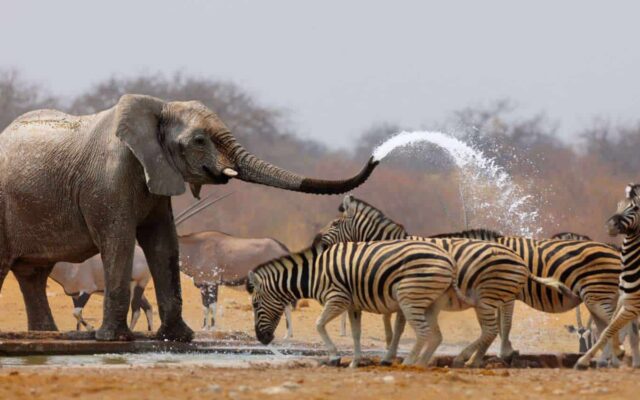
- Zebra
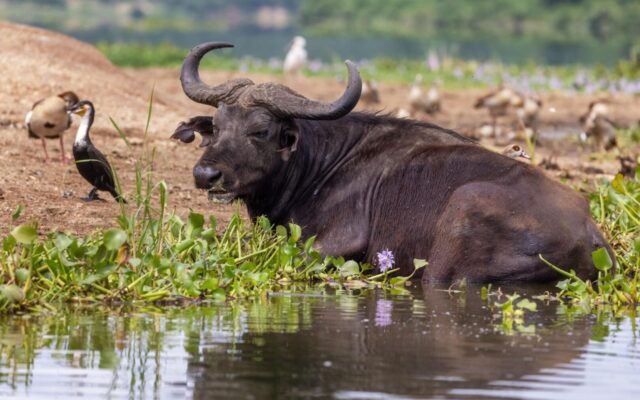
- Buffalo
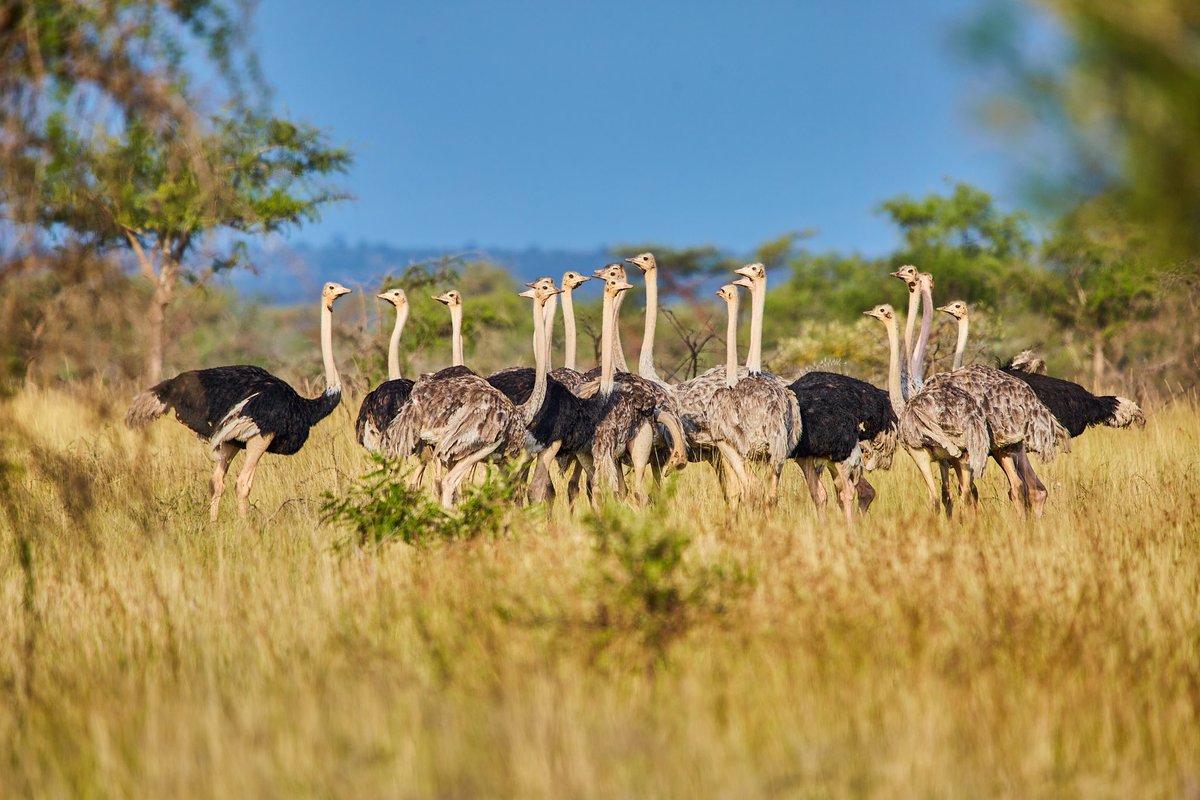
- Ostrich
- Dry-country birds
- Seasonal wetlands
- Mount Kadam scenery
It is also increasingly recognized as a conservation recovery landscape.
Recent surveys recorded more than 7,200 animals in 2025, while current conservation monitoring confirms 163 mammal species and 286 bird species in the wider reserve surveys.
This makes Pian Upe particularly interesting for travelers who want to see a different side of Uganda’s wildlife.
The Landscape of Pian Upe
The scenery is one of the reserve’s greatest attractions.
Pian Upe consists of broad grasslands and wooded savannah broken by rocky outcrops, seasonal wetlands and distant mountains.
The landscape changes considerably with the seasons.
During wetter periods, grasses and vegetation become greener, while the dry season can transform the plains into golden-brown landscapes.
The mountains provide an impressive backdrop, particularly around Mount Kadam, which rises to just over 3,000 metres.
For photographers, the combination of:
Open plains + mountains + wildlife + dramatic skies
creates excellent opportunities.
Wildlife in Pian Upe
Pian Upe supports an impressive range of wildlife, although visitors should approach it differently from Uganda’s more developed safari destinations.
Animals are widely dispersed across the enormous reserve, meaning sightings can require patience and long game drives.
Important species include:
- Roan antelope
- Nubian giraffe
- Common eland
- Jackson’s hartebeest
- Zebra
- Buffalo
- Uganda kob
- Waterbuck
- Oribi
- Reedbuck
- Warthog
- Ostrich
- Cheetah
- Leopard
- Hyena
- Baboon
- Patas monkey
Current conservation data lists Pian Upe as supporting 163 mammal species.
Roan Antelope in Pian Upe
The roan antelope is arguably Pian Upe’s most important wildlife attraction.
The reserve contains Uganda’s only remaining population of roan antelope, making the species especially significant for the country’s conservation efforts. (Pian Upe Wildlife Reserve)
Roan antelopes are large, powerful antelopes recognized by their distinctive facial markings, dark mane and impressive horns.
Seeing one in the wild can be a highlight of a Pian Upe safari.
Because the population is small, sightings require patience and responsible wildlife viewing.
Nubian Giraffes in Pian Upe
Another major conservation story at Pian Upe is the return of the Nubian giraffe.
Giraffes had disappeared from the reserve, but they were reintroduced in 2019 and 2020.
The reintroduced population has since reproduced, and current conservation monitoring lists 52 individually catalogued Nubian giraffes in Pian Upe in 2026.
This makes a giraffe sighting here more than simply a wildlife encounter.
It is part of an ongoing conservation success story.
Cheetahs in Pian Upe
Pian Upe is also one of the Ugandan landscapes where cheetahs are confirmed to occur.
The current population is small and conservation monitoring identifies around 17 individuals.
Cheetahs are naturally elusive, and visitors should never expect to see them on every game drive.
However, knowing that these remarkable predators still survive in the reserve adds considerable excitement to exploring its open plains.
Other Antelopes
Pian Upe is particularly rich in grazing and browsing animals.
Visitors may encounter:
- Eland
- Jackson’s hartebeest
- Zebra
- Uganda kob
- Oribi
- Waterbuck
- Reedbuck
- Duiker
- Warthog
The 2025 aerial survey recorded more than 1,800 common eland and more than 2,100 Jackson’s hartebeest, demonstrating the importance of the reserve’s grassland habitat.
Bird Watching in Pian Upe
Pian Upe is an increasingly important destination for bird watchers.
Current surveys have confirmed 286 bird species, including several species of particular conservation and geographical interest.
Important birding attractions include:
- Shoebill
- Fox’s weaver
- Karamoja apalis
- Secretary bird
- Ground hornbill
- Ostrich
- Raptors
- Storks
- Bustards
- Vultures
The reserve is particularly interesting for travelers searching for dry-country and range-restricted bird species.
Fox’s Weaver
One particularly interesting bird associated with the Pian Upe landscape is the Fox’s weaver, which current conservation information identifies as Uganda’s only endemic bird species.
For serious birders, this makes the region especially significant.
A visit to Pian Upe can therefore be valuable even for travelers who are more interested in birds than large mammals.
Lake Opeta
Lake Opeta and its surrounding wetlands form an important part of the wider Pian Upe ecosystem.
The seasonal wetland environment provides water and habitat for wildlife and birds.
During suitable conditions, the wetlands can attract large numbers of water-associated species.
The lake and surrounding floodplains also demonstrate how dramatically the landscape changes with the seasons.
Game Drives in Pian Upe
Game drives are the main way most visitors explore Pian Upe.
The enormous size of the reserve means that a 4×4 safari vehicle is strongly recommended.
Morning and late-afternoon drives can be particularly rewarding because temperatures are more comfortable and the light is excellent for photography.
Unlike a compact wildlife park, Pian Upe requires patience.
You may drive considerable distances before encountering wildlife.
That is not necessarily a disadvantage.
It is part of the wilderness experience.
Guided Nature Walks
Nature walks can provide a different perspective on Pian Upe.
Instead of focusing entirely on large mammals, walking experiences can explore:
- Animal tracks
- Plants
- Birds
- Insects
- Rock formations
- Local ecology
- Landscape features
Walking should be undertaken with an appropriate ranger or recognized guide because the reserve is remote and wildlife is present.
Napedet Cave
Napedet Cave is another interesting attraction associated with Pian Upe.
The site is connected with the history and traditions of communities in the region and has been associated with rock paintings and markings.
Visitors should treat the cave as an important cultural site.
Do not touch paintings, remove stones or damage the rock surfaces.
A guided visit can provide valuable context about the cultural significance of the area.
Mount Kadam
Mount Kadam provides one of the most dramatic geographical features around Pian Upe.
The mountain rises to approximately 3,063 metres, creating a striking backdrop to the surrounding plains.
Depending on arrangements and permissions, visitors can explore parts of the mountain landscape through guided hikes.
The combination of mountain and savannah makes this region particularly attractive to photographers and hikers.
Community Experiences Around Pian Upe
Pian Upe is located within a landscape where wildlife conservation and local livelihoods are closely connected.
The wider Karamoja region is home to communities with strong pastoral traditions.
Responsible community experiences can introduce visitors to:
- Traditional livestock keeping
- Local crafts
- Music and dance
- Food
- Community life
- Cultural traditions
- Conservation challenges
Visitors should always work with recognized guides and ask permission before photographing people, homes or ceremonies.
Conservation at Pian Upe
Conservation is one of the most important stories behind modern Pian Upe.
After decades of underfunding, habitat degradation and wildlife decline, the reserve is now undergoing active restoration.
Since 2022, Pian Upe has operated under a formal co-management partnership involving the Uganda Wildlife Authority, Space for Giants and Karimojong Overland Safaris.
The goal is not simply to increase tourism.
It is to restore wildlife populations, improve management and demonstrate how conservation can generate benefits for communities.
This makes a visit to Pian Upe particularly meaningful for travelers interested in conservation tourism.
Pian Upe as an Off-the-Beaten-Path Safari
If you want a safari destination without crowds, Pian Upe is one of Uganda’s strongest options.
Tourism infrastructure remains limited compared with major parks.
That means you may experience long stretches of wilderness with very few other vehicles.
The trade-off is that visitors need to accept a more adventurous travel style.
You should not expect:
- Large numbers of lodges
- Frequent fuel stations
- Many restaurants
- Smooth safari roads everywhere
- Guaranteed wildlife sightings
Instead, you get:
Space + solitude + wilderness + rare wildlife + adventure.
That is precisely what makes Pian Upe special.
Accommodation at Pian Upe
Accommodation around Pian Upe is much more limited than in destinations such as Murchison Falls or Queen Elizabeth.
Budget Accommodation
Options may include:
- Camping
- Basic campsites
- Simple guesthouse accommodation outside the reserve
Camping can be particularly attractive for travelers who want a genuine wilderness experience.
Mid-Range Accommodation
Travelers can use selected camps or lodges around the reserve and in nearby towns.
Facilities are generally more limited than those found in Uganda’s major safari parks.
Luxury Accommodation
Luxury options are limited within the reserve itself.
Travelers seeking higher-end accommodation may need to structure the itinerary around stays in Mbale, Moroto or selected safari camps, depending on the route and current availability.
Because facilities are limited, accommodation should be arranged before traveling rather than assumed to be available on arrival.
How Many Days Do You Need in Pian Upe?
I would recommend two to three days for a meaningful Pian Upe experience.
One Day
Possible for travelers passing through, but it will provide only a brief introduction.
Two Days
Allows time for:
- Game drives
- Birding
- Scenic exploration
- Nature experiences
Three Days
Better for travelers who want to explore more extensively and allow additional time for wildlife sightings.
Because animals are widely dispersed, extra time can make a significant difference.
Best Time to Visit Pian Upe
Pian Upe can be visited throughout the year, but conditions vary considerably.
The drier period, roughly December to March, can make driving easier and may concentrate wildlife around remaining water sources. However, temperatures can be high and the landscape becomes much drier. (Wikivoyage)
The wetter months can produce greener landscapes and active wetlands, but roads may become muddy or difficult to navigate.
Because conditions can change quickly, travelers should check current road conditions before departure.
How Do You Get to Pian Upe?
Pian Upe is primarily accessed by road.
A common approach is through Mbale and the Mbale–Moroto corridor, before continuing toward the reserve.
The journey from Kampala is considerably longer than a typical weekend safari destination.
Because of the remote roads, a high-clearance 4×4 vehicle is strongly recommended. During wet periods, suitable recovery equipment and experienced drivers become especially important. (Wikivoyage)
Travelers should also carry adequate:
- Drinking water
- Food
- Fuel
- Spare tyres
- Communication equipment
- Basic recovery equipment
This is not a destination where you want to discover halfway through the journey that you forgot essential supplies.
Pian Upe and Sipi Falls
One of the best combinations for an eastern Uganda itinerary is:
Sipi Falls + Pian Upe
Sipi Falls offers:
- Waterfalls
- Coffee
- Hiking
- Mount Elgon scenery
- Abseiling
Pian Upe offers:
- Wildlife
- Savannah
- Birding
- Rare antelopes
- Cheetahs
- Karamoja landscapes
Together, they create an excellent eastern Uganda adventure and wildlife circuit.
Pian Upe and Mount Elgon
Pian Upe can also be combined with Mount Elgon.
The contrast is particularly interesting.
Mount Elgon provides mountain forests and high-altitude landscapes, while Pian Upe provides open semi-arid plains.
This combination is suitable for travelers interested in both hiking and wildlife.
Pian Upe and Kidepo Valley National Park
For travelers with more time, Pian Upe can form part of a longer journey toward Kidepo Valley National Park.
This route provides a gradual transition into the landscapes of northeastern Uganda.
A possible itinerary could follow:
Jinja → Sipi Falls → Pian Upe → Moroto → Kidepo Valley
This would create a very different Uganda experience from the classic western circuit.
Pian Upe for Photographers
Pian Upe is an excellent destination for landscape photography.
The combination of:
- Wide plains
- Mountains
- Wildlife
- Rocky outcrops
- Golden grasses
- Dramatic skies
- Sunrise and sunset
creates strong photographic opportunities.
The relatively low number of visitors also means photographers can often work without large groups of safari vehicles competing for space.
What Should You Pack for Pian Upe?
Because of the reserve’s remoteness, packing is more important here than in many established safari destinations.
Consider carrying:
- Comfortable hiking shoes
- Light clothing
- Warm layer
- Waterproof jacket
- Sun hat
- Sunscreen
- Insect repellent
- Binoculars
- Camera
- Extra batteries
- Power bank
- Reusable water bottles
- Snacks
- Personal medication
- Flashlight/headlamp
- Small first-aid kit
For longer remote trips, your safari operator should also ensure that the vehicle carries adequate recovery equipment, spare tyres, fuel and emergency supplies.
Is Pian Upe Suitable for Families?
It can be, but it is better suited to families who are comfortable with long road journeys and remote travel.
Families should consider the age of children, the length of drives and the limited infrastructure.
For older children and teenagers interested in wildlife and adventure, Pian Upe can be an exciting destination.
Is Pian Upe Worth Visiting?
Absolutely—especially if you want something different.
Pian Upe is not the destination to choose if your only goal is to see the largest possible number of animals in the shortest amount of time.
It is the destination for travelers who appreciate:
Wilderness
Rare wildlife
Open landscapes
Conservation
Birding
Adventure
Culture
Solitude
The reserve gives travelers a glimpse of a side of Uganda that many conventional safari itineraries completely miss.
Responsible Tourism at Pian Upe
Responsible tourism is especially important because the reserve is still recovering.
Visitors should:
- Stay on established tracks
- Avoid disturbing wildlife
- Never feed animals
- Avoid littering
- Respect local communities
- Use recognized guides
- Follow UWA instructions
- Avoid damaging vegetation
- Respect cultural sites
- Support legitimate community tourism
Tourism can help demonstrate the economic value of protecting Pian Upe and the wider Karamoja landscape.
Why Visit Pian Upe Wildlife Reserve?
Pian Upe is one of those places where the feeling of the destination is almost as important as the wildlife itself.
You can drive across enormous open plains beneath Mount Kadam, watch giraffes moving through the grass, search for Uganda’s rare roan antelope and scan the horizon for a cheetah.
Then, away from the wildlife, you can explore a cave with cultural significance, watch birds around seasonal wetlands or meet communities whose lives remain closely connected to the land.
The reserve is also experiencing an important conservation transformation.
Wildlife populations are being monitored and rebuilt, Nubian giraffes have returned, and the reserve’s rare roan antelope population remains a major conservation priority.
For travelers seeking an authentic, remote and less-developed Uganda safari experience, Pian Upe Wildlife Reserve deserves a place on the itinerary.
Frequently Asked Questions
What is Pian Upe famous for?
Pian Upe is famous for its vast semi-arid savannah, roan antelope, recovering Nubian giraffe population, cheetahs, elands, hartebeest, birdlife and remote wilderness.
Where is Pian Upe Wildlife Reserve?
It is located in eastern/northeastern Uganda within the wider Karamoja region.
Can I see roan antelope in Pian Upe?
Yes. Pian Upe contains Uganda’s only remaining population of roan antelope.
Can I see giraffes in Pian Upe?
Yes. Nubian giraffes were reintroduced to the reserve in 2019 and 2020, and the population has since grown.
Are there cheetahs in Pian Upe?
Yes. Cheetahs are confirmed in the reserve, although sightings are uncommon because the population is small and elusive.
Is Pian Upe good for bird watching?
Yes. Recent surveys have confirmed 286 bird species in the reserve.
Can I combine Pian Upe with Sipi Falls?
Yes. This is one of the strongest combinations for an eastern Uganda itinerary.
Can I combine Pian Upe with Kidepo?
Yes. Travelers with sufficient time can create an eastern and northeastern Uganda route linking Pian Upe, Karamoja and Kidepo Valley.
How many days should I spend in Pian Upe?
Two to three days is a good starting point, especially because wildlife is widely dispersed.
Is Pian Upe suitable for first-time safari travelers?
Yes, but travelers should understand that it is more remote and less developed than Uganda’s major safari destinations.