







Overview
Queen Elizabeth National Park – Travel Overview
Queen Elizabeth National Park is one of Uganda’s most diverse and scenic wildlife destinations, combining open savannah, crater lakes, wetlands, forests and the famous Kazinga Channel. Located in western Uganda, the park is particularly popular because travelers can experience a wide range of wildlife and landscapes within one destination.
The park is home to elephants, lions, buffaloes, hippos, leopards, Uganda kobs and numerous other wildlife species, while its wetlands and forests support an impressive variety of birds and primates.
One of the park’s greatest advantages is its location. Queen Elizabeth can easily form part of a longer western Uganda itinerary connecting Kibale National Park, Bwindi Impenetrable National Park, Mgahinga Gorilla National Park and Lake Bunyonyi.
For travelers looking for a destination that combines classic African wildlife with beautiful scenery and diverse activities, Queen Elizabeth National Park is one of Uganda’s strongest choices.
Where Is Queen Elizabeth National Park?
Queen Elizabeth National Park is located in western Uganda, near the border with the Democratic Republic of Congo.
The park lies between Lake Edward and Lake George and is crossed by the Kazinga Channel, which connects the two lakes.
Its location makes it particularly convenient to combine with Uganda’s primate and gorilla destinations.
A popular western Uganda route can include:
Kampala → Kibale → Queen Elizabeth → Bwindi → Lake Bunyonyi
This allows travelers to experience primates, savannah wildlife, lakes, forests and mountain landscapes within one safari.
Why Is Queen Elizabeth National Park Famous?
Queen Elizabeth is famous for its wildlife diversity and varied landscapes.
Unlike a destination focused primarily on one species, the park offers several different wildlife experiences.
Visitors may encounter:
- Elephants
- Lions
- Buffaloes
- Hippos
- Leopards
- Uganda kobs
- Warthogs
- Waterbucks
- Topis
- Hyenas
- Numerous bird species
- Several primate species
The park is also particularly famous for the Kazinga Channel, where large concentrations of hippos, crocodiles and water birds can be observed.
Another major attraction is the Ishasha sector, known for its tree-climbing lions.
What Can You Do in Queen Elizabeth National Park?
There is plenty to do beyond a traditional game drive.
Game Drives
Game drives are one of the main ways to explore the park.
The savannah provides opportunities to search for elephants, buffaloes, lions, Uganda kobs, antelopes and other wildlife.
Kazinga Channel Boat Cruise
The boat cruise is one of the park’s signature experiences.
Travelers can observe hippos, crocodiles, elephants and numerous birds from the water.
Chimpanzee Trekking
Visitors can experience chimpanzee trekking in Kalinzu Forest or explore the primate-rich Kyambura Gorge area, depending on the activity and itinerary.
Tree-Climbing Lions
The Ishasha sector is famous for lions that are sometimes seen resting in trees.
Bird Watching
Queen Elizabeth’s diverse habitats make it an excellent birding destination.
Nature and Cultural Experiences
Travelers can also explore local communities, crater landscapes and other experiences around the park.
Wildlife in Queen Elizabeth National Park
The park supports one of Uganda’s richest collections of large mammals.
Elephants
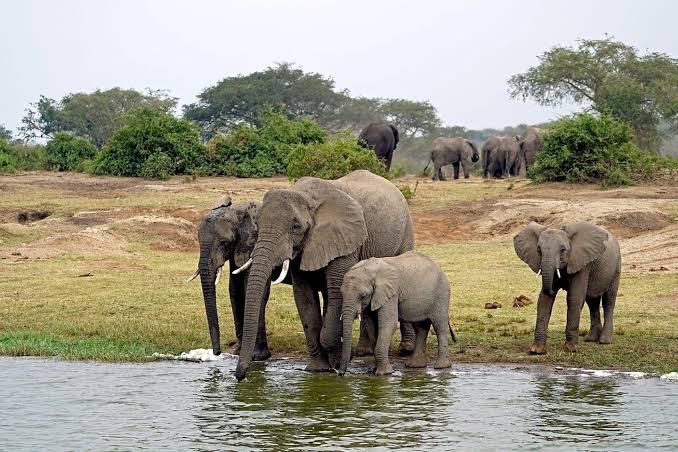
Elephants can be encountered in several areas of the park.
They may be seen feeding in the savannah, moving through woodland or approaching water.
Lions
Lions are among the park’s major predators.
They can sometimes be found resting during the hotter parts of the day before becoming more active later.
Buffaloes
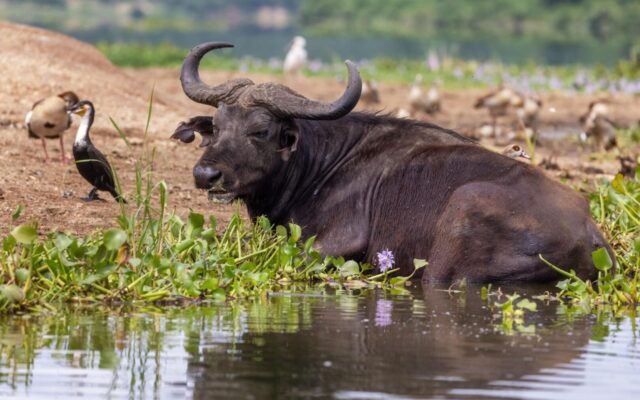
Large buffalo herds are commonly associated with the park’s open grasslands and wetlands.
Hippos
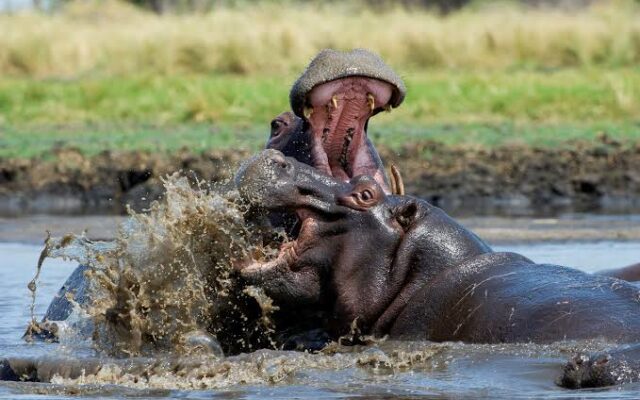
The Kazinga Channel is particularly famous for its large hippo populations.
Leopards
Leopards occur in the park but are more elusive than lions.
A sighting can be one of the most exciting moments of a game drive.
Uganda Kobs
Uganda kobs are an important antelope species in the park and are particularly associated with open grassland areas.
Tree-Climbing Lions in Ishasha
The Ishasha sector in the southern part of Queen Elizabeth National Park is particularly famous for its tree-climbing lions.
Visitors may sometimes find lions resting on large fig or acacia trees.
Why do they climb?
There are several possible explanations, including escaping insects, taking advantage of a cool breeze and getting a better view of their surroundings.
However, sightings aren’t guaranteed.
The lions are wild animals and their behavior changes according to weather, prey availability and other environmental factors.
The Kazinga Channel
The Kazinga Channel is one of Queen Elizabeth National Park’s most important wildlife attractions.
The channel connects Lake Edward and Lake George and attracts large numbers of animals.
A boat cruise gives visitors the opportunity to see wildlife from a different perspective.
Along the banks, you may encounter:
- Hippos
- Crocodiles
- Elephants
- Buffaloes
- Waterbirds
- Warthogs
- Antelopes
The concentration of wildlife around the channel makes it one of the best places in Uganda for close-range aquatic wildlife viewing.
The Kazinga Channel Boat Cruise
The boat cruise is arguably one of the most memorable activities in Queen Elizabeth.
Rather than searching for animals from a safari vehicle, you travel along the water and observe wildlife along the shoreline.
The experience also provides excellent opportunities for photography.
Bird watchers can particularly enjoy the cruise because numerous species gather around the water.
Chimpanzee Experiences in Queen Elizabeth
Queen Elizabeth isn’t only about large mammals.
The Kyambura Gorge provides opportunities for chimpanzee trekking.
The gorge is a dramatic landscape surrounded by savannah and forest.
Entering the gorge creates a completely different experience from the open plains.
Chimpanzees are not guaranteed sightings, but the experience provides an opportunity to explore forest habitat while searching for our closest living relatives.
For travelers who want a more reliable chimpanzee experience, Kibale National Park is generally the stronger choice.
Bird Watching in Queen Elizabeth
Queen Elizabeth is an excellent destination for bird enthusiasts.
The park contains a mixture of:
- Savannah
- Wetlands
- Lakes
- Forest
- Crater habitats
- Open woodland
This variety supports numerous bird species.
Depending on the location and season, birders may encounter:
- African fish eagles
- Kingfishers
- Herons
- Egrets
- Storks
- Bee-eaters
- Hornbills
- Raptors
- Waterbirds
The Kazinga Channel is particularly productive for water-associated species.
Crater Lakes Around Queen Elizabeth
The area surrounding Queen Elizabeth is characterized by numerous volcanic crater lakes.
These landscapes add another dimension to the safari.
The crater region provides:
- Scenic viewpoints
- Hiking opportunities
- Birding
- Photography
- Cultural experiences
The contrast between crater lakes, savannah and distant mountains makes the region particularly scenic.
The Mweya Peninsula
The Mweya Peninsula is one of the best-known areas within Queen Elizabeth National Park.
It extends into the Kazinga Channel and is surrounded by water on several sides.
Mweya is strategically important because several safari activities can be accessed from the area.
Accommodation here can also provide convenient access to game drives and boat cruises.
How Long Should You Spend in Queen Elizabeth?
A 2- to 3-day visit can provide a good introduction to the park.
A simple itinerary could look like:
Day 1: Arrival and afternoon game drive
Day 2: Morning game drive + Kazinga Channel boat cruise
Day 3: Optional morning activity and departure
Travelers combining Queen Elizabeth with chimpanzee trekking or Ishasha may want additional time.
Best Time to Visit Queen Elizabeth National Park
Queen Elizabeth can be visited throughout the year.
The drier periods are often preferred for conventional wildlife viewing because animals may concentrate around water sources and some roads can be easier to navigate.
The wetter seasons bring greener scenery and can provide excellent conditions for bird watching and photography.
However, wildlife is present year-round.
How Do You Get to Queen Elizabeth National Park?
Most travelers reach Queen Elizabeth by road.
The park is conveniently located along western Uganda safari routes.
It can be reached from Kampala or Entebbe, although the journey takes several hours.
It is also commonly accessed from:
Kibale National Park
Bwindi Impenetrable National Park
Lake Bunyonyi
Kisoro and Mgahinga
For travelers with limited time, domestic or charter flights can reduce the amount of road travel.
Queen Elizabeth and Kibale National Park
These two destinations make an excellent combination.
Kibale is famous for chimpanzee trekking and its extraordinary primate diversity.
Queen Elizabeth then introduces travelers to savannah wildlife.
The combination provides:
Chimpanzees + primates + elephants + lions + buffaloes + hippos + boat cruise
This is one of the strongest combinations for a traveler interested in both primates and classic safari wildlife.
Queen Elizabeth and Bwindi
Queen Elizabeth and Bwindi are often combined on Uganda gorilla and wildlife safaris.
The journey takes you from savannah landscapes into the mountainous forests of southwestern Uganda.
A longer itinerary can therefore include:
Chimpanzees → Savannah wildlife → Kazinga Channel → Mountain gorillas
Queen Elizabeth and Lake Bunyonyi
Lake Bunyonyi is an excellent place to add relaxation to a wildlife itinerary.
After several days of game drives and trekking, travelers can spend time around the lake enjoying:
- Canoeing
- Boat trips
- Scenic views
- Community experiences
- Relaxation
Accommodation in Queen Elizabeth National Park
Queen Elizabeth has accommodation options for different budgets.
Budget Accommodation
Budget travelers can find camps, guesthouses and simpler safari lodges.
These are suitable for visitors who want to spend more of their budget on activities.
Mid-Range Accommodation
Mid-range lodges provide a comfortable balance between price and facilities.
Depending on the property, travelers can expect:
- Comfortable rooms
- En-suite bathrooms
- Restaurants
- Scenic views
- Outdoor relaxation areas
Luxury Accommodation
Luxury safari lodges offer a more exclusive experience.
Depending on the property, facilities may include:
- Spacious cottages
- Private verandas
- Swimming pools
- Premium dining
- Spa facilities
- Exceptional views
The best accommodation isn’t necessarily the most expensive.
Location matters.
If your itinerary includes the Kazinga Channel, game drives and Ishasha, choosing accommodation based on your planned activities can reduce unnecessary driving.
Is Queen Elizabeth Good for Families?
Yes.
Queen Elizabeth is a strong family safari destination because it provides a variety of experiences without requiring every day to be a long game drive.
Children can enjoy seeing:
- Elephants
- Lions
- Giraffes
- Hippos
- Buffaloes
- Crocodiles
- Monkeys
- Birds
The boat cruise can also be a welcome change from vehicle-based activities.
Families should follow all park and guide safety instructions around wildlife and water.
What Should You Pack?
For Queen Elizabeth, consider bringing:
- Comfortable walking shoes
- Lightweight clothing
- Neutral-colored clothes
- Hat
- Sunglasses
- Sunscreen
- Insect repellent
- Binoculars
- Camera
- Extra batteries or power bank
- Reusable water bottle
- Light jacket
- Rain jacket
Early mornings can be cool, while afternoons can become hot.
Is Queen Elizabeth a Big Five Destination?
Queen Elizabeth is an important Big Five safari destination in Uganda.
It supports:
- Lions
- Leopards
- Elephants
- Buffaloes
Rhinos aren’t part of the wild population in Queen Elizabeth, so travelers looking to see all five traditional Big Five animals can combine their safari with Ziwa Rhino Sanctuary.
Conservation in Queen Elizabeth
Queen Elizabeth National Park protects important ecosystems and wildlife habitats in western Uganda.
Tourism contributes to conservation through park fees, employment, guiding, accommodation and other tourism-related activities.
The park also exists alongside communities that depend on the surrounding landscape.
Responsible tourism therefore plays an important role.
Visitors should respect wildlife, follow park regulations and avoid activities that disturb animals or damage the environment.
What Makes Queen Elizabeth Different?
One of the park’s biggest strengths is variety.
You aren’t limited to one landscape or one type of activity.
Within the broader destination, travelers can experience:
Savannah
Lakes
Wetlands
Forests
Crater landscapes
River channels
Large mammals
Primates
Birdlife
That diversity makes Queen Elizabeth particularly valuable for first-time visitors who want to experience several sides of Uganda in one safari.
Why Visit Queen Elizabeth National Park?
Queen Elizabeth National Park is a destination where Uganda’s different ecosystems come together.
You can start the morning searching for lions and elephants on the savannah, spend the afternoon cruising past hippos and crocodiles on the Kazinga Channel, and then continue your journey toward the forests of Kibale or Bwindi.
It is this combination of wildlife, scenery, primates and water-based experiences that makes Queen Elizabeth such an important part of Uganda’s tourism circuit.
For travelers planning a longer Uganda safari, it can act as the bridge between the country’s savannah wildlife destinations and its famous primate and gorilla destinations.
Frequently Asked Questions
What is Queen Elizabeth National Park famous for?
It is famous for its diverse wildlife, the Kazinga Channel, tree-climbing lions in Ishasha and its varied landscapes.
What animals can I see in Queen Elizabeth?
Visitors may see elephants, lions, buffaloes, hippos, leopards, Uganda kobs, warthogs, antelopes and many other species.
Can I see tree-climbing lions in Queen Elizabeth?
Yes. The Ishasha sector is particularly famous for lions that sometimes rest in trees, although sightings aren’t guaranteed.
Is there a boat cruise in Queen Elizabeth?
Yes. The Kazinga Channel boat cruise is one of the park’s most popular activities.
Can I trek chimpanzees in Queen Elizabeth?
Yes. Chimpanzee experiences are available around Kyambura Gorge, while Kibale is generally considered Uganda’s leading chimpanzee trekking destination.
How many days do I need in Queen Elizabeth?
Two to three days is a good introduction, although longer stays are recommended if you want to include several different activities and sectors.
Can Queen Elizabeth be combined with Bwindi?
Yes. It is one of the most popular combinations for travelers interested in both savannah wildlife and mountain gorilla trekking.
What accommodation is available?
Queen Elizabeth offers budget, mid-range and luxury accommodation options around different parts of the park.