








Overview
Toro-Semliki Wildlife Reserve – Travel Overview
Toro-Semliki Wildlife Reserve is one of Uganda’s most fascinating off-the-beaten-path safari destinations, located in the western part of the country along the floor of the Albertine Rift Valley.
Established in 1926, the reserve is among Uganda’s oldest protected areas. It covers approximately 542 square kilometres and stretches across the districts of Kabarole and Ntoroko. Its landscape is remarkably diverse, combining open savannah, acacia-combretum woodland, Borassus palm stands, riverine forests, wetlands and the shores of Lake Albert.
What makes Toro-Semliki particularly interesting is the unusual meeting of East African savannah and Central African forest influences.
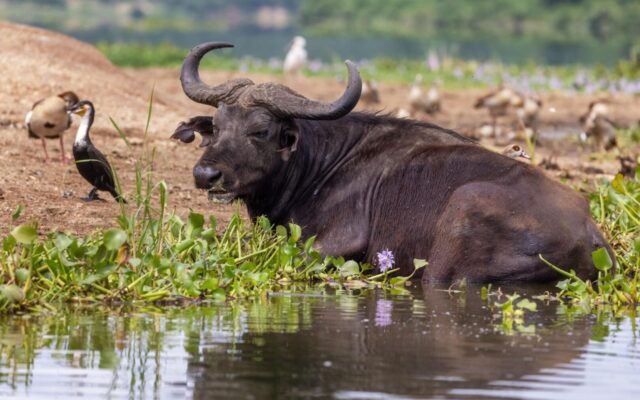
The reserve supports elephants, buffaloes, Uganda kobs, waterbucks, warthogs, giant forest hogs, hippos and several primate species. It is also home to a population of chimpanzees that live in an unusually dry environment, making them particularly interesting for researchers studying chimpanzee behavior and adaptation.
For birders, the reserve is equally attractive, with more than 400 recorded bird species, while nearby Lake Albert offers opportunities to search for the highly sought-after Shoebill.
Where Is Toro-Semliki Wildlife Reserve?
Toro-Semliki Wildlife Reserve is located in western Uganda, on the floor of the Albertine Rift Valley.
The reserve lies between some of western Uganda’s most dramatic geographical features:
- The Rwenzori Mountains to the south
- Lake Albert to the west/northwest
- The Rift Valley escarpment to the east
- The Blue Mountains of the Democratic Republic of Congo to the west
The reserve’s relatively low elevation creates a striking contrast with the high Rwenzori Mountains visible in the distance.
Its location makes it possible to combine Toro-Semliki with destinations such as:
- Semuliki National Park
- Fort Portal
- Rwenzori Mountains National Park
- Kibale National Park
- Queen Elizabeth National Park
- Lake Albert
Toro-Semliki vs Semuliki National Park
This is an important distinction for your website.
Although their names are very similar, Toro-Semliki Wildlife Reserve and Semuliki National Park are different protected areas.
Toro-Semliki is dominated by:
- Savannah
- Woodland
- Borassus palms
- Riverine forests
- Wetlands
- Lake Albert landscapes
Semuliki National Park is primarily a lowland tropical rainforest and is famous for attractions such as the Sempaya Hot Springs, forest birding and Central African forest species.
That means travelers can actually visit both and experience two very different ecosystems within the same wider Semliki Valley.
Why Is Toro-Semliki Wildlife Reserve Famous?
Toro-Semliki is best known for its combination of wildlife, birdlife and unusual landscapes.
The reserve’s main attractions include:
- Game drives
- Chimpanzee tracking
- Primate walks
- Bird watching
- Lake Albert boat trips
- Shoebill sightings
- Nyaburogo Gorge
- Nature walks
- Community experiences
- Scenic views of the Rwenzori Mountains
It is also important scientifically because of its dry-habitat chimpanzees and the coexistence of forest and savannah elephants within the wider reserve ecosystem.
Wildlife in Toro-Semliki
Toro-Semliki provides a mixture of species associated with both East African savannah and Central African forest environments.
Visitors may encounter:
- Elephants
- Buffaloes
- Uganda kobs
- Waterbucks
- Warthogs
- Bushbucks
- Giant forest hogs
- Hippopotamuses
- Leopards
- Spotted hyenas
- Primates
- Chimpanzees
The reserve is particularly interesting because it supports both savannah and forest elephants, including evidence of hybridization between the two forms.
Wildlife is not as concentrated as in some of Uganda’s major safari parks, so patience is important.
That relative lack of crowds, however, is part of the attraction.
Uganda Kob in Toro-Semliki
The reserve was originally established largely to protect the area’s large population of Uganda kob.
These antelopes remain one of the characteristic species of the Toro-Semliki landscape.
Visitors may see them moving across the open grasslands or gathering in suitable areas.
Their presence also helps demonstrate the importance of protecting the reserve’s savannah habitat.
Elephants of Toro-Semliki
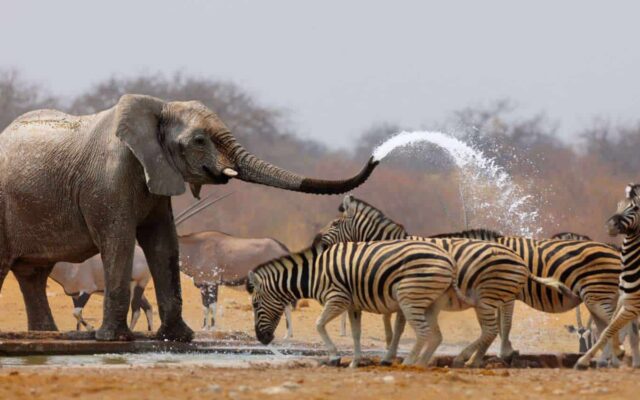
Elephants are another major attraction.
Toro-Semliki is unusual because elephants associated with both forest and savannah environments occur in the reserve.
The reserve’s location between forested and open habitats gives visitors an opportunity to experience elephants in a landscape very different from the better-known savannah parks.
Elephant sightings can occur during game drives and nature activities.
Chimpanzees in Toro-Semliki
One of the most fascinating aspects of Toro-Semliki is its chimpanzee population.
The chimpanzees live in a relatively dry environment compared with many other chimpanzee populations in Uganda.
Research teams have been studying these chimpanzees for years, particularly around the Mugiri River forest. The research focuses on how chimpanzees adapt their movement and behavior to an environment where forest patches are separated by more open landscapes.
Current tourism information describes the population as roughly 70–100 individuals, although exact population estimates can vary with ongoing research and monitoring.
This makes Toro-Semliki particularly interesting for travelers who want to experience chimpanzees outside Uganda’s better-known Kibale ecosystem.
Chimpanzee Tracking in Toro-Semliki
Chimpanzee tracking is conducted through a research-based visitation model.
Rather than simply entering a forest and searching for chimpanzees, visitors benefit from the long-running research and monitoring work taking place in the area.
The experience can involve walking through forest patches and riverine habitat while searching for chimpanzees and learning about their behavior.
One particularly interesting aspect is seeing how these apes move through a landscape that contains more open habitat than the dense forests associated with traditional chimpanzee destinations.
Primate Walks
Toro-Semliki offers guided primate walks that generally take several hours.
During these walks, visitors can search for:
- Chimpanzees
- Vervet monkeys
- Red-tailed monkeys
- Black-and-white colobus monkeys
- Olive baboons
Other wildlife may also appear along the trails.
Because the walks pass through different habitats, they provide more than just a primate experience.
You are also exploring the ecology of the reserve itself.
Game Drives in Toro-Semliki
Game drives are one of the reserve’s principal activities.
There are several established game tracks crossing the savannah and woodland.
Morning and afternoon drives provide opportunities to search for:
- Uganda kob
- Buffalo
- Elephant
- Waterbuck
- Warthog
- Bushbuck
- Other wildlife
Night game drives are also part of the reserve’s tourism experience, providing opportunities to search for nocturnal animals such as white-tailed mongooses and bushbabies.
This gives Toro-Semliki an advantage for travelers who want to experience Uganda’s wildlife after sunset.
Night Game Drives
A night drive offers an entirely different perspective of Toro-Semliki.
As the sun disappears, many daytime animals become less active while nocturnal species emerge.
With a spotlight and experienced ranger, visitors may search for:
- Bushbabies
- White-tailed mongooses
- Nocturnal rodents
- Nightjars
- Other nocturnal wildlife
The experience is particularly suitable for wildlife enthusiasts who want something beyond the standard morning and afternoon game drive.
Bird Watching in Toro-Semliki
Birding is one of the reserve’s major strengths.
More than 400 bird species have been recorded, with some sources documenting more than 440 species and broader surveys recording more than 460.
The diversity comes from the combination of:
- Savannah
- Woodland
- Riverine forest
- Wetlands
- Lake Albert
- Rift Valley habitats
Potential sightings include:
- Abyssinian ground hornbill
- Black-billed barbet
- Red-necked falcon
- Bee-eaters
- Coucals
- Bushshrikes
- Storks
- Raptors
For serious birders, the reserve can be particularly rewarding because it sits within an important ecological transition zone.
Shoebill Watching Near Lake Albert
One of the biggest attractions around Toro-Semliki is the opportunity to search for the Shoebill around Lake Albert.
Boat trips from the Ntoroko area provide access to lakeshore and wetland habitats where Shoebills can sometimes be observed.
The species is one of Africa’s most sought-after birds because of its enormous bill, prehistoric appearance and relatively limited distribution.
The Lake Albert area is considered one of the better places in Uganda to search for this remarkable bird.
Boat Trips on Lake Albert
Boat trips provide an opportunity to explore the aquatic side of the Toro-Semliki landscape.
The lake supports:
- Hippos
- Crocodiles
- Waterbirds
- Fish
- Wetland habitats
Birding from the water can be particularly rewarding because the boat provides access to areas that are difficult to reach by road.
A Lake Albert boat trip can therefore complement a game drive and forest walk.
Nyaburogo Gorge
The Nyaburogo Gorge is another attraction within Toro-Semliki.
The hiking route is approximately 7 kilometres and passes through a variety of habitats, including savannah, woodland, riverine areas and forest.
This makes it particularly attractive to birders and nature enthusiasts.
Along the route, visitors may encounter:
- Birds
- Monkeys
- Baboons
- Colobus monkeys
- Vervet monkeys
- Other forest wildlife
The changing habitats make the hike interesting even when large mammals are not encountered.
Nature Walks
Nature walks allow visitors to explore Toro-Semliki at a slower pace.
Instead of focusing exclusively on large mammals, guides can explain:
- Trees
- Plants
- Animal tracks
- Birds
- Insects
- Forest ecology
- Riverine habitats
Walking through the reserve gives visitors a better appreciation of how savannah, woodland and forest interact within the landscape.
The Landscape of Toro-Semliki
The scenery is one of the reserve’s hidden strengths.
The landscape includes:
- Open grassland
- Acacia-combretum woodland
- Borassus palms
- River valleys
- Swamps
- Lakeshore habitats
- Rift Valley escarpments
In the distance, the Rwenzori Mountains provide an impressive backdrop.
On clear days, the mountains create a dramatic contrast with the relatively low-lying savannah of the Semliki Valley.
Toro-Semliki and the Rwenzori Mountains
The reserve sits within a landscape dominated by the Rwenzori Mountains.
This makes it possible to combine a wildlife experience with a mountain adventure.
A longer itinerary could connect:
Toro-Semliki → Rwenzori Mountains → Queen Elizabeth
or:
Toro-Semliki → Kibale → Queen Elizabeth
Toro-Semliki and Semuliki National Park
These two destinations make a particularly interesting combination.
Toro-Semliki provides:
Savannah + wildlife + chimpanzees + Lake Albert
while Semuliki National Park provides:
Rainforest + hot springs + Central African forest species + birding
The two experiences complement each other extremely well.
Toro-Semliki and Kibale National Park
Travelers interested in primates can combine Toro-Semliki with Kibale National Park.
Kibale is one of Uganda’s most famous chimpanzee destinations, while Toro-Semliki offers a very different setting in which chimpanzees live in a relatively dry habitat.
This combination can therefore create a particularly strong Uganda primate safari.
Community Tourism
Communities surrounding Toro-Semliki are an important part of the wider conservation landscape.
The main communities include:
- Ntoroko fishing community
- Rwebisengo
- Karugutu-Kyabandara
- Kasesenge-Kyakabaseke
Community tourism can introduce visitors to local culture, music, dance, crafts and livelihoods.
The Karugutu Community Conservation Association has been involved in cultural performances and conservation education.
Visitors can support local communities by participating in legitimate community tourism experiences and purchasing locally made crafts.
Accommodation at Toro-Semliki
Accommodation is more limited than in major safari destinations such as Queen Elizabeth or Murchison Falls.
Budget Accommodation
Budget travelers can consider:
- UWA bandas
- Campsites
- Basic accommodation around Ntoroko
- Campsites near the reserve headquarters
UWA information lists a campsite and budget bandas around Ntoroko, as well as a campsite at the reserve headquarters in Karugutu.
Mid-Range Accommodation
Travelers can use selected lodges and safari camps around the reserve and Ntoroko area.
These provide a more comfortable base for game drives and Lake Albert activities.
Luxury Accommodation
For travelers seeking a more upscale experience, Semliki Safari Lodge provides high-end tented accommodation within the wider reserve landscape.
Ntoroko Game Lodge is another option around the Ntoroko area.
How Many Days Do You Need at Toro-Semliki?
I’d recommend two to three days for travelers who want to experience the reserve properly.
One Day
A one-day visit can focus on:
- Game drive
- Nature walk
- Birding
Two Days
Two days allow you to combine:
- Game drives
- Primate tracking
- Birding
- Lake Albert boat trip
Three Days
Three days provide enough flexibility for:
- Chimpanzee experience
- Game drives
- Night drive
- Nyaburogo Gorge
- Birding
- Lake Albert
- Community experience
If you’re combining Toro-Semliki with Semuliki National Park, I would recommend staying longer in the region.
Best Time to Visit Toro-Semliki
Toro-Semliki can be visited throughout the year.
The drier periods can make game drives and walking trails easier, while wetter months can produce greener scenery and more active vegetation.
Because the reserve contains wetlands and riverine habitats, seasonal conditions can significantly influence wildlife and bird activity.
Travelers should therefore consider their priorities when selecting travel dates.
How Do You Get to Toro-Semliki?
Toro-Semliki is primarily accessed by road.
The reserve can be reached from the Fort Portal and Semliki Valley area, with routes continuing toward Ntoroko and the Lake Albert side of the reserve.
It can be incorporated into a western Uganda circuit such as:
Kampala → Fort Portal → Toro-Semliki → Semuliki → Kibale
or:
Kampala → Fort Portal → Toro-Semliki → Rwenzori → Queen Elizabeth
Travel times depend heavily on the route, road conditions and stops.
What Should You Pack?
For Toro-Semliki, travelers should pack for both wildlife viewing and walking.
Recommended items include:
- Comfortable hiking shoes
- Long trousers
- Long-sleeved shirts
- Lightweight rain jacket
- Sun hat
- Sunscreen
- Insect repellent
- Binoculars
- Camera
- Extra batteries
- Power bank
- Reusable water bottle
- Small backpack
- Personal medication
If you’re doing a Lake Albert boat trip, waterproof protection for cameras and phones is also useful.
Is Toro-Semliki Good for Photographers?
Definitely.
The reserve offers several different photographic subjects within one destination.
You can photograph:
- Elephants
- Uganda kobs
- Buffaloes
- Chimpanzees
- Monkeys
- Birds
- Borassus palms
- Riverine forests
- Lake Albert
- Rwenzori Mountain views
- Rift Valley landscapes
The combination of wildlife and dramatic geography gives photographers considerable variety.
Is Toro-Semliki Suitable for Families?
Yes, although it is better suited to families who enjoy nature and longer road journeys.
Families can choose activities such as:
- Game drives
- Boat trips
- Bird watching
- Nature walks
- Cultural experiences
Chimpanzee activities have specific participation requirements, so these should be confirmed when planning a family safari.
Conservation at Toro-Semliki
Toro-Semliki has major conservation importance because it protects a combination of habitats and species rarely found together elsewhere.
The reserve supports:
- Dry-habitat chimpanzees
- Forest and savannah elephants
- Shoebill habitat
- Large Uganda kob populations
- Diverse birdlife
- Riverine forests
- Wetlands
It is also part of a wider landscape where conservation and community livelihoods need to coexist.
Current conservation programs include wildlife monitoring, community involvement and improved protected-area management.
Responsible Tourism at Toro-Semliki
Visitors can contribute to conservation by:
- Following ranger instructions
- Maintaining a safe distance from wildlife
- Avoiding litter
- Staying on designated tracks
- Keeping noise levels low
- Never feeding animals
- Respecting local communities
- Supporting community tourism
- Avoiding damage to vegetation
- Respecting research areas
This is especially important around the chimpanzee research sites.
Why Visit Toro-Semliki Wildlife Reserve?
Toro-Semliki is one of Uganda’s most underrated safari destinations.
It doesn’t have the same international profile as Murchison Falls, Queen Elizabeth or Bwindi, but that is precisely what makes it interesting.
Here you can experience a combination that is difficult to find in one place:
Savannah wildlife
Dry-habitat chimpanzees
Forest and savannah elephants
Lake Albert
Shoebills
Bird-rich wetlands
Rift Valley landscapes
Rwenzori Mountain views
Community experiences
The reserve is particularly appealing to travelers who have already experienced Uganda’s main safari circuit and want something more unusual.
It is also an excellent choice for travelers who enjoy birding, primates, photography and off-the-beaten-path wildlife experiences.
Most importantly, Toro-Semliki gives you a chance to experience Uganda’s wildlife in a landscape where Central African forest ecosystems meet East African savannah.
Frequently Asked Questions
What is Toro-Semliki Wildlife Reserve famous for?
It is known for savannah wildlife, chimpanzees, forest and savannah elephants, birding, Lake Albert and its unusual Rift Valley landscape.
Where is Toro-Semliki Wildlife Reserve?
It is located in western Uganda in the districts of Kabarole and Ntoroko.
Is Toro-Semliki the same as Semuliki National Park?
No. They are separate protected areas within the wider Semliki Valley. Toro-Semliki is primarily savannah and woodland, while Semuliki National Park is mainly rainforest.
Can I track chimpanzees in Toro-Semliki?
Yes. Chimpanzee tracking takes place within the reserve under a research-based visitation model.
Can I see Shoebills?
Yes. Boat trips around Lake Albert provide opportunities to search for Shoebills and other waterbirds. Sightings are never guaranteed.
Can I do a night game drive?
Yes. Night game drives are among the activities offered in Toro-Semliki.
How many days should I spend in Toro-Semliki?
Two to three days is ideal if you want to combine wildlife, chimpanzees, birding and Lake Albert.
Can I combine Toro-Semliki with Kibale?
Yes. It is an excellent combination for a primate-focused Uganda safari.
Can I combine Toro-Semliki with Semuliki National Park?
Yes. In fact, combining the two allows travelers to experience savannah, woodland and rainforest environments in the same broader region.
Is Toro-Semliki good for birding?
Yes. More than 400 bird species have been recorded, with some sources documenting considerably higher totals depending on the survey area used.