




Overview
Lake Mburo National Park – Travel Overview
Lake Mburo National Park is one of Uganda’s most accessible wildlife destinations and one of the country’s best places to experience savannah wildlife without traveling as far as some of Uganda’s larger national parks.
Located in western Uganda between Kampala and the southwestern safari circuit, the park is particularly convenient for travelers heading toward Bwindi Impenetrable National Park, Mgahinga Gorilla National Park or Lake Bunyonyi.
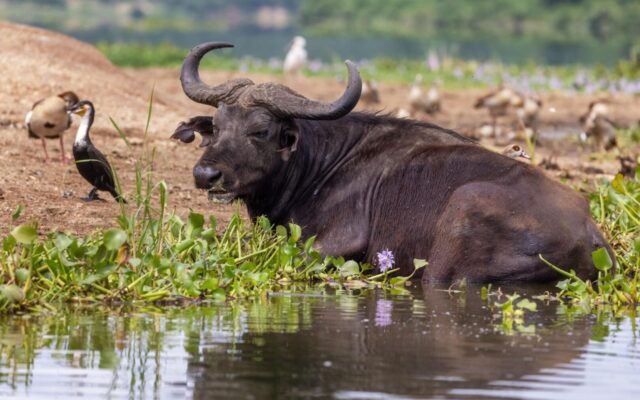
What makes Lake Mburo different is its combination of savannah, wetlands, lakes and rolling hills. The park is especially known for zebras, impalas, elands, buffaloes, hippos and Uganda kobs, as well as its growing importance for giraffe viewing.
Lake Mburo is also one of the few places in Uganda where visitors can experience a safari on foot or on horseback, giving the destination a different feel from traditional vehicle-based game drives.
For travelers with limited time, Lake Mburo can also be an excellent short Uganda safari destination.
Where Is Lake Mburo National Park?
Lake Mburo National Park is located in western Uganda, in the Ankole region.
It is positioned along the road between Kampala and southwestern Uganda, making it an important stopover for travelers continuing toward destinations such as:
- Bwindi Impenetrable National Park
- Mgahinga Gorilla National Park
- Lake Bunyonyi
- Kisoro
- Queen Elizabeth National Park
Its relatively convenient location is one of its biggest advantages.
A traveler who doesn’t have enough time for a long safari in northern Uganda can still experience wildlife at Lake Mburo before continuing deeper into western Uganda.
Why Is Lake Mburo National Park Famous?
Lake Mburo is particularly famous for its zebras, impalas and beautiful lake-and-savannah landscapes.
The park is also notable because it supports wildlife species that are less commonly encountered in some of Uganda’s other national parks.
Visitors can encounter:
- Zebras
- Impalas
- Elands
- Uganda kobs
- Buffaloes
- Warthogs
- Hippos
- Giraffes
- Topis
- Waterbucks
- Leopards
- Hyenas
- Various antelope species
The park’s relatively compact size means travelers can experience several different habitats without spending days driving between distant areas.
What Can You Do in Lake Mburo National Park?
Lake Mburo offers considerably more than the traditional safari vehicle experience.
Game Drives
Game drives provide opportunities to search for zebras, impalas, buffaloes, giraffes, Uganda kobs and other wildlife.
Boat Cruise
A boat cruise on Lake Mburo offers a different perspective of the park.
Visitors can look for hippos, crocodiles, waterbirds and animals approaching the shoreline.
Walking Safari
Lake Mburo is one of Uganda’s notable destinations for guided walking safaris.
Walking allows visitors to experience the smaller details of the ecosystem that are easily missed from a vehicle.
Horseback Safari
Horseback safaris are one of Lake Mburo’s most distinctive experiences.
Visitors can explore the savannah on horseback and observe wildlife without the presence of a safari vehicle.
Bird Watching
The park’s wetlands, woodland and savannah support a large variety of birds.
Cultural Experiences
Visitors can also interact with communities around the park and learn more about the traditional cattle-keeping culture of the Ankole region.
Wildlife in Lake Mburo National Park
Lake Mburo has a distinctive collection of wildlife.
Zebras
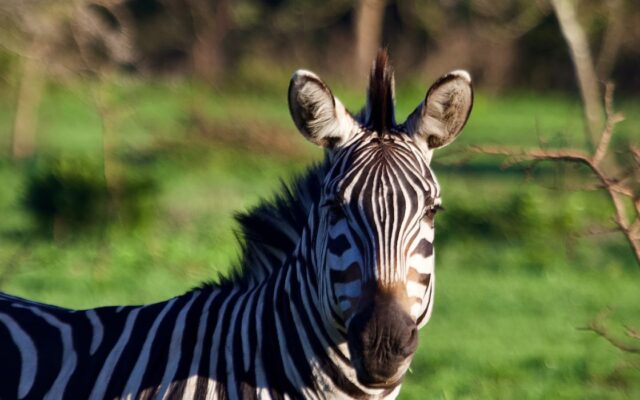
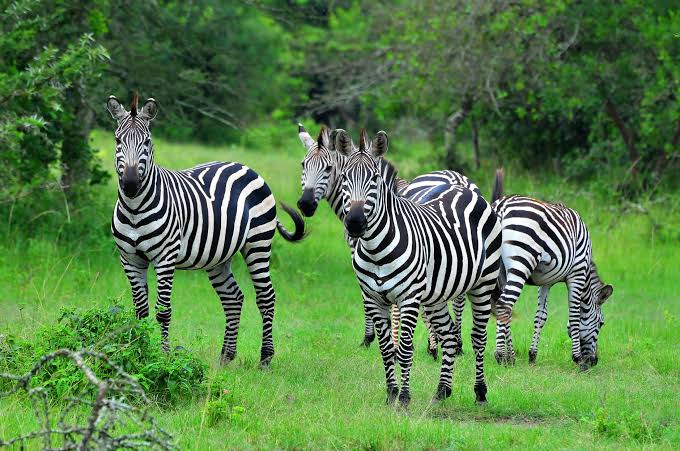
Zebras are among the animals most associated with Lake Mburo.
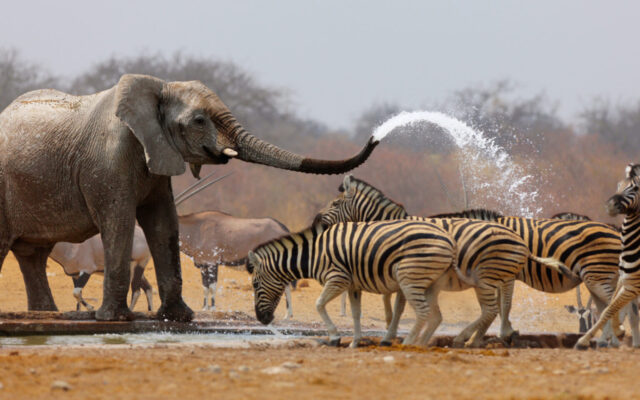
Large groups can sometimes be seen grazing across the open grasslands.
Their presence makes the park particularly attractive to travelers interested in classic African savannah scenery.
Impalas
Lake Mburo is one of Uganda’s notable destinations for seeing impalas.
They can frequently be found in open grassland and woodland areas.
Elands
The eland is another important antelope species found in the park.
These large antelopes can be impressive to see because of their size and distinctive appearance.
Giraffes
Giraffes are an increasingly important attraction in Lake Mburo.
Seeing a giraffe moving through the acacia-dominated landscape can provide some excellent safari photography opportunities.
Buffaloes
Buffaloes can be found around the park’s grasslands and water sources.
Hippos
Hippos are particularly associated with Lake Mburo and its waterways.
They are commonly encountered around the lake and can be observed from the safety of a boat or designated viewing areas.
Leopards and Hyenas
These predators are present but can be more difficult to find than herbivores.
Early morning and evening game drives can provide better opportunities for predator sightings.
Lake Mburo Boat Cruise
The Lake Mburo boat cruise is one of the park’s most popular activities.
The lake attracts animals seeking water and provides habitat for numerous aquatic species.
During a cruise, visitors may see:
- Hippos
- Crocodiles
- Buffaloes
- Antelopes
- Waterbirds
- Kingfishers
- Fish eagles
The experience also provides an opportunity to enjoy the scenery away from the safari vehicle.
Walking Safari in Lake Mburo
One of Lake Mburo’s biggest advantages is that visitors can explore parts of the park on foot with a trained guide.
A walking safari changes the way you experience wildlife.
Instead of focusing only on large animals, you begin noticing:
- Animal tracks
- Droppings
- Insects
- Plants
- Bird calls
- Smaller mammals
- Signs of predators
Your guide can explain how to interpret these clues and understand the behavior of animals around you.
Walking also gives you a stronger sense of the landscape itself.
Horseback Safari in Lake Mburo
Horseback safari is one of the experiences that makes Lake Mburo particularly different.
Riding through the savannah allows visitors to experience the park from a lower and quieter perspective.
Depending on the location and conditions, you may ride near wildlife such as:
- Zebras
- Impalas
- Elands
- Uganda kobs
- Warthogs
The experience should always be conducted with trained guides who understand animal behavior and safe distances.
For travelers who have already experienced conventional game drives, a horseback safari can add something completely different to their Uganda itinerary.
Bird Watching in Lake Mburo
Lake Mburo is an excellent destination for bird lovers.
Its combination of wetlands, lakes, woodland and open grassland creates habitat for numerous bird species.
Birders can search for:
- African fish eagles
- Kingfishers
- Herons
- Egrets
- Storks
- Bee-eaters
- Hornbills
- Raptors
- Wetland specialists
The lake and surrounding wetlands are particularly valuable for water-associated species.
Lake Mburo and Ankole Culture
The area surrounding Lake Mburo is closely connected with Ankole culture and traditional cattle keeping.
Visitors can learn about local livelihoods and the importance of cattle in the region.
Cultural experiences may include opportunities to learn about:
- Traditional cattle keeping
- Local food
- Community life
- Traditional dances
- Crafts
- Milk processing
- Ankole long-horned cattle
This adds an important human dimension to a wildlife safari.
Instead of simply passing through the region, visitors gain a better understanding of the communities living around the park.
Lake Mburo and the Ankole Long-Horned Cattle
The Ankole long-horned cattle are one of the cultural symbols of southwestern Uganda.
Their enormous horns make them immediately recognizable.
A visit to a local community or cattle-keeping project can provide travelers with an opportunity to learn about the traditional relationship between people, cattle and land in the Ankole region.
This can be particularly interesting for visitors who want to include cultural experiences alongside wildlife viewing.
Accommodation in Lake Mburo
Lake Mburo has accommodation options covering different budgets.
Budget Accommodation
Budget travelers can find:
- Campsites
- Guesthouses
- Simple safari camps
- Budget lodges
These are useful for travelers who want to keep accommodation costs low while spending more on safari activities.
Mid-Range Accommodation
Mid-range lodges offer a balance between comfort and price.
Depending on the property, facilities may include:
- En-suite rooms
- Restaurants
- Private cottages
- Outdoor seating
- Views of the surrounding landscape
Luxury Accommodation
Luxury safari properties provide a more exclusive experience.
Depending on the lodge, travelers may find:
- Spacious cottages
- Private verandas
- Scenic views
- Swimming pools
- Premium dining
- Personalized service
One advantage of staying near the park is the ability to begin activities early, particularly for morning game drives and walking safaris.
How Many Days Do You Need in Lake Mburo?
Lake Mburo works particularly well for a 1- to 3-day safari.
One Day
A one-day visit can include a game drive and potentially a boat cruise, depending on timing.
Two Days
Two days provide more time for:
Game drive + boat cruise + walking safari
Three Days
Three days allow travelers to slow down and include experiences such as:
Game drive + boat cruise + walking safari + horseback safari + cultural experience
For travelers using Lake Mburo as part of a longer Uganda itinerary, two nights can provide a good balance.
Best Time to Visit Lake Mburo
Lake Mburo can be visited throughout the year.
Drier periods can make some wildlife viewing easier because animals may gather around water sources and vegetation can be less dense.
The wetter periods bring greener landscapes and can be rewarding for photography and bird watching.
Because Lake Mburo is relatively accessible, it can also be a good choice for travelers who don’t want to build their entire safari around one particular season.
How Do You Get to Lake Mburo?
One of Lake Mburo’s biggest advantages is its accessibility.
The park is located relatively close to Kampala compared with some of Uganda’s more distant safari destinations.
The journey is commonly included in itineraries traveling toward southwestern Uganda.
A typical route can look like:
Entebbe/Kampala → Lake Mburo → Bwindi
or:
Entebbe/Kampala → Lake Mburo → Mgahinga → Lake Bunyonyi
This makes Lake Mburo particularly useful as the first wildlife stop before continuing toward the gorilla destinations.
Domestic flights are also possible for travelers who prefer a fly-in safari, although road travel is generally the more straightforward option for this destination.
Lake Mburo as a Stopover on a Gorilla Safari
This is one of the destination’s biggest selling points.
Travelers arriving from Kampala or Entebbe and heading toward Bwindi or Mgahinga can include Lake Mburo along the way.
For example:
Day 1: Arrival in Uganda
Day 2: Transfer to Lake Mburo + afternoon game drive
Day 3: Morning safari + transfer toward Bwindi
This gives travelers a taste of Uganda’s savannah before entering the mountainous forests of southwestern Uganda.
Lake Mburo and Bwindi
Combining Lake Mburo with Bwindi Impenetrable National Park creates a strong wildlife-and-gorilla itinerary.
Lake Mburo offers:
Zebras + impalas + giraffes + elands + buffaloes
Bwindi offers:
Mountain gorillas + rainforest + forest wildlife
The contrast between the open savannah and dense mountain forest makes the journey particularly memorable.
Lake Mburo and Mgahinga
Travelers heading to Mgahinga can also use Lake Mburo as an early safari destination.
The combination offers:
Lake Mburo: Savannah wildlife and horseback/walking experiences
Mgahinga: Mountain gorillas, golden monkeys and volcanoes
Lake Mburo and Queen Elizabeth
Lake Mburo can also be combined with Queen Elizabeth National Park for travelers who want more extensive wildlife viewing.
Queen Elizabeth provides opportunities for:
- Lions
- Elephants
- Buffaloes
- Hippos
- Leopards
- Kazinga Channel boat cruises
Lake Mburo provides a different ecosystem and experiences such as walking and horseback safaris.
What Should You Pack for Lake Mburo?
A safari in Lake Mburo generally requires practical, comfortable clothing.
Consider packing:
- Comfortable walking shoes
- Neutral-colored clothing
- Lightweight trousers
- Long-sleeved shirts
- Hat
- Sunglasses
- Sunscreen
- Insect repellent
- Light jacket
- Rain jacket
- Binoculars
- Camera
- Extra batteries
- Reusable water bottle
If you plan to do a walking or horseback safari, comfortable footwear becomes particularly important.
Is Lake Mburo Good for Families?
Yes.
Lake Mburo can be one of the more family-friendly safari destinations in Uganda.
Its relatively accessible location means families don’t necessarily have to spend an entire day traveling before reaching wildlife areas.
The variety of activities is another advantage.
Children may enjoy:
- Zebras
- Giraffes
- Impalas
- Hippos
- Boat cruises
- Horseback experiences
- Cultural activities
However, age and safety requirements should always be checked for walking and horseback activities.
Is Lake Mburo a Big Five Destination?
Lake Mburo is not generally considered Uganda’s main Big Five destination.
It has elephants, buffaloes and leopards, but it is particularly valued for species such as zebras, impalas, elands, Uganda kobs and giraffes, as well as its unique activities.
Travelers whose main goal is to see a broad range of Big Five wildlife may prefer combining Lake Mburo with Murchison Falls National Park or Queen Elizabeth National Park.
Conservation in Lake Mburo
Lake Mburo protects an important wetland and savannah ecosystem.
The park provides habitat for wildlife while also supporting tourism and surrounding communities.
Tourism contributes through:
- Park fees
- Accommodation
- Guides
- Drivers
- Local employment
- Community tourism
- Conservation initiatives
Visitors can contribute positively by following park regulations and supporting responsible tourism businesses.
Responsible Tourism in Lake Mburo
Visitors should:
- Keep a safe distance from wildlife.
- Follow guide instructions.
- Never feed animals.
- Avoid littering.
- Stay on designated routes where required.
- Respect local communities.
- Avoid disturbing animals.
- Follow boating safety instructions.
- Use responsible photography practices.
Walking and horseback activities require particular attention to guide instructions because visitors are closer to wildlife than they would be from a safari vehicle.
Why Visit Lake Mburo National Park?
Lake Mburo is a destination that proves a safari doesn’t always have to involve a long journey into a remote wilderness.
Its location, wildlife and variety of activities make it one of Uganda’s most practical safari destinations.
You can watch zebras crossing the grasslands in the morning, take a boat cruise among hippos in the afternoon and, if your itinerary allows, explore the savannah on foot or horseback.
For travelers heading toward Uganda’s famous gorilla destinations, Lake Mburo can also provide an excellent introduction to the country’s wildlife before the journey continues into the forests of Bwindi or the volcanic landscape of Mgahinga.
Its combination of wildlife, accessibility, wetlands, cultural experiences and alternative safari activities makes Lake Mburo an important destination to include in Uganda’s tourism circuit.
Frequently Asked Questions
What is Lake Mburo National Park famous for?
Lake Mburo is famous for zebras, impalas, elands, Uganda kobs, giraffes, hippos and its scenic lake-and-savannah landscape.
Can I see zebras in Lake Mburo?
Yes. Zebras are one of the park’s most recognizable wildlife attractions.
Can I see giraffes in Lake Mburo?
Yes. Giraffes can be encountered in the park.
Can I take a boat cruise?
Yes. Boat cruises on Lake Mburo provide opportunities to see hippos, crocodiles and waterbirds.
Can I do a walking safari?
Yes. Guided walking experiences are one of Lake Mburo’s distinctive activities.
Can I do a horseback safari?
Yes. Horseback safaris are among the experiences that make Lake Mburo different from many other Uganda safari destinations.
How many days should I spend in Lake Mburo?
One day can provide a quick introduction, but two to three days allow travelers to experience more of the park’s activities.
Can I combine Lake Mburo with gorilla trekking?
Yes. It is commonly combined with Bwindi or Mgahinga on longer Uganda safari itineraries.
What accommodation is available?
Lake Mburo has budget, mid-range and luxury accommodation options.
Is Lake Mburo suitable for a short Uganda safari?
Yes. Its relatively convenient location makes it one of the best options for travelers with limited time.