






Overview
Katonga Wildlife Reserve – Travel Overview
Katonga Wildlife Reserve is one of Uganda’s lesser-known wildlife destinations, offering a very different safari experience from the country’s famous savannah parks.
Located in western Uganda along the Katonga River, the reserve protects a fascinating mixture of savannah, woodland, riverine vegetation, papyrus swamps and seasonal and permanent wetlands. This unusual combination of habitats supports a variety of mammals, birds, reptiles, amphibians and butterflies.
The reserve covers approximately 207 square kilometres and lies within Kyenjojo and Kamwenge districts. It was gazetted in 1964 as a game reserve, originally serving as a corridor for wildlife moving between western Uganda and neighboring regions. It became a wildlife reserve in 1996 following the formation of the Uganda Wildlife Authority.
Katonga’s greatest attraction is not huge concentrations of big game. Instead, it is the opportunity to explore a wetland-rich wilderness on foot, search for the elusive Sitatunga antelope, watch wetland birds and experience a quieter side of Uganda’s wildlife tourism.
For travelers who want to get away from the busy safari routes, Katonga can be a fascinating addition to a western Uganda itinerary.
Where Is Katonga Wildlife Reserve?
Katonga Wildlife Reserve is located in western Uganda, along the Katonga River.
The reserve lies within Kyenjojo and Kamwenge districts and is accessible from the Kampala–Fort Portal road corridor. From the Kyegegwa area, travelers branch south toward the reserve headquarters at Kikorogoto. UWA describes the route as approximately three hours from Kampala to Kyegegwa, followed by about 42 kilometres toward the reserve.
Its location makes Katonga particularly useful for travelers exploring western Uganda.
It can be combined with:
- Fort Portal
- Kibale National Park
- Semuliki National Park
- Toro-Semliki Wildlife Reserve
- Queen Elizabeth National Park
- Rwenzori Mountains National Park
- Lake Mburo National Park
Why Is Katonga Wildlife Reserve Famous?
Katonga is best known for its wetland ecosystem and Sitatunga population.
The reserve contains a mixture of:
- Savannah grasslands
- Wooded grasslands
- Woodlands
- Riverine forests
- Papyrus swamps
- Permanent wetlands
- Seasonal wetlands
This creates habitat for a diverse collection of wildlife. UWA identifies approximately 40 mammal species and more than 150 bird species in the reserve.
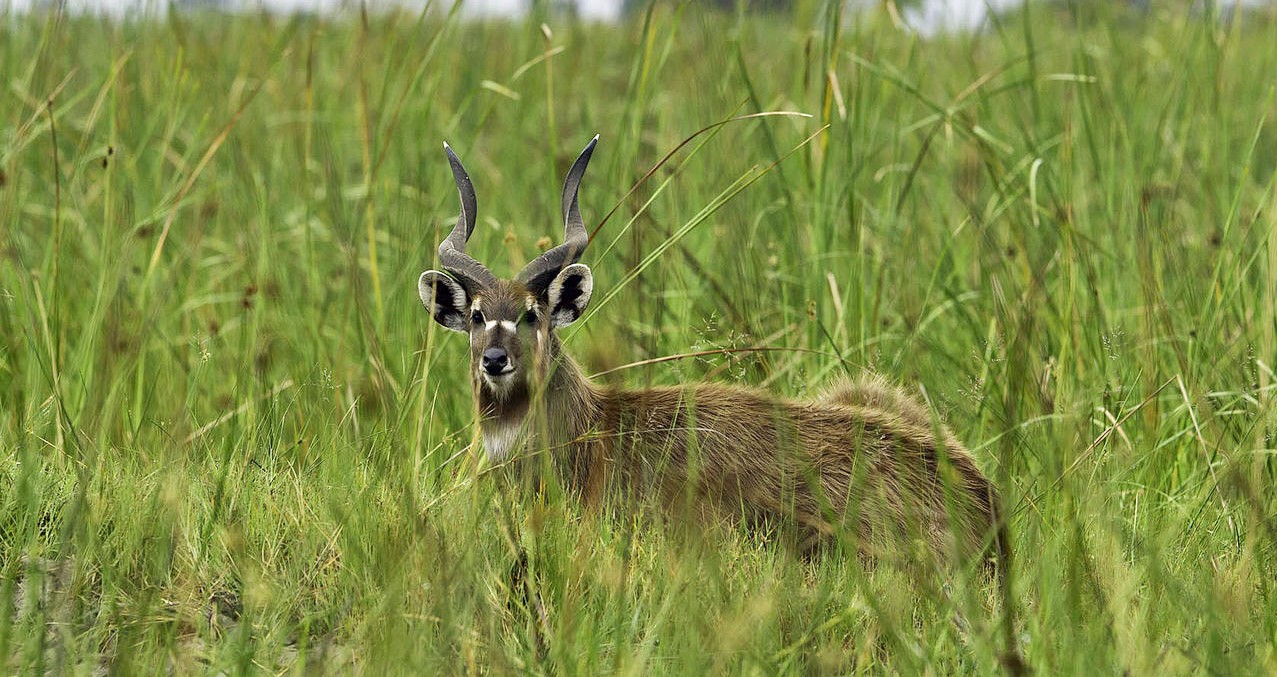
The reserve’s signature species is the Sitatunga, a semi-aquatic antelope specially adapted to living in swamps.
Other wildlife associated with Katonga includes:
- Waterbuck
- Hippopotamus
- Uganda kob
- Bushbuck
- Reedbuck
- Warthog
- Buffalo
- Elephant
- Impala
- Topi
- Eland
- River otter
- Olive baboon
- Black-and-white colobus monkey
- Vervet monkey
- Leopard
- Duiker
The exact likelihood of seeing individual species varies, and Katonga should not be approached like a high-density big-game park.
The Sitatunga of Katonga
The Sitatunga is the animal that gives Katonga much of its tourism identity.
This unusual antelope is specially adapted to swamp environments. Its elongated, splayed hooves allow it to move through soft, muddy vegetation where many other antelopes would struggle.
Sitatungas are generally shy and can disappear quickly into dense papyrus and wetland vegetation.
This makes finding one a rewarding wildlife experience.
Katonga’s wetland system provides important habitat for a viable Sitatunga population, making the reserve one of Uganda’s interesting destinations for travelers hoping to encounter this elusive antelope. (UETCL)
Wildlife in Katonga
Katonga’s wildlife is closely connected to its diverse habitats.
The open grasslands provide grazing areas for species such as Uganda kobs, waterbucks and reedbucks, while wetlands provide habitat for Sitatungas, hippos and water-associated species.
Riverine forests support monkeys and other forest wildlife.
Visitors may encounter:
- Sitatunga
- Waterbuck
- Uganda kob
- Reedbuck
- Bushbuck
- Warthog
- Impala
- Buffalo
- Elephant
- Hippopotamus
- Duiker
- River otter
- Olive baboon
- Vervet monkey
- Black-and-white colobus monkey
- Leopard
UWA’s current reserve information confirms the presence of approximately 40 mammal species.
Elephants and Buffaloes
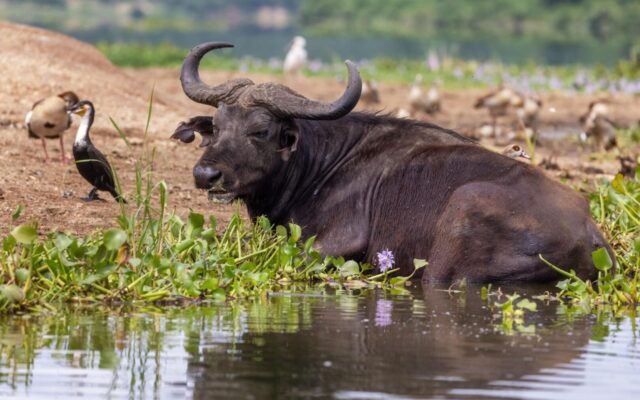
Katonga has historically supported larger mammals including elephants and buffaloes.
However, visitors should not expect the same wildlife density found in destinations such as Murchison Falls or Queen Elizabeth.
The reserve’s attraction lies more in its habitat diversity and specialized wetland wildlife than in large concentrations of big game.
This is an important point to communicate on the website so visitors arrive with realistic expectations.
Primates in Katonga
Katonga’s riverine and woodland habitats support several primate species.
Depending on conditions and location, visitors may encounter:
- Olive baboons
- Vervet monkeys
- Black-and-white colobus monkeys
These can sometimes be easier to detect along forest edges and riverine vegetation.
For travelers interested in Uganda’s primates, Katonga can therefore complement the more specialized chimpanzee destinations such as Kibale and Budongo.
River Otters
The wetland environment also provides habitat for river otters.
Seeing an otter is not guaranteed, but their presence adds another interesting element to Katonga’s aquatic ecosystem.
The river, wetlands and channels provide opportunities to observe wildlife that is closely associated with water rather than open savannah.
Bird Watching in Katonga
Bird watching is one of Katonga’s strongest attractions.
More than 150 bird species are recorded in the reserve, with many associated with wetlands, woodland and riverine habitats.
Birders can search for:
- Herons
- Egrets
- Kingfishers
- Storks
- Papyrus-associated species
- Raptors
- Weavers
- Hornbills
- Waterbirds
The mixture of wetlands and savannah means birding can remain interesting even when mammal sightings are quiet.
For serious birders, a local guide who knows bird calls can make a major difference.
Wetland Birding
The papyrus swamps are particularly important for birding.
Wetland habitats provide food and nesting areas for numerous species.
The best birding experience involves moving slowly and quietly, giving birds time to reveal themselves.
Morning hours are especially attractive because bird activity is generally high and temperatures are more comfortable.
Guided Nature Walks in Katonga
Unlike Uganda’s major safari parks, Katonga is particularly suited to walking experiences.
UWA describes the reserve as an area where wildlife and habitats can be explored on foot.
Walking allows visitors to experience the reserve at a completely different pace.
Instead of simply searching for large mammals, guides can point out:
- Animal tracks
- Bird calls
- Plants
- Insects
- Wetland ecology
- Wildlife signs
- Forest vegetation
You become more aware of the smaller details that are easily missed from a safari vehicle.
Sitatunga Trail
The Sitatunga Trail focuses on wetland habitats where visitors have opportunities to search for the elusive antelope.
The trail passes through areas associated with:
- Swamps
- Grassland
- Wetland vegetation
- Papyrus
This is particularly appealing to photographers and wildlife enthusiasts who want to search for animals that are difficult to find in conventional savannah parks.
Kisharara Trail
The Kisharara area provides access to a mixture of habitats, including grassland, savannah and wetland environments.
This makes it useful for observing a broader selection of wildlife and birds.
The changing habitats also demonstrate why Katonga can support such a diverse collection of species within a relatively small protected area.
Kyeibale Trail
The Kyeibale trail offers another perspective on the reserve’s landscape, including woodland and more forested areas.
Nature walks here can focus on:
- Primates
- Birds
- Trees
- Rock formations
- Wildlife signs
For travelers who enjoy walking rather than sitting in a safari vehicle, these trails are an important part of the Katonga experience.
Canoe Experiences at Katonga
Katonga has traditionally been known for canoe exploration, particularly through its wetland environments.
A canoe allows visitors to experience the reserve from the water and can provide opportunities to observe:
- Wetland birds
- Papyrus vegetation
- Hippos
- River wildlife
- Sitatunga habitat
However, this is one area where your website should avoid promising a canoe safari as a guaranteed current activity.
Some current tourism sources report that boat trips are no longer offered because of safety concerns associated with hippos, while other tourism sources still describe canoe experiences.
So for a commercial page, I’d phrase it as “canoe experiences may be available subject to current UWA safety arrangements” rather than advertising them as permanently available.
The Katonga River
The Katonga River is the geographical feature around which the reserve is built.
The river flows through the wider landscape and is closely connected to the reserve’s wetlands and wildlife habitats.
It provides:
- Water
- Wetland habitat
- Riverine vegetation
- Wildlife corridors
- Bird habitat
The river also explains why Katonga looks so different from Uganda’s drier savannah reserves.
The Landscape of Katonga
Katonga is characterized by gently undulating terrain rather than dramatic mountain scenery.
Its landscape includes:
Grasslands
Woodland
Papyrus
Swamps
Riverine vegetation
Wetlands
The combination produces a landscape that changes significantly over relatively short distances.
One moment you can be walking through open grassland, and shortly afterward you can find yourself at the edge of a swamp surrounded by papyrus.
Katonga and Wetland Conservation
The wetlands are perhaps the most important ecological feature of the reserve.
They provide habitat for specialized wildlife while also functioning as important natural water systems.
Protecting Katonga therefore means protecting more than animals.
It also means conserving:
- Wetlands
- River systems
- Papyrus
- Forest patches
- Wildlife corridors
- Biodiversity
This makes Katonga particularly valuable for travelers interested in conservation and ecosystems.
Katonga and Kibale National Park
Katonga can be combined with Kibale National Park for a broader western Uganda nature experience.
Kibale is famous for:
- Chimpanzees
- Primates
- Tropical forest
- Forest birding
Katonga offers:
- Wetlands
- Sitatunga
- Savannah
- Riverine habitats
- Nature walks
The combination therefore provides two very different ecosystems.
Katonga and Queen Elizabeth National Park
Travelers can also combine Katonga with Queen Elizabeth National Park.
Queen Elizabeth provides a more traditional safari experience with:
- Lions
- Elephants
- Buffaloes
- Hippos
- Leopards
- Uganda kobs
- Kazinga Channel boat cruises
Katonga provides a quieter wetland and walking experience.
This makes the two destinations complementary rather than repetitive.
Katonga and Lake Mburo National Park
Another interesting combination is Katonga + Lake Mburo.
Both destinations are relatively close within western Uganda and offer opportunities to see antelopes and wetland-associated wildlife.
Lake Mburo is particularly known for:
- Zebras
- Impalas
- Elands
- Giraffes
- Hippos
- Crocodiles
- Walking safaris
Katonga adds:
- Sitatunga
- Wetland habitats
- Riverine forest
- Birding
Katonga and Fort Portal
Katonga can also form part of a broader Fort Portal itinerary.
Fort Portal provides access to:
- Kibale National Park
- Semuliki National Park
- Toro-Semliki Wildlife Reserve
- Rwenzori Mountains
- Crater lakes
A longer itinerary could therefore incorporate Katonga before continuing toward the main western Uganda circuit.
Accommodation at Katonga Wildlife Reserve
Accommodation around Katonga is relatively limited compared with Uganda’s major safari destinations.
That is important for travelers planning their trip.
Budget Accommodation
The simplest option is camping.
UWA-related tourism information identifies camping around the reserve headquarters at Kikorogoto.
Camping provides a more authentic wilderness experience and is suitable for adventurous travelers.
Mid-Range Accommodation
Travelers can use accommodation around the reserve and nearby towns.
Options can include:
- Local lodges
- Guesthouses
- Small safari establishments
- Hotels around nearby communities
Luxury Accommodation
There are currently far fewer luxury properties directly associated with Katonga than around destinations such as Queen Elizabeth, Murchison Falls or Bwindi.
Travelers wanting upscale accommodation may therefore need to structure their itinerary around Fort Portal or other nearby destinations rather than expecting a luxury lodge inside the reserve.
How Many Days Do You Need in Katonga?
For most travelers, one to two days is enough to experience the main attractions.
One Day
A day can focus on:
- Guided nature walk
- Birding
- Wildlife viewing
- Wetland exploration
Two Days
Two days provide more time for:
- Multiple walking trails
- Birding
- Wildlife observation
- Photography
- Wetland experiences
- Community activities
If you are combining Katonga with Kibale, Queen Elizabeth or Fort Portal, two days works particularly well.
Best Time to Visit Katonga Wildlife Reserve
Katonga can be visited throughout the year.
The generally drier periods of December to February and July to September can provide more favorable conditions for walking and wildlife viewing, although weather patterns are increasingly unpredictable.
Wet periods can make trails muddy but can also produce lush vegetation and excellent birding conditions.
So the best time depends partly on what you want to experience.
For general wildlife viewing:
Dryer months → easier walking and access
For lush scenery and birding:
Wetter periods → greener wetlands and active birdlife
How Do You Get to Katonga Wildlife Reserve?
Katonga is primarily accessed by road.
From Kampala, travelers head west along the Fort Portal road corridor toward Kyegegwa before turning south toward the reserve.
UWA describes the journey as approximately three hours from Kampala to Kyegegwa, followed by a further 42-kilometre approach to the reserve.
Other tourism sources give longer total journey estimates depending on the exact starting point and road conditions, so it is better to budget roughly half a day for the transfer rather than promising a precise travel time.
A 4×4 safari vehicle is advisable, particularly during wet conditions.
What Should You Pack for Katonga?
Because much of the experience involves walking and wetlands, packing should be practical.
Bring:
- Comfortable hiking shoes
- Waterproof shoes or gaiters
- Long trousers
- Long-sleeved shirts
- Rain jacket
- Insect repellent
- Sun hat
- Sunscreen
- Binoculars
- Camera
- Extra batteries
- Power bank
- Reusable water bottle
- Small backpack
- Personal medication
For photographers and birders, binoculars and a telephoto lens can be particularly useful.
Is Katonga Good for Birders?
Yes.
Katonga is arguably more attractive to serious birders than to travelers whose only goal is seeing large mammals.
The combination of:
Wetlands + papyrus + woodland + savannah + riverine forest
creates a wide variety of habitats.
Birders who take time to walk slowly and listen for calls can find the experience particularly rewarding.
Is Katonga Good for Photographers?
Yes, especially for nature and wildlife photographers.
The reserve offers opportunities to photograph:
- Sitatunga
- Waterbucks
- Hippos
- Monkeys
- Birds
- Papyrus wetlands
- Riverine forest
- Savannah
- Wildlife tracks
- Landscapes
The biggest challenge is that some wildlife is hidden by dense vegetation.
That makes patience and a good telephoto lens valuable.
Is Katonga Suitable for Families?
Yes, but it is better suited to families who enjoy nature walks and less-developed destinations.
Families should consider the age and fitness of children before choosing longer walking trails.
Parents should also follow ranger instructions carefully around wetlands and large animals, particularly hippos.
Conservation and Community Tourism
Katonga is managed by the Uganda Wildlife Authority under the Kibale Conservation Area.
Its conservation importance extends beyond individual animals because the reserve protects a connected system of wetlands, savannah and riverine habitats.
Responsible tourism can support conservation by:
- Using local guides
- Following UWA regulations
- Avoiding litter
- Staying on designated routes
- Keeping a safe distance from wildlife
- Respecting wetlands
- Supporting community-based tourism
- Avoiding disturbance to birds and animals
Why Visit Katonga Wildlife Reserve?
Katonga is not Uganda’s answer to the Serengeti.
And that’s exactly why it deserves its own place on the map.
It offers something different.
Instead of spending an entire safari searching for the biggest concentration of lions and elephants, you slow down and enter a landscape shaped by water, wetlands and riverine vegetation.
You walk quietly through the grasslands searching for Sitatunga.
You listen for birds hidden inside the papyrus.
You watch monkeys moving through riverine vegetation.
You follow animal tracks through the wetland edges.
And, depending on current safety arrangements, you may experience parts of the reserve from the water.
For travelers who appreciate specialized wildlife, wetlands, birding, walking and off-the-beaten-path experiences, Katonga can be one of Uganda’s most rewarding hidden destinations.
It also makes a particularly good supporting destination for a western Uganda itinerary connecting Kibale, Queen Elizabeth, Fort Portal and Lake Mburo.
Frequently Asked Questions
What is Katonga Wildlife Reserve famous for?
Katonga is particularly famous for its wetlands, Sitatunga antelope, birdlife, guided nature walks and diverse riverine and savannah habitats.
Where is Katonga Wildlife Reserve?
It is located in western Uganda in Kyenjojo and Kamwenge districts along the Katonga River.
Is Katonga a national park?
No. Katonga is a wildlife reserve managed by the Uganda Wildlife Authority.
Can I see Sitatunga in Katonga?
Yes. The reserve has a viable Sitatunga population and is particularly known for this elusive semi-aquatic antelope.
Can I go on a game drive?
Wildlife viewing is possible, but Katonga is particularly suited to guided walking experiences. Some current sources indicate that there are no conventional internal driving tracks, so visitors should confirm the current access arrangements with UWA or their safari operator.
Can I take a canoe safari?
Canoe experiences have historically been an important Katonga activity, but current availability and safety arrangements should be confirmed before travel because some recent sources report that boat trips are no longer offered due to hippo-related safety concerns.
How many bird species are found in Katonga?
UWA and Uganda tourism sources report more than 150 bird species.
Can I see elephants in Katonga?
Elephants occur in the reserve, although sightings are less predictable than in Uganda’s major big-game parks.
How many days should I spend in Katonga?
One to two days is generally enough for the main experiences, although birders and photographers may prefer longer.
Can I combine Katonga with Kibale?
Yes. The combination gives travelers both wetland wildlife and tropical forest experiences.
Can I combine Katonga with Queen Elizabeth?
Yes. Katonga can be a quieter walking and wetland component of a broader western Uganda safari.