









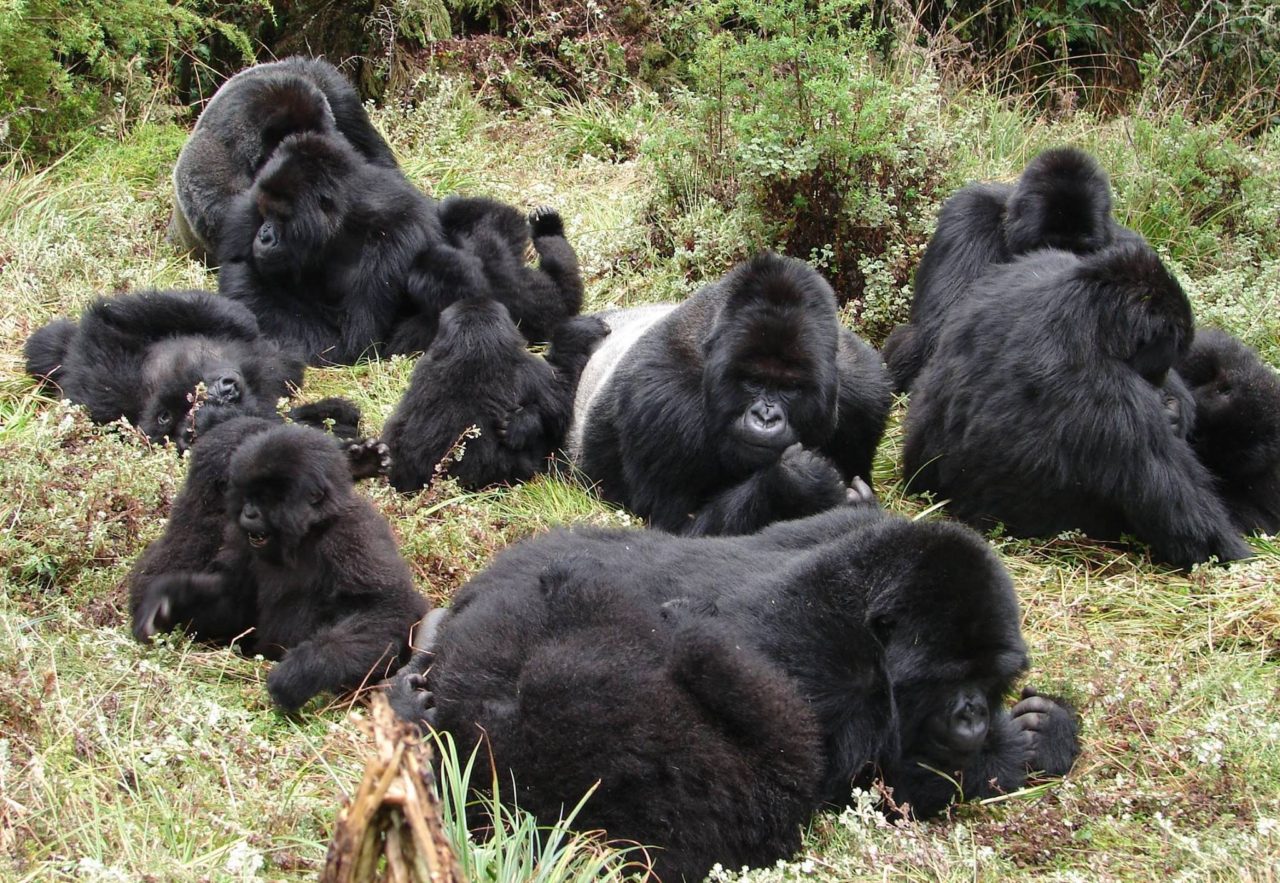
10 Amazing Mountain Gorilla Facts You Didn’t Know
Introduction: Discovering the Incredible World of Mountain Gorillas
Mountain Gorilla Facts You Didn’t Know that among the most fascinating and rare animals on Earth. These gentle giants live deep within the misty forests of Central Africa, where they spend their days feeding, caring for their families, and navigating the challenges of survival in one of the world’s most unique ecosystems.
For many travelers, seeing a mountain gorilla in the wild is the ultimate African wildlife experience. Unlike traditional safaris where visitors observe animals from a vehicle, Gorilla Trekking Uganda allows travelers to enter the rainforest and spend time observing these incredible primates in their natural environment.
Uganda is one of the best destinations in the world for a mountain gorilla experience, with most encounters taking place in Bwindi Impenetrable National Park and Mgahinga Gorilla National Park.
The opportunity to see gorillas is not only an adventure but also a lesson in conservation. Every gorilla trekking experience contributes to protecting these endangered animals and supporting communities living around the forests.
Before planning your Uganda gorilla safari, understanding these amazing facts about mountain gorillas helps you appreciate the incredible animals you are about to encounter.
HERE ARE THE FACTS
Fact 1: Mountain Gorillas Are One of the World’s Most Endangered Great Apes
One of the most remarkable mountain gorilla facts is that these incredible primates are among the world’s rarest and most endangered great apes. Unlike western lowland gorillas, mountain gorillas (Gorilla beringei beringei) are found only in a small region of East and Central Africa, making every individual vital to the survival of the species.
Today, mountain gorillas live in just two isolated populations. One population inhabits the Bwindi Impenetrable National Park in southwestern Uganda, while the other lives within the Virunga Massif, a chain of volcanic mountains that stretches across Mgahinga Gorilla National Park in Uganda, Volcanoes National Park in Rwanda, and Virunga National Park in the Democratic Republic of the Congo. Because their habitat is so limited, they are especially vulnerable to environmental changes and human activities.
For much of the 20th century, mountain gorilla numbers declined dramatically. Deforestation for farming, illegal hunting, habitat fragmentation, civil unrest, and diseases transmitted by humans all contributed to shrinking populations. Although gorillas are rarely targeted for bushmeat, they are often injured or killed by snares intended for other animals, and the destruction of their forest habitat reduces the space and food they need to survive.
Fortunately, mountain gorillas have become one of conservation’s greatest success stories. Thanks to decades of dedicated efforts by wildlife authorities, conservation organizations, researchers, veterinarians, local communities, and responsible tourism operators, the population has steadily increased. Regular monitoring, anti-poaching patrols, veterinary care, habitat protection, and strict tourism regulations have all played an essential role in their recovery.
Uganda has been at the forefront of these conservation efforts. Through the protection of Bwindi Impenetrable National Park and Mgahinga Gorilla National Park, the country safeguards a significant portion of the world’s remaining mountain gorillas. Rangers work every day to monitor gorilla families, remove illegal snares, patrol the forests, and ensure that both wildlife and visitors remain safe.
One of the most effective conservation tools has been responsible gorilla tourism. Every visitor who purchases a gorilla trekking permit contributes directly to protecting these endangered animals. A portion of the permit fees supports:
- Wildlife ranger patrols that protect gorillas from poaching.
- Habitat conservation and forest management.
- Veterinary teams that respond to injured or sick gorillas.
- Scientific research and long-term monitoring programs.
- Community development projects that encourage local people to protect wildlife instead of exploiting it.
This successful partnership between conservation and tourism has transformed mountain gorillas from a species once feared to be heading toward extinction into one that is showing encouraging signs of recovery. However, they are still considered endangered and remain dependent on continuous protection. Climate change, habitat pressure, emerging diseases, and growing human populations around protected areas continue to present challenges that require ongoing conservation efforts.
For travelers, seeing mountain gorillas in the wild is more than an unforgettable wildlife encounter it is an opportunity to become part of one of the world’s most inspiring conservation stories. By choosing Gorilla Trekking Uganda, you are not only experiencing one of Africa’s greatest adventures but also helping ensure that future generations will have the same opportunity to witness these gentle giants in their natural habitat.
Did you know? Every gorilla trekking permit purchased in Uganda directly supports mountain gorilla conservation, protected area management, and community development initiatives, making your safari a meaningful contribution to wildlife preservation.
They survive mainly in protected areas such as:
- Bwindi Impenetrable National Park
- Mgahinga Gorilla National Park
- Volcanoes National Park
- Virunga National Park
For many years, mountain gorillas faced serious threats including:
- Habitat destruction
- Illegal hunting
- Human-wildlife conflict
- Diseases transmitted from humans
However, conservation efforts have helped increase their population numbers, making them one of the greatest conservation success stories in Africa.
Tourism has played a major role in protecting these animals. Revenue from gorilla permits supports:
- Ranger protection
- Forest conservation
- Research programs
- Local communities
Fact 2: Mountain Gorillas Live in Close Family Groups
One of the most beautiful things about mountain gorillas is their strong social relationships.
Unlike many animals that live alone, mountain gorillas live in organized family groups known as troops.
A typical gorilla family may include:
- A dominant silverback
- Adult females
- Young gorillas
- Juveniles
The silverback is usually the leader of the group. He protects the family, decides movement patterns, and keeps peace among members.
Female gorillas play an important role by caring for young gorillas and maintaining social bonds within the group.
These family relationships are one reason why gorillas are often compared to humans. They show emotions, form friendships, and display strong family connections.
During a Gorilla Trekking Uganda experience, visitors often witness these relationships firsthand from mothers caring for babies to young gorillas playing around the forest.
Fact 3: Silverback Gorillas Are Powerful Protectors and Leaders
The silverback gorilla is one of the most recognizable animals in the rainforest.
A silverback is a mature male gorilla that develops a distinctive silver-colored patch of hair across its back as it reaches adulthood.
This silver hair is not just a physical feature; it represents maturity and leadership.
The main responsibilities of a silverback include:
- Protecting the family from threats
- Leading the group to feeding areas
- Making decisions about movement
- Protecting young gorillas
- Maintaining order within the family
Although silverbacks look intimidating because of their size and strength, they are usually calm and peaceful when they do not feel threatened.
During gorilla trekking, visitors often experience a powerful moment when a silverback appears from the vegetation. Seeing this magnificent animal quietly observing its surroundings is one of the unforgettable highlights of visiting Uganda.
Fact 4: Mountain Gorillas Are Highly Intelligent Animals
One of the most fascinating mountain gorilla facts is their remarkable intelligence. Mountain gorillas are among humans’ closest living relatives, sharing approximately 98% of their DNA with humans. This close genetic relationship is reflected in their complex social behavior, problem-solving abilities, emotional intelligence, and the way they interact with one another in the wild.
Unlike many other wildlife species, mountain gorillas display behaviors that closely resemble those of humans. They form strong family bonds, communicate using a variety of sounds and gestures, care deeply for their young, and even show signs of empathy and curiosity. Watching these behaviors during a Gorilla Trekking Uganda experience often leaves visitors amazed by how familiar gorilla interactions seem.
Researchers who have spent decades studying mountain gorillas have discovered that these primates possess advanced cognitive abilities. They can recognize members of their family, remember individuals they have encountered, learn from observation, and adapt to changes in their environment. Young gorillas, in particular, spend much of their time learning by watching and copying the behavior of older members of the group, much like human children do.
Mountain Gorillas Have Excellent Memories
Mountain gorillas rely on their memory to survive in dense rainforest habitats. They can remember the locations of feeding areas, water sources, and safe resting places throughout their home range. Experienced silverbacks often lead their families along familiar routes, ensuring they have access to nutritious vegetation while avoiding potential dangers.
Their memory also helps maintain social relationships. Gorillas recognize members of their own troop and understand their place within the group’s social structure, allowing families to live together peacefully for many years.
They Communicate in Sophisticated Ways
Another sign of gorilla intelligence is their ability to communicate effectively. Mountain gorillas use a combination of vocalizations, facial expressions, body posture, and physical contact to express emotions and share information with other members of their family.
Scientists have identified numerous vocal sounds that gorillas use in different situations. These sounds may indicate contentment, warn of danger, help locate family members, or reassure young gorillas. Gentle grunts often signal peaceful interactions during feeding, while louder calls may alert the group to a potential threat.
Body language is equally important. A silverback may stand upright or beat his chest to display confidence and authority, while mothers use gentle touches to comfort their infants. Playful wrestling, grooming, and eye contact all strengthen the social bonds that keep gorilla families united.
Gorillas Experience Emotions Similar to Humans
One of the most touching facts about mountain gorillas is their ability to express a wide range of emotions. Researchers have observed gorillas showing affection, excitement, curiosity, sadness, fear, and even grief.
Mother gorillas develop incredibly strong bonds with their babies, caring for them continuously during their early years. Young gorillas enjoy playing together, chasing one another through the forest, climbing trees, and practicing the skills they will need as adults. These playful interactions are not only entertaining to watch but are also essential for learning and social development.
Silverbacks also demonstrate emotional intelligence. Although they are powerful enough to defend their families against threats, they often resolve conflicts peacefully through communication rather than aggression. Their calm leadership helps maintain stability within the group.
They Learn by Observation and Experience
Mountain gorillas are excellent learners. Young gorillas carefully observe adults while feeding, building nests, interacting with family members, and moving through the forest. Over time, they imitate these behaviors until they become skilled enough to perform them independently.
This ability to learn from observation highlights the importance of family groups in gorilla society. Every member contributes to teaching younger gorillas how to survive in the rainforest.
Visitors participating in Gorilla Trekking Uganda often witness juvenile gorillas experimenting with climbing trees, copying the actions of adults, or engaging in playful behavior that helps develop their physical strength and coordination.
Why Gorilla Intelligence Makes Trekking So Special
Understanding gorilla intelligence transforms a simple wildlife encounter into a deeply meaningful experience. Instead of seeing just another wild animal, visitors begin to recognize individuals with distinct personalities, strong family relationships, and complex social lives.
As you quietly observe a gorilla family in the forests of Bwindi Impenetrable National Park or Mgahinga Gorilla National Park, you may notice a mother gently grooming her infant, juveniles playing together, or a silverback calmly watching over his family. These moments reveal the extraordinary intelligence and emotional depth that make mountain gorillas one of the most captivating species on Earth.
It is this combination of intelligence, social complexity, and gentle behavior that makes gorilla trekking one of Africa’s most unforgettable wildlife experiences. Every encounter reminds us of the close connection between humans and our primate relatives, while highlighting the importance of protecting them for future generations.
Fact 5: Mountain Gorillas Have a Unique Diet Based on Forest Plants
One of the most interesting mountain gorilla facts is that these powerful animals survive mainly on a plant-based diet.
Despite their large size and impressive strength, mountain gorillas are mostly herbivores. They spend a large part of their day searching for and eating different types of vegetation found in their rainforest environment.
Their diet mainly consists of:
- Leaves
- Shoots
- Bamboo
- Roots
- Wild fruits
- Flowers
- Tree bark
A fully grown mountain gorilla can consume a large amount of vegetation every day because their bodies require enough energy to support their massive size.
Unlike many people imagine, gorillas do not need to hunt other animals for food. Their strength comes from their natural body structure, genetics, and the nutrients they receive from the plants they eat.
During a Gorilla Trekking Uganda experience, visitors often observe gorillas feeding peacefully in the forest. You may see a silverback sitting calmly while pulling leaves from trees, or young gorillas learning feeding habits from older members of the family.
Their feeding behavior also plays an important role in the ecosystem. As gorillas move through the forest and consume different plants, they help distribute seeds and contribute to forest regeneration.
This shows that protecting mountain gorillas is not only about saving one species it is also about protecting the entire rainforest ecosystem.
Fact 6: Baby Mountain Gorillas Are Born Small but Grow Into Powerful Adults
One of the most emotional facts about mountain gorillas is the strong bond between mothers and their babies.
Baby gorillas are born after a pregnancy period of approximately eight to nine months, similar to humans. At birth, they are completely dependent on their mothers for protection, transportation, and survival.
During their early months, baby gorillas:
- Stay close to their mothers
- Hold onto their mother’s fur while moving
- Learn social behaviors from the group
- Develop strength through play
Mother gorillas are extremely protective and spend years caring for their young ones.
Young gorillas learn important survival skills by watching older members of the family. They learn:
- How to find food
- How to communicate
- How to interact socially
- How to move through the forest
During a gorilla safari in Uganda, seeing a mother with her baby is often one of the most unforgettable moments.
Visitors may witness young gorillas playing, climbing trees, or interacting with other members of the family. These moments show the emotional intelligence and family connection that make gorillas so special.
The survival of baby gorillas is extremely important because every new generation contributes to the future of this endangered species.
Fact 7: Mountain Gorillas Communicate Through Sounds, Expressions, and Body Language
Another fascinating mountain gorilla fact is their complex communication system.
Although gorillas cannot speak like humans, they communicate constantly with each other through different sounds, movements, and facial expressions.
Scientists have identified many forms of gorilla communication, including:
- Vocal sounds
- Chest beating
- Posture changes
- Facial expressions
- Touch
Different sounds can represent different emotions or messages.
For example:
- Soft vocalizations may show comfort or connection
- Loud calls may warn others of danger
- Chest beating may demonstrate strength or confidence
Chest beating is one of the most famous gorilla behaviors. Many people think it always means aggression, but gorillas often use it as a form of communication, especially among males.
During Gorilla Trekking Uganda, ranger guides help visitors understand these behaviors and explain what the gorillas are communicating.
A quiet moment watching gorillas interact in the forest reveals how intelligent and socially connected these animals truly are.
Fact 8: Gorilla Conservation in Uganda Helps Protect an Entire Ecosystem
One of the most important mountain gorilla facts is that their survival depends heavily on conservation efforts.
Mountain gorillas are classified as endangered, meaning they require continuous protection to survive.
Uganda has become one of the leading countries in mountain gorilla conservation through the protection of areas such as:
- Bwindi Impenetrable National Park
- Mgahinga Gorilla National Park
Conservation programs focus on:
Protecting Gorilla Habitats
The rainforest is the home of mountain gorillas. Protecting forests ensures gorillas have enough space, food, and safety.
Ranger Protection
Rangers play a critical role in conservation by:
- Monitoring gorilla families
- Protecting forests
- Preventing illegal activities
- Supporting research
Many rangers spend their lives protecting wildlife in challenging environments.
Supporting Local Communities
Successful conservation requires cooperation with people living near the forests.
Tourism creates benefits through:
- Employment opportunities
- Community projects
- Local businesses
- Conservation awareness
When travelers visit Uganda for gorilla trekking, they contribute directly to protecting these incredible animals.
The Connection Between Gorilla Tourism and Conservation
Many travelers wonder:
“How does my gorilla safari help protect gorillas?”
The answer is through responsible tourism.
Gorilla trekking fees support conservation programs that help maintain protected forests and fund wildlife protection.
Tourism also gives local communities a reason to support conservation because healthy forests and protected gorillas create long-term economic opportunities.
This relationship between tourism and conservation has helped mountain gorilla populations recover from the challenges they faced in previous decades.
A gorilla safari is therefore not only a personal adventure it is also a contribution toward protecting one of the world’s rarest animals.
Fact 9: Every Mountain Gorilla Has a Unique Personality
One of the most surprising mountain gorilla facts is that no two gorillas are exactly alike. Just like humans, every mountain gorilla has its own personality, temperament, and way of interacting with others. Some gorillas are naturally playful and curious, while others are calm, reserved, or protective. These individual personalities make every gorilla trekking experience unique because no two encounters are ever the same.
Researchers and park rangers who monitor gorilla families every day can often identify individual gorillas not only by their physical features but also by their behavior. Some young gorillas are known for constantly playing and climbing trees, while others prefer staying close to their mothers. Adult females develop different relationships within the family, and each silverback leads in his own distinctive way.
One of the most fascinating personalities is the dominant silverback. Although often portrayed as fierce and aggressive, silverbacks are usually patient and protective leaders. They spend much of their day watching over the group, settling disputes, and ensuring every member of the family is safe. A silverback will only become defensive if he believes his family is under threat.
Juvenile gorillas, on the other hand, are energetic and adventurous. During a Gorilla Trekking Uganda experience, visitors often enjoy watching young gorillas tumble through the forest, chase one another, swing from vines, or curiously observe human visitors from a safe distance. Their playful behavior often reminds people of young children enjoying a day outdoors.
Female gorillas are equally fascinating. They are caring mothers who nurture and protect their babies for several years while teaching them essential survival skills. Their gentle interactions highlight the strong family bonds that define mountain gorilla society.
These individual personalities make every gorilla family different. A visit to one family in Bwindi Impenetrable National Park may be completely different from an encounter with another family in Mgahinga Gorilla National Park. This unpredictability is one of the reasons why experienced travelers often describe gorilla trekking as one of the most rewarding wildlife experiences in Africa.
Understanding that mountain gorillas have unique personalities helps visitors connect with them on a deeper level. Instead of simply observing wildlife, travelers witness social interactions, emotions, and behaviors that reflect the intelligence and complexity of one of humanity’s closest relatives.
Fact 10: Seeing Mountain Gorillas in the Wild Is a Once-in-a-Lifetime Experience
Among all the incredible facts about mountain gorillas, perhaps the most inspiring is that meeting them in their natural habitat is an experience unlike any other on Earth.
Unlike a visit to a zoo or wildlife sanctuary, Gorilla Trekking Uganda allows you to enter the gorillas’ own world. Guided by experienced Uganda Wildlife Authority rangers, you hike through ancient rainforests filled with towering trees, colorful birds, butterflies, and unique plant life before finally coming face-to-face with a mountain gorilla family.
The first sight of a silverback quietly resting among the vegetation or a playful baby gorilla climbing over its siblings is a moment many travelers describe as emotional and unforgettable. There is no barrier separating you from the gorillas—only a safe viewing distance that allows both visitors and gorillas to remain comfortable. Watching these magnificent animals eat, groom one another, play, and communicate offers a rare glimpse into a world that few people are fortunate enough to experience.
Every trek is different because mountain gorillas are wild animals that move freely through the forest. Some hikes may take less than an hour, while others may require several hours of trekking before the gorilla family is found. This sense of adventure makes every encounter feel even more rewarding.
Beyond the excitement, gorilla trekking carries a deeper meaning. Every permit purchased contributes directly to conservation efforts, helping protect endangered mountain gorillas, preserve their rainforest habitat, and support local communities. By visiting Uganda, travelers become active participants in one of Africa’s greatest wildlife conservation success stories.
Many visitors choose to extend their journey by exploring other destinations such as Queen Elizabeth National Park, Kibale National Park, or Lake Bunyonyi, creating a complete Uganda safari filled with unforgettable wildlife, landscapes, and cultural experiences.
Whether you are a wildlife enthusiast, photographer, conservation supporter, or simply someone seeking an extraordinary adventure, seeing mountain gorillas in the wild is an experience that leaves a lasting impression. It changes the way people think about wildlife, conservation, and our connection with nature.
If Uganda is on your travel bucket list, there is no better time to begin planning your gorilla safari. The memories you create while standing quietly in the rainforest, watching a gorilla family go about its daily life, will stay with you forever.
Why Learning Mountain Gorilla Facts Makes Your Trekking Experience Better
Understanding gorilla behavior before your visit makes the experience much more meaningful.
Instead of simply seeing a large animal in the forest, you begin to recognize:
- Family relationships
- Communication patterns
- Leadership behavior
- Conservation importance
A gorilla encounter becomes more than a sightseeing activity it becomes an opportunity to connect with one of nature’s most remarkable creatures.
Plan Your Mountain Gorilla Adventure in Uganda
After learning these amazing mountain gorilla facts, the next step is experiencing these incredible animals yourself.
Uganda offers some of the most authentic gorilla encounters in Africa, allowing travelers to explore ancient rainforests and spend unforgettable moments with mountain gorillas.