







Overview
Bugoma Forest Reserve – Travel Overview
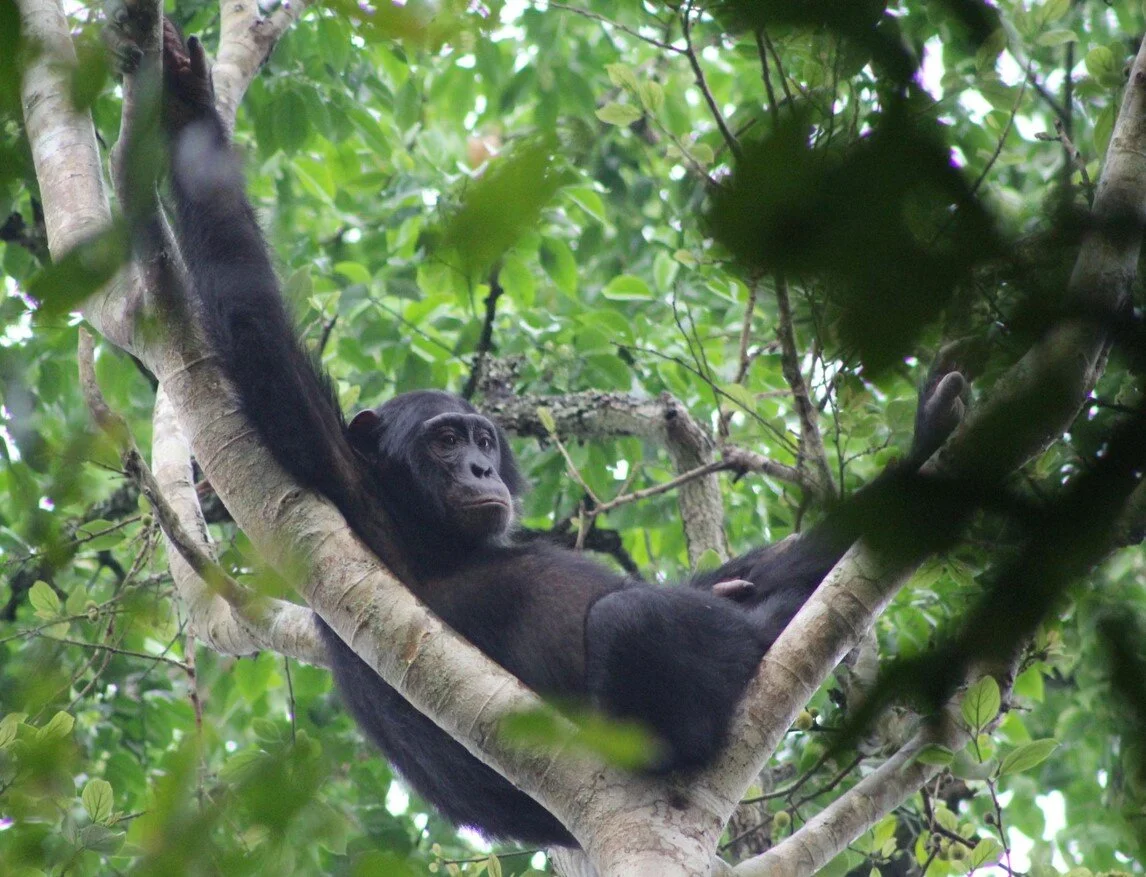
Bugoma Forest Reserve is one of western Uganda’s important tropical forest landscapes and a significant biodiversity site within the Albertine Rift. Located in the Bunyoro region, the forest provides habitat for chimpanzees, mangabeys, elephants, antelopes, birds, butterflies and numerous indigenous tree species.
For travelers, Bugoma offers a very different experience from Uganda’s open savannah parks. Instead of spending the day searching for wildlife from a safari vehicle, visitors enter a natural forest environment where primates, birds and other wildlife live within the vegetation and canopy.
Bugoma has also become increasingly important for tourism in 2026. Uganda Wildlife Authority took over its protection and management in May 2026, and UWA’s August 2026 update confirms that visitors can currently participate in chimpanzee tracking, chimpanzee habituation, mangabey tracking and guided nature walks.
This makes Bugoma particularly interesting for travelers looking for a less conventional primate and forest experience in western Uganda.
Where Is Bugoma Forest Reserve?
Bugoma Forest Reserve is located in western Uganda, in the Bunyoro region, around the Kikuube and Hoima area.
The forest lies within the broader Albertine Rift landscape and forms part of an important network of natural habitats in western Uganda.
Its ecological position is particularly significant because the forest contributes to connectivity between other protected and forest areas in the region.
The NFA’s Central Forest Reserve catalogue identifies Bugoma as a biodiversity corridor and notes its ecological connection with areas including Kabwoya Wildlife Reserve, Murchison Falls National Park, Budongo, Rwengeye, Matiri, Itwara and Semliki National Park.
That makes Bugoma much more than an isolated patch of forest.
What Makes Bugoma Forest Reserve Special?
Bugoma’s greatest attraction is its combination of forest biodiversity, primates and ecological importance.
The forest contains natural habitats supporting chimpanzees, mangabeys, elephants, antelopes, birds and butterflies. UWA specifically describes Bugoma as one of Uganda’s ecologically important tropical forests and highlights its role in watershed protection, climate regulation, carbon sequestration and ecological connectivity.
For travelers, however, the most immediately interesting feature is the opportunity to explore a large natural forest while searching for primates.
Bugoma also has an advantage that is becoming increasingly important for Uganda’s tourism industry: it gives visitors another option for experiencing chimpanzees and forest wildlife outside the country’s better-known destinations.
Chimpanzee Tracking in Bugoma
Chimpanzee tracking is currently offered in Bugoma Forest Reserve.
This is one of the most important updates for your website because older online information may not reflect the current tourism situation.
UWA’s August 2026 update explicitly states that activities currently offered in Bugoma include chimpanzee tracking.
The experience involves entering the forest with guides and searching for chimpanzees in their natural environment.
Unlike a game drive, there is no predetermined route guaranteeing where the animals will be found.
Chimpanzees move through the forest according to food availability, social behavior and other ecological factors.
Visitors therefore need to be prepared for a genuine tracking experience rather than expecting the animals to appear at a fixed location.
Chimpanzee Habituation Experience
Bugoma currently offers another particularly interesting experience: chimpanzee habituation.
UWA’s August 2026 update specifically lists chimpanzee habituation among the activities taking place in the reserve.
Habituation is different from ordinary chimpanzee tracking.
The objective is to allow chimpanzees that are not yet fully accustomed to human presence to gradually become comfortable around researchers and observers.
This can provide a longer and more observational experience, although the exact current visitor arrangements, duration and fees should be confirmed with UWA before publishing specific prices or schedules.
For your website, I would therefore say Bugoma offers chimpanzee habituation, but avoid inventing a particular daily schedule or fee unless we verify it from the current UWA tariff or booking information.
Mangabey Tracking in Bugoma
One of the more distinctive experiences currently offered in Bugoma is mangabey tracking.
UWA’s August 2026 update specifically lists mangabey tracking among the tourism activities available in the forest.
This gives Bugoma an interesting identity beyond chimpanzees.
Mangabeys are forest-dwelling primates, and tracking them requires visitors to move through the forest while looking and listening for signs of the animals.
For travelers interested in Uganda’s primate diversity, this can make Bugoma particularly appealing.
Guided Nature Walks
Guided nature walks are another activity currently offered in Bugoma.
UWA confirms that guided nature walks form part of the tourism activities being conducted in the reserve.
These walks allow visitors to experience the forest beyond a specific search for chimpanzees or mangabeys.
A guided walk can focus on the broader ecosystem, including trees, birds, insects, animal signs and the relationship between the forest and surrounding communities.
For visitors who don’t necessarily want a dedicated primate-tracking experience, this provides another way to explore Bugoma.
Wildlife in Bugoma Forest
Bugoma supports a variety of wildlife.
UWA identifies chimpanzees, elephants, mangabeys and numerous species of birds, butterflies and indigenous trees among the forest’s important biodiversity.
The NFA Central Forest Reserve catalogue also identifies chimpanzees, elephants, antelopes, birds and butterflies as prized species in Bugoma.
However, it is important not to present Bugoma as a traditional savannah game-viewing destination.
Large mammals such as elephants may occur in the broader forest ecosystem, but visitors coming for chimpanzee tracking should not expect the kind of predictable large-mammal sightings associated with Murchison Falls or Queen Elizabeth National Park.
The forest experience is primarily about biodiversity and primates.
Birds and Butterflies
Bugoma’s biodiversity extends beyond mammals.
UWA specifically highlights the forest’s birds and butterflies as part of its ecological importance.
The dense forest environment provides habitat for species that may be difficult to encounter in open savannah.
Birding therefore offers an additional reason to spend time in the forest.
Visitors interested in bird photography should be prepared for forest conditions where birds may remain high in the canopy or hidden among vegetation.
A guide familiar with the forest can help interpret calls and locate species.
Indigenous Trees and Forest Vegetation
Bugoma is also important for its indigenous forest vegetation.
The NFA catalogue notes that the reserve has high potential for valuable indigenous timber species, including Khaya anthotheca, Milicia excelsa and Anigeria altissima.
For visitors, this means the forest itself becomes part of the attraction.
A nature walk isn’t simply about finding animals.
It can also introduce travelers to the trees, ecological relationships and forest structure that support the wildlife they came to see.
Bugoma and the Albertine Rift
Bugoma’s location within the Albertine Rift is one of its most important ecological characteristics.
The Albertine Rift is one of Africa’s major biodiversity regions, containing numerous species and ecosystems of high conservation value.
Bugoma contributes to this landscape by maintaining forest habitat and helping connect different natural areas.
The NFA catalogue describes the forest as a biodiversity corridor, connecting it with several surrounding protected and forest areas.
This connectivity is particularly important for wildlife populations that need to move between habitats.
Bugoma as a Wildlife Corridor
The forest’s ecological importance goes beyond the reserve’s boundaries.
According to NFA, Bugoma contributes to a corridor connecting Kabwoya Wildlife Reserve with Murchison Falls National Park, Budongo and other forest and protected areas toward Semliki.
This makes the forest significant for maintaining landscape-level ecological connectivity.
For a traveler, that may not be immediately visible.
But when walking through the forest, you are experiencing part of a much larger network of habitats that supports Uganda’s wildlife.
Bugoma and Lake Albert
Bugoma also plays an important role in water and watershed protection.
NFA notes that the forest protects waterways including the Nguse and Rutowa rivers, which eventually feed into Lake Albert.
This adds another layer to the forest’s importance.
Bugoma is therefore not simply a habitat for wildlife.
Its vegetation helps regulate water systems that are important to surrounding communities and ecosystems.
Bugoma and Murchison Falls National Park
Bugoma can potentially complement a safari to Murchison Falls National Park.
The two destinations offer different wildlife experiences.
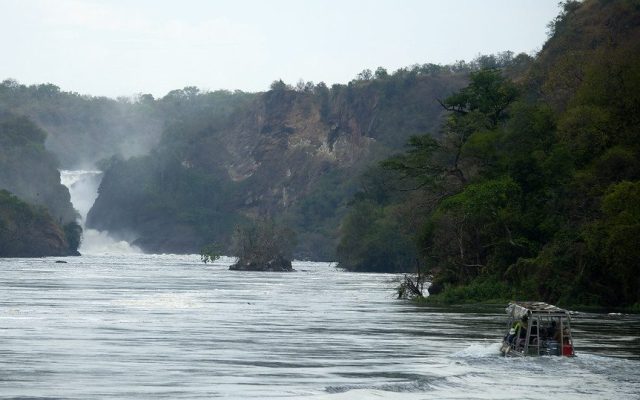
Murchison Falls is famous for open savannah, elephants, giraffes, buffaloes, lions and the Nile River.
Bugoma is primarily a forest destination with chimpanzees, mangabeys, birds and forest biodiversity.
For travelers interested in combining classic safari wildlife with primate experiences, the two can therefore provide useful contrast.
The NFA catalogue specifically identifies Bugoma as part of the ecological corridor connecting with Murchison Falls and other surrounding protected areas.
Bugoma and Budongo Forest
Bugoma is also closely related geographically and ecologically to Budongo Forest.
Both are important forests within western Uganda’s Albertine Rift landscape.
Budongo is considerably more established as a tourism destination, particularly around Kaniyo-Pabidi and chimpanzee tracking.
Bugoma is an emerging tourism destination whose visitor activities are currently expanding under UWA management.
That means we should not describe Bugoma as simply another Budongo.
Instead, it is better presented as an emerging forest and primate destination with growing tourism potential.
Bugoma and Kabwoya Wildlife Reserve
Bugoma also has an ecological connection with Kabwoya Wildlife Reserve.
The NFA catalogue identifies Bugoma as part of a biodiversity corridor connecting Kabwoya with other protected areas.
This creates opportunities for travelers interested in exploring western Uganda beyond the country’s most famous national parks.
A longer itinerary could potentially combine forest experiences with wildlife viewing around the Lake Albert landscape.
However, exact routing and tourism arrangements should be confirmed when designing the itinerary.
How to Get to Bugoma Forest Reserve
Bugoma is located in western Uganda’s Bunyoro region.
Travelers generally approach the forest by road from the direction of Hoima and Kikuube.
Because Bugoma’s tourism infrastructure is still developing, travelers should arrange their visit with the responsible authorities or a tour operator rather than assuming that the reserve operates like a major national park with numerous public entry points and facilities.
This is particularly important following UWA’s takeover in May 2026.
Accommodation Near Bugoma
This is another area where I would not overpromise.
Bugoma is currently developing as a tourism destination, and UWA’s recent update focuses primarily on establishing management, conservation enforcement and tourism activities.
UWA has reported that its operational headquarters at Bugoma has been connected to piped water and solar power, but this does not mean the reserve currently has a mature network of tourist lodges.
For your website, I would therefore recommend describing accommodation as being available in the broader Hoima/Kikuube area, unless we separately verify a specific lodge or campsite currently operating for tourists.
That is much safer than listing accommodation based on outdated or unverified information.
Best Time to Visit Bugoma
Bugoma can potentially be visited throughout the year, but forest conditions vary with rainfall.
During wetter periods, trails can become muddy and more difficult to walk.
During drier conditions, walking may be more comfortable, although wildlife movements and forest conditions are naturally variable.
For chimpanzee tracking, the exact experience depends on where the animals are located on the day.
Rather than promising that one particular month guarantees better sightings, travelers should consider the wider itinerary, weather conditions and current guidance from the reserve’s management.
How Many Days Do You Need in Bugoma?
Bugoma can potentially work as a one- or two-night forest experience, depending on the activities selected.
A traveler interested in ordinary chimpanzee tracking may not need a long stay.
Someone interested in chimpanzee habituation, mangabey tracking, nature walks and birding could benefit from more time.
Because the tourism system is still developing, itinerary arrangements should be confirmed before travel.
Is Bugoma Good for Primates?
Yes.
This is arguably one of the strongest reasons to visit.
The forest currently offers:
Chimpanzee tracking
Chimpanzee habituation
Mangabey tracking
and guided nature walks.
That gives Bugoma a particularly interesting place within Uganda’s growing primate-tourism network.
Is Bugoma Good for First-Time Safari Travelers?
It depends on what the traveler expects.
If someone wants a classic Uganda safari featuring elephants, giraffes, lions and buffaloes, Bugoma should not be their primary destination.
But if they want to explore Uganda’s forest biodiversity and primates, Bugoma can be an excellent addition.
It becomes especially attractive when combined with a broader western Uganda itinerary.
Conservation and the New Management Era
Bugoma’s conservation story is particularly important right now.
On 9 May 2026, UWA officially took over responsibility for protecting and managing Bugoma Central Forest Reserve. UWA stated that the move was intended to strengthen protection, address degradation and improve conservation of the ecosystem.
Just a few months later, UWA reported major enforcement operations against illegal activities.
Between May and July 2026, UWA reported 114 operations, 336 arrests, 3,721 bags of illegally produced charcoal recovered and 697 pieces of illegally harvested timber seized.
That tells us something important about the current situation.
Bugoma is not simply an established tourism destination.
It is a forest undergoing active conservation and management transition.
Tourism Development in Bugoma
Despite those conservation challenges, tourism is already taking place.
UWA reported 87 visitors during June and July 2026, with 31 visitors in June and 56 in July.
The currently reported activities are:
- Chimpanzee tracking
- Chimpanzee habituation
- Mangabey tracking
- Guided nature walks
This is a very useful fact for your website because it shows that Bugoma isn’t merely a theoretical tourism destination anymore.
There is already an active visitor experience, although the destination is still developing.
Is Bugoma Ready for Mass Tourism?
I would say not yet.
UWA itself describes the current phase as one of strengthening protection, restoring degraded areas, demarcating boundaries, working with communities and supporting the process toward stronger permanent legal protection.
So Bugoma should currently be marketed as an emerging forest and primate destination, not as a fully developed national-park-style tourism hub.
That actually gives the destination an interesting appeal for travelers who want to explore places that are less established.
But expectations need to be managed properly.
Why Visit Bugoma Forest Reserve?
Bugoma offers travelers the opportunity to explore one of western Uganda’s important forest ecosystems at a time when its tourism potential is beginning to develop.
The attraction is not simply one animal.
It is the combination of:
Chimpanzee tracking
Chimpanzee habituation
Mangabey tracking
Guided forest walks
Birdlife
Forest biodiversity
and the wider Albertine Rift landscape.
For travelers who have already visited Uganda’s major safari parks, Bugoma can introduce a different side of the country.
And for primate enthusiasts, it provides another opportunity to experience Uganda’s forest wildlife beyond the better-known destinations.
Frequently Asked Questions
What Is Bugoma Forest Reserve Famous For?
Bugoma is known for its tropical forest biodiversity and wildlife, particularly chimpanzees, mangabeys, elephants, antelopes, birds and butterflies.
Can I Track Chimpanzees in Bugoma?
Yes. UWA currently lists chimpanzee tracking among the tourism activities being offered in Bugoma.
Can I Do Chimpanzee Habituation in Bugoma?
Yes. UWA’s August 2026 update confirms that chimpanzee habituation is currently offered.
Can I Track Mangabeys?
Yes. Mangabey tracking is currently listed among Bugoma’s tourism activities.
Is Bugoma Managed by NFA or UWA?
This has recently changed. UWA officially took over protection and management of Bugoma Central Forest Reserve on 9 May 2026.
Is Bugoma a National Park?
No. It remains referred to as Bugoma Central Forest Reserve. UWA’s current temporary management measures are being implemented while a process toward stronger and permanent legal protection is pursued.
Can Bugoma Be Combined With Murchison Falls?
Yes, potentially. The two provide contrasting forest and savannah experiences, although the exact itinerary should be planned around road conditions and current tourism arrangements.
Is Bugoma Suitable for Bird Watching?
Yes. Birds are among the biodiversity values specifically identified by UWA and NFA.