






Overview
Uganda Equator Crossing – Travel Overview
The Uganda Equator Crossing is one of the country’s most popular roadside attractions and a memorable stop for travelers exploring central and western Uganda. Standing with one foot in the Northern Hemisphere and the other in the Southern Hemisphere makes for an instantly recognizable travel experience, while the surrounding craft shops, restaurants, demonstrations and photography opportunities turn a short stop into a worthwhile part of a Uganda itinerary.
Uganda is crossed by the Equator, giving travelers several opportunities to experience this geographical landmark.
The most famous and frequently visited crossing is at Kayabwe, along the Kampala–Masaka road. Its location makes it particularly convenient for travelers heading toward destinations such as Lake Mburo National Park, Bwindi Impenetrable National Park and Queen Elizabeth National Park.
For many visitors, the Equator Crossing is not a destination where they spend an entire day. Instead, it works best as a short cultural, geographical and photographic stop during a longer Uganda journey.
What Is the Equator?
The Equator is an imaginary line around Earth that divides the planet into the Northern Hemisphere and Southern Hemisphere.
It is located at approximately 0° latitude.
Uganda is one of the countries through which the Equator passes.
This gives travelers the unusual opportunity to physically stand at the geographical boundary between the two hemispheres.
While the Equator itself is an imaginary line, the marked crossing points in Uganda turn this geographical concept into a tangible travel experience.
Where Is the Uganda Equator Crossing?
The best-known Uganda Equator Crossing is located at Kayabwe, in Mpigi District, along the main road between Kampala and western Uganda.
Its position makes it a convenient stop for travelers heading toward the southwestern safari circuit.
Other marked Equator locations exist in Uganda, including areas around Queen Elizabeth National Park.
However, Kayabwe is the most commonly visited crossing for travelers coming from Kampala.
The Kayabwe Equator Crossing
Kayabwe has developed into a tourism stop designed around the Equator experience.
Visitors can stop, take photographs at the Equator monument and explore nearby attractions.
The location includes souvenir shops, restaurants and opportunities to learn about the Equator and local culture.
For travelers on a long road journey, Kayabwe also provides a useful opportunity to stretch their legs, have refreshments and break up the drive.
Standing in Two Hemispheres
The classic Equator photograph is simple:
One foot in the Northern Hemisphere.
One foot in the Southern Hemisphere.
The marked Equator line makes the photograph immediately recognizable.
Families, couples and groups often take turns posing across the line.
It may only take a few minutes, but it becomes one of those photographs that travelers remember long after returning home.
The Equator Monument
At the main crossing, visitors can see the Equator marker or monument identifying the geographical location.
The monument provides the central photographic point for most visitors.
Guides and local operators may also explain the geographical significance of the Equator and demonstrate some of the phenomena commonly associated with it.
The stop is therefore both recreational and educational.
Equator Water Demonstrations
One of the most popular experiences at Uganda’s Equator Crossing is the demonstration involving water draining through a container.
Visitors are shown demonstrations intended to illustrate differences in water movement on opposite sides of the Equator.
These demonstrations are entertaining and have become part of the tourist experience.
However, it is important to distinguish the tourist demonstration from the underlying physics.
The Coriolis effect does not suddenly reverse direction immediately on crossing the Equator in the way these small demonstrations often suggest. The effect is extremely weak at the Equator, and the outcome of water draining from a small container is dominated by the container’s shape, initial water movement and other local conditions.
The demonstration is therefore best enjoyed as a tourism presentation rather than treated as a scientific experiment proving hemispheric rotation.
Learning About the Equator
A visit can provide a simple introduction to Earth’s geography.
Travelers can learn about:
Latitude
The Northern Hemisphere
The Southern Hemisphere
Earth’s rotation
Climate around the Equator
Uganda’s geographical position
For children, this can be an especially engaging way to connect classroom geography with a real-world experience.
Equator Crossing for Families
The Equator is an excellent stop for families.
Children can stand across the line, take photographs and participate in demonstrations.
Because the experience does not require strenuous walking, it can easily be included in a busy safari itinerary.
The educational aspect also gives parents an opportunity to turn the stop into a geography lesson.
Equator Crossing for Couples
Couples often enjoy the Equator as a quick and memorable travel stop.
The classic photograph of two people standing on opposite sides of the Equator makes an easy souvenir of a Uganda trip.
It can also be a fun stop during a road trip toward southwestern Uganda.
Equator Crossing for Photographers
Photography is one of the biggest attractions.
Popular photographs include:
Standing across the Equator
Posing beside the Equator monument
Group photographs
Family photographs
Couple photographs
Souvenir and craft scenes
The location provides a simple visual record of your journey through Uganda.
A normal smartphone camera is more than sufficient for most travelers.
Souvenirs at the Equator
The Kayabwe crossing has developed into a significant souvenir-shopping stop.
Visitors can find locally produced crafts, artwork, clothing, carvings, jewelry and other Uganda-themed products.
Purchasing locally made products can support artisans and small businesses.
Travelers should compare prices and ask about locally produced items rather than assuming everything sold at a tourism stop is locally made.
Restaurants and Refreshments
The Equator area also provides places where travelers can stop for food and refreshments.
This is particularly useful because many visitors encounter the crossing during a longer road journey.
A short meal or coffee break can make the stop more comfortable.
Travelers should consider the Equator crossing as part of the journey rather than necessarily planning a separate trip solely to visit the monument.
How Long Should You Spend at the Equator?
For most travelers, 30 minutes to 1 hour is enough.
This allows time to:
- Take photographs
- Visit the monument
- Watch a demonstration
- Browse souvenirs
- Have refreshments
Travelers interested in shopping, eating or spending more time learning about the site may stay longer.
There is generally no need to dedicate an entire day to the Equator Crossing.
Best Time to Visit
The Equator Crossing can be visited throughout the year.
Because it is primarily a roadside attraction, the experience is less dependent on seasonal wildlife conditions than a national park.
Morning and afternoon visits are both possible.
If the crossing is included on a safari route, the best time is usually determined by your wider itinerary and driving schedule.
Uganda Equator Crossing on a Safari
The Equator Crossing is particularly useful as part of a western or southwestern Uganda safari.
Travelers heading from Kampala toward Lake Mburo National Park often pass through or near Kayabwe.
It can therefore serve as an early highlight of the journey.
The same applies to longer journeys toward Bwindi and Queen Elizabeth National Park, depending on the chosen route.
Equator Crossing and Lake Mburo National Park
Lake Mburo National Park is one of the most natural destinations to combine with the Equator Crossing.
A traveler can leave Kampala, stop at Kayabwe, continue toward Lake Mburo and then spend the rest of the day exploring the park.
This creates a nice transition:
Kampala → Equator → Lake Mburo → western Uganda.
Because Lake Mburo is relatively close to Kampala compared with many other national parks, the Equator can be easily incorporated into short safari itineraries.
Equator Crossing and Bwindi
Travelers heading toward Bwindi Impenetrable National Park may also include the Equator as a stop along the journey.
The crossing provides a convenient break during the long drive toward southwestern Uganda.
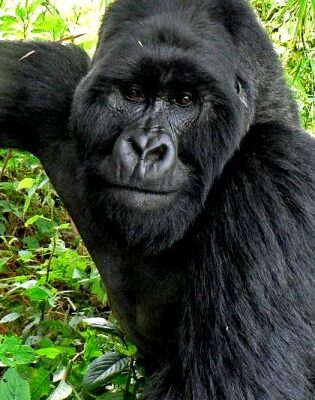
For travelers doing gorilla trekking, it can be a particularly memorable early stop before reaching the forested mountains of Bwindi.
Equator Crossing and Queen Elizabeth National Park
The Equator can also fit into itineraries heading toward Queen Elizabeth National Park.
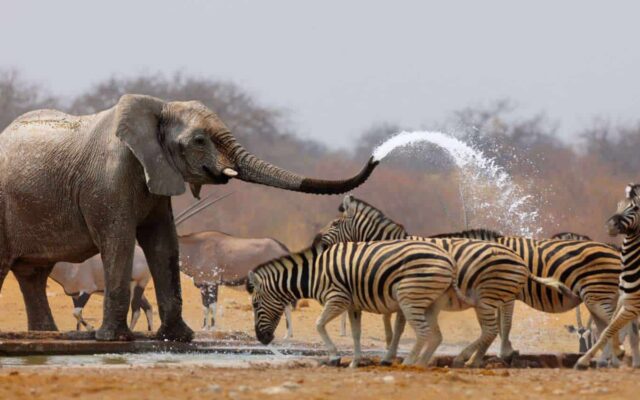
Travelers can combine the geographical experience with a safari focused on lions, elephants, buffaloes, hippos and other wildlife.
The contrast between the simple Equator stop and the expansive savannah environment of Queen Elizabeth can make the journey more varied.
Equator Crossing and Kibale National Park
Travelers heading toward Kibale National Park may also encounter Equator-related stops depending on their route.
Kibale is known for its chimpanzee trekking and primate experiences.
Combining the Equator with Kibale therefore adds a geographical and cultural element to a wildlife-focused journey.
Equator Crossing Near Queen Elizabeth
There are Equator-related locations within or near the Queen Elizabeth region as well.
This can be particularly interesting for travelers who want to experience the Equator without making a separate stop at Kayabwe.
However, the exact location and visitor facilities differ between sites.
Travelers should confirm the current accessibility and facilities of a particular crossing when planning their route.
Is the Equator Crossing Worth Visiting?
Yes, particularly when it is already on your route.
The Equator Crossing is not an attraction that requires several hours of travel solely for the experience.
Its value comes from being an easy, memorable stop during a Uganda road trip.
The combination of geography, photography, demonstrations, souvenirs and refreshments makes it worthwhile for many visitors.
For first-time travelers to Uganda, standing at the Equator is also a simple way to mark the beginning of a journey into the country’s western and southwestern regions.
Is It a Tourist Trap?
The Equator Crossing is undeniably commercialized.
There are souvenir sellers, restaurants, guides and demonstrations designed for tourists.
But that does not necessarily make it a poor experience.
If you understand what it is—a short, entertaining geographical and cultural stop rather than a major natural attraction—it can be enjoyable.
The key is to allow an appropriate amount of time and avoid expecting a full-day destination.
What Should You Buy?
Travelers interested in souvenirs can look for:
Ugandan crafts
Wood carvings
Handmade jewelry
Local artwork
Textiles
Uganda-themed gifts
If supporting local communities is important to you, ask whether the item is locally produced and consider purchasing directly from genuine artisans or established local businesses.
Responsible Tourism at the Equator
Even at a busy tourist stop, responsible travel matters.
Visitors should:
Avoid littering.
Respect local sellers and guides.
Ask before photographing people.
Support legitimate local businesses.
Avoid purchasing illegal wildlife products.
Treat demonstrations as tourism activities rather than scientific experiments.
Respect the surrounding community.
Small choices can help ensure tourism benefits the people living around the destination.
What Should You Bring?
You do not need specialized equipment.
Useful items include:
- Camera or smartphone
- Drinking water
- Sunscreen
- Hat
- Comfortable clothing
- Small amount of local currency
- Reusable shopping bag for souvenirs
If the Equator is part of a safari, keep your camera easily accessible because the stop is often relatively short.
Is the Equator Crossing Suitable for Travelers With Limited Time?
Yes.
This is actually one of its greatest strengths.
Travelers with only a short Uganda itinerary can still experience the Equator without adding an entire day to their schedule.
If your route already passes through Kayabwe, a short stop can provide a memorable geographical experience.
Uganda Equator Crossing as a First Safari Stop
For travelers beginning their first Uganda safari, the Equator can be an exciting introduction.
It provides a transition from Uganda’s urban center into the countryside.
After leaving Kampala, travelers begin seeing more rural landscapes before eventually reaching the national parks.
The Equator stop becomes a symbolic point where the road trip begins to feel like a real adventure.
Frequently Asked Questions
Where Is the Main Uganda Equator Crossing?
The most famous and frequently visited crossing is at Kayabwe in Mpigi District along the Kampala–Masaka road.
What Can I Do at the Equator?
You can take photographs, visit the Equator monument, watch demonstrations, buy souvenirs and have refreshments.
How Long Should I Stay?
Around 30 minutes to one hour is enough for most visitors.
Can I Visit the Equator on the Way to a Safari?
Yes. It is particularly convenient when traveling toward destinations in western and southwestern Uganda.
Is the Equator Crossing Worth Visiting?
Yes, especially if it is already on your route. It is a fun geographical and photographic stop.
Can Children Enjoy the Equator?
Yes. The experience is family-friendly and can provide a simple geography lesson.
Can I Buy Souvenirs There?
Yes. The main tourism areas around Kayabwe have shops selling a variety of crafts and Uganda-themed souvenirs.
Are the Water Demonstrations Scientifically Accurate?
They should be treated as tourist demonstrations rather than definitive demonstrations of the Coriolis effect.
Can I Visit the Equator From Kampala?
Yes. Kayabwe can be visited as a day excursion, although it is particularly convenient as part of a journey toward western or southwestern Uganda.
Can I Combine the Equator With Lake Mburo?
Yes. The two destinations fit naturally into the same western Uganda itinerary.