Overview
Aruu Falls – Travel Overview
Aruu Falls is a spectacular waterfall destination in northern Uganda, located in the Acholi sub-region of Pader District. The falls are formed where water moves through a series of rocky formations, creating several cascading streams surrounded by vegetation and rugged terrain.
Unlike Uganda’s famous Murchison Falls or Sipi Falls, Aruu remains a relatively lesser-known destination. That gives it a different character: the experience is more about discovering a natural attraction away from the country’s busiest tourism circuits.
The falls are located along the Gulu–Kitgum highway, making them particularly suitable for travelers exploring northern Uganda. From Gulu, the site is roughly 47 kilometres away, while Kitgum is about 57 kilometres from the falls.

Where Is Aruu Falls?
Aruu Falls is located in Lupaya village, Angagura Sub-county, Pader District, in northern Uganda.
The attraction lies just off the Gulu–Kitgum highway, making it relatively accessible for travelers moving through the Acholi sub-region.
Its location also makes Aruu Falls a potential stop on longer northern Uganda journeys toward destinations such as Kidepo Valley National Park.
The Landscape Around Aruu Falls
The scenery around Aruu Falls is characteristic of northern Uganda.
The journey toward the falls passes through countryside containing:
Farmland
Grasslands
Wooded areas
Traditional homesteads
Small villages
The landscape changes considerably between rainy and dry periods.
During wetter months, vegetation becomes greener and the water flowing through the falls can become more impressive.
During drier periods, the surrounding landscape takes on the warmer tones associated with northern Uganda.
The Waterfalls
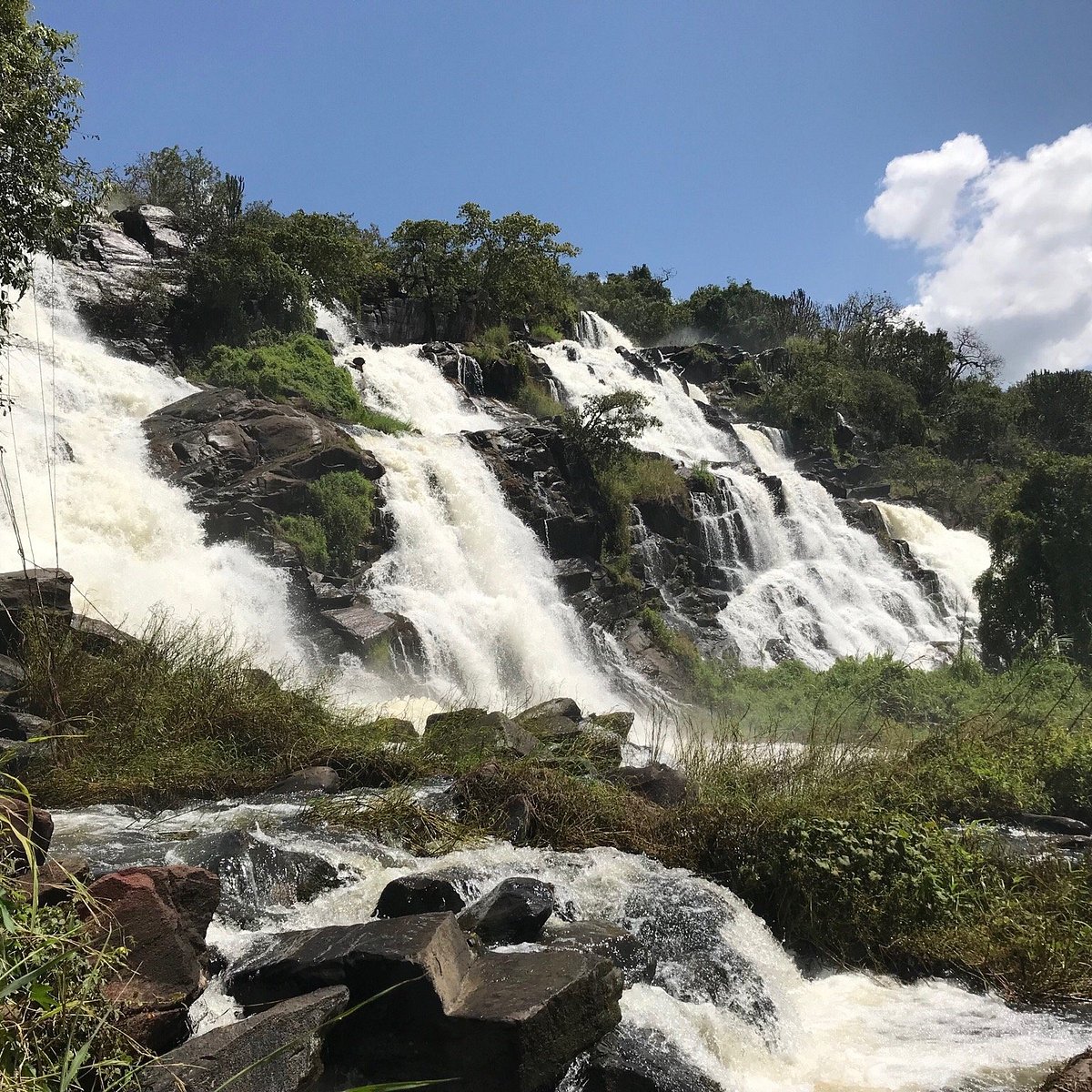
Aruu is not simply one narrow waterfall dropping from a single cliff.
The attraction consists of multiple cascades and rocky channels, with water moving across a series of rock formations.
Local descriptions identify several named rocky sections associated with the falls, including Rwanga, Awilo Yaa, Akweyo, Wang Akiye, Lacee, Okello Gem and Lanya Kweyo. These formations create the distinctive stepped appearance of the waterfalls.
The sound of the rushing water is one of the first things visitors notice as they approach.
The Agago River Connection
Aruu Falls is associated with the Agago River system.
Descriptions of the waterfall indicate that water flows through Agago District before reaching the rocky formations in Pader where the falls are created.
This connection gives the attraction importance beyond its scenic value, linking it to the wider river and landscape systems of northern Uganda.
Why Is It Called Aruu?
The name Aruu is associated with a Luo word meaning “woken up.”
Local explanations connect the name to the powerful sound of the waterfall, with stories that the noise of the falling water was strong enough to disturb people’s sleep.
This gives the destination an interesting connection between its physical character and local cultural interpretation.
Aruu Falls and Acholi Culture
Aruu Falls is not simply a natural attraction.
The falls have cultural significance within the Acholi region, and the site is officially recognized as a national cultural site.
This makes visiting Aruu an opportunity to experience both the natural landscape and the cultural heritage of northern Uganda.
Travelers interested in understanding the region should consider combining the waterfall visit with opportunities to interact respectfully with nearby communities.
Hiking Around Aruu Falls
One of the attractions of Aruu is the rugged terrain surrounding the waterfalls.
Reaching some sections involves walking over uneven and rocky ground, making the journey part of the adventure.
Sources describing the site mention hiking and rock climbing opportunities around the rocky formations.
This means visitors should not expect a polished attraction with extensive paved walkways.
Aruu is more suited to travelers who enjoy natural, rugged environments.
Exploring the Rocks
The rocks around the falls provide some of the most interesting scenery.
Water moves through channels and over rock shelves, creating multiple viewpoints.
The dark rocks contrast strongly with the white water, particularly when the falls are flowing strongly.
This makes the area attractive to photographers.
However, the rocks can become very slippery, particularly after rainfall or close to the flowing water.
Visitors should therefore prioritize safety over getting the perfect photograph.
Swimming at Aruu Falls
Some visitors do enter pools or areas beneath the cascades, and travel accounts describe bathing beneath sections of the waterfall.
However, this should not be treated as a guaranteed or universally safe activity.
Water levels, currents and slippery rocks can change significantly depending on rainfall.
If swimming or bathing is permitted during your visit, follow local guidance and avoid areas with strong currents or unstable rocks.
Photography at Aruu Falls
Aruu Falls is an excellent destination for travelers interested in landscape photography.
The strongest subjects include:
Cascading water
Rock formations
Forest and vegetation
Local landscapes
Rural communities
Northern Uganda scenery
The contrast between the white water and dark rocks can create particularly striking images.
A wide-angle lens is useful for capturing the falls and surrounding landscape, while a telephoto lens can isolate individual cascades.
Aruu Falls During the Rainy Season
Rainfall has a major effect on the character of the waterfall.
When water levels rise, the cascades can become considerably more powerful.
The surrounding vegetation also becomes greener, creating a dramatic contrast with the rocks.
However, wetter conditions can make access more difficult because paths and rocks become slippery.
Travelers should therefore balance waterfall intensity with accessibility and safety when choosing when to visit.
Aruu Falls During the Dry Season
During drier periods, the volume of water may decrease.
This can make some rocky sections easier to explore, and previous travel accounts describe visitors being able to move closer to lower sections of the falls during periods of lower flow.
The surrounding countryside, however, can be much drier and less green.
For photographers, this creates a completely different visual character.
Aruu Falls and Local Communities
Aruu Falls is surrounded by rural communities, meaning that a visit can easily become more than a waterfall excursion.
Travelers passing through the area can observe:
Farming
Local markets
Rural homesteads
Traditional landscapes
Everyday community life
A respectful interaction with local people can help visitors understand the region beyond its natural attractions.
Aruu Falls Campsite
There is accommodation associated with the waterfall, including Aruu Falls Campsite. Tourism sources identify the campsite as a stop point for visitors exploring the falls.
For travelers wanting to experience the area at a slower pace, an overnight stay can make sense.
However, because facilities at lesser-developed tourism sites can change, it is wise to confirm current accommodation arrangements before traveling.
Aruu Falls as a Northern Uganda Stop
Aruu Falls works particularly well as part of a broader northern Uganda road trip.
Rather than traveling directly from one major destination to another, visitors can use Aruu as a scenic stop while exploring the region.
A possible northern itinerary could connect:
Gulu
Aruu Falls
Kitgum
Kidepo Valley National Park
This creates a journey that combines culture, landscapes, waterfalls and wildlife.
Aruu Falls and Kidepo Valley National Park
For safari travelers, one of the most useful connections is Kidepo Valley National Park.
Kidepo is famous for its remote wilderness, dramatic valleys and wildlife.
Aruu Falls offers something completely different.
At Aruu, the focus is on:
Water
Rock formations
Hiking
Culture
Landscape
At Kidepo, the focus shifts toward:
Savannah
Wildlife
Game drives
Wilderness
Combining the two can make a northern Uganda itinerary much more varied.
Aruu Falls and Gulu
Gulu is one of the most practical starting points for travelers visiting Aruu Falls.
The falls are approximately 47 kilometres from Gulu, according to current tourism information.
This makes Aruu suitable for travelers staying in Gulu who want to explore a nearby natural attraction.
It can also serve as a stop while continuing north toward Kitgum.
Aruu Falls and Kitgum
Kitgum is another useful base or stopping point when exploring northern Uganda.
The falls are approximately 57 kilometres from Kitgum.
Travelers moving between Gulu and Kitgum can therefore incorporate Aruu into their route rather than making a separate long-distance journey.
Aruu Falls for Adventure Travelers
Aruu is particularly appealing to travelers who prefer less-developed attractions.
The combination of:
Rocky terrain
Hiking
Waterfalls
Natural pools
Photography
Rural landscapes
creates an adventurous experience without requiring specialized mountaineering skills.
Visitors should nevertheless take care around the rocks and water.
Aruu Falls for Families
Families can enjoy the scenery and short walks around the falls, but parents should be particularly attentive to children around the rocky terrain.
The site does not have the same controlled infrastructure found at some heavily developed tourist attractions.
Children should remain supervised, particularly near steep rocks and flowing water.
Aruu Falls for Couples
Aruu can also make an interesting stop for couples exploring northern Uganda.
The sound of rushing water, rocky scenery and surrounding vegetation provide a peaceful environment away from busy towns.
Couples interested in photography can also use the falls as a backdrop while exploring the surrounding landscape.
Best Time to Visit Aruu Falls
Aruu Falls can be visited throughout the year, but the experience changes with rainfall.
Rainier periods: stronger water flow and greener surroundings.
Drier periods: potentially easier access to some rocky sections but lower water volume.
Because access involves uneven terrain, visitors should also consider current road and trail conditions.
For a first-time visit, checking local conditions before setting out is advisable.
How Long Should You Spend at Aruu Falls?
Aruu does not necessarily require a multi-day stay.
A half-day visit can work well for travelers primarily interested in seeing the waterfalls.
A full day gives more time for:
Hiking
Photography
Exploring the rocky formations
Community interaction
Relaxing around the falls
An overnight stay can make sense if Aruu forms part of a longer northern Uganda road trip.
What Should You Bring?
For an Aruu Falls visit, pack:
- Comfortable hiking shoes
- Lightweight clothing
- Rain jacket
- Insect repellent
- Sunscreen
- Hat
- Drinking water
- Camera
- Small backpack
- Extra clothes if you intend to get into the water
Most importantly, bring shoes with good grip.
The rocks around waterfalls can become extremely slippery.
Responsible Tourism at Aruu Falls
Because Aruu is both a natural attraction and a culturally significant site, responsible tourism is important.
Visitors should:
Avoid littering.
Respect local communities.
Ask before photographing people.
Stay cautious around the water.
Avoid damaging vegetation or rock formations.
Follow local guidance.
Support local guides and tourism businesses where possible.
Respect the cultural significance of the site.
Is Aruu Falls Worth Visiting?
Yes—especially if you are exploring northern Uganda.
Aruu Falls is not trying to compete with Uganda’s biggest waterfalls in terms of infrastructure or international fame.
Its strength is precisely that it remains a lesser-known, rugged natural attraction.
The combination of cascading water, unusual rock formations, Acholi cultural heritage and surrounding countryside makes it an interesting stop for travelers who want to explore beyond Uganda’s most familiar tourist destinations.
And if your itinerary already takes you through Gulu, Kitgum or toward Kidepo, Aruu Falls becomes an even more practical addition.
Who Should Visit Aruu Falls?
Aruu Falls is particularly suitable for:
Adventure travelers
Nature lovers
Photographers
Hikers
Couples
Cultural travelers
Northern Uganda explorers
Road-trip travelers
Travelers visiting Kidepo Valley National Park
Visitors looking for lesser-known Uganda attractions
Frequently Asked Questions
Where Is Aruu Falls?
Aruu Falls is in Pader District in northern Uganda, along the Gulu–Kitgum highway.
How Far Is Aruu Falls From Gulu?
It is approximately 47 kilometres from Gulu.
How Far Is Aruu Falls From Kitgum?
The falls are approximately 57 kilometres from Kitgum.
What Makes Aruu Falls Special?
The attraction consists of multiple cascades flowing over distinctive rocky formations, combined with its cultural importance within the Acholi region.
Can You Swim at Aruu Falls?
Some visitors have bathed in pools beneath sections of the falls, but conditions vary. Water levels, currents and slippery rocks mean visitors should follow local safety guidance rather than assuming swimming is always safe.
Is Aruu Falls a Cultural Site?
Yes. Aruu Falls is recognized as a National Cultural Site of Uganda.
Can I Combine Aruu Falls With Kidepo?
Yes. Aruu Falls can be incorporated into a broader northern Uganda road trip toward Kidepo Valley National Park.