









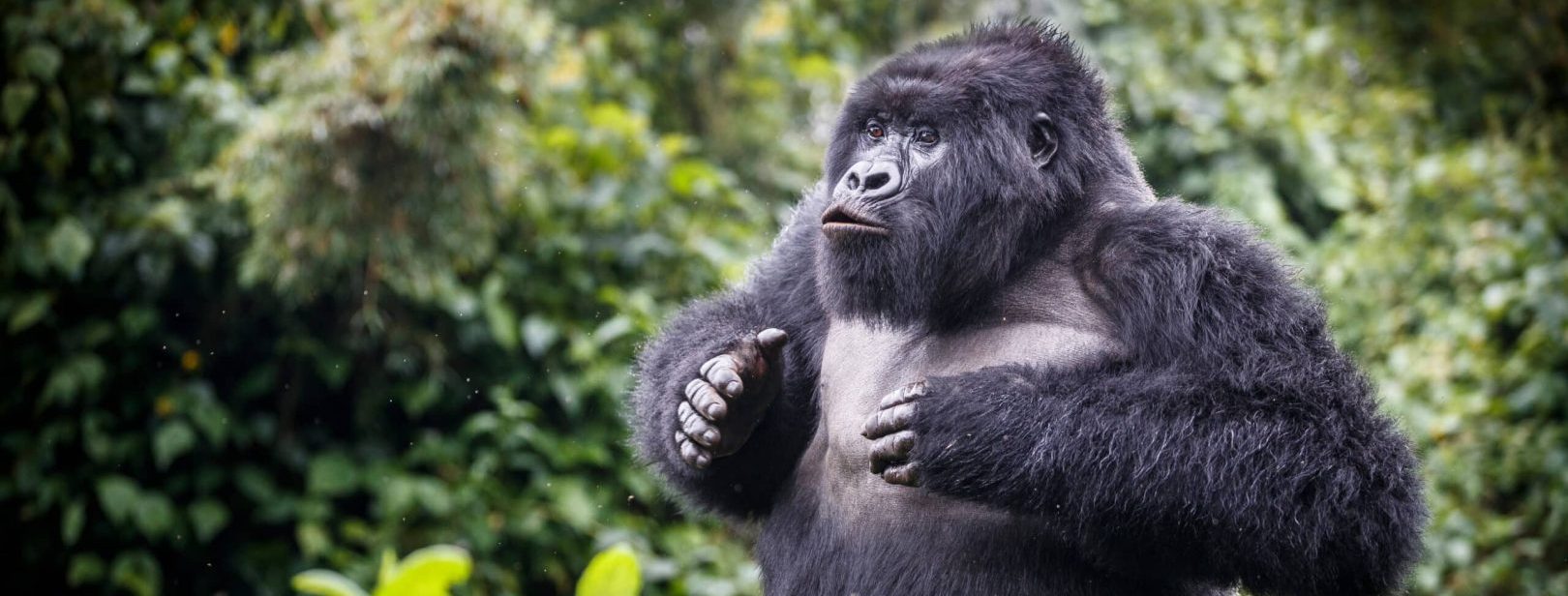
Meet the Gentle Giants of Africa’s Misty Mountains
The Mountain Gorilla (Gorilla beringei beringei) is one of the world’s most remarkable and endangered primates. Found only in a small region of East and Central Africa, these magnificent animals are among the most sought-after wildlife species for travelers visiting Uganda, Rwanda, and the Democratic Republic of Congo. Mountain gorillas are famous for their intelligence, complex social structures, and striking resemblance to humans, sharing approximately 98% of their DNA with us.
Unlike many wildlife species that roam vast savannahs, mountain gorillas inhabit dense tropical forests and bamboo-covered mountain slopes at elevations ranging from 2,200 to over 4,000 meters above sea level. Their restricted habitat, combined with their endangered status, makes every gorilla encounter a rare and unforgettable experience.
For many travelers, observing mountain gorillas in their natural environment is the highlight of an African safari. Watching a silverback protect his family, juveniles playing among the vegetation, or a mother nurturing her infant offers a profound glimpse into the lives of one of humanity’s closest relatives.

Physical Characteristics
Mountain gorillas are the largest living primates on Earth. Adult males, known as silverbacks, can weigh between 135 and 220 kilograms and stand up to 1.8 meters tall when upright. Their name comes from the distinctive silver-colored hair that develops across their backs as they mature.
Females are generally smaller, weighing between 70 and 110 kilograms. Both males and females possess powerful arms, broad chests, and strong muscles adapted for navigating steep mountain terrain.
Their thick black fur distinguishes them from other gorilla subspecies and helps them survive the cool temperatures found at high elevations. Their expressive faces, dark eyes, and human-like emotions often leave visitors amazed by their striking resemblance to people.
Habitat and Distribution
Mountain gorillas inhabit only two isolated populations in the world:
Bwindi Impenetrable National Park, Uganda
Uganda’s Bwindi Impenetrable National Park is home to nearly half of the global mountain gorilla population. This ancient rainforest, recognized as a UNESCO World Heritage Site, contains dense vegetation, steep valleys, and diverse ecosystems that provide ideal conditions for gorillas.
Virunga Conservation Area
The second population lives within the Virunga Massif, a chain of volcanic mountains spanning:
- Uganda’s Mgahinga Gorilla National Park
- Rwanda’s Volcanoes National Park
- Democratic Republic of Congo’s Virunga National Park
These protected areas work together to safeguard gorilla populations and maintain critical wildlife corridors.
Social Structure and Family Life
Mountain gorillas live in cohesive family groups led by a dominant silverback. These groups can range from a few individuals to more than thirty members.
A typical gorilla family consists of:
- One dominant silverback
- Several adult females
- Juveniles and adolescents
- Infants
- Occasionally subordinate males
The silverback serves as the group’s protector, decision-maker, and leader. He determines feeding locations, resting sites, and movement patterns while defending the family against threats.
Family bonds are exceptionally strong. Gorillas spend much of their time grooming, resting, feeding, and interacting socially. Young gorillas are particularly playful and often engage in mock fights, climbing, and chasing games that help develop social skills.
Diet and Feeding Habits
Mountain gorillas are primarily herbivores and consume a wide variety of plant materials. Their diet changes seasonally depending on food availability.
Common food sources include:
- Leaves
- Shoots
- Bamboo stems
- Wild celery
- Roots
- Bark
- Fruits
- Flowers
An adult gorilla may spend up to six hours each day feeding and can consume more than 30 kilograms of vegetation daily.
Unlike many primates, mountain gorillas rarely require standing water because they obtain most of their moisture from the plants they eat.
Intelligence and Communication
Mountain gorillas are highly intelligent animals with complex communication systems. They use a combination of vocalizations, facial expressions, body posture, and physical gestures to communicate with one another.
Researchers have identified more than twenty distinct vocal sounds used for:
- Warning group members of danger
- Maintaining contact while foraging
- Expressing contentment
- Resolving conflicts
- Strengthening social bonds
One of the most famous gorilla behaviors is chest beating. While often perceived as aggressive, chest beating can communicate dominance, attract mates, or simply announce a gorilla’s presence.
Their ability to learn, solve problems, and display emotional responses highlights their close evolutionary relationship with humans.
Reproduction and Life Cycle
Female mountain gorillas typically give birth for the first time between the ages of 8 and 10 years. After a gestation period of approximately 8.5 months, a single infant is usually born.
Newborn gorillas are entirely dependent on their mothers and remain in close contact for several years. The mother-infant bond is one of the strongest relationships within the group.
Key life stages include:
- Infancy: Birth to 3 years
- Juvenile: 3 to 6 years
- Adolescence: 6 to 10 years
- Adulthood: 10 years and older
Mountain gorillas can live between 35 and 45 years in the wild under favorable conditions.
Conservation Success Story
Mountain gorillas represent one of the world’s greatest wildlife conservation success stories. Once feared to be nearing extinction, intensive conservation efforts have helped populations recover steadily over recent decades.
Conservation initiatives include:
- Anti-poaching patrols
- Veterinary intervention programs
- Habitat protection
- Community-based conservation
- Sustainable tourism
- Scientific research and monitoring
Revenue generated through gorilla trekking permits directly contributes to protecting gorillas and supporting local communities living near protected areas.
Today, the global mountain gorilla population exceeds 1,000 individuals, marking a significant achievement in wildlife conservation.
Mountain Gorilla Trekking Experience
Mountain gorilla trekking is considered one of Africa’s most extraordinary wildlife encounters. Visitors hike through dense forests under the guidance of experienced trackers and rangers to locate habituated gorilla families.
Once located, visitors are allowed a strictly regulated one-hour observation period. During this time, trekkers can witness natural gorilla behaviors such as:
- Feeding
- Grooming
- Playing
- Resting
- Social interactions
The experience is both thrilling and deeply emotional, often ranking among the most memorable wildlife encounters in the world.
Threats Facing Mountain Gorillas
Despite encouraging population growth, mountain gorillas continue to face several threats:
Habitat Loss
Growing human populations place pressure on forest ecosystems surrounding gorilla habitats.
Disease Transmission
Because gorillas share much of their genetic makeup with humans, they are susceptible to many human illnesses, including respiratory infections.
Human-Wildlife Conflict
Encroachment into protected areas can increase interactions between people and wildlife.
Political Instability
Some gorilla habitats exist in regions affected by conflict, creating challenges for conservation management.
Continued international support and responsible tourism remain essential for ensuring the long-term survival of mountain gorillas.
Why Mountain Gorillas Matter
Mountain gorillas play a crucial role in maintaining the health and biodiversity of the forests they inhabit. As they move through the forest, they help disperse seeds and shape vegetation patterns that benefit countless other species.
Beyond their ecological importance, mountain gorillas symbolize the success that can be achieved when governments, conservation organizations, local communities, and tourists work together toward a common goal.
Their survival demonstrates that endangered species can recover when provided with effective protection and sustainable management.
Discover Mountain Gorillas in the Wild
Encountering mountain gorillas in their natural habitat is more than a wildlife experience—it is an opportunity to connect with one of humanity’s closest relatives and witness one of conservation’s greatest achievements. Whether trekking through the ancient forests of Bwindi Impenetrable National Park or the volcanic landscapes of the Virunga Mountains, visitors leave with a deeper appreciation for these extraordinary primates and the efforts being made to secure their future.
For wildlife enthusiasts, photographers, conservationists, and safari travelers alike, mountain gorillas remain one of Africa’s most iconic and inspiring species.