







Overview
Batwa Cultural Experience (Bwindi and Mgahinga) – Travel Overview
The Batwa Cultural Experience is one of the most meaningful cultural activities that travelers can add to a Uganda safari, particularly when visiting Bwindi Impenetrable National Park or Mgahinga Gorilla National Park. It offers visitors an opportunity to learn about the Batwa people, their historical relationship with the forests of southwestern Uganda, their traditional knowledge and the challenges they have faced since being displaced from their ancestral forest homes.
For many travelers, the experience provides an important human dimension to a gorilla trekking safari. Bwindi and Mgahinga are internationally known for mountain gorillas, but long before these forests became protected tourism destinations, they were also home to Batwa communities who depended on the forest for hunting, gathering, medicine, shelter and other aspects of daily life.
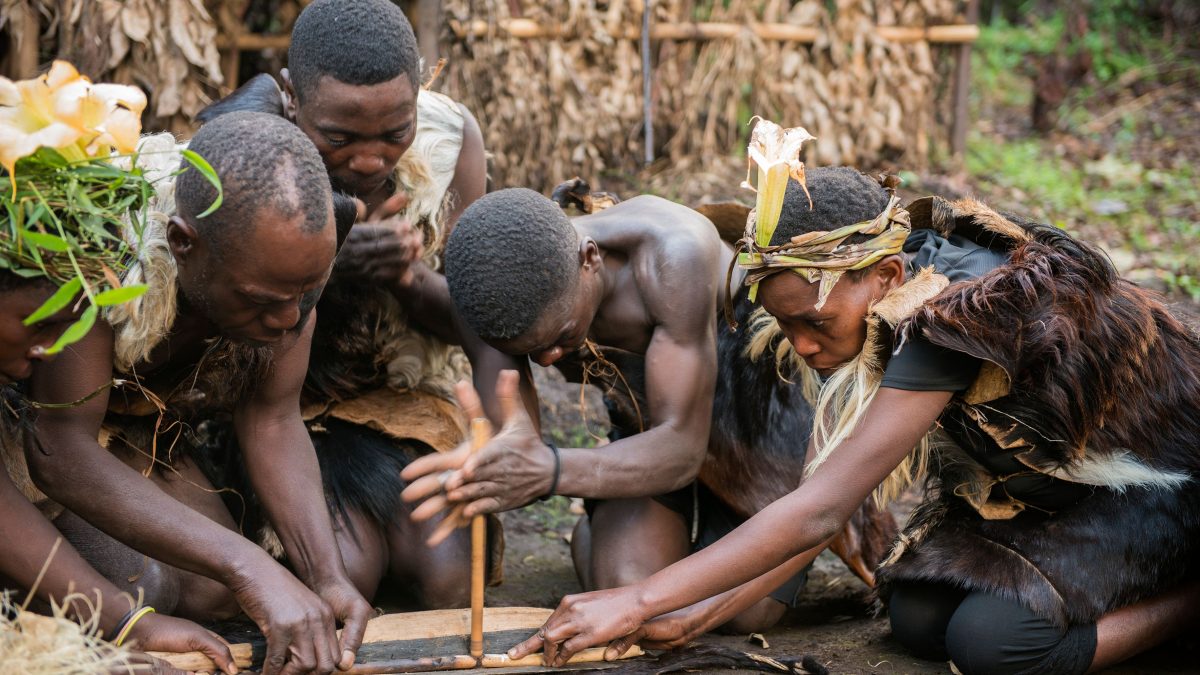
Today, Batwa cultural experiences allow visitors to hear some of this history directly from Batwa guides and community members. Depending on the location, activities can include forest walks, demonstrations of traditional hunting and gathering techniques, fire making, storytelling, traditional music and dance, explanations of medicinal plants and visits to reconstructed traditional settings.
The experience is therefore much more than entertainment. It provides an opportunity to understand the relationship between people, forests, conservation and tourism in southwestern Uganda.
Who Are the Batwa?
The Batwa are an Indigenous forest-dwelling people of the Great Lakes region of Central Africa. In southwestern Uganda, their traditional territories included areas around Bwindi, Mgahinga and other forests.
Historically, Batwa communities practiced hunting and gathering and possessed extensive knowledge of the forest environment. They collected wild foods, honey and medicinal plants, hunted small animals and used forest materials for shelter, tools and other everyday needs.
Their relationship with the forest was therefore not simply economic. The forest was also connected to their identity, traditions, beliefs and cultural knowledge.
This history is important when visiting a Batwa cultural experience because it explains why the activity is so closely connected with conservation.
The Batwa and the Forest
The forests of southwestern Uganda are among the most biologically important ecosystems in the country. Bwindi and Mgahinga are now protected areas famous for mountain gorilla conservation, but conservation has also had profound consequences for the people who historically depended on these forests.
When Bwindi and Mgahinga were gazetted as protected areas, Batwa communities were removed from the forests. The exact historical circumstances and impacts varied, but the displacement resulted in major social and economic changes for Batwa communities.
The Batwa had to adapt to life outside the forest and became increasingly dependent on neighboring communities, land access, employment, education and other forms of support.
This history should not be ignored when presenting the Batwa experience to travelers.
A responsible cultural tour should give visitors an opportunity to understand both the ancient forest heritage of the Batwa and their present-day realities.
Batwa Cultural Experience in Bwindi
The Batwa cultural experience around Bwindi Impenetrable National Park is generally a community-based activity taking place outside the national park.
One established Batwa Experience on the Buhoma side begins near the park entrance and takes visitors into an adjacent forested area. The experience can involve a guided walk, demonstrations of traditional forest skills, storytelling, cultural explanations and interaction with Batwa community members. The current operator information describes the activity as taking up to around five hours depending on the pace and interests of visitors.
The exact activities and duration can vary depending on the community, location and arrangement.
This means travelers should confirm the details when booking rather than assuming every “Batwa experience” in Bwindi follows exactly the same program.
What to Expect in Bwindi
A Batwa cultural experience in the Bwindi area can provide a glimpse into how forest life was traditionally organized.
Visitors may learn about:
- Traditional hunting methods
- Gathering wild foods
- Use of medicinal plants
- Traditional fire making
- Forest knowledge
- Traditional shelters
- Food preparation
- Storytelling
- Songs and dances
- Traditional tools and crafts
Some experiences allow visitors to participate in demonstrations rather than simply watching.
For example, guests may be shown how traditional fire-making techniques worked or how particular forest materials were used.
The purpose is to help visitors understand the knowledge that enabled Batwa communities to survive in a dense forest environment.
Learning Traditional Forest Knowledge
One of the most valuable parts of the experience is learning how the Batwa traditionally understood the forest.
A forest that may appear unfamiliar to an outside visitor was once a source of food, medicine, materials and shelter.
Batwa guides can explain how particular plants were used, how food was collected and how people navigated the forest.
This knowledge represents an important part of Batwa cultural heritage.
It also provides a different way of looking at Bwindi.
Instead of seeing the forest only as the habitat of mountain gorillas, visitors begin to understand it as a landscape with a long human history.
Traditional Hunting and Gathering Demonstrations
Traditional hunting and gathering demonstrations are commonly included in Batwa cultural experiences.
Visitors may learn how small game was traditionally hunted using tools such as bows, arrows, traps or nets.
The emphasis should be on demonstration and cultural education, not on actual hunting.
Guests may also learn how wild foods, fruits, roots, mushrooms and other forest resources were collected.
These demonstrations help explain how closely everyday survival was connected to knowledge of the forest.
Traditional Medicine
Another important part of Batwa forest knowledge is the use of plants for medicinal purposes.
During some experiences, Batwa guides explain the traditional uses of different plants and how forest resources were historically used to treat ailments.
This should be understood as traditional cultural knowledge rather than modern medical advice.
Visitors should not collect plants or attempt to self-treat illnesses based on information learned during a cultural experience.
The value of this part of the experience is understanding how traditional knowledge was passed from one generation to another.
Traditional Food and Cooking
Some Batwa cultural experiences include demonstrations of traditional food preparation.
Visitors may see how food was traditionally collected, prepared and cooked using locally available resources.
Depending on the experience, guests may also have an opportunity to taste a traditional meal.
This provides another way to understand everyday life.
Food was not simply something consumed; obtaining and preparing it was closely connected to the forest environment and community life.
Travelers with allergies or dietary restrictions should inform their tour operator in advance.
Traditional Music, Dance and Storytelling
Music, dance and storytelling are often among the most memorable parts of the Batwa cultural experience.
Songs can communicate history, emotions, cultural identity and experiences that have been passed from one generation to another.
Storytelling provides another way for elders and guides to explain Batwa traditions and their relationship with the forest.
For visitors, this can be more meaningful than simply reading historical information in a guidebook because the cultural knowledge is being shared directly by members of the community.
Visitors should still remember that cultural performances represent living traditions and should be approached respectfully.
The Batwa Trail in Mgahinga
The experience in Mgahinga Gorilla National Park differs from the community-based Batwa experiences around Bwindi.
The Batwa Trail is associated with Mgahinga and provides a more immersive trail experience connected to the forest landscape and Batwa heritage.
Current tourism information describes the trail as involving Batwa guides, traditional forest knowledge, hunting and gathering demonstrations, medicinal plant explanations, storytelling and cultural activities. The trail is also associated with Garama Cave, an important cultural location within the experience.
Because the trail involves walking in a mountainous environment, travelers should expect a more physically active experience than a simple community visit.
Garama Cave
One of the distinctive features of the Mgahinga Batwa Trail is Garama Cave.
The cave has cultural significance in Batwa history and is incorporated into the trail experience.
Visitors can learn about how the cave was connected to Batwa life and hear stories relating to their history and traditions.
The cave setting also makes the Mgahinga experience visually and atmospherically different from the Batwa experiences around Bwindi.
It is important to listen carefully when guides explain the cultural significance of the site and to follow instructions regarding photography and behavior.
Bwindi or Mgahinga: Which Experience Should You Choose?
Both destinations provide valuable Batwa cultural experiences, but the experience can feel different.
Bwindi is particularly convenient for travelers already staying around areas such as Buhoma or other sectors where community-based Batwa experiences are available. The focus is generally on cultural interaction, demonstrations, storytelling, traditional skills and learning about the Batwa’s historical relationship with the forest.
Mgahinga provides the Batwa Trail, which has a stronger trekking component and incorporates the forest landscape and Garama Cave.
Therefore, the best option is often determined by your safari route.
If you are already trekking gorillas in Bwindi, adding a local Batwa cultural experience can be convenient.
If your safari is based around Mgahinga, the Batwa Trail can naturally fit into the itinerary.
Batwa Experience and Gorilla Trekking
The Batwa Cultural Experience can be a powerful addition to a gorilla trekking safari because it introduces visitors to another part of the history of the same forest landscape.
Gorilla trekking focuses on the endangered mountain gorillas and their conservation.
The Batwa experience focuses on the people who historically lived in and depended upon the forest.
Experiencing both allows travelers to see the destination from two perspectives.
The forest becomes more than a habitat for wildlife.
It becomes a landscape containing ecological, cultural and human history.
This is one of the strongest reasons to include the Batwa experience in a longer southwestern Uganda itinerary.
Is the Batwa Experience Physically Difficult?
The level of physical difficulty depends on the experience you choose.
Some community-based experiences around Bwindi involve a forest hike and can include steep sections. One established Buhoma experience describes the hike as moderately strenuous, with some steep sections, and recommends appropriate footwear and rain protection.
The Mgahinga Batwa Trail is also a walking experience in mountainous terrain.
Travelers should therefore treat it as an outdoor activity rather than a simple village visit.
Comfortable hiking shoes, drinking water, appropriate clothing and rain protection are useful.
What Should You Wear?
Visitors should dress for the conditions of southwestern Uganda.
Recommended clothing includes:
- Comfortable hiking shoes or boots
- Long trousers
- A lightweight shirt
- Rain protection
- A light jacket
- Sun protection
- Insect repellent
The weather around Bwindi and Mgahinga can change quickly, particularly in the highlands.
Even when the morning begins dry and sunny, rain can develop later.
How Long Does the Batwa Experience Take?
There is no single duration that applies to every Batwa experience.
Some community-based experiences can take several hours, while the length of the Mgahinga trail depends on the route, pace and activities.
For example, the established Buhoma Batwa Experience currently describes a total hike and visit of up to approximately five hours.
When planning a safari, it is therefore better to confirm the duration with the operator rather than placing a generic two- or three-hour figure on every itinerary.
Best Time to Experience the Batwa Culture
The Batwa experience can generally be incorporated into a Uganda safari throughout the year.
However, weather matters because parts of the experience take place outdoors.
Rain can make forest trails slippery and more challenging.
The drier periods can therefore be more comfortable for walking, although southwestern Uganda remains a highland rainforest environment where rainfall can occur at any time.
Your guide or operator can advise on the most appropriate departure time based on current conditions.
Responsible Batwa Cultural Tourism
Responsible tourism is especially important when visiting Batwa communities.
Travelers should remember that they are engaging with a living community, not visiting a museum.
A respectful visitor should:
Listen to the guides and community members.
Ask permission before photographing people.
Avoid mocking or imitating cultural practices.
Support locally owned tourism initiatives where possible.
Pay agreed fees fairly.
Avoid treating poverty as entertainment.
Respect sacred or culturally sensitive locations.
Do not remove plants, cultural objects or forest materials.
These principles help ensure that tourism contributes positively to the communities involved.
How Tourism Can Support Batwa Communities
Cultural tourism can provide income to Batwa guides, performers, artisans and community initiatives.
Some Batwa tourism initiatives were established specifically to preserve cultural knowledge while generating income for community development.
The Batwa Development Program, for example, has been associated with initiatives involving education, healthcare, income generation and cultural preservation.
However, travelers should avoid assuming that every cultural experience distributes money in exactly the same way.
When booking, it is reasonable to ask the operator who runs the experience, who the guides are and how tourism revenue benefits the community.
Why the Batwa Experience Matters
The Batwa Cultural Experience matters because it tells a part of Uganda’s conservation story that can easily be overlooked.
Bwindi and Mgahinga are celebrated internationally for protecting mountain gorillas.
But conservation also changed the lives of people who historically depended on those forests.
Learning about the Batwa allows visitors to understand this complicated history rather than seeing conservation only from the perspective of wildlife.
The experience therefore encourages a broader understanding of what responsible conservation and tourism should mean.
Combining the Batwa Experience With Other Activities
The Batwa experience can easily be incorporated into a broader southwestern Uganda itinerary.
A traveler visiting Bwindi could combine:
Gorilla trekking
Batwa cultural experience
Community walks
Forest walks
Bird watching
Waterfalls and scenic viewpoints
A traveler based around Mgahinga could combine:
Gorilla trekking
Golden monkey tracking
Batwa Trail
Volcano hiking
Lake Mutanda
This creates a much more complete experience than visiting the region exclusively for gorilla trekking.
Why Add the Batwa Experience to Your Uganda Safari?
A gorilla trek can be one of the most extraordinary wildlife experiences in Africa.
But when you add the Batwa Cultural Experience, you gain another perspective on the same landscape.
You learn how people historically survived in the forest, how they used its resources, how traditions were passed between generations and how conservation changed their lives.
You also meet people who are working to preserve and share their heritage today.
That makes the experience valuable not simply because it is different from gorilla trekking, but because it helps travelers understand the human story behind the forest.
Frequently Asked Questions
Who Are the Batwa?
The Batwa are an Indigenous forest-dwelling people of the Great Lakes region of Central Africa. In southwestern Uganda, their traditional relationship with forests such as Bwindi and Mgahinga forms an important part of their cultural history.
Where Can I Experience Batwa Culture in Uganda?
Batwa cultural experiences are available around Bwindi Impenetrable National Park and Mgahinga Gorilla National Park, as well as in other areas where Batwa communities live.
Is the Batwa Experience Inside Bwindi National Park?
Not necessarily. The established Batwa Experience on the Buhoma side takes place on forested land adjacent to Bwindi rather than inside the national park itself.
What Happens During the Batwa Experience?
Activities can include guided walks, traditional hunting demonstrations, fire making, forest-food knowledge, medicinal plant explanations, storytelling, traditional music and dance, depending on the specific experience.
Is the Mgahinga Batwa Trail the Same as the Bwindi Batwa Experience?
No. They are related cultural experiences but are organized differently. The Mgahinga Batwa Trail has a stronger trail component and includes the cultural history associated with Garama Cave, while Bwindi has community-based Batwa experiences in areas adjacent to the forest.
Can I Combine the Batwa Experience With Gorilla Trekking?
Yes. It is one of the best ways to combine wildlife, conservation and cultural experiences during a southwestern Uganda safari.
Is the Batwa Experience Suitable for Families?
It can be, although the physical requirements depend on the particular experience. Families should discuss the walking distance and terrain with their tour operator before booking.
Do I Need a Gorilla Trekking Permit for the Batwa Experience?
The requirements depend on the particular activity. The established Buhoma Batwa Experience states that its activity takes place outside Bwindi National Park and does not require a park permit, while activities associated with Mgahinga should be confirmed with the relevant operator or park authorities.
What Should I Bring?
Comfortable walking shoes, water, rain protection, long trousers, insect repellent and sun protection are useful for most experiences.
Is the Batwa Experience Worth Adding to a Uganda Safari?
Yes. Especially for travelers already visiting Bwindi or Mgahinga, it adds cultural and historical context to the wildlife experience and provides an opportunity to support community-based tourism.