







Overview
Bokora Wildlife Reserve – Travel Overview
Bokora Wildlife Reserve, also known as Bokora Corridor Wildlife Reserve, is one of Uganda’s most remote and least-developed wildlife destinations. Located in the Karamoja region of northeastern Uganda, the reserve offers travelers an opportunity to explore a vast semi-arid landscape of open grasslands, wooded savannah, rocky formations and seasonal wetlands.
Established in 1964, Bokora was originally gazetted partly to maintain wildlife movement between the Matheniko plains and Pian Upe. Today, it remains an important part of the wider protected-area network of northeastern Uganda. UWA places Bokora between Matheniko Wildlife Reserve and Pian Upe Wildlife Reserve, with the reserve covering approximately 205,600 hectares (2,056 km²).
What makes Bokora particularly appealing is not simply the number of animals visitors may encounter, but the wildness of the landscape.
This is a destination for travelers who want to get away from the established safari circuits and experience a quieter side of Uganda.
You can expect wide plains, rugged hills, dry-country wildlife, unusual antelopes, birds and an authentic Karamoja atmosphere.
where is Bokora Wildlife Reserve?
Bokora Wildlife Reserve is located in eastern Uganda within the Karamoja region, between Moroto and Mount Elgon.
The reserve lies between Matheniko Wildlife Reserve to the northeast and Pian Upe Wildlife Reserve to the southwest, making it an important link within the broader conservation landscape of northeastern Uganda. UWA records the reserve at elevations ranging from approximately 1,000 to 2,100 metres.
The landscape is extensive, covering about 205,600 hectares, or roughly 2,056 square kilometres. Its position means Bokora can be incorporated into longer journeys through Karamoja rather than treated simply as a quick standalone safari destination.
what makes Bokora Wildlife Reserve special?
Bokora is special because it provides a very different safari environment from Uganda’s better-known western parks.
There are no dense rainforests here.
Instead, the reserve is dominated by dry wooded grassland and semi-arid savannah, with scattered rocky formations and seasonal wetlands.
UWA describes the landscape as a plateau with several isolated hills or inselbergs, while its vegetation is primarily wooded grassland savannah.
This environment supports animals that have adapted to relatively dry conditions.
The reserve is particularly interesting for travelers looking for:
- Eland
- Uganda kob
- Topi
- Hartebeest
- Oribi
- Reedbuck
- Mountain reedbuck
- Spotted hyena
- Leopard
- Other dry-country wildlife
And because Bokora is still relatively undeveloped for tourism, the experience can feel genuinely remote.
wildlife in Bokora Wildlife Reserve
Bokora supports a variety of antelopes and other mammals.
UWA records several species, including:
- Eland
- Uganda kob
- Reedbuck
- Mountain reedbuck
- Topi
- Hartebeest
- Oribi
- Spotted hyena
- Leopard
UWA also notes that the reserve contains a wide variety of antelopes, although they are not present in high numbers.
That distinction is important when presenting Bokora to potential travelers.
This isn’t a destination where visitors should expect the dense concentrations of wildlife associated with some of Uganda’s major safari parks.
Instead, Bokora offers the excitement of searching through a huge wilderness landscape for species that may be encountered along the way.
eland in Bokora
The eland is among the larger antelopes recorded in Bokora.
These impressive animals are well adapted to savannah environments and can travel across considerable distances in search of food and water.
Their large size makes them relatively easy to recognize, but finding them in such an expansive reserve can still require patience.
For wildlife enthusiasts, encountering an eland in Bokora can be a memorable experience precisely because the encounter feels less predictable.
Uganda kob
The Uganda kob is another antelope associated with Bokora.
These reddish-brown antelopes prefer open grassland where they can graze and maintain visibility of potential predators.
Seeing Uganda kob in Bokora also connects the reserve with the wider savannah ecosystems of Uganda.
topi and hartebeest
Topi and hartebeest are among the other antelope species recorded within the reserve.
Both are adapted to open savannah landscapes and can often be found grazing in grassland environments.
Their presence adds to the diversity of herbivores that make Bokora particularly interesting for wildlife enthusiasts.
mountain reedbuck and reedbuck
Bokora is also home to reedbuck and mountain reedbuck, two species that occupy somewhat different habitats.
Mountain reedbuck are especially associated with rocky and hilly environments, making Bokora’s scattered hills and elevated terrain particularly relevant to them.
This is another example of how the reserve’s mixture of grasslands and rocky areas creates different ecological niches for wildlife.
oribi
The oribi is another antelope recorded by UWA in Bokora.
These small, elegant antelopes are generally associated with grassland habitats.
Because of their smaller size and tendency to remain alert, they can be easy to overlook during a fast-moving game drive.
A slower safari with a guide who knows the reserve can make these smaller species much easier to appreciate.
predators in Bokora
Bokora is not exclusively about antelopes.
The reserve also supports predators.
UWA specifically records spotted hyena and leopard among the reserve’s wildlife.
Other sources describe a broader range of predators and wildlife in the Bokora landscape, although individual sightings should never be guaranteed.
For travelers interested in predators, this makes early morning and late afternoon wildlife drives particularly worthwhile.
leopard in Bokora
The leopard is one of the more elusive predators associated with Bokora.
The reserve’s combination of wooded grassland, rocky terrain and open plains can provide suitable habitat for these secretive cats.
However, leopard sightings are naturally unpredictable.
A visitor should approach leopard viewing in Bokora as a wildlife-searching experience, rather than expecting the kind of regular predator sightings sometimes possible in more heavily visited parks.
spotted hyenas
Spotted hyenas are also recorded in Bokora.
Their ability to survive in relatively harsh environments makes them well suited to Karamoja’s semi-arid conditions.
They are important predators and scavengers within the ecosystem.
For photographers, seeing hyenas in the dry Karamoja landscape can provide a very different photographic setting from the greener environments found elsewhere in Uganda.
bird watching in Bokora
Bokora also has potential for bird watching, particularly around its seasonal wetlands.
One of the better-known birding areas associated with the reserve is Loporokocho Swamp.
The wetland provides habitat for a variety of bird species, including dry-country and wetland-associated birds.
Sources describing the wider Bokora–Pian Upe–Matheniko landscape highlight species such as:
- Ostrich
- Jackson’s hornbill
- Hartlaub’s bustard
- White-headed buffalo-weaver
- Hartlaub’s turaco
- Dusky turtle dove
- African hill babbler
- Eastern bronze-naped pigeon
among others.
This makes Bokora particularly interesting for birders looking for species that are not commonly encountered on Uganda’s standard western safari routes.
Loporokocho Swamp
Loporokocho Swamp is one of the more interesting wetland areas within the wider Bokora landscape.
The swamp provides a contrast to the surrounding dry grasslands and shrubland.
It is particularly valuable for birding because water and wetland vegetation attract species that may not be as common in the surrounding dry areas.
For a traveler interested in combining wildlife and birding, a visit to the swamp can add another dimension to the Bokora experience.
the landscape of Bokora
The landscape is one of Bokora’s greatest attractions.
UWA describes the reserve as a plateau with several inselbergs, creating a distinctive combination of broad plains and isolated rocky formations.
The scenery can include:
- Dry grasslands
- Acacia and other woodland
- Rocky hills
- Seasonal streams
- Wetlands
- Open plains
- Distant mountains
During dry periods, the landscape can appear golden and rugged.
Following rainfall, it can change dramatically, becoming greener and more vibrant.
This seasonal transformation gives photographers very different opportunities throughout the year.
Bokora and the Karamoja landscape
Bokora cannot really be separated from Karamoja.
The reserve forms part of a much larger landscape associated with the Karamojong people and their pastoral traditions.
The wider region is famous for its semi-arid environment, livestock culture, traditional communities and dramatic mountains.
This means a safari in Bokora can be expanded beyond wildlife.
Visitors can combine their time in the reserve with cultural experiences around Moroto and other parts of Karamoja.
cultural experiences around Bokora
For travelers interested in culture, the wider Karamoja region provides opportunities to learn about traditional pastoral lifestyles.
Depending on the itinerary and local arrangements, experiences can include visits to:
- Traditional homesteads
- Cattle camps
- Local communities
- Craft workshops
- Cultural performances
- Markets
- Cultural museums
The important thing is that cultural visits should be organized respectfully and with local community involvement.
For a travel website, I would position cultural tourism as a complement to the wildlife experience, rather than presenting communities simply as another tourist attraction.
game drives in Bokora
Game drives are the main way to explore the reserve.
Because Bokora is extensive and relatively remote, a 4×4 safari vehicle is recommended.
The reserve’s rough terrain and seasonal road conditions mean that a high-clearance vehicle is particularly useful.
A typical game drive can involve searching for:
- Eland
- Uganda kob
- Topi
- Hartebeest
- Reedbuck
- Oribi
- Leopard
- Spotted hyena
- Other savannah wildlife
Early morning and late afternoon are generally the most comfortable periods for wildlife viewing.
Recent reporting on UWA’s 2026 aerial wildlife survey also highlights the importance of monitoring wildlife populations and conservation challenges in the Bokora–Matheniko landscape, including unauthorized livestock grazing.
nature walks
Where currently permitted and arranged with UWA, guided nature walks can provide another way of experiencing Bokora.
Walking changes the focus from simply searching for large mammals to observing the smaller details of the ecosystem.
You may encounter:
- Animal tracks
- Bird calls
- Insects
- Plants
- Wildlife signs
- Rocky formations
- Seasonal watercourses
Because Bokora remains a genuine wildlife area, walking should always be conducted with appropriate guides or rangers and according to current UWA arrangements.
UWA’s current tariff information lists guided nature walks and birding among activities applicable to wildlife reserves.
birding safaris in Bokora
Birding can be incorporated into a wildlife drive or planned as a dedicated activity.
The best approach is to spend time around wetland areas and other habitats where birds concentrate.
A knowledgeable guide can make a major difference because some of the region’s most interesting species may be identified through their calls before they are seen.
For specialist birders, the dry-country environment is one of Bokora’s strongest attractions.
photography in Bokora
Bokora is an excellent destination for photographers who want something beyond the classic safari image.
The landscape itself provides strong photographic opportunities.
You can capture:
Antelope against golden grasslands
Rocky inselbergs rising above the plains
Birds around seasonal wetlands
Karamojong cultural scenes
Wildlife silhouettes at sunrise
Dramatic skies over Karamoja
The relatively low level of tourism also means photographers may have more opportunities to work without large numbers of safari vehicles around them.
Bokora and Matheniko Wildlife Reserve
One of the most natural combinations is Bokora + Matheniko.
The two reserves form part of the same broader Karamoja conservation landscape.
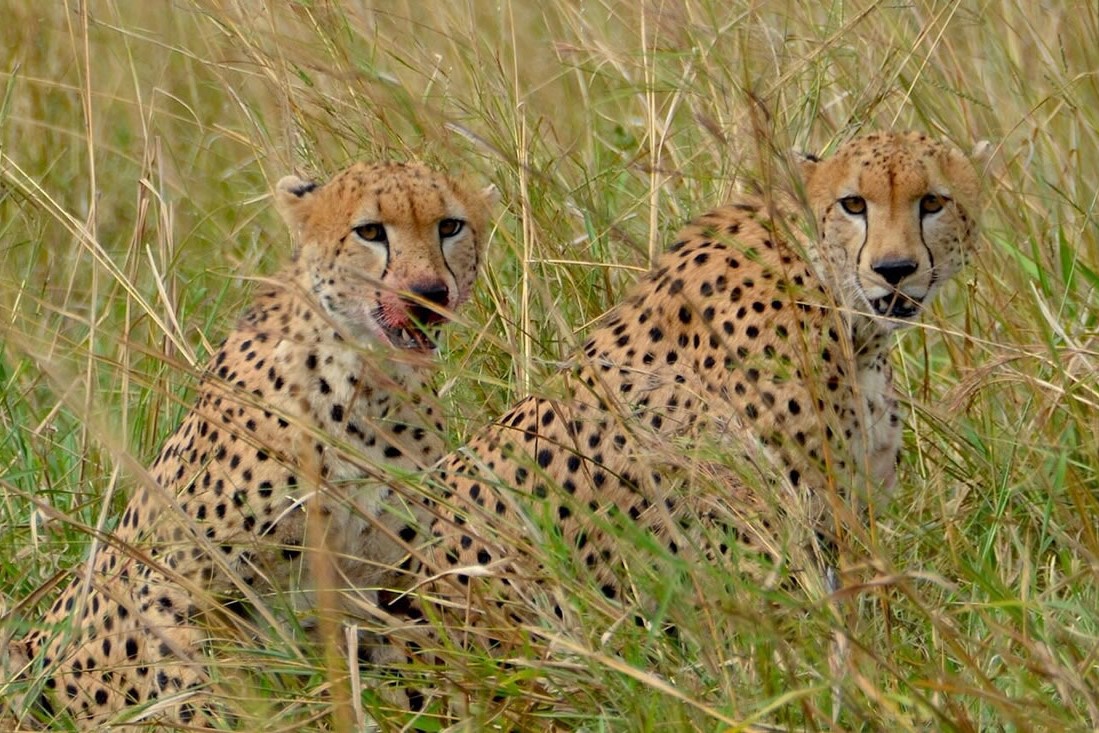
Matheniko provides opportunities to search for species such as cheetah, roan antelope, eland and Bright’s gazelle, while Bokora adds its own mixture of antelopes, predators and dry-country habitats. UWA identifies both reserves as contiguous components of the wider protected landscape.
This is one of the few internal links I’d definitely keep because the two destinations are closely connected geographically and ecologically.
Bokora and Pian Upe Wildlife Reserve
Bokora also connects naturally with Pian Upe Wildlife Reserve.
Together, the reserves form a large semi-arid ecosystem extending across northeastern Uganda.
Pian Upe is particularly useful for travelers who want to explore more of Uganda’s dry-country wildlife and landscapes.
Again, this is a highly relevant internal link because visitors planning one of these reserves are very likely to be interested in the others.
Bokora and Kidepo Valley National Park
For a longer safari, Bokora can also be combined with Kidepo Valley National Park.
Kidepo is much more developed as a tourism destination and offers a stronger classic safari experience, while Bokora provides a more remote and exploratory atmosphere.
The broader protected-area landscape extends toward Kidepo, creating an opportunity for travelers to build a multi-destination northeastern Uganda itinerary. UWA describes its protected areas as part of larger wildlife and conservation landscapes, while its Bokora information specifically notes connections through surrounding protected and controlled hunting areas toward Kidepo.
I would stop the internal links there for the main destination page. Those three are enough.
accommodation in Bokora Wildlife Reserve
This is one of the areas where expectations need to be managed.
Bokora does not currently have the developed lodge infrastructure found in destinations such as Queen Elizabeth or Murchison Falls.
Tourism sources report that there are no established standard lodges inside the reserve, with camping being one of the options for visitors who want to stay close to the wilderness.
For travelers who prefer conventional accommodation, it is more practical to use Moroto or Kotido as a base and make excursions into the reserve.
For adventurous travelers, mobile or organized camping can provide a much more immersive experience.
This is actually one of the things that makes Bokora attractive to the right kind of traveler.
camping in Bokora
Camping can offer the most authentic way to experience the reserve.
Far away from major towns and city lights, the night environment can be exceptionally quiet.
The experience can include:
- Sunset over the savannah
- A dark African sky
- Night sounds from the wilderness
- Early morning wildlife activity
- Sunrise over the plains
Camping should, however, be arranged in advance and according to current UWA requirements and safety guidelines.
staying in Moroto
For travelers who prefer a hotel or lodge rather than camping, Moroto is a practical base.
It allows visitors to explore Bokora while retaining access to accommodation, food, fuel and other basic services.
Moroto also makes it easier to combine Bokora with other Karamoja experiences.
A multi-day itinerary could therefore use Moroto as the central base before continuing toward Matheniko, Pian Upe or other destinations.
best time to visit Bokora Wildlife Reserve
Bokora can be visited throughout the year, but road conditions are an important consideration.
The dry seasons are generally more practical for safari travel because dirt and murram roads are easier to navigate.
Tourism sources commonly identify June–September and December–February as favorable dry periods.
During wetter periods, the landscape becomes greener and birding can become particularly rewarding, but roads can become difficult.
So the choice depends on the traveler’s priorities:
Dry season: easier access and wildlife exploration.
Wet season: greener scenery, fewer visitors and potentially excellent birding, but more challenging roads.
how to get to Bokora Wildlife Reserve
Bokora is most commonly approached by road through the Karamoja region.
Moroto is an important gateway for travelers exploring the reserve.
Because of the distance and road conditions, this is not a destination where I would recommend rushing.
A well-planned safari should allow enough time for the journey and ideally combine Bokora with other destinations in northeastern Uganda.
A 4×4 vehicle with good ground clearance is recommended, particularly when exploring the reserve itself.
Current access conditions should be confirmed before travel because road conditions can change significantly during rainy periods.
what should you pack for Bokora?
Because of the semi-arid climate and remote setting, practical packing is important.
Bring:
- Lightweight long trousers
- Long-sleeved shirts
- Comfortable walking shoes
- Sun hat
- Sunglasses
- Sunscreen
- Insect repellent
- Light jacket
- Rain jacket during wet periods
- Binoculars
- Camera
- Extra batteries
- Power bank
- Reusable water bottle
- Personal medication
If you are camping, confirm beforehand which equipment is provided by your safari operator and which items you need to bring yourself.
is Bokora good for birding?
Yes.
Bokora’s combination of dry grassland, wooded savannah and wetlands gives birders a variety of habitats to explore.
The Loporokocho Swamp is particularly interesting, while the wider Karamoja ecosystem contains several dry-country bird species that can be difficult to encounter elsewhere in Uganda.
For a serious birder, Bokora can therefore be combined with Matheniko and Pian Upe to create a much more comprehensive northeastern Uganda birding experience.
is Bokora good for families?
Bokora is possible for families, but it is better suited to adventurous families.
The long journey, rough roads, limited accommodation and remote environment may not appeal to travelers looking for a conventional lodge-based safari.
Older children and teenagers who enjoy adventure, wildlife and outdoor experiences may find it particularly rewarding.
The cultural experiences around Karamoja can also provide an educational element to the trip.
conservation in Bokora
Bokora’s importance goes beyond tourism.
Its location between other protected areas makes it an important component of the broader northeastern Uganda conservation landscape.
UWA originally established the reserve partly to maintain wildlife movement between the Matheniko plains and Pian Upe.
Today, conservation monitoring remains important.
In July 2026, UWA conducted a 10-day aerial wildlife survey across the Bokora–Matheniko landscape to assess wildlife populations, habitat conditions and conservation challenges. The survey also examined issues such as unauthorized livestock grazing.
This shows that Bokora is not simply a forgotten reserve—it remains part of ongoing wildlife management and conservation work.
community and conservation
Bokora exists within a landscape where wildlife conservation and pastoral livelihoods intersect.
The reserve’s position in Karamoja means conservation needs to take account of the communities living around protected areas and their livestock practices.
This makes responsible tourism especially important.
Visitors should:
- Follow UWA instructions
- Avoid disturbing wildlife
- Never feed animals
- Avoid littering
- Respect local communities
- Use authorized guides
- Follow approved routes
- Avoid interfering with livestock
- Support legitimate local tourism services
Tourism can help demonstrate that protected landscapes have economic as well as ecological value.
why visit Bokora Wildlife Reserve?
Bokora is not for everyone.
If you’re looking for luxury lodges, paved roads and guaranteed big-five sightings, there are better-established safari destinations in Uganda.
But if you’re looking for something wild, remote and different, Bokora is fascinating.
Here you can explore a huge semi-arid landscape where:
- Elands move across open plains
- Uganda kob graze the grasslands
- Reedbuck occupy suitable habitats
- Leopards hide in woodland and rocky areas
- Spotted hyenas move through the wilderness
- Birds gather around seasonal wetlands
- Rocky inselbergs break the horizon
- Karamoja’s cultural landscape surrounds the reserve
And perhaps most importantly, you can experience a part of Uganda that relatively few international safari travelers reach.
Bokora is therefore best presented as an off-the-beaten-path safari destination for adventurous travelers, wildlife enthusiasts, birders, photographers and conservation-minded visitors.
Frequently asked questions
What is Bokora Wildlife Reserve famous for?
Bokora is known for its extensive semi-arid savannah landscape, antelope diversity, dry-country birdlife and its role as part of the wider Karamoja conservation landscape. UWA records eland, Uganda kob, topi, hartebeest, reedbuck, mountain reedbuck, oribi, spotted hyena and leopard among its fauna.
Where is Bokora Wildlife Reserve?
It is located in northeastern Uganda’s Karamoja region, between Matheniko Wildlife Reserve and Pian Upe Wildlife Reserve.
How large is Bokora Wildlife Reserve?
UWA gives the reserve’s area as approximately 205,600 hectares, or about 2,056 km².
Can I see leopards in Bokora?
Leopards are recorded among the reserve’s wildlife, although sightings are not guaranteed.
Can I see spotted hyenas?
Yes. Spotted hyenas are among the mammals recorded in Bokora.
Is Bokora good for bird watching?
Yes. The reserve’s wetlands and dry-country habitats provide opportunities to see a range of bird species, including species associated with the wider Karamoja ecosystem.
Is there accommodation inside Bokora?
Accommodation infrastructure inside the reserve is very limited. Camping and staying in nearby towns such as Moroto or Kotido are more practical options.
Can I combine Bokora with Matheniko?
Yes. They are geographically connected and form part of the same wider Karamoja conservation landscape.
Can I combine Bokora with Pian Upe?
Yes. This is another excellent combination for travelers exploring northeastern Uganda.
How many days do I need?
A minimum of two days is sensible for exploring Bokora, while three or more days allows you to combine it with other Karamoja destinations.