




Overview
Bugungu Wildlife Reserve – Travel Overview
Bugungu Wildlife Reserve is a protected wildlife area in western Uganda, forming part of the wider Murchison Falls Conservation Area. It lies between Murchison Falls National Park and Lake Albert, along the southern side of the Murchison conservation landscape.
The reserve is particularly interesting because of its position at the meeting point of savannah, woodland, the Albertine Rift escarpment and Lake Albert landscapes. Rather than being Uganda’s most developed wildlife destination, Bugungu offers travelers an opportunity to explore a quieter and less-visited part of the Murchison ecosystem.
It is managed by the Uganda Wildlife Authority (UWA) and was established as a wildlife reserve in 1968, having originally been created as a Controlled Hunting Area in 1963.

Where Is Bugungu Wildlife Reserve?
Bugungu Wildlife Reserve is located in western Uganda, primarily across Buliisa and Masindi districts.
UWA describes the reserve as lying between Murchison Falls National Park and the northern shore of Lake Albert, at elevations of approximately 600 to 1,300 metres.
Its location is one of its greatest strengths.
The reserve is connected to:
Murchison Falls National Park
Karuma Wildlife Reserve
Budongo Forest Reserve
Lake Albert
The Albertine Rift escarpment
Together, these areas form an important conservation landscape in northwestern Uganda.
How Big Is Bugungu Wildlife Reserve?
There are different figures circulating online, so this is one place where we should use the more authoritative UWA figure.
UWA currently describes Bugungu as covering approximately 52,000 hectares, equivalent to about 520 square kilometres.
Other sources give slightly different figures, including approximately 473 km², reflecting differences in mapping and historical descriptions.
For your website, I’d use the UWA figure rather than presenting conflicting numbers.
History of Bugungu Wildlife Reserve
Bugungu was originally established as a Controlled Hunting Area in 1963.
It was later designated a Wildlife Reserve in 1968.
The reserve was established within a broader conservation landscape surrounding what is now Murchison Falls National Park.
Today, its importance extends beyond its historical hunting designation because it provides habitat and a buffer around one of Uganda’s most important protected areas.
Bugungu and Murchison Falls Conservation Area
Bugungu is an important component of the Murchison Falls Conservation Area.
The conservation landscape includes:
Murchison Falls National Park
Bugungu Wildlife Reserve
Karuma Wildlife Reserve
and the adjoining Budongo Forest landscape.
UWA describes Bugungu and Karuma as contiguous with Murchison Falls National Park, creating a much larger connected conservation landscape.
This connectivity is important because wildlife does not necessarily remain inside the boundaries of one protected area.
The Landscape of Bugungu
Bugungu’s landscape is strongly influenced by its position near the Albertine Rift Valley.
The reserve contains:
Open savannah woodland
Dry thickets
Grasslands
Seasonal wetlands
Escarpment landscapes
The habitat is broadly similar to parts of the southern sector of Murchison Falls National Park.
This gives Bugungu a classic northern Ugandan savannah appearance while also introducing the dramatic scenery of the Rift Valley.
The Albertine Rift Escarpment
One of the most impressive geographical features associated with Bugungu is the Albertine Rift escarpment.
The escarpment rises dramatically above the surrounding landscape and provides elevated viewpoints across the region.
The official Murchison Falls protected-area management plan specifically identifies the Bugungu/Kikonko Escarpment as having strong scenic potential, with views toward Lake Albert, the Rift Valley and the Blue Mountains of the Democratic Republic of Congo.
This is an important feature to highlight on your page because it gives Bugungu a tourism identity beyond wildlife.
Views Over Lake Albert
The elevated areas around Bugungu provide opportunities for spectacular views toward Lake Albert.
On clear days, the landscape opens toward the lake and the mountains beyond it.
For travelers who enjoy scenic landscapes, this can be one of the most memorable aspects of visiting the reserve.
The combination of:
Rift Valley escarpment
Lake Albert
Savannah
Woodland
Distant mountains
creates a very different visual experience from the flatter game-drive areas of Murchison Falls.
Wildlife in Bugungu Wildlife Reserve
Bugungu supports a range of wildlife species associated with the savannah and woodland ecosystems of the Murchison region.
UWA lists species including:
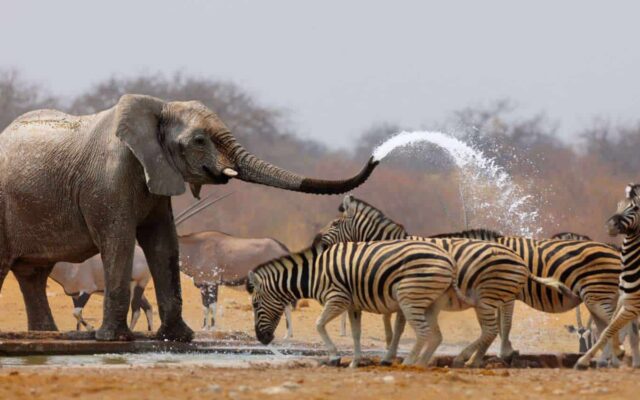
Elephants
Lions
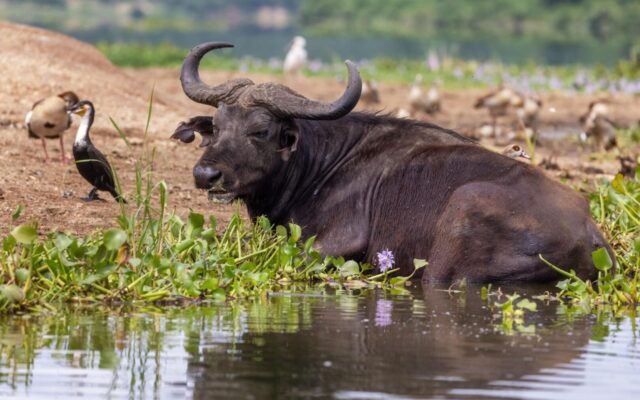
Buffaloes
Warthogs
Waterbucks
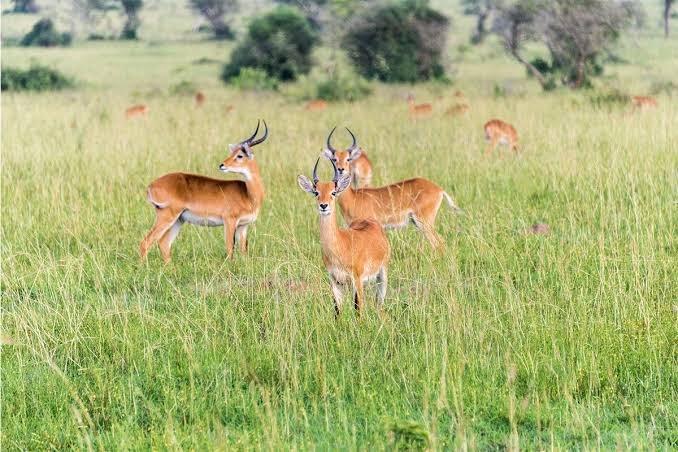
Uganda kobs
Hartebeests
Small antelopes
The reserve is also known for chimpanzees, although UWA notes that the number of chimpanzees within the reserve is unclear.
Wildlife movement between Bugungu and neighboring protected areas also contributes to the ecological importance of the area.
Elephants in Bugungu
Elephants are among the larger mammals associated with the Bugungu ecosystem.
Their presence reflects the wider connectivity between Bugungu, Murchison Falls National Park and surrounding habitats.
Because wildlife movements can vary with season, water availability and food distribution, sightings should never be guaranteed.
That is something I’d keep very clear on the website.
Lions and Other Predators
Bugungu also provides habitat for predators such as lions.
The reserve’s open savannah and woodland environments provide suitable habitat for large carnivores and their prey.
However, Bugungu should not be marketed as though it guarantees the same density of predator sightings as the better-known game-viewing areas of Murchison Falls National Park.
It is better described as a wild and less-developed extension of the Murchison ecosystem.
Uganda Kob and Antelopes
The reserve supports several antelope species, including Uganda kob, waterbuck and hartebeest.
Open grassland and woodland create a mixture of habitats suitable for different herbivores.
These animals also form an important part of the food chain supporting predators within the wider Murchison ecosystem.
Chimpanzees in Bugungu
One particularly interesting aspect of Bugungu is its association with chimpanzees.
UWA identifies chimpanzees as one of the species for which the reserve is known, although the exact population within the reserve is unclear.
This is worth mentioning, but I would not market Bugungu as a chimpanzee trekking destination in the same way as Kibale National Park.
That would create unrealistic expectations.
Bird Watching in Bugungu
Bugungu is also relevant to birding.
The combination of:
Savannah
Woodland
Wetlands
Lake Albert
Forest edges
creates a variety of bird habitats.
UWA notes the birdlife associated with the reserve and the adjoining Budongo landscape.
Local tourism information also reports more than 200 bird species in the reserve.
For serious birders, the wider Murchison–Budongo landscape can therefore be more rewarding than treating Bugungu as an isolated destination.
Bugungu and Budongo Forest
Bugungu has an interesting ecological relationship with Budongo Forest Reserve.
Budongo lies to the south of Bugungu, and the broader landscape creates a transition between forest and savannah habitats.
This is important because different habitats support different species.
A traveler can therefore combine:
Bugungu’s savannah
with
Budongo’s forest
for a more diverse wildlife experience.
Bugungu and Karuma Wildlife Reserve
Bugungu is also connected to Karuma Wildlife Reserve.
UWA describes Karuma as contiguous with both Murchison Falls National Park and Bugungu Wildlife Reserve.
Together, these reserves contribute to the larger protected landscape around Murchison Falls.
This makes them particularly useful for travelers interested in exploring lesser-known wildlife reserves surrounding Uganda’s major national parks.
Bugungu and Lake Albert
Lake Albert is one of the defining geographical features of the region.
The reserve’s position between the Murchison ecosystem and Lake Albert creates an interesting combination of terrestrial and aquatic landscapes.
For travelers exploring the area, Lake Albert can therefore become part of a broader western Uganda itinerary.
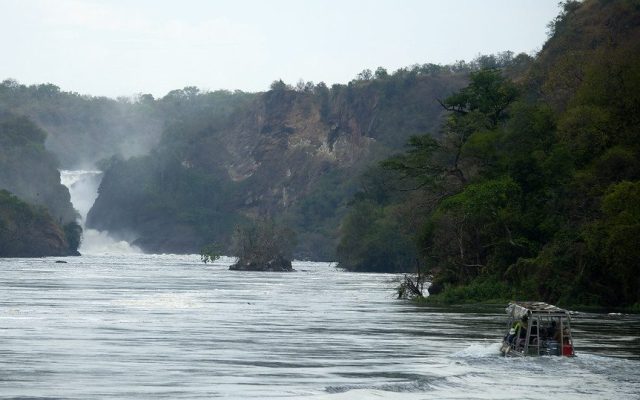
Waisoke Falls
One of the lesser-known natural features associated with Bugungu is Waisoke Falls.
The Murchison Falls protected-area management plan identifies the falls as having potential for picnicking and nature-based tourism, as the river descends through the escarpment into the reserve.
This is a useful attraction to mention, but I would avoid presenting it as a heavily developed tourism site.
Its appeal is precisely its natural and relatively undeveloped character.
Activities in Bugungu Wildlife Reserve
Activities associated with Bugungu include:
Game drives
Bird watching
Nature walks
Camping
Picnicking
Scenic viewing
Community visits
Local government tourism information specifically lists these activities among the experiences available in the reserve.
Game Drives in Bugungu
Game drives are one of the main ways to explore the reserve.
The open savannah and woodland provide opportunities to search for wildlife while enjoying the scenery of the Albertine Rift.
However, Bugungu should be marketed as a quieter alternative or extension to Murchison Falls, rather than promising a guaranteed Big Five experience.
Wildlife sightings are naturally unpredictable.
Nature Walks
Nature walks provide a different perspective from game drives.
Walking allows travelers to pay closer attention to:
Plants
Birds
Tracks
Insects
Landscape features
Smaller wildlife
Because the terrain can be rugged, walking should be done with appropriate local guidance and according to UWA regulations.
Bird Watching
Birding can be combined with game viewing or nature walks.
The variety of habitats means that visitors can look for birds associated with both woodland and open savannah environments.
For dedicated birders, the wider Bugungu–Budongo area offers particularly interesting possibilities.
Camping in Bugungu
Camping is among the tourism activities identified for Bugungu.
For adventurous travelers, camping can provide a more immersive experience than staying in a lodge outside the reserve.
However, because facilities at less-developed reserves can change, travelers should confirm current camping arrangements and available facilities with UWA or their safari operator before traveling.
Community Visits
Bugungu is surrounded by communities whose livelihoods are connected to agriculture, fishing, livestock keeping and other activities.
Community visits can help travelers understand the relationship between conservation and the people living around protected areas.
This is particularly important in areas where wildlife and human communities share the same landscape.
Conservation and Communities
Like many protected areas in Uganda, Bugungu exists within a landscape where conservation and human livelihoods interact.
UWA’s broader mandate includes working with neighboring communities and promoting wildlife conservation as a form of land use.
Responsible tourism can contribute to this relationship by creating economic opportunities and encouraging greater appreciation of wildlife.
Bugungu for Photographers
Bugungu is particularly interesting for landscape photographers.
Instead of focusing exclusively on animals, photographers can capture:
Lake Albert
Rift Valley escarpments
Savannah
Wildlife
Sunsets
Woodland
Distant mountains
The combination of elevation and open landscapes can produce some excellent panoramic images.
Bugungu for Adventure Travelers
If you prefer places that feel less commercialized, Bugungu can be appealing.
It offers a more exploratory experience than the heavily visited sections of Uganda’s flagship parks.
The combination of wildlife, rougher landscapes, escarpments and scenic viewpoints makes it suitable for travelers who want to experience a less familiar side of the Murchison region.
Bugungu for Families
Families can potentially include Bugungu in a broader safari itinerary, particularly when traveling through the Murchison region.
However, activities should be chosen according to the age of the children and current safety guidance.
For younger children, a conventional safari game drive may be more practical than longer nature walks.
Bugungu for Couples
Couples interested in scenery and quiet wildlife experiences may enjoy Bugungu.
The escarpment viewpoints overlooking Lake Albert can provide particularly memorable moments, especially around sunrise or sunset.
The reserve’s quieter character can also appeal to travelers looking for an experience away from crowded tourist areas.
Best Time to Visit Bugungu Wildlife Reserve
Bugungu can be visited throughout the year.
For easier wildlife viewing and road access, the drier periods are generally more convenient.
However, the rainy periods bring greener landscapes and can make the scenery particularly attractive.
The best timing therefore depends on whether your priority is:
Wildlife viewing
Photography
Birding
Scenery
Road accessibility
How Long Should You Spend in Bugungu?
For most travelers, Bugungu works best as part of a broader Murchison Falls itinerary rather than as a standalone multi-day destination.
A half-day or full-day experience may be enough depending on the activities planned.
Travelers interested in camping, nature walks and exploring the escarpment can dedicate more time.
How to Get to Bugungu Wildlife Reserve
One established access route is through the Masindi–Biiso–Buliisa road.
A World Bank document citing UWA information specifically identifies this route for accessing Bugungu Wildlife Reserve.
This makes the reserve particularly practical for travelers approaching from the Masindi side.
Because road conditions can change, especially during wet weather, current conditions should be checked before departure.
Bugungu and Murchison Falls Safari
The strongest way to market Bugungu on a tourism website is as part of a Murchison Falls safari circuit.
A traveler could combine:
Murchison Falls National Park
Bugungu Wildlife Reserve
Budongo Forest Reserve
Karuma Wildlife Reserve
Lake Albert
This creates a broader experience covering wildlife, forests, rivers, escarpments and lake landscapes.
Is Bugungu Wildlife Reserve Worth Visiting?
Yes, especially for travelers exploring the greater Murchison Falls region.
But I would position it correctly.
Bugungu is not another Murchison Falls National Park.
Its value comes from being a quieter protected area within the same broader conservation landscape, with savannah, woodland, wildlife, scenic escarpments and views toward Lake Albert.
For travelers who want to go beyond the standard Uganda safari route, Bugungu can add another layer to a Murchison itinerary.
Who Should Visit Bugungu Wildlife Reserve?
Bugungu is particularly suitable for:
Wildlife enthusiasts
Bird watchers
Landscape photographers
Nature lovers
Adventure travelers
Camping enthusiasts
Couples
Travelers exploring Murchison Falls
Visitors interested in lesser-known Ugandan reserves
Frequently Asked Questions
Where Is Bugungu Wildlife Reserve?
Bugungu is in western Uganda, between Murchison Falls National Park and Lake Albert, across the Buliisa and Masindi area.
When Was Bugungu Wildlife Reserve Established?
It was originally established as a Controlled Hunting Area in 1963 and became a Wildlife Reserve in 1968.
What Animals Are Found in Bugungu?
Wildlife includes elephants, lions, buffaloes, warthogs, waterbucks, Uganda kobs, hartebeests and other antelopes. UWA also identifies chimpanzees in the reserve, although their population there is unclear.
Can I Go on a Game Drive in Bugungu?
Yes. Game drives are among the activities associated with the reserve.
Is Bugungu Part of Murchison Falls National Park?
No. Bugungu is a separate Wildlife Reserve, but it is contiguous with Murchison Falls National Park and forms part of the wider Murchison Falls Conservation Area.
Can I Combine Bugungu With Murchison Falls?
Absolutely. In fact, that is probably the strongest way to include it in a Uganda safari itinerary.
Is Bugungu Good for Bird Watching?
Yes. Its mixture of woodland, savannah and wetland habitats supports a diverse bird community, with local authorities reporting more than 200 species.
Can I Camp in Bugungu?
Camping is listed among the activities associated with the reserve, but current facilities and arrangements should be confirmed before travel.