Overview
Entebbe Botanical Gardens – Travel Overview
Entebbe Botanical Gardens, officially known as the National Botanical Gardens of Uganda, is one of the most accessible nature attractions in Uganda. Located on the shores of Lake Victoria in Entebbe, the gardens offer visitors an opportunity to explore tropical vegetation, mature trees, birdlife and lakeside scenery without traveling far from Uganda’s main international airport.
The gardens are particularly useful for travelers who want a relaxed introduction to Uganda’s natural environment before beginning a longer safari.
Unlike Uganda’s national parks, the gardens are not a destination for large-animal game viewing. Their appeal lies in botanical diversity, bird watching, nature walks, photography, history and peaceful lakeside surroundings.
For travelers staying in Entebbe, the gardens can easily fill a few hours and can be combined with other nearby attractions such as the Uganda Wildlife Conservation Education Centre, Lake Victoria and Mabamba Swamp.
They are also an excellent option for travelers with a free morning or afternoon before a flight.
Where Are Entebbe Botanical Gardens?
Entebbe Botanical Gardens are located in Entebbe, Wakiso District, on the northern shores of Lake Victoria.
The gardens are within the city, making them relatively easy to reach from hotels and other accommodation in Entebbe.
Their location also means visitors can combine a garden visit with other Entebbe attractions without spending the entire day traveling between destinations.
For international visitors, the gardens are particularly convenient because they are relatively close to Entebbe International Airport.
What Makes Entebbe Botanical Gardens Special?
The gardens provide a peaceful green environment containing a wide variety of tropical plants and mature trees.
Walking through the gardens gives visitors a chance to experience Uganda’s plant life while observing birds and other small wildlife.
The location beside Lake Victoria adds another dimension to the experience.
Rather than being a formal garden filled only with ornamental plants, the area provides a mixture of vegetation, natural habitats and open lakeside spaces.
This makes it particularly interesting for travelers who enjoy nature walks and photography.
A Brief History of the Gardens
The gardens have a long history dating back to the colonial period.
They were established in the early twentieth century and have played an important role in botanical research, plant conservation and education in Uganda.
Over time, the gardens have developed into both a scientific and recreational space.
Their history is therefore part of what makes a visit interesting.
A traveler walking through the gardens is experiencing a site that has played a role in Uganda’s botanical and environmental history for generations.
The Botanical Collection
The gardens contain a variety of tropical vegetation.
Visitors can encounter:
Large mature trees
Palms
Flowering plants
Shrubs
Climbers
Wetland vegetation
Native plant species
Introduced tropical plants
The vegetation changes across different parts of the gardens, creating a variety of habitats for wildlife.
A guided walk can help visitors understand the ecological and cultural uses of different plants.
Nature Walks
Walking is the main way to explore the gardens.
The paths allow visitors to move between different sections while observing plants, trees and wildlife.
The walking experience is generally relaxed rather than physically demanding.
That makes the gardens suitable for travelers who want to spend a few hours outdoors without committing to strenuous hiking.
Comfortable shoes are still recommended because some areas can become muddy after rain.
Bird Watching at Entebbe Botanical Gardens
Bird watching is one of the most rewarding activities in the gardens.
The mature vegetation provides shelter and feeding opportunities for numerous bird species.
Visitors may encounter:
Weavers
Sunbirds
Kingfishers
Turacos
Hornbills
Woodpeckers
African fish eagles
Herons
Egrets
and many other species.
The exact birds seen will depend on the season, time of day and weather conditions.
Early morning is generally an excellent period for birding.
Entebbe Botanical Gardens for Birders
For serious bird watchers, the gardens can form part of a broader Entebbe birding itinerary.
The city is particularly interesting because several different habitats occur close together.
Birders can combine the gardens with:
Mabamba Swamp
Lutembe Bay Wetland
Lake Victoria
Other nearby wetlands and forest habitats
This allows visitors to experience forest, garden, wetland and lakeside environments within the same general region.
Wildlife in the Gardens
Entebbe Botanical Gardens are not a traditional safari destination, but visitors can encounter smaller wildlife while exploring.
Depending on the area and season, this can include monkeys, squirrels, butterflies, insects, reptiles and numerous birds.
The gardens therefore provide an opportunity to observe wildlife in a relatively peaceful environment.
Visitors should avoid feeding or approaching wild animals.
Monkeys and Other Small Mammals
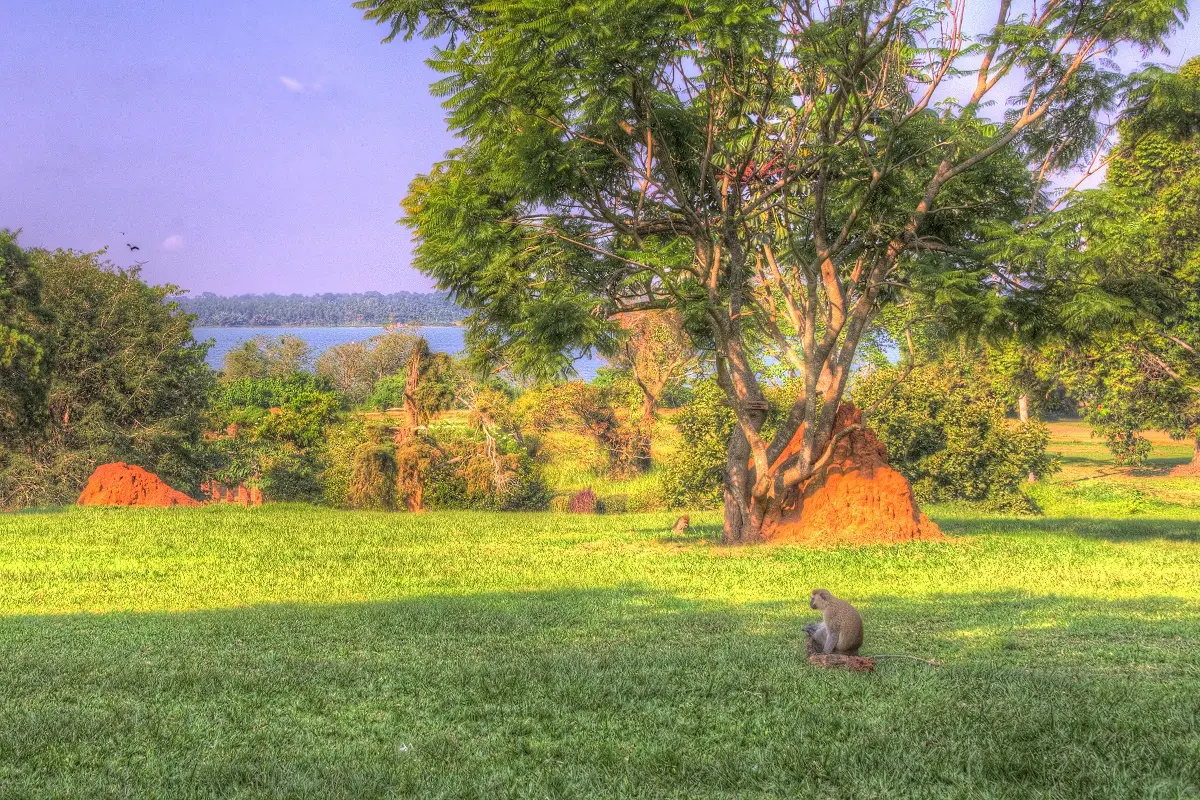
Monkeys may occasionally be seen moving through the trees and vegetation.
Their presence adds an unexpected wildlife element to the garden experience.
Squirrels and other small mammals may also be observed.
However, sightings are not guaranteed, and visitors should avoid treating the animals like captive wildlife.
The attraction is the opportunity to encounter animals living freely within the garden environment.
Lake Victoria and the Gardens
One of the gardens’ most attractive features is their location beside Lake Victoria.
The lake provides an open contrast to the dense vegetation found in other parts of the gardens.
Visitors can enjoy views across the water and experience the relationship between the botanical environment and the lake.
The lakeside setting also makes the gardens a good place for photography.
Photography at Entebbe Botanical Gardens
The gardens provide many opportunities for nature photography.
Photographers can capture:
Large tropical trees
Flowers
Birds
Butterflies
Monkeys
Forest paths
Lake Victoria
Sunlight through vegetation
Lakeside landscapes
The variety of vegetation means that even a short walk can produce several different photographic subjects.
Bird photographers should carry binoculars or a suitable telephoto lens.
The Gardens as an Educational Experience
Entebbe Botanical Gardens are particularly useful for travelers interested in plants and environmental education.
A guided visit can explain:
Plant identification
Traditional plant uses
Forest ecology
Plant conservation
Botanical research
Wetland environments
Wildlife habitats
For children, this can turn a simple walk into an educational outdoor experience.
Traditional Uses of Plants
Uganda has a long history of using plants for food, medicine, construction and cultural purposes.
Some plants found in the gardens have traditional or practical uses.
Guides can provide context about how communities have historically interacted with Uganda’s plant resources.
Visitors should avoid collecting plants or attempting to use unfamiliar species themselves.
The purpose of the visit is observation and learning.
Entebbe Botanical Gardens for Families
The gardens are a good option for families.
Children can walk through the vegetation, observe birds and insects and learn about different types of plants.
Unlike a long safari drive, the experience allows children to move around and explore at a comfortable pace.
Parents should still supervise children, particularly near the lakeside and around wildlife.
Entebbe Botanical Gardens for Couples
Couples can also enjoy the gardens as a relaxed outdoor experience.
The combination of mature trees, walking paths and Lake Victoria scenery provides a peaceful environment away from busy urban areas.
A garden walk can be particularly suitable for couples looking for a quieter activity during an Entebbe stay.
Entebbe Botanical Gardens for Photographers
The gardens are especially useful for photographers who want to capture Uganda’s tropical landscapes without traveling to a remote forest.
The mixture of plants, wildlife and lake scenery creates numerous subjects within a relatively compact area.
Morning and late afternoon can provide attractive natural light.
Bird photographers should be patient because many species remain high in the trees or hidden within vegetation.
Best Time to Visit
Entebbe Botanical Gardens can be visited throughout the year.
However, weather can influence the experience.
During rainy periods, vegetation is often lush and green, but some paths may become muddy.
During drier periods, walking conditions may be easier.
For bird watching, early morning is generally one of the best times to visit.
Visitors who want cooler conditions for walking may also prefer morning or late afternoon.
How Long Should You Spend at the Gardens?
Most visitors can explore the gardens within two to three hours.
Nature lovers, photographers and birders may prefer to spend longer.
A short visit works well for travelers with limited time.
A longer visit can include a guided nature walk, bird watching and photography.
Because the gardens are within Entebbe, they can also be combined easily with other attractions.
Entebbe Botanical Gardens and UWEC
One of the easiest combinations is Entebbe Botanical Gardens and the Uganda Wildlife Conservation Education Centre (UWEC).
The two attractions provide different experiences.
The botanical gardens focus on plants, birds and natural habitats.
UWEC focuses more directly on wildlife conservation and education.
Together, they can create a well-balanced half-day or full-day Entebbe excursion.
Entebbe Botanical Gardens and Mabamba Swamp
Travelers interested in bird watching can combine the gardens with Mabamba Swamp.
Mabamba is particularly famous for the Shoebill and is explored by canoe.
The botanical gardens offer forest and garden birding.
Combining the two gives travelers a wider experience of Uganda’s birdlife and wetland environments.
Entebbe Botanical Gardens and Lake Victoria
The gardens can also be combined with a broader Lake Victoria experience.
Travelers can enjoy the gardens during the day and then explore the lakeside or take a boat excursion later.
This combination is particularly suitable for visitors who want a relaxed day rather than a demanding itinerary.
Entebbe Botanical Gardens and Ngamba Island
Travelers interested in wildlife conservation can consider combining the gardens with Ngamba Island Chimpanzee Sanctuary.
The island experience focuses on chimpanzee conservation, while the gardens provide botanical and birding experiences.
Because Ngamba requires boat travel and careful timing, the two activities should be planned in advance rather than treated as spontaneous stops.
Entebbe Botanical Gardens and Lutembe Bay
For serious birders, Lutembe Bay Wetland can provide another complementary destination.
Lutembe offers wetland and lakeshore habitats, while the botanical gardens provide more terrestrial vegetation.
The combination can therefore broaden the range of habitats explored during an Entebbe birding trip.
Getting to Entebbe Botanical Gardens
The gardens are located within Entebbe and can be reached by road from the town center.
Travelers staying in Entebbe can usually arrange transport through their accommodation or tour operator.
Visitors coming from Kampala can also include the gardens in a day trip to Entebbe.
Travel times from Kampala vary significantly depending on traffic.
Visiting Before Your Flight
One of the biggest advantages of the gardens is their suitability for travelers with limited time.
If you have a late international flight from Entebbe, you may be able to visit the gardens earlier in the day, depending on your accommodation, transport arrangements and airport check-in requirements.
However, travelers should leave a generous buffer for traffic and airport procedures.
Do not schedule the gardens so tightly that a delay could put an international flight at risk.
Visiting After Arrival in Uganda
The gardens can also be a good first-day activity for travelers arriving in Uganda.
Rather than immediately starting a long safari drive after an international flight, visitors can spend some time around Entebbe.
A relaxed garden walk provides an easy introduction to Uganda’s tropical environment.
The following morning, travelers can then begin their safari.
Accommodation Near the Gardens
Because the gardens are located in Entebbe, visitors have access to a broad range of accommodation.
Options include:
Budget guesthouses
Mid-range hotels
Boutique properties
Lakeside accommodation
Higher-end hotels
Staying in Entebbe is particularly convenient for travelers with early flights or activities around Lake Victoria.
What Should You Bring?
For a visit to the gardens, travelers should consider carrying:
- Comfortable walking shoes
- Drinking water
- Camera
- Binoculars
- Insect repellent
- Sunscreen
- Hat
- Light clothing
- Rain jacket
Birders should carry a field guide or bird-identification application.
Is Entebbe Botanical Gardens Safe?
Visitors should follow normal precautions while exploring the gardens.
Stay on appropriate paths, follow guide instructions and avoid approaching wildlife.
The lakeside environment also requires caution, particularly when traveling with children.
If you are visiting with a guide, follow their advice regarding areas that should or should not be entered.
Responsible Tourism
The botanical gardens are an important environmental and educational site.
Visitors can help protect them by:
Not picking flowers or plants.
Avoiding litter.
Not feeding wildlife.
Staying on designated paths.
Avoiding unnecessary disturbance to birds and animals.
Respecting other visitors.
Following guide instructions.
Responsible behavior helps maintain the gardens as a place for conservation, research, education and tourism.
Is Entebbe Botanical Gardens Worth Visiting?
Yes, particularly if you are already staying in Entebbe.
The gardens are not a substitute for Uganda’s national parks or major forests, but they offer something different.
They provide an accessible introduction to Uganda’s plant life and smaller wildlife while also offering beautiful views around Lake Victoria.
For travelers with only a few hours available, the gardens can be an excellent choice.
For bird watchers, photographers and nature lovers, they can become an even more rewarding part of an Entebbe itinerary.
Who Should Visit Entebbe Botanical Gardens?
The gardens are particularly suitable for:
Nature lovers
Bird watchers
Families
Photographers
Couples
Botany enthusiasts
Travelers with limited time
Visitors staying in Entebbe
Travelers before or after a safari
Visitors looking for relaxed outdoor activities
Their greatest advantage is accessibility.
You can experience a surprisingly rich natural environment without traveling far from Entebbe International Airport.
Frequently Asked Questions
Where Are Entebbe Botanical Gardens?
They are located in Entebbe on the northern shores of Lake Victoria in Uganda.
What Can I See at Entebbe Botanical Gardens?
Visitors can see a variety of tropical plants, mature trees, birds, butterflies and sometimes small mammals such as monkeys and squirrels.
Are Entebbe Botanical Gardens Good for Bird Watching?
Yes. The gardens provide habitat for numerous bird species and can be combined with other birding destinations around Entebbe.
How Long Does a Visit Take?
Around two to three hours is suitable for a general visit, although birders and photographers may stay longer.
Can I Visit the Gardens Before My Flight?
Yes, depending on your flight time. However, always leave enough time for transport, airport procedures and possible traffic delays.
Can I Combine the Gardens With Mabamba Swamp?
Yes. This is an excellent combination for travelers interested in birds and nature.
Can I Combine the Gardens With UWEC?
Yes. The two attractions complement each other well.
Are the Gardens Suitable for Children?
Yes. They can provide an enjoyable and educational outdoor experience for families.
What Should I Bring?
Comfortable walking shoes, water, insect repellent, sun protection, a camera and binoculars are useful.
Is Entebbe Botanical Gardens a National Park?
No. They are a botanical and conservation-oriented garden attraction within Entebbe.