






Overview
Igongo Cultural Centre – Travel Overview
Igongo Cultural Centre is one of the most important cultural tourism attractions in southwestern Uganda, offering visitors an opportunity to explore the history, traditions and everyday heritage of the Ankole region.
Located at Biharwe near Mbarara, Igongo combines a cultural museum, reconstructed traditional homes, historical monuments, local crafts, accommodation, restaurants and other visitor facilities. The centre is particularly valuable for travelers who want to understand the people and traditions behind the landscapes of southwestern Uganda rather than simply passing through the region on a safari.
The centre also provides an excellent cultural complement to nearby destinations such as Lake Mburo National Park, making it easy to include in a southwestern Uganda safari.

Where Is Igongo Cultural Centre?
Igongo Cultural Centre is located at Biharwe, along the Mbarara–Masaka highway, roughly 12 kilometres from Mbarara City.
Its location makes it particularly convenient for travelers driving between Kampala and southwestern Uganda.
It can also be incorporated into itineraries heading toward:
Lake Mburo National Park
Mbarara
Queen Elizabeth National Park
Bwindi Impenetrable National Park
Mgahinga Gorilla National Park
Lake Bunyonyi
The Mbarara City tourism information also identifies Igongo as a convenient access point for several major attractions in western Uganda.
What Is Igongo Cultural Centre Famous For?
Igongo is primarily famous for preserving and presenting the cultural and natural heritage of southwestern Uganda, particularly the heritage of Ankole.
Its attractions include:
Eriijukiro Museum
Cultural Village
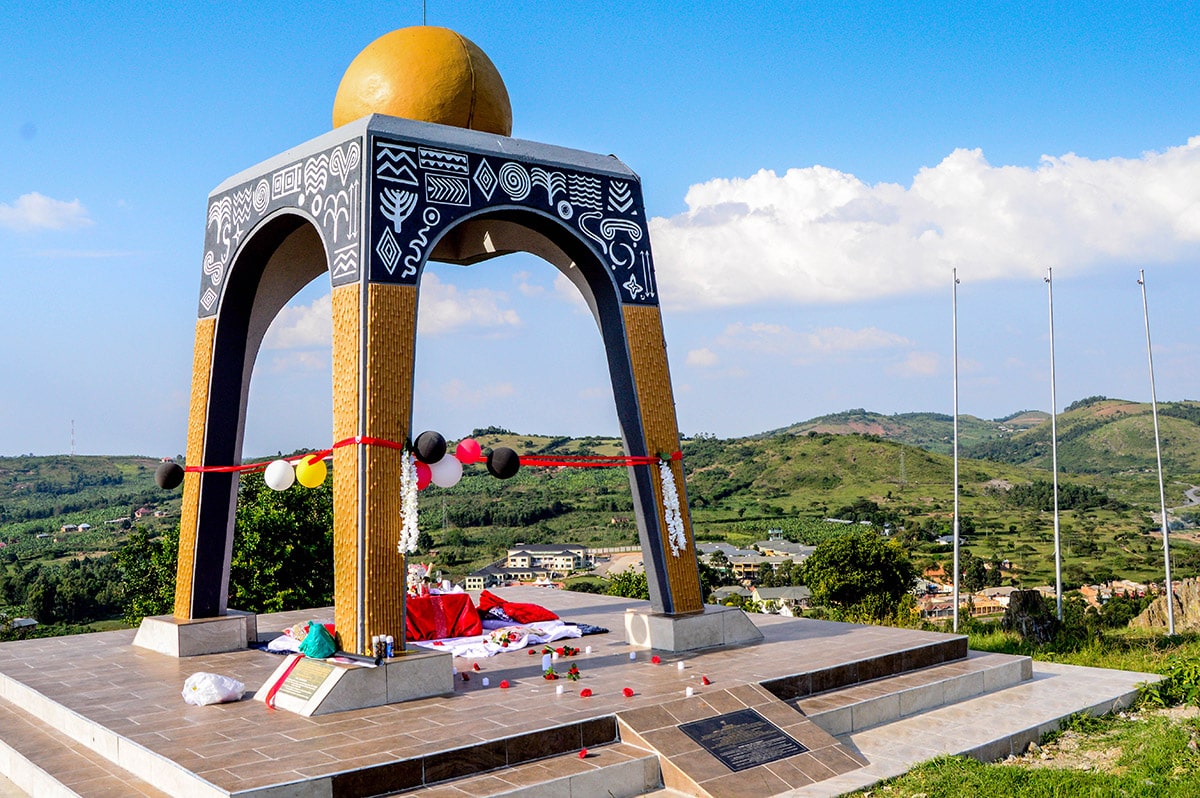
Biharwe Eclipse Monument
Nkwanzi Crafts Shop
Mpororo Courts
Traditional architecture
Cultural performances
Local food
Ankole heritage exhibits
The centre also provides accommodation, restaurants, conference facilities and wellness services.
Eriijukiro Museum
The Eriijukiro Museum is the heart of the cultural experience at Igongo.
The museum contains collections of artifacts, photographs and other materials that help explain the traditions and history of southwestern Uganda.
The exhibits cover subjects including:
Family life
Community organization
Traditional skills
Clans
Social structures
Leadership
Ankole history
Traditional objects
The museum was established to preserve and promote the cultural and natural heritage of southwestern Uganda.
For visitors, it provides context that you simply cannot get from driving through the Ankole countryside.
Understanding Ankole Culture
One of the strongest reasons to visit Igongo is the opportunity to learn about Ankole culture.
Historically, cattle were extremely important to communities in the region, providing milk, meat, hides and other resources while also playing important social and cultural roles.
The famous long-horned Ankole cattle are therefore an important part of the region’s cultural identity.
Igongo uses museum exhibits, traditional structures and cultural displays to help visitors understand this relationship between people, cattle, land and society.
The Cultural Village
Igongo’s Cultural Village, known as Itaramiro, recreates aspects of traditional life in southwestern Uganda.
The village includes traditional-style homes representing different livelihoods and social settings.
The centre’s current information describes reconstructed homes associated with:
Bariisa – cattle keepers
Abahiingi – crop farmers
The village also includes an amphitheater and spaces used for storytelling and cultural activities.
This makes the experience more visual and interactive than a conventional museum visit.
Traditional Architecture
The Cultural Village gives visitors an opportunity to see traditional architectural styles that were once common in southwestern Uganda.
The structures help demonstrate how homes were designed according to:
Family life
Occupation
Available materials
Climate
Social organization
Rather than simply looking at objects behind glass, visitors can walk through reconstructed environments and see how different aspects of traditional life fitted together.
Biharwe Eclipse Monument
One of the most fascinating historical attractions associated with Igongo is the Biharwe Eclipse Monument.
The site commemorates a solar eclipse traditionally associated with the history of the region around 1520 AD.
The event has historical importance because the eclipse has been used as a chronological reference point when discussing the reigns of rulers in the Great Lakes region.
The monument is located on a hill near the centre.
Visitors can hike toward the site and enjoy views across the surrounding landscape.
The Story Behind the Biharwe Eclipse
The Biharwe eclipse is connected to the history and oral traditions of the region.
Historical accounts and traditions associate the eclipse with a period of conflict involving Bunyoro and Nkore.
The eclipse reportedly occurred during a major battle, and its sudden appearance contributed to the withdrawal of the invading forces.
This is one reason the event became so important as a chronological marker in regional history.
The story makes the monument particularly interesting for travelers who enjoy the intersection of history, astronomy and oral tradition.
Igongo and Lake Mburo
One of the strongest tourism connections is with Lake Mburo National Park.
Igongo is located conveniently along the route toward the park, making it easy to combine a cultural visit with a wildlife safari.
A traveler can experience:
Ankole culture at Igongo
followed by
Wildlife viewing at Lake Mburo
This creates a much more diverse itinerary than focusing exclusively on game drives.
Igongo and Ankole Long-Horned Cattle
The famous Ankole long-horned cattle are one of the visual symbols of southwestern Uganda.
Their long, curved horns and distinctive appearance make them particularly interesting to visitors.
The cattle are more than an agricultural resource; they have historically been associated with:
Wealth
Status
Marriage arrangements
Social identity
Milk production
Cultural traditions
Igongo’s cultural displays help explain this deeper significance.
The Power of Milk
One particularly interesting museum exhibition at Igongo is The Power of Milk.
The exhibition explores the cultural significance of milk in southwestern Uganda and was developed through cooperation involving the Uganda National Museum, Igongo Cultural Centre and the Ethnographic Museum at the University of Zurich. (Uganda Museums)
The exhibition is useful because it shows that cattle culture was not simply about owning animals.
Milk itself played an important role in food, hospitality, social relationships and cultural life.
Nkwanzi Crafts Shop
Visitors can also explore the Nkwanzi Crafts Shop, where traditional and locally inspired crafts are available.
The centre’s current information notes that the shop includes books related to Ankole and Kigezi history as well as traditional costumes and other items.
For travelers looking for meaningful souvenirs, this is a better option than buying generic imported products.
Mpororo Courts
Igongo also features the Mpororo Courts, where visitors can explore artifacts associated with the history of the former Mpororo kingdom.
The attraction provides another connection between the museum experience and the wider history of southwestern Uganda.
Cultural Performances
Cultural performances can form part of the Igongo experience.
Traditional music and dance offer visitors another way to understand the region’s heritage.
The centre has historically worked with traditional music and drama groups from western Uganda, allowing different performances to be organized.
For a travel website, I’d describe performances as available depending on arrangements and scheduling, rather than promising that a particular dance group will perform every day.
Traditional Food at Igongo
Food is an important part of the cultural experience.
Igongo provides opportunities to experience both local and international cuisine, with traditional dishes helping visitors connect the museum experience to everyday life in southwestern Uganda.
For travelers interested in food tourism, this makes Igongo more than a sightseeing stop.
Igongo for Cultural Travelers
Igongo is particularly valuable for travelers who want to understand Uganda’s cultural diversity.
Instead of simply seeing traditional objects, visitors can connect:
History
Architecture
Cattle culture
Food
Music
Crafts
Traditional livelihoods
into one experience.
This makes it particularly useful for international visitors who may have limited opportunities to encounter Ankole heritage elsewhere during their safari.
Igongo for Families
Igongo can work very well for families.
Children can learn about:
Traditional homes
Cattle keeping
Farming
Old household objects
Crafts
Music
Local history
The cultural village is particularly useful for younger visitors because it makes history more tangible.
Igongo for Couples
Couples can combine the cultural experience with the centre’s accommodation, gardens and dining facilities.
A visit can therefore be more relaxed than simply arriving, touring the museum and immediately leaving.
For couples traveling toward Lake Mburo or southwestern Uganda, Igongo can make a convenient cultural stop.
Igongo for Photography
There are plenty of photographic subjects around the centre.
You can capture:
Ankole long-horned cattle
Traditional huts
Museum displays
Cultural sculptures
Crafts
Gardens
Biharwe landscape
Eclipse Monument
Traditional performances
If photographing cultural performances or people, permission should be obtained first.
Igongo and Mbarara
Igongo is closely connected to Mbarara, one of the major urban centers of southwestern Uganda.
This makes it easy to combine a visit to the centre with:
Mbarara city
Ankole cultural attractions
Lake Mburo National Park
River Rwizi
Biharwe
and other destinations around the region.
Accommodation at Igongo
Igongo is not simply a museum.
The complex also provides accommodation, allowing travelers to stay on-site.
This can be useful for visitors who want to explore the cultural centre without rushing or who are using the property as a stopover between destinations.
The centre also provides restaurants and other hospitality facilities.
Wellness and Recreation
For travelers staying at the property, Igongo also offers wellness facilities.
These include services associated with the Humura Health Club, including spa services, swimming and salon facilities.
This makes the centre suitable for travelers looking for a mixture of cultural exploration and relaxation.
Conferences and Events
Igongo also has facilities for meetings, conferences and private functions.
Its conference hall can accommodate large gatherings, while the wider property can host events such as celebrations and other functions.
This gives the centre a role in both leisure tourism and business/event tourism.
How Long Should You Spend at Igongo?
A basic museum and cultural visit can be completed in a few hours.
However, if you want to include:
The museum
Cultural Village
Biharwe Eclipse Monument
Craft shopping
Lunch
then allowing half a day is much more comfortable.
If you’re staying at the centre, you can naturally make it part of a longer western Uganda itinerary.
Best Time to Visit Igongo
Igongo can be visited throughout the year.
Because much of the experience takes place indoors and around established facilities, it is less dependent on weather than purely outdoor attractions.
However, if you plan to hike to the Biharwe Eclipse Monument or combine the visit with other outdoor attractions, weather conditions should be considered.
How to Get to Igongo Cultural Centre
Igongo is located along the Mbarara–Masaka highway, making it relatively straightforward to reach by road.
From Mbarara, it is approximately 12 kilometres away, while travelers coming from Kampala encounter the centre before reaching Mbarara.
Its position along the highway makes it particularly convenient for safari travelers.
Responsible Cultural Tourism
When visiting Igongo, travelers should approach cultural heritage respectfully.
Visitors should:
Respect museum objects.
Follow photography rules.
Ask permission before photographing people.
Listen to local guides.
Respect traditional practices.
Avoid touching artifacts unless permitted.
Support local craftspeople.
Avoid treating cultural traditions as entertainment without context.
Cultural tourism works best when visitors approach it with curiosity and respect.
Is Igongo Cultural Centre Worth Visiting?
Absolutely.
For travelers heading into southwestern Uganda, Igongo offers something that a wildlife safari cannot provide: context about the people, history and traditions of the region.
You can learn about Ankole cattle culture, explore traditional architecture, see historical artifacts, hear stories connected to the Biharwe eclipse and experience local cuisine—all within one destination.
Its location also makes it particularly useful as a cultural stop before or after Lake Mburo National Park.
Who Should Visit Igongo Cultural Centre?
Igongo is particularly suitable for:
Cultural travelers
History enthusiasts
Families
Photographers
Food travelers
Couples
Students
Researchers
Travelers visiting Mbarara
Lake Mburo safari travelers
Visitors interested in Ankole heritage
Frequently Asked Questions
Where Is Igongo Cultural Centre?
It is located at Biharwe, approximately 12 kilometres from Mbarara City along the Mbarara–Masaka highway.
What Can I See at Igongo Cultural Centre?
You can explore the Eriijukiro Museum, Cultural Village, Biharwe Eclipse Monument, Mpororo Courts, crafts shop and cultural displays, with accommodation, dining and other facilities also available.
What Culture Does Igongo Cultural Centre Showcase?
The centre primarily showcases the heritage of Ankole and southwestern Uganda, while also presenting aspects of neighboring cultures and kingdoms.
What Is the Biharwe Eclipse?
It refers to a historically significant solar eclipse associated with Biharwe around 1520 AD, which has been used as a chronological reference in regional Great Lakes history.
Can I Combine Igongo With Lake Mburo National Park?
Yes. The two destinations work particularly well together because of Igongo’s location along the route toward Lake Mburo.
How Much Time Do I Need at Igongo?
Allowing half a day is ideal if you want to comfortably experience the museum, cultural village, historical site and other activities.