








Overview
Ishasha Sector – Travel Overview
Ishasha Sector is the remote southern section of Queen Elizabeth National Park in western Uganda, famous for its dramatic landscapes, abundant wildlife and, most notably, its tree-climbing lions.
Situated close to Uganda’s border with the Democratic Republic of the Congo, Ishasha offers a quieter and more wilderness-oriented safari experience than some of the more frequently visited areas of Queen Elizabeth National Park.
The sector is characterized by open savannah, fig trees, acacia woodland, wetlands and the Ishasha River. These varied habitats support elephants, buffaloes, antelopes, hippos, lions and numerous bird species.
For travelers planning a Uganda safari, Ishasha is particularly attractive because it offers a combination of wildlife viewing, remote wilderness and unusual lion behavior.
The sector is also strategically positioned for travelers combining Queen Elizabeth National Park with Bwindi Impenetrable National Park, making it a popular part of southwestern Uganda safari itineraries.
Where Is Ishasha Sector?
Ishasha Sector lies in the southern part of Queen Elizabeth National Park, in western Uganda.
It is located close to the border with the Democratic Republic of the Congo, with the Ishasha River forming part of the international boundary in the area.
The sector is separated from the more central areas of Queen Elizabeth National Park by considerable distances, which contributes to its quieter atmosphere.
Its location also makes Ishasha particularly useful for travelers heading between Queen Elizabeth National Park and Bwindi.
What Makes Ishasha Special?
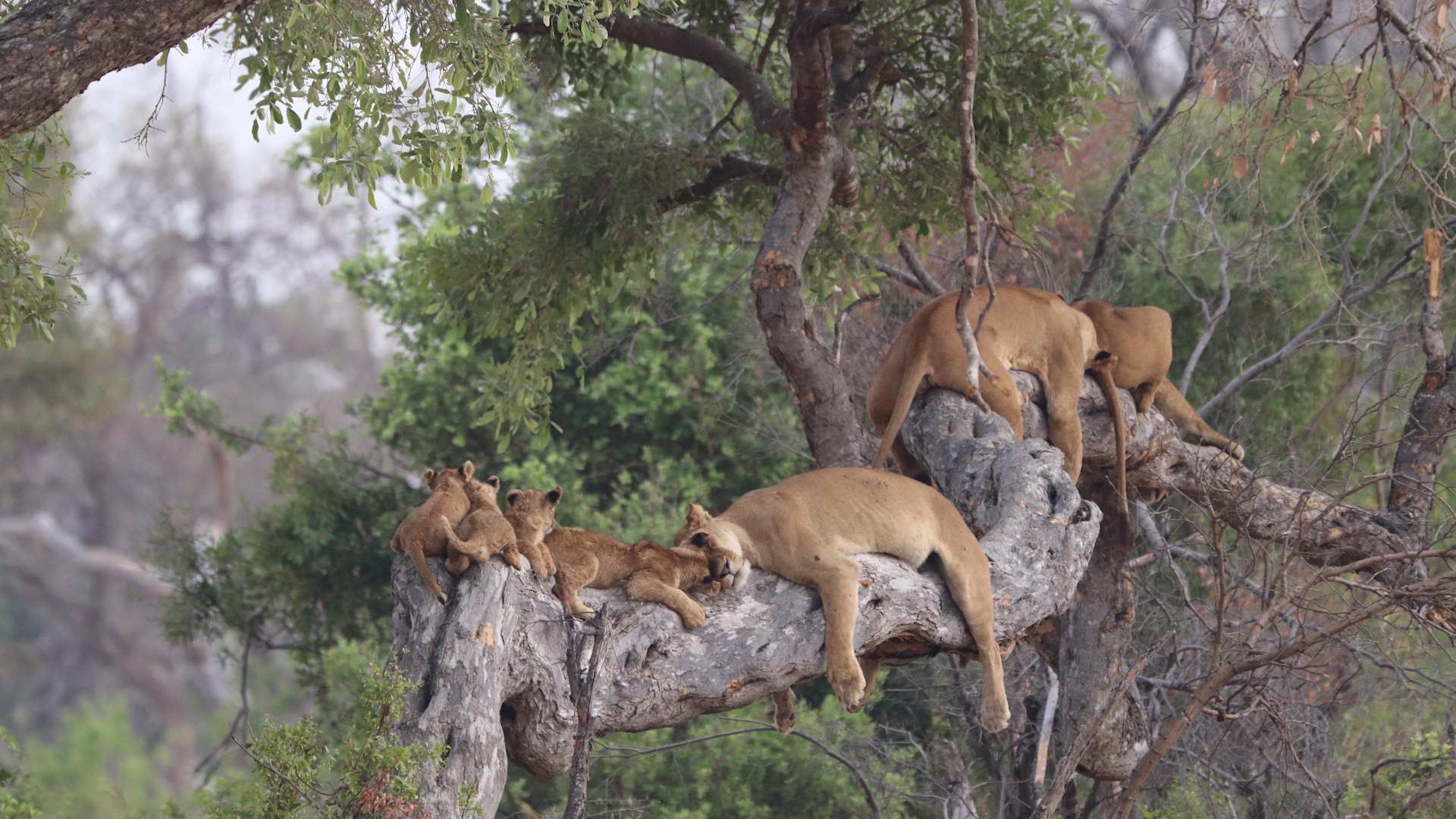
The biggest attraction is the area’s tree-climbing lions.
Unlike most lions, which spend much of their time resting on the ground, Ishasha’s lions are famous for climbing trees and spending periods resting on large branches.
Seeing a lion stretched across a tree branch above the savannah is one of the most memorable wildlife experiences in Uganda.
But the lions are only part of Ishasha’s appeal.
The sector’s remote setting, open plains, riverine habitats and relatively low visitor traffic create a distinctive safari atmosphere.
The Famous Tree-Climbing Lions
The tree-climbing lions are the wildlife attraction most closely associated with Ishasha.
Visitors may encounter lions resting in the branches of large fig trees or other suitable trees.
Why they climb remains an interesting subject of wildlife observation. Possible explanations include escaping insects, catching a breeze, gaining a better view of the surroundings or simply finding a comfortable resting position.
The behavior is not exclusive to Ishasha, and tree-climbing lions can occur elsewhere in East Africa.
However, Ishasha is particularly well known for the opportunity to observe this behavior.
A sighting is never guaranteed, because lions are wild animals and their location changes constantly.
Why Do Ishasha Lions Climb Trees?
There is no single explanation that applies to every tree-climbing lion.
Researchers and wildlife observers have proposed several possible reasons.
Trees may provide relief from insects, offer shade and airflow, or give lions a useful vantage point over the surrounding landscape.
Sometimes the simplest explanation may be that the tree provides a comfortable place to rest.
Whatever the reason, the behavior gives visitors a fascinating opportunity to observe lions in an unusual setting.
Wildlife in Ishasha
Ishasha supports a diverse collection of wildlife.
During game drives, visitors may encounter:
African elephants
Buffaloes
Lions
Topi
Uganda kob
Hippopotamuses
Warthogs
Antelopes
Leopards
Monkeys
Birds
The open savannah makes it possible to scan large areas for animals, while woodland and river habitats provide additional opportunities for sightings.
Ishasha Elephants
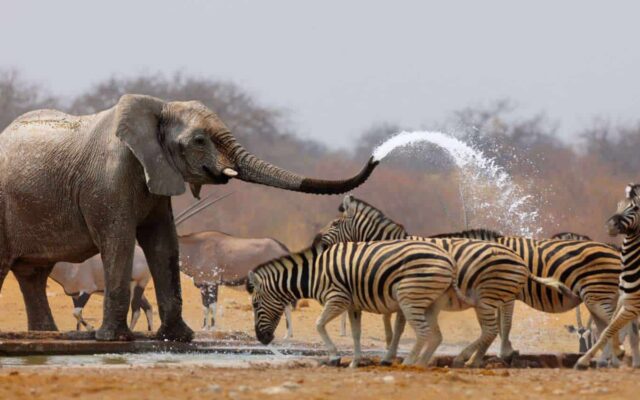
Elephants are among the animals commonly encountered in Ishasha.
They may move through the savannah, woodland and areas around the river.
Watching elephants in a relatively quiet wilderness environment can be particularly rewarding because visitors may spend more time observing natural behavior rather than simply moving from one sighting to another.
As always, wildlife should be observed from a safe distance and according to guide instructions.
Buffaloes and Antelopes
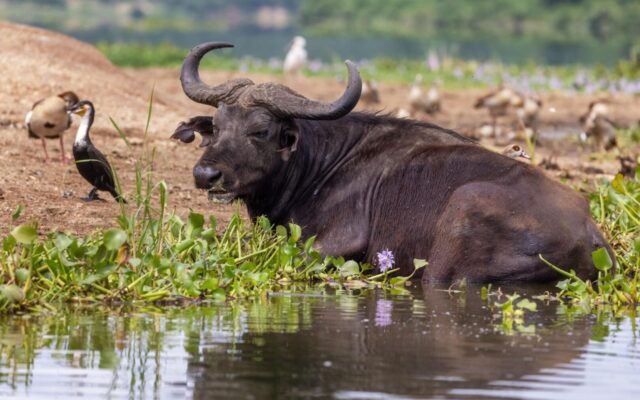
Large herds of African buffalo can occur across Ishasha’s grasslands.
The sector is also known for its populations of Uganda kob and topi, which can often be seen grazing across the open plains.
These herbivores form an important part of the ecosystem and also provide prey for large predators.
The presence of both prey and predators makes Ishasha an interesting area for game drives.
Leopards in Ishasha
Leopards also occur in Queen Elizabeth National Park, including the Ishasha area.
However, leopard sightings are much less predictable than encounters with more common herbivores.
Leopards are solitary, elusive and often active around dawn, dusk or at night.
A patient guide and favorable conditions can improve the chances of finding one, but there should never be an expectation of a guaranteed sighting.
The Ishasha River
The Ishasha River is one of the defining geographical features of the sector.
The river contributes to the area’s wildlife habitat and provides water for animals.
Its surroundings can be particularly productive for wildlife viewing.
Hippos and other animals may be seen around suitable water areas, while birds are attracted to the river and surrounding vegetation.
The river also contributes to Ishasha’s sense of wilderness because it forms part of the natural landscape along the Uganda–DRC border.
The Ishasha Plains
The open plains are another major feature of the sector.
Grasslands provide grazing areas for herbivores while allowing predators to move through the landscape.
The combination of open grassland and scattered trees is particularly attractive for photography.
Early morning light can create beautiful views across the plains, while afternoon and evening light can dramatically change the appearance of the landscape.
Game Drives in Ishasha
The primary way to explore Ishasha is through game drives.
Morning and afternoon drives allow visitors to search for wildlife across different habitats.
A typical drive may involve moving through:
Open grassland
Woodland
Riverine areas
Fig-tree habitats
Savannah plains
The exact route depends on wildlife movements, road conditions and the guide’s knowledge of the area.
Unlike attractions where animals are concentrated in one small location, Ishasha requires patience and observation.
Morning Game Drives
Morning is an excellent time for wildlife viewing.
Temperatures are generally cooler, and many animals are active after the night.
Predators may still be moving through the landscape, while herbivores begin feeding.
Morning light also provides favorable conditions for photography.
Travelers hoping to see lions should be prepared to spend time searching rather than expecting to find them immediately.
Afternoon Game Drives
Afternoon drives provide another opportunity to explore Ishasha.
As temperatures begin to fall, some wildlife becomes more active.
This can be a good period for observing elephants, antelopes and other animals.
The changing light can also make the savannah particularly attractive for photography.
Wildlife Photography
Ishasha is an excellent destination for wildlife photography.
The combination of open landscapes and scattered trees creates opportunities for both close wildlife portraits and wider environmental images.
The most sought-after photograph is naturally a lion resting in a tree.
Other opportunities include:
Elephants against the savannah
Buffalo herds
Topi
Uganda kob
Hippos
Birds
Savannah landscapes
A telephoto lens is recommended for wildlife photography.
Bird Watching in Ishasha
Although lions receive most of the attention, Ishasha is also an interesting destination for bird watchers.
The combination of grassland, woodland, riverine vegetation and wetlands supports many species.
Visitors may encounter:
African fish eagles
Kingfishers
Herons
Egrets
Storks
Hornbills
Weavers
Raptors
and numerous smaller savannah birds.
Travelers interested in birds should carry binoculars and allow time to stop and observe.
Ishasha and the Democratic Republic of the Congo
Ishasha’s location near the Democratic Republic of the Congo adds to its geographical significance.
Across the border lies Virunga National Park, creating a broader transboundary landscape of exceptional ecological importance.
Travelers should remember that the international border is regulated and cannot simply be crossed during a normal game drive.
The significance is primarily ecological and geographical: wildlife habitats extend beyond political boundaries.
Ishasha and Bwindi Impenetrable National Park
One of the strongest reasons travelers include Ishasha in their Uganda itinerary is its location relative to Bwindi Impenetrable National Park.
A safari can be designed to travel from Queen Elizabeth’s Ishasha Sector toward Bwindi, creating a natural transition from savannah wildlife to mountain forest.
This makes Ishasha particularly attractive for travelers planning:
Wildlife safari + gorilla trekking
The combination is one of Uganda’s most rewarding travel experiences.
Ishasha and Queen Elizabeth National Park
Ishasha is part of Queen Elizabeth National Park, but its experience can feel very different from the park’s more central areas.
The northern and central sections offer attractions such as the Kazinga Channel and crater areas.
Ishasha provides a more remote southern experience characterized by open plains, riverine habitats and famous tree-climbing lions.
For travelers with enough time, visiting both areas provides a much more complete understanding of the park.
Ishasha and the Kazinga Channel
The Kazinga Channel is one of Queen Elizabeth National Park’s best-known attractions.
It offers boat cruises and excellent opportunities to see hippos, crocodiles, elephants and waterbirds.
Combining a Kazinga Channel experience with an Ishasha game drive creates a varied Queen Elizabeth itinerary.
The two areas showcase different habitats and wildlife experiences within the same national park.
How Long Should You Spend in Ishasha?
A one- to two-night stay can work well for most travelers.
One night allows you to enjoy game drives while continuing toward another destination.
Two nights provide more flexibility and increase the amount of time available for wildlife viewing.
Travelers particularly interested in photography or predators may benefit from staying longer.
Accommodation in Ishasha
Accommodation in the sector is generally more wilderness-oriented than the larger tourism areas of Queen Elizabeth National Park.
Travelers can find safari lodges, tented camps and other accommodation options around the sector.
Because the area is remote, it is advisable to arrange accommodation in advance.
Travelers should also confirm current road and access conditions when planning their stay.
Best Time to Visit Ishasha
Ishasha can be visited throughout the year.
Drier periods can make some wildlife-viewing conditions easier because animals may concentrate around water sources and roads can be more accessible.
Rainy periods can make the landscape greener and more dramatic, although road conditions may become more challenging.
For tree-climbing lions, there is no specific season that guarantees sightings.
Wildlife behavior changes naturally from day to day.
Is Ishasha Good for Families?
Yes, provided the family enjoys wildlife viewing.
Children can find the tree-climbing lions particularly exciting because they offer something visually different from ordinary lion sightings.
Parents should ensure children remain quiet and follow the guide’s instructions during game drives.
The remote environment also means families should prepare adequately with water, snacks, sun protection and appropriate clothing.
Is Ishasha Good for Couples?
Yes.
The remote setting can provide a romantic wilderness experience.
Couples can combine game drives with evenings at a safari lodge, surrounded by the sounds of the African bush.
For couples planning a gorilla trekking holiday, Ishasha can also provide a memorable safari component before continuing to Bwindi.
What Should You Bring?
Useful items for an Ishasha safari include:
- Binoculars
- Camera
- Telephoto lens
- Neutral-colored comfortable clothing
- Hat
- Sunglasses
- Sunscreen
- Insect repellent
- Drinking water
- Light jacket
- Rain protection
- Comfortable closed shoes
A pair of binoculars can be particularly useful for scanning the open plains.
Is Ishasha Accessible?
Ishasha is more remote than some of the other parts of Queen Elizabeth National Park.
Road conditions and travel times can vary depending on weather.
Travelers should allow sufficient time when moving between Ishasha and other destinations.
If Ishasha is part of a route toward Bwindi, the itinerary should be planned with realistic driving times rather than assuming the roads will always be fast.
A 4×4 safari vehicle is generally the preferred option for exploring remote safari areas.
Is Ishasha Worth Visiting?
Yes—especially if you want a quieter and more distinctive safari experience.
Ishasha’s greatest attraction is not simply the number of animals.
It is the combination of remote wilderness, tree-climbing lions, open savannah and its strategic location near Bwindi.
For travelers who have already visited other Ugandan parks, Ishasha can add a different dimension to the journey.
For first-time visitors, it can be particularly rewarding when combined with gorilla trekking.
Who Should Visit Ishasha Sector?
Ishasha is particularly suitable for:
Wildlife enthusiasts
Photographers
Lion lovers
Bird watchers
Couples
Families
Adventure travelers
Safari enthusiasts
Travelers combining safari and gorilla trekking
Visitors seeking quieter safari areas
It is especially valuable for travelers who want to experience Uganda beyond the busiest safari routes.
Frequently Asked Questions
Where Is Ishasha Sector?
Ishasha is located in the southern part of Queen Elizabeth National Park in western Uganda, near the border with the Democratic Republic of the Congo.
What Is Ishasha Famous For?
It is most famous for its tree-climbing lions, as well as its savannah landscapes and diverse wildlife.
Are the Tree-Climbing Lions Guaranteed?
No. They are wild animals and may be difficult to locate on any particular day.
What Animals Can I See in Ishasha?
Possible sightings include lions, elephants, buffaloes, Uganda kob, topi, hippos, antelopes, leopards and numerous bird species.
Can I Combine Ishasha With Bwindi?
Yes. Ishasha is particularly well positioned for itineraries combining Queen Elizabeth National Park with Bwindi gorilla trekking.
How Many Days Do I Need?
One or two nights is suitable for many visitors, although photographers and serious wildlife enthusiasts may prefer longer.
Is Ishasha Part of Queen Elizabeth National Park?
Yes. Ishasha is the southern sector of Queen Elizabeth National Park.
Can I Visit Ishasha and Kazinga Channel?
Yes. Both are within Queen Elizabeth National Park and can be combined in a longer safari itinerary.
When Is the Best Time to Visit?
Ishasha can be visited year-round. Drier periods may offer easier road conditions, while wetter periods can produce greener landscapes.
Is Ishasha Suitable for Families?
Yes, especially for families interested in wildlife and nature.