






Overview
Kalinzu Forest Reserve – Travel Overview
Kalinzu Forest Reserve is a natural forest destination in southwestern Uganda, best known for its rich biodiversity, primates, birdlife and its location close to Queen Elizabeth National Park. The reserve is situated in Bushenyi District, within the wider Albertine Rift landscape, and provides an important forest habitat in a region better known internationally for savannah safaris and mountain gorilla trekking.
Kalinzu offers travelers a different kind of Ugandan wildlife experience. Instead of searching for animals across open grasslands from a safari vehicle, visitors enter a tropical forest where wildlife is often heard before it is seen.
The reserve is particularly associated with chimpanzee tracking, although chimpanzees are not the only attraction. Kalinzu’s forest supports several other primate species, forest birds and a variety of plant life.
Its proximity to Queen Elizabeth National Park also makes it practical to combine a forest experience with a traditional savannah safari.
For travelers interested in primates, birding, forest ecosystems and less-commercialized nature experiences, Kalinzu can be an interesting addition to a southwestern Uganda itinerary.
Where Is Kalinzu Forest Reserve?
Kalinzu Forest Reserve is located in southwestern Uganda, in Bushenyi District, near the town of Bushenyi.
The forest lies close to the southern part of Queen Elizabeth National Park, making it relatively easy to incorporate into a wider western Uganda safari.
Its location within the Albertine Rift is particularly important because this region contains some of Africa’s most biologically diverse ecosystems.
Kalinzu therefore sits within a broader landscape that includes forests, savannah, wetlands, lakes and other protected areas.
The reserve’s proximity to Queen Elizabeth also means travelers can move from forest to savannah within the same safari itinerary.
What Makes Kalinzu Forest Reserve Special?
Kalinzu’s biggest attraction is its forest biodiversity.
The reserve provides habitat for numerous species that are adapted to tropical forest conditions.
Unlike a conventional game drive, exploring Kalinzu involves moving through forest trails and paying attention to sounds, movement in the canopy, tracks and signs of wildlife.
The forest atmosphere itself becomes part of the experience.
Tall trees create a shaded environment, while dense vegetation and the sounds of birds and primates surround visitors.
For someone who has already experienced Uganda’s open savannah parks, Kalinzu provides a completely different perspective on the country’s wildlife.
Chimpanzee Tracking in Kalinzu
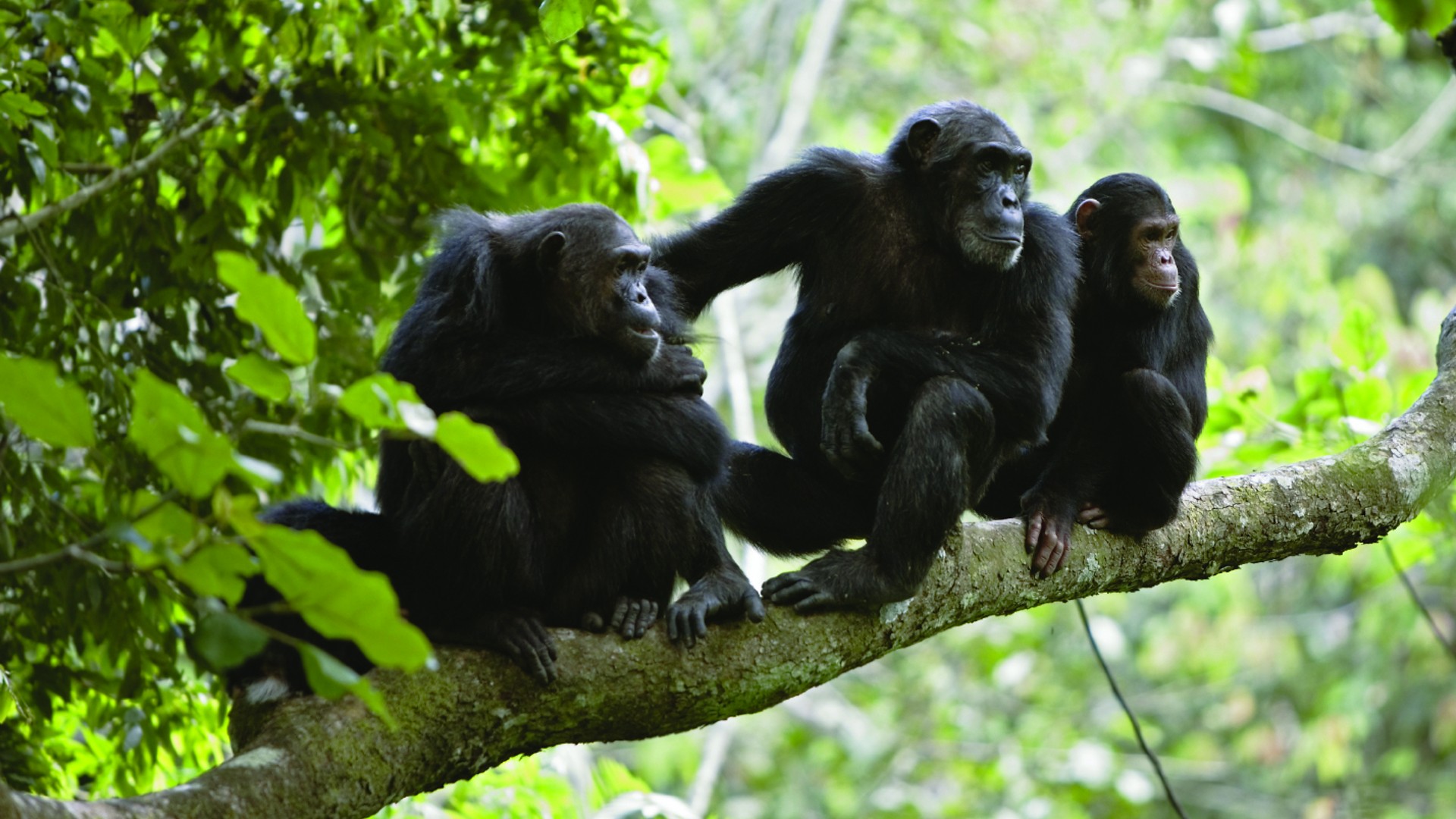
Chimpanzee tracking is one of the main reasons travelers visit Kalinzu Forest.
The forest is home to a habituated chimpanzee community that can be followed with trained guides.
Chimpanzee tracking is fundamentally different from viewing wildlife on a game drive.
Visitors walk through the forest searching for signs of the chimpanzees and listening for their calls.
Once the group is located, travelers can observe their behavior from within the forest environment.
Chimpanzees are wild animals, so sightings cannot be guaranteed and their location can change from day to day.
This unpredictability is part of what makes tracking an authentic wildlife experience.
The Chimpanzees of Kalinzu
Kalinzu is particularly valuable because its chimpanzees form part of a larger population of forest primates in southwestern Uganda.
The forest environment provides food, shelter and movement corridors for chimpanzees.
During tracking, visitors may see chimpanzees moving through the canopy, feeding, resting or communicating with one another.
Sometimes they remain high in the trees, while on other occasions they may come closer to the forest floor.
The experience therefore depends heavily on where the animals choose to move.
A good guide can make a major difference by interpreting calls, tracks and other signs to help locate the group.
Other Primates in Kalinzu Forest
Chimpanzees are only one part of Kalinzu’s primate diversity.
The forest is known for several other primates, including:
- Red-tailed monkeys
- Black-and-white colobus monkeys
- Blue monkeys
- L’Hoest’s monkeys
- Vervet monkeys
- Olive baboons
The exact species encountered will depend on the part of the forest being explored and the day’s conditions.
For travelers interested in primates, this diversity is one of Kalinzu’s strongest attractions.
It also means that even when chimpanzees are difficult to locate, there may still be plenty of movement in the forest canopy.
Red-Tailed Monkeys
Red-tailed monkeys are among the forest’s interesting smaller primates.
They are generally associated with forest habitats and can sometimes be observed moving through the trees.
Their reddish tail markings help distinguish them from other monkeys.
For photographers, these monkeys can be challenging subjects because they often move quickly through dense vegetation.
But the forest setting can produce much more natural photographs than a controlled environment.
Black-and-White Colobus Monkeys
The black-and-white colobus monkey is another notable primate associated with Kalinzu.
Colobus monkeys are highly adapted to life in the canopy.
Their contrasting black-and-white coats can make them relatively easy to recognize when they are sitting in exposed branches.
Seeing a group moving between trees is one of the experiences that makes forest exploration different from traditional savannah wildlife viewing.
Blue Monkeys and L’Hoest’s Monkeys
Kalinzu also provides habitat for blue monkeys and L’Hoest’s monkeys.
These forest primates contribute to the reserve’s overall biodiversity.
L’Hoest’s monkeys are particularly interesting because they are strongly associated with forest environments in the Albertine Rift.
For primate enthusiasts, encountering several different species during the same forest excursion can be one of the highlights of a Kalinzu visit.
Bird Watching in Kalinzu Forest
Kalinzu is also an important destination for bird enthusiasts.
The forest environment provides habitat for numerous forest bird species.
Birding in Kalinzu requires a different approach from birding in an open savannah.
Many species remain within the canopy or dense vegetation, meaning visitors need to listen carefully for calls and movement.
A knowledgeable birding guide can significantly improve the experience by helping identify species that may otherwise go unnoticed.
The reserve’s position within the Albertine Rift further increases its interest for birders exploring southwestern Uganda.
Forest Walks in Kalinzu
Forest walks provide a way to experience Kalinzu beyond chimpanzee tracking.
A guided walk allows visitors to explore the forest ecosystem while learning about:
- Trees and plants
- Birds
- Primates
- Insects
- Animal tracks
- Forest ecology
The experience is slower than a game drive and encourages visitors to pay attention to the smaller details of the ecosystem.
This makes Kalinzu particularly suitable for travelers who enjoy nature interpretation rather than simply searching for large animals.
Nature and Vegetation
Kalinzu is characterized by tropical forest vegetation.
The forest canopy creates a cooler and more shaded environment than the surrounding open landscapes.
Different layers of vegetation provide habitats for different species.
Some animals live mainly in the canopy, while others spend more time closer to the forest floor.
This vertical structure is one reason tropical forests can support such high biodiversity within a relatively small area.
The Albertine Rift Connection
Kalinzu forms part of the biologically important Albertine Rift region.
The Albertine Rift extends across parts of Uganda, Rwanda, Burundi, Tanzania and the Democratic Republic of Congo and contains numerous species found nowhere else in the world.
Kalinzu’s location within this region gives the reserve significance beyond its tourism value.
Its forest helps protect habitat for primates, birds and plant species while contributing to the wider network of natural areas in southwestern Uganda.
Kalinzu and Queen Elizabeth National Park
One of Kalinzu’s biggest advantages for travelers is its proximity to Queen Elizabeth National Park.
The two destinations provide completely different experiences.
Kalinzu offers:
Forest and primates.
Queen Elizabeth offers:
Savannah wildlife and aquatic ecosystems.
A traveler can therefore experience chimpanzee tracking in the morning and continue into a broader savannah safari itinerary.
This makes Kalinzu particularly attractive for travelers who want to combine primate tracking with classic wildlife viewing.
Kalinzu and Kyambura Gorge
Kalinzu is also an interesting alternative to Kyambura Gorge for travelers interested in chimpanzees.
Both destinations are located in southwestern Uganda and offer chimpanzee experiences.
Kyambura is famous for its dramatic gorge and the forest hidden within it.
Kalinzu, by contrast, provides a broader forest environment.
The choice between them can depend on the overall itinerary, availability, budget and the type of forest experience a traveler wants.
Travelers with sufficient time can even consider visiting both for two different chimpanzee experiences.
Kalinzu and Kibale National Park
Kalinzu is also relevant when discussing Kibale National Park, Uganda’s most famous chimpanzee-tracking destination.
Kibale has a stronger international reputation for primate tourism and offers a particularly rich concentration of primates.
Kalinzu provides an alternative for travelers already exploring southwestern Uganda.
Rather than seeing the destinations as direct replacements, it is more useful to view them as different options within Uganda’s broader chimpanzee-tourism network.
Wildlife Photography in Kalinzu
Photography in Kalinzu presents a different challenge from photographing animals in open savannah.
Forest conditions can be darker, and animals may move quickly through dense vegetation.
This makes patience important.
Instead of waiting for a perfect close-up, photographers may find environmental photographs more rewarding.
Possible subjects include:
- Chimpanzees in the canopy
- Colobus monkeys
- Red-tailed monkeys
- Forest birds
- Giant trees
- Forest trails
- Sunlight filtering through the canopy
The atmosphere of the forest can become as important as the animals themselves.
Best Time to Visit Kalinzu Forest Reserve
Kalinzu can be visited throughout the year.
Because chimpanzee tracking and forest exploration depend on trails and weather, conditions can change considerably between seasons.
The wetter periods can produce muddy trails but also create lush, vibrant forest conditions.
Drier periods may provide easier walking conditions.
There is therefore no need to describe one particular month as the only suitable time to visit.
Instead, travelers should choose according to their wider Uganda itinerary and preferred conditions.
How to Get to Kalinzu Forest Reserve
Kalinzu is accessed by road from southwestern Uganda.
Its location near Queen Elizabeth National Park makes it practical to include during a western Uganda safari.
Travelers coming from Kampala can reach the Bushenyi area by road before continuing toward the forest.
The reserve is also relatively close to the Queen Elizabeth area, meaning visitors can combine the two without creating a completely separate journey.
For travelers using a safari vehicle, a 4×4 is recommended for broader western Uganda itineraries, particularly when roads are affected by seasonal rainfall.
How Many Days Do You Need in Kalinzu?
Kalinzu does not necessarily require several days on its own.
For travelers primarily interested in chimpanzee tracking, the forest can be incorporated as a one- or two-night stop within a broader southwestern Uganda itinerary.
A typical combination could involve:
Day 1: Travel toward Kalinzu and explore the surrounding area.
Day 2: Chimpanzee tracking or forest experience, followed by continuation toward Queen Elizabeth.
Travelers interested in birding or deeper forest exploration can allocate additional time.
Accommodation Near Kalinzu
Accommodation options are available in the broader Kalinzu and Bushenyi area, while additional lodges can be found around nearby Queen Elizabeth National Park.
Because Kalinzu is not developed on the same scale as major tourism destinations such as Queen Elizabeth or Bwindi, travelers should confirm accommodation arrangements in advance.
For an itinerary focused on chimpanzee tracking, staying reasonably close to the forest is particularly convenient.
The best accommodation choice will depend on whether the traveler plans to spend most of the trip in Kalinzu or combine it with Queen Elizabeth.
Is Kalinzu Good for First-Time Safari Travelers?
Yes, particularly when combined with Queen Elizabeth National Park.
However, Kalinzu should be understood primarily as a forest and primate destination, rather than a traditional Big Five-style safari park.
A first-time visitor wanting a mixture of chimpanzees and savannah wildlife could combine Kalinzu with Queen Elizabeth.
This provides a much more varied experience than visiting either destination alone.
Is Kalinzu Good for Families?
Kalinzu can be suitable for families who enjoy nature and walking.
Chimpanzee tracking, however, involves forest trails and can be physically demanding depending on where the animals are located.
Families should therefore consider the age and fitness of children before booking the experience.
For families with younger children, a traditional wildlife drive within Queen Elizabeth may be easier.
Conservation Importance of Kalinzu
Kalinzu’s greatest conservation value is its forest habitat.
Protecting forest areas in southwestern Uganda helps maintain habitat for primates, birds and numerous plant species.
The reserve also contributes to the wider ecological network of the Albertine Rift.
Responsible tourism can help support the continued value of such forests by creating incentives for conservation and providing economic opportunities connected to nature-based tourism.
Visitors should follow local regulations and avoid disturbing wildlife or damaging vegetation.
Why Visit Kalinzu Forest Reserve?
Kalinzu Forest Reserve offers a different side of Uganda.
It is not about driving across endless savannah looking for elephants and lions.
Instead, it is about entering a living forest.
You listen for chimpanzees.
You watch the canopy for monkeys.
You hear birds calling from somewhere above.
You follow a forest trail beneath towering trees.
And you discover an ecosystem where much of the wildlife exists beyond immediate sight.
Its location near Queen Elizabeth National Park makes the experience even more valuable because travelers can combine forest primates and savannah wildlife within the same southwestern Uganda journey.
For travelers interested in chimpanzees, forest biodiversity and quieter nature experiences, Kalinzu deserves consideration.
Frequently Asked Questions
What Is Kalinzu Forest Reserve Famous For?
Kalinzu is particularly known for its forest biodiversity, chimpanzees, other primates and birdlife.
Where Is Kalinzu Forest Reserve Located?
It is located in southwestern Uganda, in Bushenyi District, near Queen Elizabeth National Park.
Can I Track Chimpanzees in Kalinzu?
Yes. Chimpanzee tracking is one of the principal tourism experiences associated with the forest.
What Other Primates Are Found in Kalinzu?
The forest is associated with several primates, including red-tailed monkeys, black-and-white colobus monkeys, blue monkeys and L’Hoest’s monkeys.
Can Kalinzu Be Combined With Queen Elizabeth National Park?
Yes. The two destinations are geographically close and complement each other very well.
How Long Should I Stay in Kalinzu?
A one- or two-night stay can work well for travelers primarily interested in chimpanzee tracking, while birders and dedicated forest explorers may prefer longer.
Is Kalinzu Difficult to Explore?
Forest tracking involves walking on natural trails and can become muddy or slippery, particularly during wet conditions.
When Is the Best Time to Visit Kalinzu?
The reserve can be visited throughout the year. Drier periods may provide easier trail conditions, while wetter periods produce lush forest scenery.