Overview
Karamoja Region – Travel Overview
Karamoja Region is one of Uganda’s most distinctive travel destinations, located in the country’s remote northeastern corner. Known for its expansive savannah landscapes, rugged mountains, traditional pastoral communities and strong cultural identity, Karamoja offers travelers an experience that feels very different from Uganda’s more established tourism destinations.
The region is particularly important for travelers exploring Kidepo Valley National Park, but Karamoja itself extends far beyond the boundaries of the national park.
The landscape includes wide open plains, rocky hills, mountain ranges, seasonal rivers and traditional settlements. Wildlife reserves such as Matheniko Wildlife Reserve, Bokora Wildlife Reserve and Pian Upe Wildlife Reserve form part of the broader northeastern conservation landscape.
For travelers, Karamoja is therefore a destination where wildlife, culture and landscape come together.
A journey through the region is not only about finding animals. It is also about experiencing a part of Uganda with a distinctive history, traditions and way of life.
Where Is Karamoja?
Karamoja is located in northeastern Uganda, bordering Kenya to the east and South Sudan to the north.
The region includes several districts, with Moroto serving as its principal town and an important gateway for travelers exploring the area.
Other important towns and areas include Kotido, Kaabong, Nakapiripirit and Abim.
Because of its remote position, Karamoja is considerably farther from Kampala than many of Uganda’s tourism destinations.
That distance is part of what gives the region its character.
Travelers entering Karamoja experience a gradual change in scenery as Uganda’s greener central and western landscapes give way to drier savannah, rocky terrain and dramatic mountains.
What Makes Karamoja Special?
Karamoja’s greatest attraction is its sense of place.
The region has a landscape unlike almost anywhere else in Uganda.
Wide plains stretch toward distant mountains, while rocky outcrops rise from the savannah.
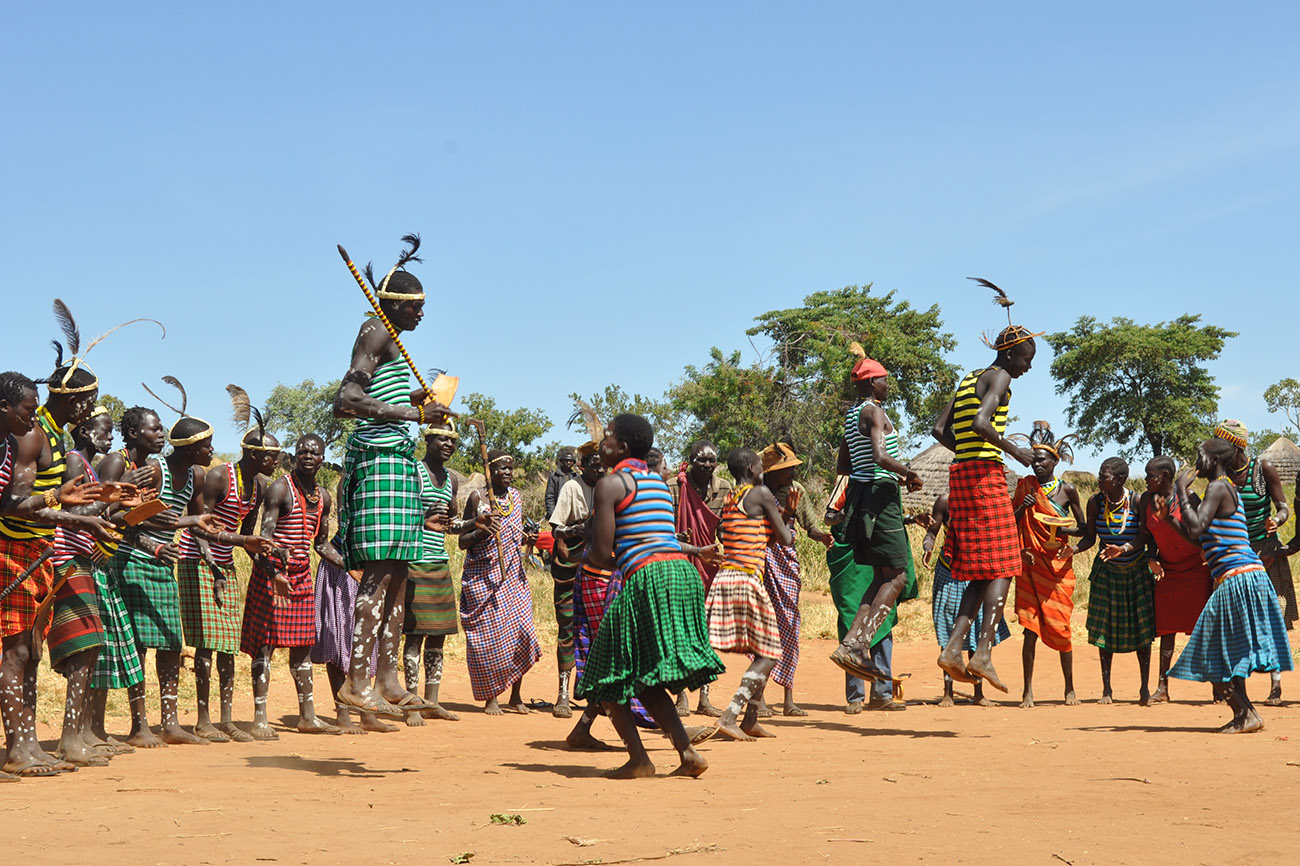
The region is also home to the Karamojong people, whose pastoral traditions have played an important role in shaping the culture and landscapes of northeastern Uganda.
For visitors, this creates a combination of experiences:
Traditional culture
Wildlife
Mountain scenery
Savannah landscapes
Community experiences
Adventure
and remote travel.
Karamoja is therefore particularly suited to travelers who want something beyond the standard Uganda safari itinerary.
The Karamojong People and Culture
The Karamojong are pastoralist communities whose traditional way of life has historically been closely connected with cattle.
Cattle have played an important social, cultural and economic role in Karamojong society.
Visitors can learn about traditional lifestyles through responsible community-based tourism experiences.
These may include visits to traditional settlements, cultural performances, storytelling, craft demonstrations and interactions with community members.
The most important thing is to approach cultural tourism respectfully.
A community is not a performance.
Travelers should use legitimate local guides and community tourism organizations where available and ask permission before photographing people, homes or ceremonies.
Manyatta Cultural Experiences
One of the experiences commonly associated with Karamoja is visiting a traditional manyatta, or settlement.
A guided visit can help travelers understand how families organize their homes, livestock and daily activities.
Depending on the community and arrangements, visitors may learn about traditional architecture, food, cattle keeping, crafts and social traditions.
These experiences are most meaningful when local people are directly involved in hosting and guiding visitors.
Rather than simply observing a settlement from a vehicle, travelers have the opportunity to understand the community from the perspective of the people who live there.
Karamoja’s Mountains
Karamoja is surrounded by dramatic mountain landscapes.
Some of the region’s most recognizable peaks include Mount Moroto, Mount Kadam and Mount Napak.
These mountains rise dramatically from the surrounding plains and create some of the region’s most impressive scenery.
For adventurous travelers, mountain hiking provides another dimension to a Karamoja itinerary.
Mount Moroto in particular has become an important attraction around Moroto.
Mount Moroto
Mount Moroto is one of Karamoja’s most recognizable natural landmarks.
Rising above Moroto Town, the mountain provides a dramatic backdrop to the region’s capital.
Hiking Mount Moroto can be physically demanding, and the experience should be undertaken with appropriate local guides and preparation.
The mountain is valuable not only for hiking.
It also provides spectacular views across the surrounding plains and settlements.
From higher elevations, travelers can appreciate the scale and ruggedness of the Karamoja landscape.
Wildlife in Karamoja
Karamoja contains several important wildlife areas.
The most famous is Kidepo Valley National Park, located in the far northeastern part of the region.
However, wildlife experiences extend beyond Kidepo.
Pian Upe Wildlife Reserve, Matheniko Wildlife Reserve and Bokora Wildlife Reserve form part of the broader northeastern conservation landscape.
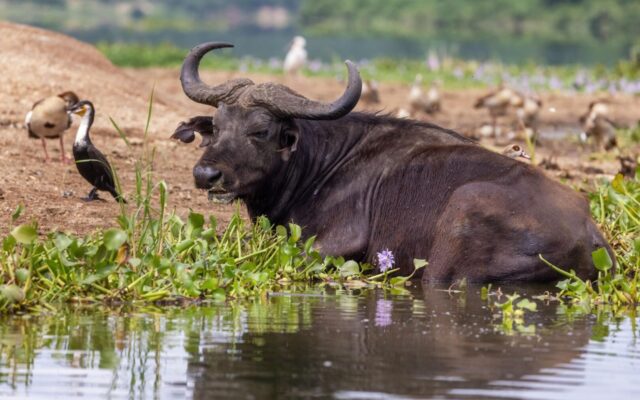
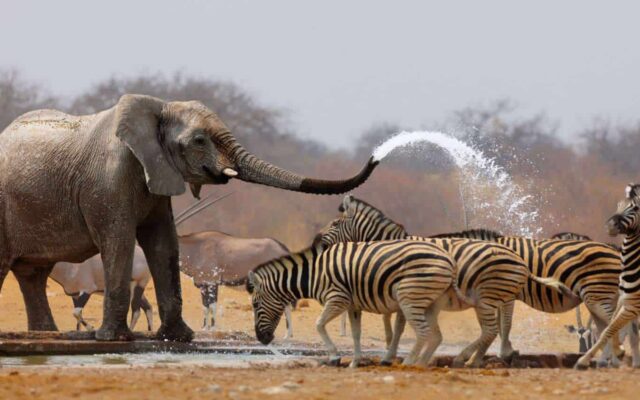
Wildlife varies between these areas, but travelers can encounter animals such as zebras, giraffes, buffaloes, antelopes and other savannah species, depending on the location and season.
Kidepo remains the region’s strongest destination for traditional game viewing, while the other reserves provide opportunities to explore less-visited landscapes.
Kidepo Valley National Park
Kidepo Valley National Park is arguably the most internationally recognized attraction in Karamoja.
The park is famous for its remote wilderness, dramatic mountains and large open plains.
It supports an impressive range of wildlife and is particularly notable for species that are less commonly encountered in other parts of Uganda.
Travelers visiting Karamoja frequently include Kidepo as the centerpiece of their itinerary.
However, one of the best ways to experience the region is to avoid treating Kidepo as the entire Karamoja story.
The national park is one part of a much larger cultural and ecological landscape.
Pian Upe Wildlife Reserve
Pian Upe Wildlife Reserve lies toward the southern part of the Karamoja region.
It provides an expansive savannah environment characterized by grasslands, rocky areas and seasonal wetlands.
The reserve is home to a variety of wildlife and is particularly attractive to travelers looking for quieter safari experiences.
Because it lies closer to the main Uganda travel routes than Kidepo, Pian Upe can also serve as an introduction to the landscapes of northeastern Uganda.
It can be incorporated into longer journeys toward Moroto and northern Karamoja.
Matheniko Wildlife Reserve
Matheniko Wildlife Reserve lies in the eastern part of Karamoja.
The reserve forms part of a broader conservation landscape stretching toward the Ugandan-Kenyan border.
Its rugged terrain, open savannah and remote character make it attractive to adventurous travelers.
Matheniko is not a safari destination with the same tourism infrastructure as Uganda’s major national parks.
That is precisely why it appeals to travelers looking for less-developed and more off-the-beaten-path experiences.
Bokora Wildlife Reserve
Bokora Wildlife Reserve is another important wildlife area in northeastern Uganda.
It forms part of the wider Karamoja conservation landscape and provides habitat for savannah wildlife.
Travelers visiting Bokora should approach it as a remote wilderness experience rather than expecting the established tourism infrastructure found in destinations such as Queen Elizabeth National Park.
Its value lies in its landscapes, wildlife potential and connection with the wider Karamoja ecosystem.
Karamoja’s Semi-Arid Landscape
One of the first things travelers notice when entering Karamoja is how different the environment can look from other parts of Uganda.
The region has a semi-arid climate, and vegetation changes dramatically with the seasons.
During wetter periods, the plains can become surprisingly green.
During dry periods, the landscape becomes much more open and golden.
This seasonal transformation is one reason Karamoja can look completely different at different times of the year.
The landscape itself becomes part of the safari experience.
Wildlife and Pastoralism
Wildlife and pastoralism exist alongside one another across much of Karamoja.
Livestock, especially cattle, goats and sheep, are important to many communities.
Travelers may see herders moving livestock across the plains or around settlements.
This creates a landscape where wildlife conservation and traditional livelihoods are closely connected.
Understanding this relationship is important when visiting the region.
The story of Karamoja is not simply about creating protected areas.
It is also about how people and wildlife share the same broader landscape.
Bird Watching in Karamoja
Karamoja also offers opportunities for bird watching.
The region’s combination of savannah, mountains, seasonal wetlands and dry-country habitats supports a variety of bird species.
Birding can be incorporated into wildlife drives, mountain excursions and nature walks.
Travelers interested in Uganda’s bird diversity may find Karamoja particularly interesting because its dry landscapes support species that may be less obvious in Uganda’s wetter western forests.
Photography in Karamoja
Karamoja is an outstanding destination for photography.
The region provides dramatic subjects in almost every direction.
Photographers can capture:
- Mount Moroto
- Karamojong communities
- Traditional settlements
- Cattle herders
- Savannah landscapes
- Wildlife
- Rocky mountains
- Sunrise and sunset
- Local markets
- Traditional crafts
- Rural roads and villages
The combination of people, culture and landscape gives Karamoja a photographic identity that is very different from Uganda’s western safari parks.
As always, travelers should seek permission before photographing individuals or culturally sensitive activities.
Karamoja’s Markets
Markets provide another opportunity to experience everyday life in the region.
Moroto and Kotido are important commercial centers where visitors can encounter local produce, livestock, crafts and other goods.
Markets can be particularly interesting for travelers interested in cultural photography and local food.
They also provide insight into how communities trade and interact across the region.
A guide can help visitors understand what they are seeing and navigate respectfully.
Traditional Crafts
Karamoja has a distinctive tradition of handmade crafts.
Visitors may find locally produced beads, jewelry, baskets and other crafts.
Purchasing directly from community artisans can provide a simple way for travelers to contribute to local livelihoods.
When buying crafts, travelers should ask about the origin of the products and support genuine locally made items where possible.
Karamoja Food and Local Life
Food is another way to experience the region’s culture.
Traditional meals are influenced by pastoral and agricultural lifestyles.
Depending on the community and location, travelers may encounter locally prepared grains, vegetables, dairy products and meat.
A cultural visit can provide opportunities to learn how food is produced and prepared.
Visitors should remain open-minded while respecting local customs surrounding food and hospitality.
Best Time to Visit Karamoja
Karamoja can be visited throughout the year, but the experience changes significantly with the seasons.
During the dry season, roads can be dusty and the landscape more arid, but wildlife viewing in some areas can become easier.
During the rainy periods, vegetation becomes greener and landscapes can be spectacular.
However, heavy rainfall can affect road conditions, particularly on remote routes.
For travelers combining Karamoja with Kidepo, the condition of the roads should be checked before departure.
Because the region is remote, seasonal conditions can have a greater impact on travel than they do in more developed tourist destinations.
How to Get to Karamoja
Karamoja can be reached by road from Kampala and other parts of Uganda.
The journey is long, and travelers should allow sufficient time.
Common routes approach the region through northeastern Uganda toward Moroto and then continue toward other destinations.
Travelers visiting Kidepo Valley National Park can continue farther north toward Kaabong and the park.
There are also domestic flight options serving the Kidepo/Moroto region, depending on the itinerary and current flight schedules.
For travelers with limited time, flying can significantly reduce the amount of time spent on the road.
Accommodation in Karamoja
Accommodation varies significantly across the region.
Moroto has the largest selection of accommodation and is a practical base for exploring the surrounding area.
Kidepo Valley National Park has established safari lodges and camps.
Outside these major tourism centers, accommodation can be much more limited.
Travelers planning to visit Matheniko, Bokora or other remote areas should arrange accommodation and transport in advance.
This is particularly important because Karamoja is not a destination where travelers should assume they can simply arrive and find extensive tourist infrastructure.
How Many Days Do You Need in Karamoja?
The ideal length depends on what you want to experience.
A short visit around Moroto could take two or three days.
A broader cultural and wildlife itinerary could take several more days.
Travelers combining Moroto, cultural experiences, wildlife reserves and Kidepo Valley National Park should allow enough time for the long distances between destinations.
Trying to rush through Karamoja defeats one of the main reasons to visit.
The region is best experienced slowly.
Is Karamoja Safe for Tourists?
Travel conditions in Karamoja have changed significantly over the years, and the region is an increasingly accessible tourism destination.
However, because parts of Karamoja are remote and some areas have specific security considerations, travelers should use reputable local guides or tour operators and follow current security advice.
Do not independently travel into remote areas without knowing the current local situation.
This is particularly important when visiting border areas or remote wildlife reserves.
A professional operator can advise on routes, local conditions, permits and appropriate guides.
Responsible Cultural Tourism in Karamoja
Responsible tourism is particularly important in Karamoja.
Travelers should remember that they are visiting communities with their own traditions and social structures.
A good cultural experience should:
Respect local customs
Ask permission before photography
Pay communities and guides fairly
Avoid treating people as tourist attractions
Support locally produced crafts
Follow local guidance during cultural activities
The goal is to create meaningful interaction rather than simply collecting photographs.
Why Visit Karamoja?
Karamoja offers one of Uganda’s most distinctive combinations of culture, wilderness and dramatic landscapes.
You can wake up beneath the shadow of Mount Moroto, meet Karamojong communities during a cultural experience, drive across wide savannah plains and continue toward some of Uganda’s most remote wildlife areas.
Few destinations in Uganda offer that combination.
For travelers who want a conventional safari with guaranteed infrastructure and short transfers, Karamoja may feel challenging.
But for adventurous travelers, photographers, cultural enthusiasts and wildlife lovers, the region can become one of the most memorable parts of a Uganda journey.
Who Should Visit Karamoja?
Karamoja is particularly suited to:
Adventure travelers looking for remote destinations.
Cultural travelers interested in Karamojong traditions and pastoral life.
Wildlife enthusiasts exploring Kidepo and the northeastern reserves.
Photographers attracted to dramatic landscapes and cultural scenes.
Bird watchers interested in dry-country habitats.
Hikers interested in mountains such as Mount Moroto.
Travelers seeking off-the-beaten-path Uganda beyond the country’s established tourism circuit.
Karamoja as Part of a Uganda Safari
Karamoja can form the northeastern section of a much larger Uganda itinerary.
A traveler could combine:
Pian Upe Wildlife Reserve → Moroto → Matheniko/Bokora → Kidepo Valley National Park
for a journey focused on the landscapes and wildlife of northeastern Uganda.
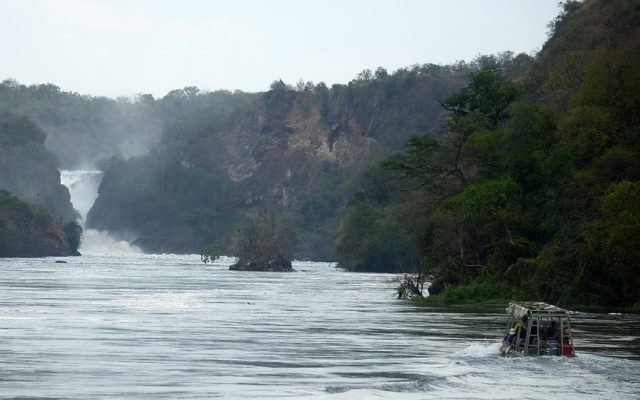
Alternatively, Kidepo can form part of a longer itinerary that includes Murchison Falls and other national parks.
The important thing is to allow sufficient time for the distances.
Karamoja is not a destination where you want to spend most of your trip sitting in a vehicle trying to reach the next attraction.
Build the itinerary around experiences, not simply locations.
Frequently Asked Questions
Where Is Karamoja Located?
Karamoja is in northeastern Uganda, bordering Kenya to the east and South Sudan to the north.
What Is Karamoja Famous For?
Karamoja is known for its distinctive Karamojong culture, pastoral traditions, semi-arid landscapes, mountains and wildlife destinations such as Kidepo Valley National Park.
What Is the Main Town in Karamoja?
Moroto is the principal town and an important gateway for exploring the region.
Can I Visit a Karamojong Manyatta?
Yes, cultural visits can be arranged through appropriate local guides and community tourism initiatives.
Can I See Wildlife in Karamoja?
Yes. Wildlife can be encountered in Kidepo Valley National Park and several wildlife reserves, including Pian Upe, Matheniko and Bokora.
Can I Hike in Karamoja?
Yes. Mountains including Mount Moroto provide opportunities for hiking, although travelers should use experienced local guides and prepare appropriately.
Is Karamoja Worth Visiting?
Yes, particularly for travelers interested in culture, wilderness, photography, mountains and less-developed tourism destinations.
How Long Should I Spend in Karamoja?
A short visit can take two or three days, but a broader itinerary involving Kidepo and other wildlife areas requires considerably more time.
When Is the Best Time to Visit Karamoja?
Karamoja can be visited year-round, although dry and wet seasons produce very different landscapes and road conditions.
Can Karamoja Be Combined With Kidepo?
Yes. In fact, Kidepo is one of the main reasons travelers visit the wider Karamoja region.