







Overview
Karuma Wildlife Reserve – Travel Overview
Karuma Wildlife Reserve is a protected wildlife area in western Uganda and an important part of the wider Murchison Falls Conservation Area. Located south of the Victoria Nile and adjoining Murchison Falls National Park, the reserve protects an extensive landscape of savannah grasslands, scattered woodland and watercourses.
Although Karuma is much less known to international travelers than Murchison Falls National Park, it plays an important role in the movement and conservation of wildlife across the wider protected landscape. UWA notes that many animals move in herds between Karuma and Murchison Falls, meaning the reserve should not be viewed as an isolated piece of habitat.
For travelers interested in discovering the less-visited side of Uganda’s wildlife areas, Karuma offers an opportunity to explore a quieter landscape while remaining close to one of the country’s major safari destinations.
Where Is Karuma Wildlife Reserve?
Karuma Wildlife Reserve is located in western Uganda, within the wider area of Kiryandongo and the former Masindi administrative region.
UWA places the reserve immediately south of Murchison Falls National Park, at an elevation of approximately 900–1,300 metres.
Its location makes it particularly significant because it forms part of a larger connected conservation landscape that includes:
- Murchison Falls National Park
- Bugungu Wildlife Reserve
- Karuma Wildlife Reserve
- Budongo Forest Reserve
- Kaniyo Pabidi Forest
Together, these protected areas create a much larger ecosystem supporting a wide variety of wildlife and habitats.
What Makes Karuma Wildlife Reserve Special?
The biggest attraction of Karuma is its connection to the Murchison Falls ecosystem.
UWA describes the reserve as being contiguous with Murchison Falls National Park and notes that many animals move between the two areas.
This means the reserve contributes to maintaining space for wildlife beyond the boundaries of the national park.
The landscape itself is also attractive.
Gentle relief, open savannah, isolated trees and several watercourses create a classic northern Ugandan wilderness setting.
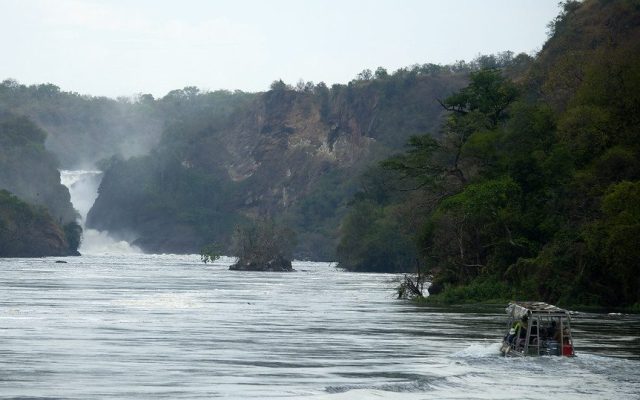
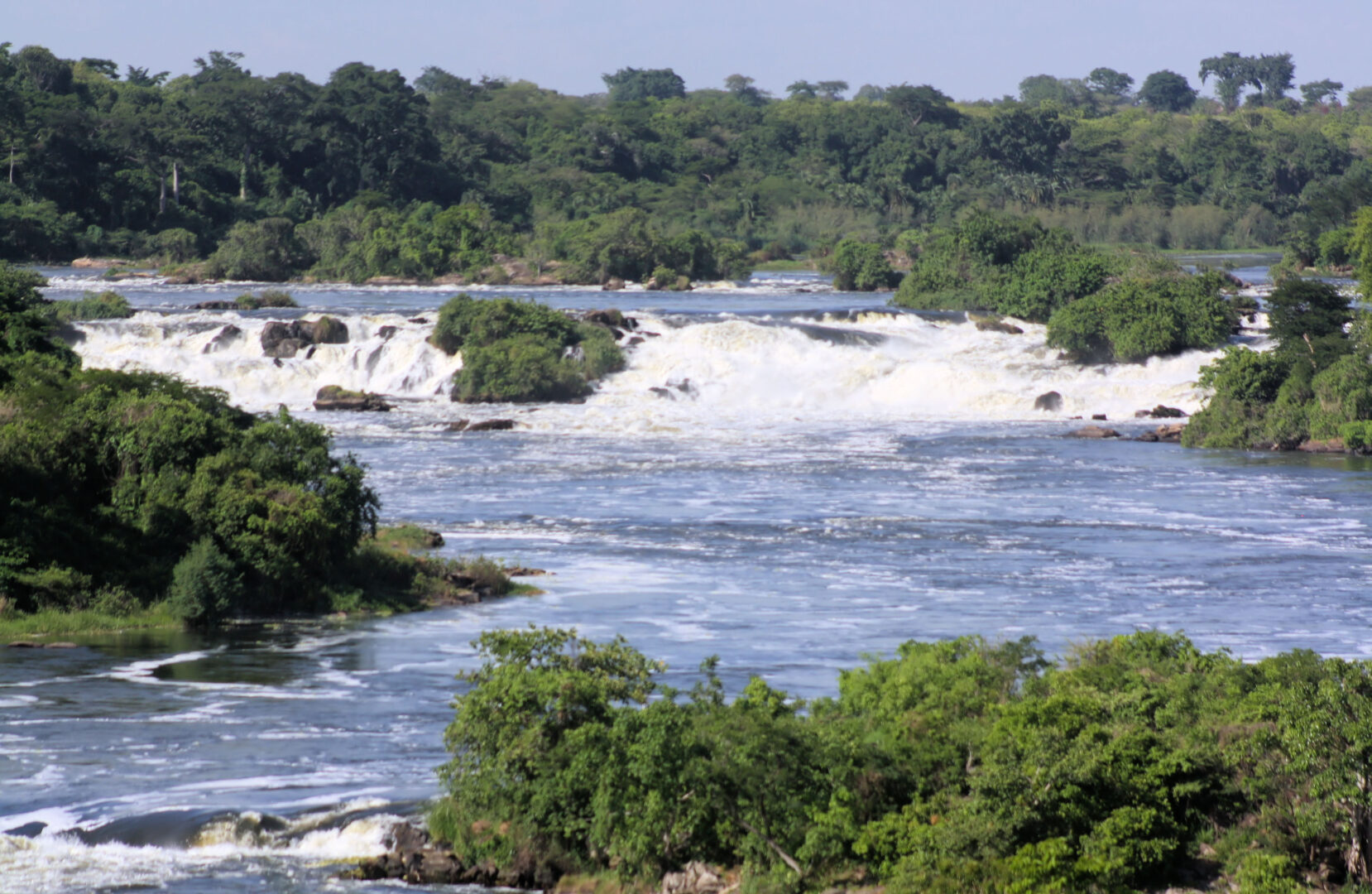
And then there is Karuma Falls, one of the area’s most recognizable natural features, located along the Victoria Nile.
Karuma Falls and the Victoria Nile
Karuma Falls is one of the most prominent attractions associated with the area.
The falls occur where the Victoria Nile moves through a rocky section of the landscape, producing a dramatic series of rapids and rushing water.
The sound and force of the river make Karuma an impressive stop for travelers heading toward northern Uganda.
The falls are also closely connected to the identity of the surrounding reserve and provide a scenic contrast to the open savannah.
During periods of higher water flow, the falls can become particularly dramatic.
Wildlife in Karuma Wildlife Reserve
Karuma supports wildlife similar to that found in the neighboring Murchison Falls ecosystem.
UWA specifically records:
- Elephants
- Giraffes
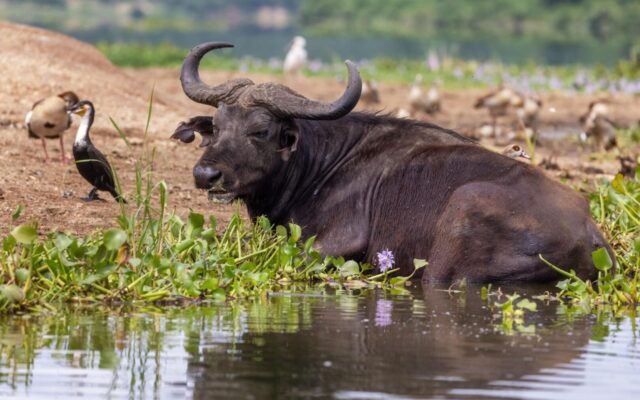
- Buffaloes
- Numerous antelope species
and notes that large numbers of animals move between Karuma and Murchison Falls National Park.
Other wildlife sources also associate the wider reserve with species such as hippos, warthogs, Uganda kob and various primates.
The exact animals seen during a visit depend on the season, habitat and current wildlife movements.
This is particularly important when presenting Karuma as a travel destination: it is better to describe it as a wildlife-rich reserve connected to the Murchison ecosystem rather than promising guaranteed sightings.
Elephants in Karuma
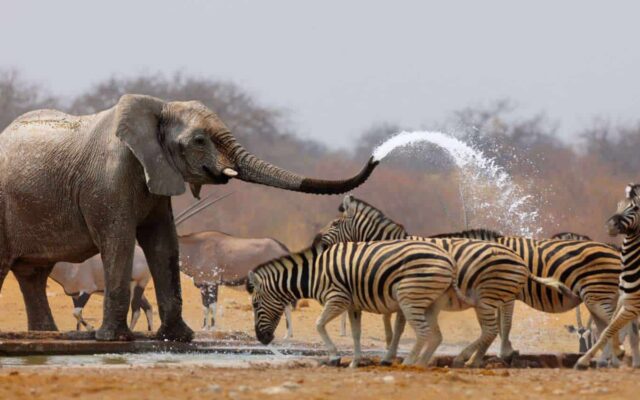
African elephants are among the most significant mammals associated with Karuma.
Their movement between the reserve and Murchison Falls highlights the importance of maintaining connected habitats.
Seeing elephants in this relatively quiet landscape can be particularly rewarding because the experience may feel less crowded than a typical wildlife encounter in a busy safari circuit.
For photographers, elephants against the open savannah also provide excellent opportunities for environmental wildlife photography.
Giraffes in Karuma
Giraffes are another large mammal recorded in Karuma.
Their long necks allow them to browse vegetation above the reach of many other herbivores, making them particularly well adapted to woodland and savannah environments.
A giraffe moving through the open grasslands with the surrounding landscape visible can make for a beautiful safari scene.
Buffaloes and Antelopes
African buffaloes are also recorded in the reserve.
Karuma’s grasslands provide suitable grazing areas, while its woodland and watercourses add habitat variety.
The reserve is also home to various antelope species.
For wildlife enthusiasts, this means a game-viewing experience can include considerably more than the large mammals.
Antelopes are important components of the ecosystem because they provide prey for predators while also contributing to the natural grazing cycle.
Predators in Karuma
Karuma forms part of the broader Murchison ecosystem, which supports a variety of predators.
The reserve itself is less intensively developed for tourism than Murchison Falls National Park, so predator sightings can be less predictable.
Travelers interested in predators should therefore consider Karuma as part of a broader wildlife itinerary rather than relying on it alone.
This is another reason why combining Karuma with Murchison Falls National Park makes so much sense.
Bird Watching in Karuma
Bird watching is another potential attraction.
The combination of:
- Savannah grasslands
- Woodland
- Watercourses
- Victoria Nile habitats
- Forested areas nearby
creates a variety of environments for birds.
Birders can explore the riverine areas and woodland habitats while also watching for savannah species.
The wider Murchison Falls Conservation Area is particularly important for birding, with a large number of species occurring across its different habitats.
For serious birders, having a knowledgeable local guide can make a major difference.
The Landscape of Karuma Wildlife Reserve
Karuma has a relatively gentle landscape compared with Uganda’s mountainous protected areas.
UWA describes the area as having gentle relief crossed by several watercourses south of the Victoria Nile.
The vegetation is primarily savannah grassland dominated by species such as elephant grass and red oat grass, with isolated forest and savannah trees scattered throughout the landscape. A forested zone borders the reserve to the southwest.
This mixture creates a classic East African savannah appearance.
Game Viewing Around Karuma
Wildlife viewing around Karuma is best approached as part of the wider Murchison ecosystem.
The reserve provides additional habitat for animals moving outside the national park, and its proximity to Murchison makes it particularly useful for longer safari itineraries.
Morning and late-afternoon wildlife viewing are generally the most rewarding periods because temperatures are cooler and wildlife tends to be more active.
Travelers should also remember that Karuma is not simply another version of Murchison Falls National Park.
Its attraction is the combination of wildlife movement, scenery and a less-developed tourism environment.
Photography in Karuma
Karuma can be an interesting destination for photographers who want to capture wildlife in a less-commercial setting.
The landscape provides opportunities for:
- Elephant photography
- Giraffe photography
- Buffalo photography
- Antelope photography
- Savannah landscapes
- River scenes
- Karuma Falls
- Sunset photography
The surrounding landscape can be just as important as the animals themselves.
Wide-angle photographs showing wildlife within the savannah can communicate the scale and wilderness of the reserve.
Karuma and Murchison Falls National Park
This is probably the most important connection for anyone planning a Karuma safari.
Karuma directly adjoins Murchison Falls National Park, and UWA identifies the two as connected components of the wider conservation landscape.
The protected areas are managed as part of the broader Murchison Falls Conservation Area, allowing wildlife to move across the landscape.
This means travelers can use Karuma to understand the wider ecosystem rather than viewing Murchison Falls National Park as a completely isolated park.
Karuma and Bugungu Wildlife Reserve
Karuma also forms part of the wider protected landscape that includes Bugungu Wildlife Reserve.
Both reserves contribute additional habitat around Murchison Falls National Park.
This makes the three areas particularly important from a conservation perspective.
For a travel website, however, I would keep Bugungu as a secondary connection rather than making it the focus of the Karuma page.
Accommodation Around Karuma
Karuma has considerably less tourism infrastructure than Murchison Falls National Park.
Travelers visiting the area should therefore plan accommodation carefully.
For many itineraries, staying within the broader Murchison Falls area or in nearby towns can be more practical than expecting a large selection of lodges directly inside Karuma.
There are also camping opportunities associated with the wider Murchison protected area, although visitors should confirm current availability and regulations before traveling.
The important thing is to make accommodation part of the itinerary planning rather than arriving without a confirmed place to stay.
Camping Around Karuma
Camping can be particularly appealing for adventurous travelers.
The surrounding landscape provides the kind of wilderness atmosphere that makes camping memorable.
However, because Karuma is a wildlife reserve, visitors should only camp in authorized locations and follow current UWA safety requirements.
Wild animals move across the wider ecosystem, so camping in an uncontrolled location is not appropriate.
Best Time to Visit Karuma Wildlife Reserve
Karuma can be visited throughout the year.
The drier periods are generally more convenient for wildlife viewing because vegetation becomes less dense and roads are often easier to navigate.
The wetter months bring greener landscapes and can be particularly attractive for photographers and birders.
Rain can also affect road conditions, so travelers visiting during wetter periods should be prepared for changing conditions.
Rather than choosing one universally “perfect” month, the best time depends on what the traveler wants from the experience.
How to Get to Karuma Wildlife Reserve
Karuma is accessible by road from western and northern Uganda.
Its location along the main route toward northern Uganda makes the area relatively accessible compared with some of Uganda’s more remote wildlife reserves.
UWA’s documentation identifies access to the wider Murchison Falls Protected Area through routes including Kampala–Karuma, with connections toward Wankwar and Tangi gates.
For wildlife exploration, a 4×4 safari vehicle is recommended.
Travelers should also check current road conditions before departure, particularly during periods of heavy rainfall or road works.
How Many Days Do You Need in Karuma?
Karuma itself can be visited as a short stop, particularly when travelers are already passing through the area.
However, if the objective is wildlife viewing rather than simply seeing Karuma Falls, it makes more sense to incorporate the reserve into a longer Murchison Falls safari.
A two- or three-day itinerary can provide a much more meaningful experience because travelers have time to explore the surrounding ecosystem rather than rushing through.
Karuma as Part of a Northern Uganda Safari
Karuma fits naturally into a northern Uganda road safari.
A longer itinerary could combine:
Murchison Falls National Park → Karuma Wildlife Reserve → Gulu → Northern Uganda
or incorporate the reserve into a broader western and northern Uganda journey.
For travelers who want to explore Uganda beyond the standard destinations, this approach can create a much richer experience.
Is Karuma Good for First-Time Safari Travelers?
Karuma can be interesting for first-time visitors, but I would not recommend making it the only safari destination on a first Uganda trip.
Murchison Falls National Park offers a much more developed safari experience with a broader range of established tourism activities.
Karuma works better as an extension or complementary destination.
For repeat visitors, however, it can be a fascinating way to explore another part of the Murchison ecosystem.
Is Karuma Good for Families?
Families can include Karuma in a broader Uganda safari, particularly when traveling through the Murchison area.
The waterfalls and river scenery can be especially interesting for children.
However, wildlife activities should always follow UWA safety guidelines.
Families should also consider driving distances and accommodation when planning the itinerary.
Conservation in Karuma
Karuma’s greatest conservation importance comes from its role as part of the wider Murchison ecosystem.
The reserve provides habitat for wildlife and helps maintain space for animals moving between protected areas.
UWA describes large numbers of animals moving between Karuma and Murchison Falls National Park, demonstrating the ecological importance of maintaining connectivity.
At the same time, the reserve faces pressures associated with surrounding human populations and land use.
This makes responsible tourism and community involvement important components of long-term conservation.
Karuma and Responsible Tourism
Visitors can contribute to conservation by following simple principles:
- Follow UWA regulations.
- Avoid disturbing wildlife.
- Do not feed animals.
- Remain on authorized routes.
- Avoid littering.
- Respect surrounding communities.
- Use authorized tourism providers.
- Support conservation and community initiatives where possible.
The goal is to ensure that tourism complements rather than undermines the reserve’s ecological importance.
Why Visit Karuma Wildlife Reserve?
Karuma Wildlife Reserve may not have the same international profile as Murchison Falls National Park, but that does not make it unimportant.
Its location within one of Uganda’s major wildlife landscapes gives it significant conservation value.
For travelers, it provides:
Wildlife connected to the Murchison ecosystem.
The dramatic scenery of Karuma Falls and the Victoria Nile.
Savannah landscapes and open wilderness.
Opportunities for bird watching and photography.
A quieter alternative to Uganda’s busiest safari destinations.
Most importantly, Karuma helps visitors understand that a wildlife destination is much more than the boundaries of a single national park.
The animals, rivers, forests and savannahs form a connected landscape.
And Karuma is an important part of that story.
Frequently Asked Questions
What Is Karuma Wildlife Reserve Famous For?
Karuma is known for its savannah landscape, wildlife and close connection to Murchison Falls National Park. It is also associated with the dramatic Karuma Falls on the Victoria Nile.
Where Is Karuma Wildlife Reserve Located?
It is located in western Uganda, adjoining Murchison Falls National Park.
How Large Is Karuma Wildlife Reserve?
UWA currently lists Karuma at approximately 675 km².
What Animals Can I See in Karuma?
UWA records elephants, giraffes, buffaloes and many antelope species, while other sources associate the wider reserve with hippos, warthogs, primates and other wildlife.
Can I Combine Karuma With Murchison Falls?
Yes. In fact, this is one of the most logical ways to experience Karuma because both areas form part of the wider Murchison Falls conservation landscape.
Is Karuma Good for Bird Watching?
Yes. Its savannah, woodland and water-associated habitats provide opportunities for bird watching.
How Many Days Do I Need?
Karuma can be visited as a short stop, but one to two days within a broader Murchison itinerary gives travelers more time to appreciate the area.
Where Can I Stay When Visiting Karuma?
Because accommodation within the reserve is limited, many travelers use accommodation in the wider Murchison Falls area or nearby towns.
What Is the Best Time to Visit Karuma?
The drier periods are generally convenient for wildlife viewing and road travel, while wetter months offer greener landscapes and good opportunities for birding and photography.