




Overview
Lake Katwe – Travel Guide
Lake Katwe is a fascinating salt lake located within the Katwe-Kabatoro area of western Uganda, in the northern part of Queen Elizabeth National Park. Unlike many of Uganda’s freshwater lakes, Lake Katwe is famous for its naturally occurring salt deposits and the traditional salt-mining activities that have taken place around its shores for generations.
The lake sits inside the dramatic Katwe Explosion Crater landscape, an area shaped by ancient volcanic activity. Today, the surrounding crater fields form an important part of the Queen Elizabeth tourism experience, offering visitors a chance to see a side of Uganda that is very different from the country’s forests, mountains and savannahs.
What makes Lake Katwe particularly interesting is the combination of geology, wildlife, local livelihoods and culture. A visit here allows travelers to learn how people have adapted to a naturally challenging environment while also exploring one of the unusual geological features of western Uganda.

Where Is Lake Katwe?
Lake Katwe is located in western Uganda, within the greater Queen Elizabeth National Park landscape.
It is situated close to the small town of Katwe-Kabatoro, not far from the northern part of Queen Elizabeth National Park. The lake lies within an area containing numerous volcanic craters and explosion depressions.
Its location makes it relatively easy to include Lake Katwe in a Queen Elizabeth safari, especially when traveling through the park’s northern sector.
What Is Lake Katwe Famous For?
Lake Katwe is best known for its salt production.
Because the lake has no obvious surface outlet, minerals have accumulated in its waters over a long period. The resulting saline environment has allowed salt harvesting to become an important traditional activity around the lake.
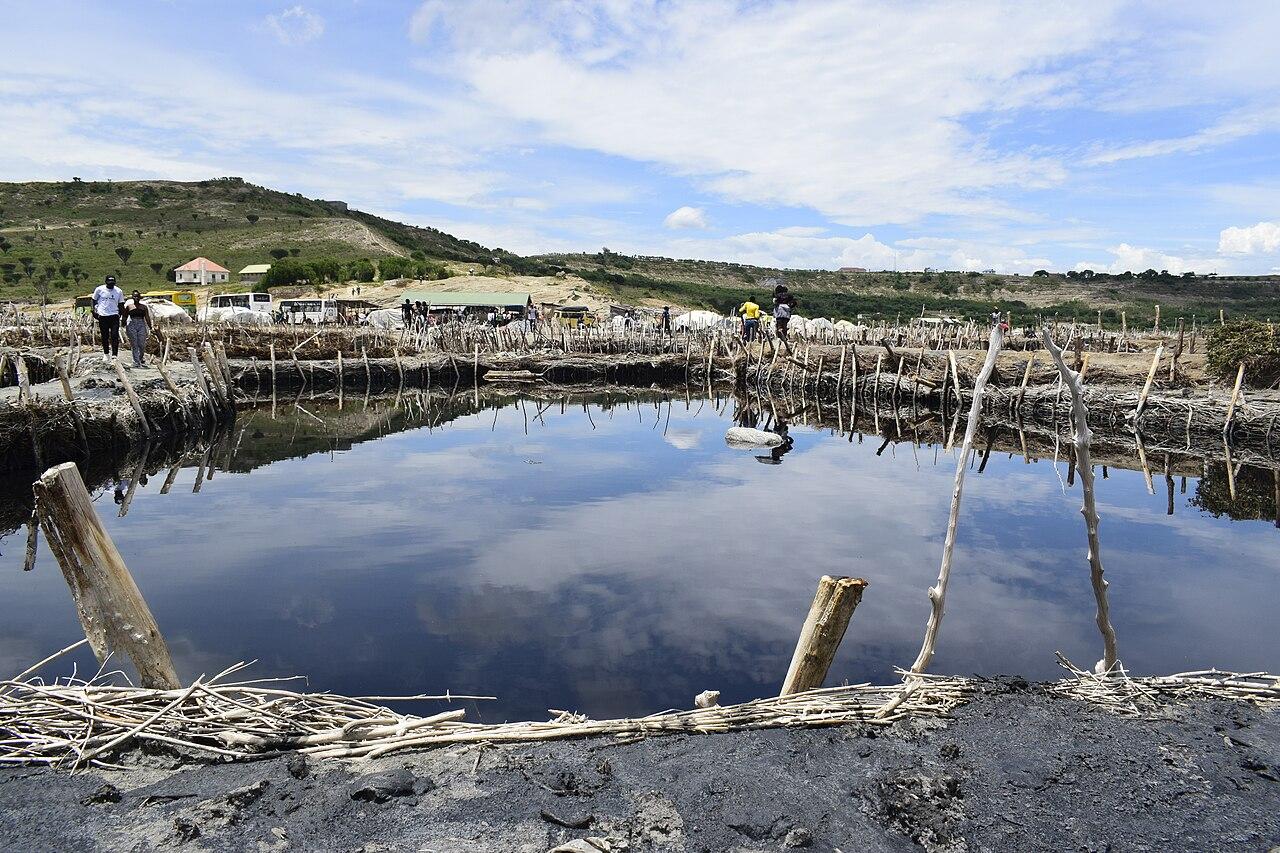
Visitors can see salt pans and learn about the methods local workers use to extract salt from the lake.
This makes Lake Katwe different from many other tourist attractions in Uganda: the main attraction is not simply the scenery but also the relationship between people and the natural environment.
The Salt-Mining Tradition
Salt production around Lake Katwe has been practiced for generations.
During periods when evaporation is strong, salt-rich water and brine can be collected and processed in specially prepared salt pans.
Workers traditionally spend considerable time around the salt pans, managing the evaporation process and collecting salt for local use and trade.
The work is physically demanding because of the intense heat, strong sunlight and highly saline environment.
For visitors, seeing this process first-hand provides an opportunity to understand an important part of the local economy and history.
How Salt Is Produced at Lake Katwe
The basic principle behind salt production is evaporation.
Salty water is directed or collected into shallow pans where the heat of the sun causes water to evaporate. As the water disappears, minerals and salt become increasingly concentrated until salt can be collected.
Different salt products may require different processing methods.
The traditional techniques used around Lake Katwe demonstrate how local communities have developed ways of making use of the lake’s unusual natural chemistry.
The Katwe Explosion Craters
Lake Katwe forms part of the Katwe Explosion Crater Field, one of the most interesting geological areas around Queen Elizabeth National Park.
The landscape contains numerous craters formed by volcanic and explosive geological processes.
Unlike a typical volcanic cone built up by layers of lava, explosion craters can form when underground heat and pressure cause powerful eruptions that leave depressions in the landscape.
The result around Katwe is a fascinating collection of crater landscapes, some containing lakes while others are covered by vegetation.
Lake Katwe and Queen Elizabeth National Park
Lake Katwe is closely associated with Queen Elizabeth National Park, one of Uganda’s most important protected areas.
The park is famous for its diverse wildlife, but its volcanic crater landscapes are an equally important part of its identity.
A visit to Lake Katwe can therefore complement a traditional safari by showing travelers the geological and cultural side of the park.
Instead of spending the entire day looking for wildlife, visitors can also learn about the landscape and the communities living around it.
Wildlife Around Lake Katwe
Lake Katwe is not primarily a wildlife-viewing destination, but the wider surrounding ecosystem supports many animals.
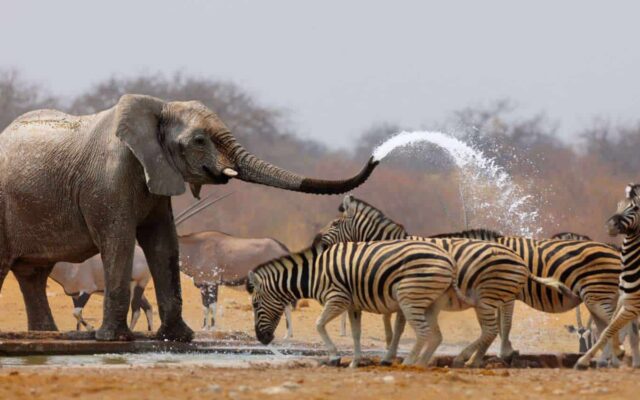
The Queen Elizabeth landscape around the crater region contains species such as elephants, buffaloes, Uganda kob, warthogs and other antelopes.
Wildlife sightings depend on the exact location, season and time of day.
The main reason to visit Lake Katwe, however, is the combination of crater scenery and salt production, rather than expecting it to function like a conventional game-drive area.
Birds Around Lake Katwe
The saline nature of the lake means its bird community differs from that of freshwater wetlands.
Nevertheless, the broader crater and savannah environment provides opportunities for bird watching.
Travelers who are particularly interested in birds can combine Lake Katwe with the surrounding wetlands and other habitats of Queen Elizabeth National Park, where a much wider variety of species can be found.
Lake Katwe for Cultural Tourism
One of the strongest reasons to visit Lake Katwe is the opportunity to connect with the people whose livelihoods are linked to salt production.
A guided cultural visit can explain how the salt industry developed, how the work is organized and how the lake has influenced the local community.
This makes the experience more meaningful than simply stopping at a viewpoint, because travelers get to understand the human story behind the landscape.
Meeting the Salt Workers
Salt workers are an important part of the Lake Katwe experience.
Visitors may see workers moving around the salt pans, collecting salt and managing the evaporation process.
Because the work can be demanding and the environment harsh, travelers should approach respectfully and follow the instructions of their local guide.
Photography should also be handled respectfully, especially when photographing individual workers.
Lake Katwe and Local Livelihoods
The lake demonstrates how communities can develop livelihoods around unusual natural resources.
Where the water may not be suitable for ordinary freshwater uses, its high mineral content has created an opportunity for salt production.
The salt industry has therefore become part of the economic and cultural identity of the surrounding communities.
Tourism adds another potential source of income when visitors use local guides and support community-based experiences.
The Katwe-Kabatoro Area
The wider Katwe-Kabatoro area is closely connected with Lake Katwe and the salt-producing communities.
It is an important local center for people living around the northern part of Queen Elizabeth National Park.
Travelers passing through the area can therefore see how tourism, conservation, fishing and other local economic activities exist alongside one another.
Lake Katwe Viewpoints
One of the simplest ways to appreciate Lake Katwe is from a suitable viewpoint above the crater.
From higher ground, visitors can see the lake sitting within the crater depression and appreciate the unusual landscape surrounding it.
The elevated perspective also makes it easier to understand how the crater field fits into the broader Queen Elizabeth landscape.
Lake Katwe for Photography
Lake Katwe is particularly interesting for photographers who enjoy landscapes, people and documentary-style travel photography.
The salt pans create geometric patterns across the landscape, while the crater provides a natural frame around the lake.
Photographs of workers harvesting salt can also tell an important story about local livelihoods.
The combination of people, salt pans, water and volcanic scenery gives Lake Katwe a visual identity that is very different from Uganda’s typical safari photographs.
Sunrise and Sunset at Lake Katwe
The early morning and late afternoon can provide beautiful light over the crater landscape.
At these times, the changing sunlight emphasizes the contours of the crater and creates stronger contrasts across the salt pans.
However, if your main goal is to learn about salt production, visiting during working hours is more important than timing the visit purely around sunrise or sunset.
Lake Katwe and the Crater Lakes Region
Lake Katwe belongs to a broader region of volcanic crater lakes in western Uganda.
The area around Fort Portal, Kasese and Queen Elizabeth National Park contains numerous crater formations created by past volcanic activity.
Some contain freshwater, while others have different mineral characteristics.
Exploring several of these landscapes can give travelers a much better understanding of the geological history of western Uganda.
Lake Katwe and Lake Edward
Lake Katwe is located relatively close to Lake Edward, another major water body within the Queen Elizabeth ecosystem.
The two lakes are very different.
Lake Edward is a large freshwater lake supporting extensive aquatic and wildlife habitats, while Lake Katwe is a smaller saline crater lake famous particularly for salt production.
Including both in a western Uganda itinerary highlights the remarkable diversity of the region’s lakes.
Lake Katwe and Kazinga Channel
Travelers can also combine Lake Katwe with a Kazinga Channel boat cruise.
The two experiences offer completely different perspectives on the Queen Elizabeth landscape.
At Lake Katwe, the focus is on geology, salt production and community livelihoods. Along the Kazinga Channel, the focus shifts toward wildlife, hippos, crocodiles and water birds.
Together they create a more complete Queen Elizabeth experience.
Lake Katwe for Families
Lake Katwe can be an interesting stop for families because it offers something educational as well as scenic.
Children can learn about:
Volcanic craters
Salt production
Evaporation
Local livelihoods
Conservation
The experience can help demonstrate how geography and natural resources influence the lives of communities.
Lake Katwe for Educational Trips
The lake is particularly suitable for educational tourism.
Geography students can study the crater landscape, while environmental and tourism students can explore the relationship between natural resources, communities and conservation.
The salt-production process also provides a practical example of evaporation and mineral concentration.
Responsible Tourism at Lake Katwe
Lake Katwe is both a tourism attraction and a working environment.
Visitors should therefore remember that the people around the lake are not simply part of a tourist display.
Use local guides where possible, ask permission before taking close-up photographs of workers and avoid interfering with salt-production activities.
Supporting locally organized tours can also help ensure that tourism benefits the community.
Best Time to Visit Lake Katwe
Lake Katwe can be visited throughout the year.
The drier months may provide more comfortable conditions for exploring the salt pans and surrounding crater landscape.
However, the salt-production process is influenced by weather and evaporation, so conditions can change depending on rainfall and the time of year.
If salt harvesting is the main reason for your visit, it is worth checking local conditions when planning the trip.
How to Get to Lake Katwe
Lake Katwe is normally visited as part of a Queen Elizabeth National Park safari.
Travelers approaching from Kampala generally travel westward through Uganda before reaching the Queen Elizabeth region.
It can also be incorporated into itineraries traveling between Fort Portal, Queen Elizabeth National Park and Kasese.
Because it is located within an established tourism area, Lake Katwe can be combined with several other western Uganda attractions without requiring a separate trip.
Where to Stay Near Lake Katwe
Most travelers do not need to stay directly at Lake Katwe.
Accommodation around Queen Elizabeth National Park, Mweya, Kasese and the surrounding tourism areas provides convenient bases for exploring the lake and other attractions.
The best location depends on the rest of your safari itinerary.
If Lake Katwe is being visited together with the Kazinga Channel and game drives, staying within or close to Queen Elizabeth National Park can be convenient.
How Long Do You Need at Lake Katwe?
Lake Katwe does not normally require an entire day by itself.
A few hours can be enough to explore the crater, learn about salt production and visit the surrounding viewpoints.
It works particularly well as part of a half-day excursion combined with other Queen Elizabeth attractions.
Is Lake Katwe Worth Visiting?
Yes—especially if you want to see a different side of Queen Elizabeth National Park.
Lake Katwe is not about watching lions chase prey or searching for elephants on a game drive.
Instead, it tells a story about geology, natural resources, traditional industry and community life.
Standing above the crater and looking down at the salt pans gives you a completely different appreciation of western Uganda. You can see how an unusual natural environment has shaped the livelihoods of generations of people.
That combination makes Lake Katwe a worthwhile cultural and geological stop for travelers exploring the Queen Elizabeth region.
Frequently Asked Questions
What Is Lake Katwe Famous For?
Lake Katwe is famous for its saline waters, traditional salt production and volcanic crater landscape in western Uganda.
Is Lake Katwe a Crater Lake?
Yes. Lake Katwe lies within an explosion crater formed by ancient volcanic activity.
Can Tourists Visit the Salt Pans?
Yes. Visitors can explore the salt-production area, normally with a local guide who can explain the process and local history.
Is Lake Katwe Inside Queen Elizabeth National Park?
Lake Katwe is located within the wider Queen Elizabeth tourism landscape and is closely associated with the park and the Katwe-Kabatoro area.
Can Lake Katwe Be Combined With a Safari?
Yes. It can easily be combined with game drives, the Kazinga Channel, Lake Edward, Lake George and other Queen Elizabeth attractions.
How Long Should I Spend at Lake Katwe?
A few hours is generally enough for a focused visit, making it easy to add to a wider Queen Elizabeth itinerary.
What Makes Lake Katwe Different From Other Ugandan Lakes?
Its saline water and traditional salt-mining industry make it very different from Uganda’s freshwater lakes.