






Overview
Lake Mutanda – Travel Overview
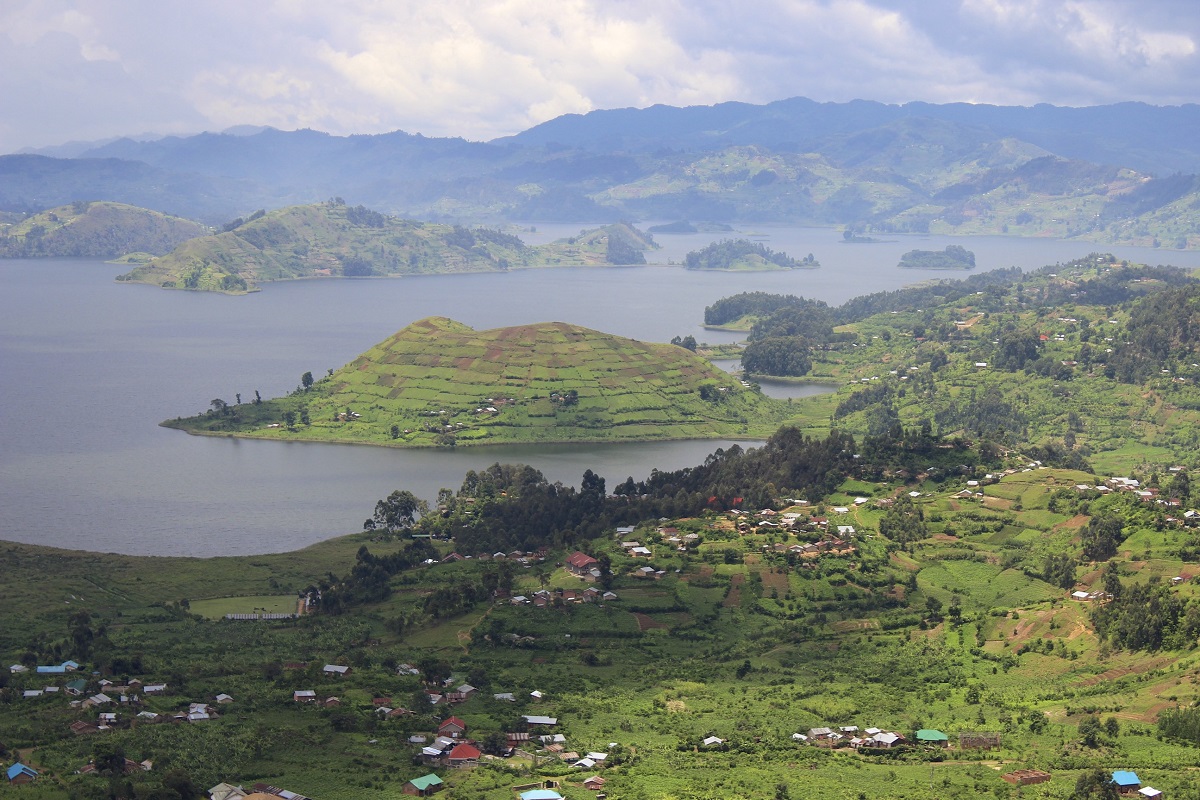
Lake Mutanda is a beautiful freshwater lake in southwestern Uganda, near Kisoro and close to the borders with Rwanda and the Democratic Republic of Congo. Surrounded by dramatic volcanic mountains, green hills and small islands, the lake is one of the most scenic destinations in the Virunga region.
The lake is particularly attractive to travelers visiting Bwindi Impenetrable National Park or Mgahinga Gorilla National Park, because it can be incorporated naturally into a southwestern Uganda itinerary.
Its setting is what makes Lake Mutanda special. Instead of the open savannah landscapes found in Uganda’s traditional safari parks, visitors encounter a highland environment dominated by volcanic peaks, cultivated hillsides, wetlands and deep blue water.
Lake Mutanda is also associated with a variety of water-based and nature activities, including canoeing, boat excursions, hiking and bird watching. The surrounding area provides opportunities to experience local communities and the agricultural landscapes of the Kisoro region.
For travelers coming for gorilla trekking, Lake Mutanda can provide a peaceful and scenic experience before or after the trek.
Where Is Lake Mutanda?
Lake Mutanda is located near Kisoro Town in southwestern Uganda, within the Kisoro District.
The lake lies in the Virunga landscape, an area dominated by a chain of volcanic mountains extending across Uganda, Rwanda and the Democratic Republic of Congo.
Its location makes it particularly convenient for travelers visiting Mgahinga Gorilla National Park.
It can also be incorporated into itineraries visiting Bwindi, although the driving distance depends considerably on which sector of Bwindi is being visited.
The lake’s elevated location gives the surrounding landscape a cool highland character.
What Makes Lake Mutanda Special?
The most remarkable feature of Lake Mutanda is its scenery.
The lake is surrounded by volcanic mountains, including views toward the Virunga volcanoes.
The combination of deep water, green hills, cultivated slopes and volcanic peaks creates one of the most distinctive landscapes in southwestern Uganda.
The lake also contains several small islands, adding to its visual appeal.
For photographers, sunrise and sunset can be particularly attractive because changing light interacts with the mountains and water.
Unlike destinations where wildlife sightings determine the quality of a visit, Lake Mutanda’s main attraction is the landscape itself.
Lake Mutanda and the Virunga Mountains
Lake Mutanda sits within the broader Virunga volcanic landscape.
The Virunga Mountains stretch across Uganda, Rwanda and the Democratic Republic of Congo and include some of Africa’s best-known volcanic peaks.
The mountains are closely associated with mountain gorilla conservation and tourism.
From the Lake Mutanda area, visitors can appreciate the volcanic character of the region without necessarily undertaking a strenuous mountain climb.
On clear days, the surrounding peaks create an impressive backdrop over the lake.
This makes Lake Mutanda particularly attractive for travelers who want to experience the scenery of the Virunga region beyond gorilla trekking.
Canoeing on Lake Mutanda
Canoeing is one of the main ways visitors can experience Lake Mutanda from the water.
A canoe trip allows travelers to move quietly across the lake while enjoying views of the surrounding mountains and islands.
Compared with a conventional motorized boat excursion, canoeing provides a slower and more peaceful experience.
It also allows visitors to appreciate the landscape from a different perspective.
Because the lake is surrounded by highlands, the scenery remains the main attraction throughout the experience.
Travelers should use appropriate safety equipment and follow local guidance regarding weather and water conditions.
Boat Experiences on Lake Mutanda
Boat excursions can provide another way to explore the lake.
From the water, visitors can appreciate the relationship between the lake, surrounding agricultural hills and volcanic landscape.
The experience is particularly suited to travelers looking for a relaxed activity rather than an intensive wildlife excursion.
Before booking, however, travelers should confirm the current type of boat, departure arrangements, duration and operating schedule with the local provider, as these details can vary.
That is better than publishing a fixed schedule that may become outdated.
Hiking Around Lake Mutanda
The hills surrounding Lake Mutanda provide opportunities for walking and hiking.
A hike around the lake can reveal a very different side of southwestern Uganda.
Instead of staying only at the lakeshore, travelers can move through surrounding hills and cultivated landscapes while enjoying views back toward the water and volcanoes.
The terrain can be steep in places because of the region’s mountainous character.
Travelers should therefore choose routes according to their fitness and use a local guide where appropriate.
Bird Watching at Lake Mutanda
Lake Mutanda and its surrounding wetlands and vegetation provide habitat for birds.
Bird watching can therefore be incorporated into a visit, particularly during walks around the lake or canoe excursions.
The combination of water, vegetation, farmland and nearby highland habitats creates different environments where birds can be observed.
For serious birders, the wider southwestern Uganda region offers considerably more birding opportunities, but Lake Mutanda can provide an enjoyable component of a broader birding itinerary.
The Islands of Lake Mutanda
One of Lake Mutanda’s visual characteristics is the presence of small islands scattered across the lake.
These islands contribute to the distinctive appearance of the landscape and can be appreciated particularly well from a canoe or boat.
They also provide interesting foreground subjects for photography, especially when combined with the volcanic mountains in the background.
The relationship between the islands, water and surrounding hills is one of the reasons Lake Mutanda photographs so well.
Lake Mutanda and Local Communities
The area around Lake Mutanda is inhabited and heavily influenced by agriculture.
The surrounding hills show the intensive cultivation that characterizes much of the Kisoro highlands.
Visitors therefore experience more than a natural landscape.
They also see how communities have adapted agriculture to a mountainous environment.
A responsible visit should respect private farmland and local communities.
Where community-based experiences are offered, travelers should use legitimate local operators and follow local guidance.
Agriculture Around Lake Mutanda
The Kisoro region is known for intensive highland agriculture.
The steep hills surrounding the lake have been cultivated for generations, producing a distinctive patchwork of fields.
This creates an unusual contrast:
Deep blue lake
Green cultivated hills
Volcanic mountains
Small islands
The agricultural landscape is therefore part of the visual identity of Lake Mutanda.
Visitors interested in rural landscapes and cultural geography may find this aspect particularly fascinating.
Lake Mutanda for Photography
Lake Mutanda is one of the stronger photography destinations in southwestern Uganda.
The lake provides several natural subjects within a relatively compact landscape.
Photographers can capture:
- The Virunga volcanoes
- Canoes on the lake
- Small islands
- Highland farms
- Sunrise and sunset
- Reflections on the water
- Local fishing activity
- Green hills surrounding the lake
The scenery changes considerably depending on weather and light.
Morning mist can sometimes create an atmospheric landscape, while clear weather can reveal the volcanic peaks more prominently.
Lake Mutanda and Gorilla Trekking
Lake Mutanda works particularly well as an addition to a gorilla trekking safari.
Travelers visiting Mgahinga Gorilla National Park can use the lake as a relaxing scenic experience before or after trekking.
This creates a useful contrast.
Gorilla trekking is physically demanding and takes place in mountainous forest.
Lake Mutanda offers a quieter environment where travelers can relax beside the water or explore the surrounding landscape.
For travelers spending several days in the Kisoro area, combining the two can make the itinerary more varied.
Lake Mutanda and Mgahinga Gorilla National Park
The lake is particularly close to Mgahinga Gorilla National Park, making the two destinations easy to combine in a southwestern Uganda itinerary.
Mgahinga provides opportunities for:
Gorilla trekking
Golden monkey tracking
Volcano hiking
while Lake Mutanda provides:
Lake scenery
Canoeing
Boat experiences
Hiking and nature exploration
This combination can create a strong itinerary for travelers who want both wildlife and landscape experiences.
Lake Mutanda and Bwindi Impenetrable National Park
Lake Mutanda can also be combined with Bwindi Impenetrable National Park.
However, travelers should remember that Bwindi has several trekking sectors, and the journey from Lake Mutanda will depend on the specific sector.
The lake is particularly convenient for itineraries involving the southern Bwindi sectors, while northern and eastern sectors may require considerably longer transfers.
This is something worth considering when building a gorilla itinerary.
Lake Mutanda and Kisoro
Kisoro Town is the main urban center serving the area.
Travelers visiting Lake Mutanda can therefore combine the lake experience with time in Kisoro.
Kisoro provides access to several attractions in the Virunga region and serves as an important base for travelers visiting Mgahinga and surrounding communities.
The town also makes it practical to arrange transport, accommodation and other services before heading into the surrounding countryside.
Best Time to Visit Lake Mutanda
Lake Mutanda can be visited throughout the year.
However, weather plays an important role in the experience because the main attraction is the landscape.
During clear weather, the Virunga volcanoes are more likely to be visible.
During wetter or cloudier periods, the mountains may disappear behind clouds, but the landscape can become exceptionally green and atmospheric.
For photography and mountain views, travelers generally benefit from choosing periods with better visibility.
However, weather in the highlands can change quickly.
How to Get to Lake Mutanda
Lake Mutanda is reached by road from Kisoro.
Travelers coming from Kampala normally travel through southwestern Uganda toward Kisoro.
The journey is long by road, so Lake Mutanda is best incorporated into a multi-day itinerary rather than treated as a quick excursion from Kampala.
Travelers visiting Mgahinga, Bwindi or the wider Virunga region can add the lake without creating a completely separate journey.
There are also air travel options serving the broader southwestern Uganda region, although the appropriate airstrip depends on the wider itinerary.
Accommodation Around Lake Mutanda
Accommodation is available around Lake Mutanda and in the wider Kisoro area.
One of the best-known properties directly associated with the lake is Lake Mutanda Resort, which offers accommodation overlooking the lake and surrounding mountains.
Other accommodation options can be found in Kisoro and around Mgahinga, allowing travelers to choose according to budget and itinerary.
Because accommodation availability and operating conditions can change, travelers should confirm current rates, room availability and included activities before booking.
How Long Should You Stay at Lake Mutanda?
For most safari itineraries, one or two nights can be enough.
A one-night stay works well for travelers who simply want to enjoy the lake and surrounding scenery.
Two nights provide more flexibility for canoeing, walking, photography and combining the lake with other attractions around Kisoro.
If Lake Mutanda forms part of a gorilla safari, it can be especially useful as a pre- or post-trekking stay.
Is Lake Mutanda Worth Visiting?
Yes, particularly if you are already traveling through southwestern Uganda.
Lake Mutanda is not a destination you visit primarily to search for large mammals.
You visit for the landscape and atmosphere.
The combination of water, islands, cultivated hills and volcanic mountains creates a setting that is distinctly different from Uganda’s savannah parks.
It also provides an excellent opportunity to slow down during a safari.
After spending hours on the road or a physically demanding day in the forest, sitting beside Lake Mutanda and looking toward the Virunga volcanoes can become one of the quieter highlights of the journey.
Why Visit Lake Mutanda?
Lake Mutanda offers a beautiful combination of highland scenery, water, volcanic landscapes and outdoor experiences.
Its strongest attractions include:
Canoeing and lake excursions
Scenic views of the Virunga Mountains
Hiking and nature walks
Bird watching
Photography
Small lake islands
Cultural and agricultural landscapes
Most importantly, it fits naturally into southwestern Uganda’s gorilla and primate itineraries.
A traveler can spend one day trekking through mountain forest in search of gorillas and the next morning enjoying a peaceful canoe ride surrounded by volcanic scenery.
That contrast is what makes Lake Mutanda such a worthwhile addition to a Uganda safari.
Frequently Asked Questions
Where Is Lake Mutanda?
Lake Mutanda is located near Kisoro in southwestern Uganda, within the Virunga volcanic region.
What Is Lake Mutanda Famous For?
It is best known for its beautiful volcanic mountain scenery, islands, freshwater lake environment and opportunities for canoeing and other nature experiences.
Can I Go Canoeing on Lake Mutanda?
Yes. Canoeing is one of the activities associated with Lake Mutanda.
Can Lake Mutanda Be Combined With Gorilla Trekking?
Yes. It is particularly convenient for travelers visiting Mgahinga Gorilla National Park and can also be incorporated into suitable Bwindi itineraries.
Can I See the Virunga Mountains From Lake Mutanda?
Yes. The lake’s location provides scenic views toward the Virunga volcanic range, although visibility depends on weather conditions.
How Long Should I Spend at Lake Mutanda?
One or two nights is generally sufficient for travelers who want to enjoy the lake and combine it with other southwestern Uganda attractions.
Is Lake Mutanda Suitable for Families?
Yes. Relaxed lakeside experiences and nature activities can work well for families, although specific water activities should be selected according to children’s ages and swimming ability.
Is Lake Mutanda a Wildlife Safari Destination?
Not primarily. Its main attractions are the lake, scenery, volcanic landscape and outdoor activities rather than traditional game viewing.
When Is the Best Time to Visit Lake Mutanda?
It can be visited year-round. Clearer weather is particularly useful for mountain views and photography, while wetter periods can produce lush landscapes and atmospheric scenery.