Overview
Lutembe Bay Wetland – Travel Overview
Lutembe Bay Wetland is one of Uganda’s important wetland destinations along the northern shores of Lake Victoria, offering travelers a quieter alternative to the country’s better-known wildlife and nature attractions. Located in Wakiso District, west of Kampala, the wetland is particularly valuable for bird watching, nature photography and travelers interested in Uganda’s lake and wetland ecosystems.
The destination is especially significant because of its location along an important route used by migratory birds. During suitable seasons, visitors can encounter large numbers of waterbirds and other species associated with wetlands, making Lutembe Bay an interesting stop for birders exploring the Lake Victoria region.
Unlike a traditional Ugandan safari destination, Lutembe Bay is not about game drives or large mammals. Its attraction lies in wetland scenery, birdlife, Lake Victoria views and conservation.
For travelers staying in Kampala or Entebbe, Lutembe Bay can also provide a relatively accessible opportunity to experience a different side of Uganda’s natural environment without committing to a multi-day safari.
Where Is Lutembe Bay Wetland?
Lutembe Bay Wetland is located along the northern shoreline of Lake Victoria in Wakiso District, central Uganda.
It lies west of Kampala and relatively close to Entebbe, placing it within the wider Lake Victoria landscape.
The wetland is connected to the lake and consists of aquatic habitats, shoreline vegetation and surrounding wetland environments that provide important feeding and resting areas for birds.
Its location makes it potentially convenient for travelers exploring the Kampala–Entebbe corridor.
What Makes Lutembe Bay Special?
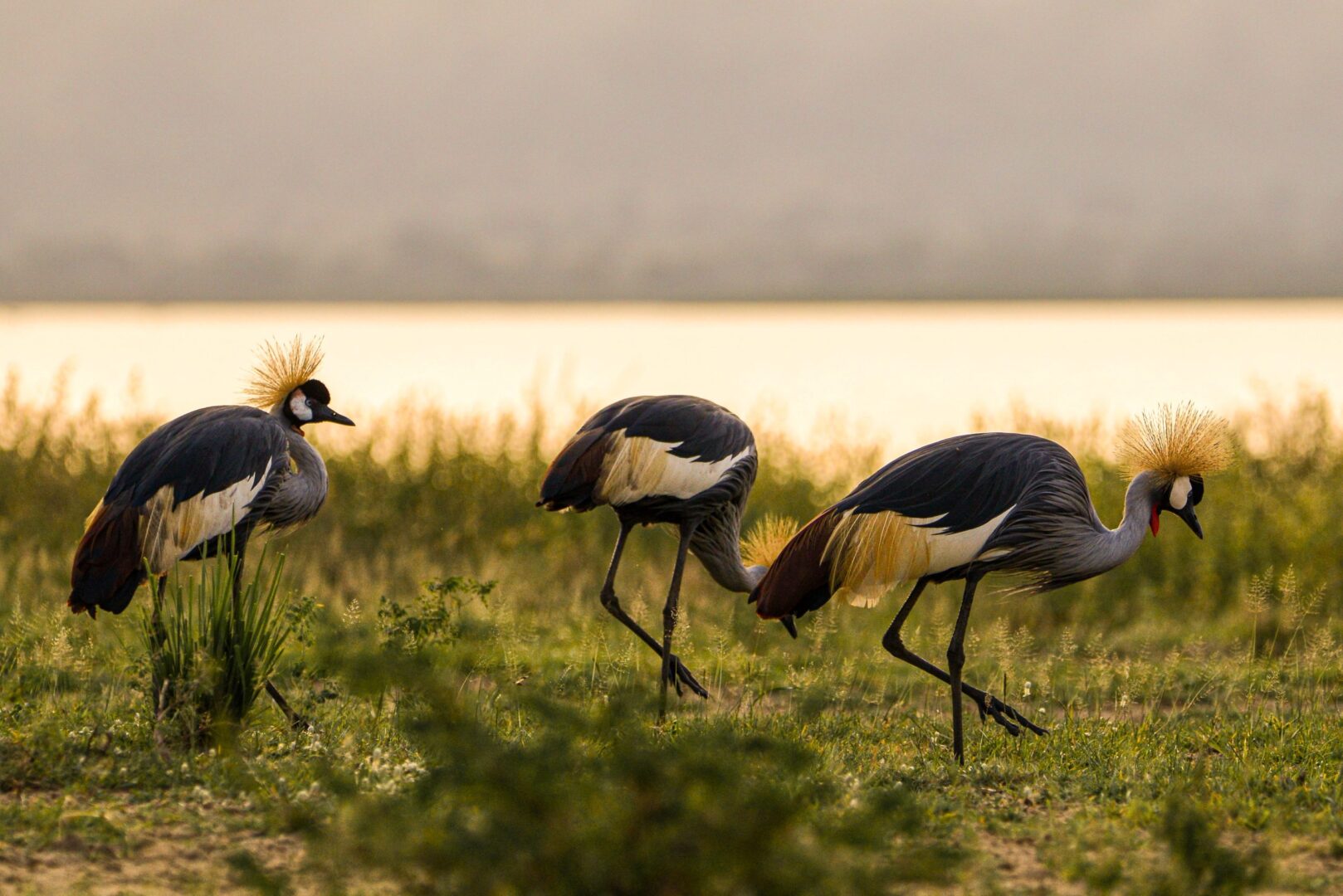
Lutembe Bay’s greatest attraction is its birdlife.
The wetland provides important habitat for both resident and migratory birds.
During periods when migratory birds are present, the bay can become particularly interesting for bird watchers because large numbers of birds may gather around the wetland.
The combination of open water, marsh vegetation and Lake Victoria shoreline creates several different habitats within a relatively compact area.
For photographers and birders, this can make Lutembe Bay an interesting destination for observing Uganda’s wetland ecosystems.
Lutembe Bay and Lake Victoria
Lake Victoria is central to the identity of Lutembe Bay.
The enormous lake supports numerous wetlands and coastal habitats around its shores, each contributing to the wider ecosystem.
Lutembe Bay provides a transition between the lake and surrounding terrestrial environments.
This makes it important not only for birds but also for aquatic plants, fish and other organisms associated with wetland habitats.
Visitors interested in environmental tourism can therefore learn how wetlands interact with larger freshwater ecosystems.
Bird Watching at Lutembe Bay
Bird watching is the main reason many visitors are interested in Lutembe Bay.
The wetland supports a variety of waterbirds and other species.
Depending on the season, visitors may encounter:
Egrets
Herons
Kingfishers
Cormorants
Ibises
Storks
Waders
Terns
Gulls
Raptors
The exact species and numbers vary according to season, water conditions and other environmental factors.
This makes each visit somewhat different.
Migratory Birds
One of Lutembe Bay’s most important ecological features is its significance for migratory birds.
Birds moving between breeding and non-breeding areas can use wetlands such as Lutembe as feeding and resting sites.
This means that birding can become particularly rewarding during migration periods.
For serious birders, timing the visit around the presence of migratory species can make a substantial difference.
However, visitors should remember that bird numbers naturally fluctuate.
A Destination for Birding Enthusiasts
Lutembe Bay is especially attractive to travelers who want to explore Uganda beyond the famous national parks.
A visitor interested in birds does not necessarily need to travel to Bwindi, Murchison Falls or Queen Elizabeth to find interesting species.
Wetlands around Lake Victoria can provide excellent birding opportunities close to Uganda’s major urban centers.
Lutembe Bay therefore works particularly well as part of a broader Uganda birding itinerary.
Nature and Wetland Exploration
The attraction is not limited to bird watching.
Travelers can also appreciate the wetland environment itself.
The combination of water, marsh vegetation, open skies and Lake Victoria creates a peaceful natural setting.
For visitors coming from Kampala, the contrast can be striking.
Within a relatively short journey, travelers can move from busy urban environments into a landscape dominated by water and wetland vegetation.
Photography at Lutembe Bay
Lutembe Bay can be rewarding for nature photographers.
The open landscape makes it possible to capture birds against the water and sky, while the surrounding vegetation provides natural framing.
Photography opportunities include:
Waterbirds
Migratory birds
Lake Victoria landscapes
Wetland vegetation
Sunrise
Sunset
Fishing and local activities
Canoes and boats
A telephoto lens is useful for bird photography.
Binoculars are equally valuable because many birds may remain at a distance.
Sunrise and Sunset
The Lake Victoria setting provides opportunities for beautiful sunrise and sunset photography.
The open horizon allows changing light to spread across the water and wetland.
Early morning is also useful for bird watching because temperatures are generally more comfortable and wildlife activity can be higher.
Travelers planning photography excursions should confirm local access arrangements and safety conditions before visiting at very early or late hours.
Lutembe Bay as a Community Landscape
Lutembe Bay is not an isolated wilderness.
People live and work around the wider wetland and Lake Victoria environment.
Fishing, agriculture and other livelihood activities have historically been important to communities around the lake.
This creates an important connection between conservation and local livelihoods.
Responsible tourism should therefore recognize that the wetland has value not only as a habitat for birds but also as part of the lives of surrounding communities.
Conservation Importance
Wetlands such as Lutembe Bay play an important role in supporting biodiversity.
They provide feeding, breeding and resting areas for birds while contributing to the health of larger freshwater ecosystems.
However, wetlands around growing urban areas can face pressures from:
Land conversion
Pollution
Agricultural activity
Settlement expansion
Resource use
Changes in water conditions
Protecting these ecosystems requires cooperation between conservation organizations, local communities, authorities and visitors.
Tourism can contribute by creating economic value around keeping natural habitats intact.
Responsible Tourism at Lutembe Bay
Visitors should treat the wetland as a sensitive ecosystem.
Travelers should:
Avoid littering.
Do not disturb birds.
Keep noise levels low.
Do not damage vegetation.
Follow local access rules.
Respect private property.
Ask permission before photographing people.
Use local guides where available.
These simple practices help minimize the impact of tourism.
Is Lutembe Bay Good for Families?
It can be.
Families interested in nature and birds may enjoy the experience, especially children who like observing wildlife.
However, the attraction is more appropriate for families who enjoy quiet outdoor activities rather than those expecting a large-animal safari.
Parents should supervise children around water and follow all local safety instructions.
Binoculars can make the experience more engaging for young visitors.
Is Lutembe Bay Suitable for Non-Birders?
Yes, although birders will get the most from the destination.
Visitors who are not experienced bird watchers can still appreciate the lake scenery, wetlands and peaceful environment.
A knowledgeable guide can also introduce beginners to common bird species and explain how wetlands function.
This can turn an ordinary nature visit into an educational experience.
Best Time to Visit Lutembe Bay
Lutembe Bay can be visited throughout the year.
For birding, however, seasonal conditions matter.
Migratory birds can make certain periods more rewarding, while resident species remain present at different times.
Early morning is generally a good period for bird watching.
Travelers should also consider rainfall when planning their visit, especially if they intend to spend significant time outdoors.
How Long Should You Spend at Lutembe Bay?
Most visitors do not need several days.
A few hours can provide enough time for a nature and birding excursion.
Serious birders may prefer to spend longer in the area or combine Lutembe Bay with other birding destinations around Kampala, Entebbe and Lake Victoria.
For ordinary travelers, Lutembe Bay works best as a half-day excursion or a stop within a wider central Uganda itinerary.
Lutembe Bay From Kampala
Lutembe Bay can be considered as a day excursion from Kampala.
Its location along the Lake Victoria side of the Kampala–Entebbe corridor makes it relatively accessible compared with remote Ugandan wildlife destinations.
However, traffic can significantly affect journey times.
Travelers should allow additional time when planning morning or evening excursions from Kampala.
Lutembe Bay From Entebbe
Travelers staying in Entebbe can also explore Lutembe Bay.
The relatively close location makes it useful for visitors who have extra time around their arrival or departure from Uganda.
Bird watchers staying in Entebbe may find it particularly convenient because several wetland and forest habitats are accessible from the town.
Lutembe Bay and Mabamba Swamp
Mabamba Swamp is one of the strongest destinations to combine with Lutembe Bay for travelers interested in wetland birding.
Mabamba is particularly famous for its Shoebill and canoe experiences.
Lutembe Bay offers another perspective on Lake Victoria’s wetland ecosystems and migratory bird habitats.
A dedicated birding itinerary can therefore include both destinations.
This combination is more appropriate for bird enthusiasts than for travelers looking for large mammals.
Lutembe Bay and Entebbe Botanical Gardens
Entebbe Botanical Gardens can also complement a Lutembe Bay visit.
The botanical gardens offer terrestrial vegetation, birdlife and a different natural environment.
Together, the two attractions provide an opportunity to explore both wetland and lakeside habitats.
This can work well for travelers spending a day or two in Entebbe.
Lutembe Bay and Mabira Forest
Travelers interested in birding can also consider combining Lutembe Bay with Mabira Forest Reserve.
The habitats are very different.
Mabira provides tropical forest environments, while Lutembe Bay provides wetland and lakeshore habitats.
Combining them therefore increases the variety of environments experienced during the trip.
Lutembe Bay and Jinja
For travelers continuing east, Lutembe Bay can form part of a longer journey toward Jinja.
Jinja provides access to the Nile and a range of adventure and cultural activities.
Lutembe Bay adds a birding and wetland component.
The two destinations should be planned as part of a wider itinerary rather than trying to rush through both in a few hours.
What Should You Bring?
Travelers visiting Lutembe Bay should consider carrying:
- Binoculars
- Camera
- Telephoto lens
- Drinking water
- Hat
- Sunscreen
- Insect repellent
- Comfortable walking shoes
- Light clothing
- Rain protection
Bird watchers should also consider carrying a field guide or using a reliable bird-identification application.
What to Expect During a Visit
Lutembe Bay should be approached as a quiet nature and birding destination.
Visitors should not expect:
- Big Five game drives
- Luxury safari lodges
- Large tourism crowds
- Guaranteed wildlife sightings
Instead, expect:
Wetland scenery
Lake Victoria views
Bird watching
Nature photography
Quiet exploration
Community landscapes
An opportunity to learn about wetland conservation
The experience is more about observing and appreciating the environment than seeking constant action.
Is Lutembe Bay Worth Visiting?
For dedicated bird watchers, Lutembe Bay is a worthwhile destination to include in a Uganda birding itinerary.
For ordinary travelers, its value depends on your interests.
If you are already visiting Entebbe or traveling around Lake Victoria, it can provide a rewarding nature excursion.
If your primary goal is to see Uganda’s famous large mammals, however, destinations such as Murchison Falls, Queen Elizabeth, Kidepo Valley or Lake Mburo will be more appropriate.
Lutembe Bay’s strength is its wetland ecosystem and birdlife, not conventional safari game viewing.
Who Should Visit Lutembe Bay?
Lutembe Bay is particularly suitable for:
Bird watchers
Nature lovers
Wildlife photographers
Conservation enthusiasts
Families interested in nature
Travelers staying in Entebbe
Travelers based in Kampala
Visitors exploring Lake Victoria
Travelers building a Uganda birding itinerary
It is especially useful for travelers who want to explore Uganda’s biodiversity beyond the major national parks.
Frequently Asked Questions
Where Is Lutembe Bay Wetland?
Lutembe Bay is located along the northern shore of Lake Victoria in Wakiso District, west of Kampala and near the Entebbe area.
What Is Lutembe Bay Famous For?
It is particularly known for its wetland ecosystem and importance for resident and migratory birds.
Can I See Migratory Birds at Lutembe Bay?
Yes. The wetland is used by migratory birds, although species and numbers vary depending on the season.
Is Lutembe Bay a National Park?
No. It is a wetland ecosystem and conservation area associated with Lake Victoria.
Is Lutembe Bay Good for Bird Watching?
Yes. Birding is one of the main reasons to visit.
Can I Visit Lutembe Bay From Kampala?
Yes. It can be included in a day excursion from Kampala, although traffic should be considered when planning the journey.
Can I Visit Lutembe Bay From Entebbe?
Yes. Its location makes it a practical option for travelers staying in Entebbe.
Can I Combine Lutembe Bay With Mabamba Swamp?
Yes. The two destinations can work particularly well together for dedicated bird watchers.
How Long Should I Spend There?
A few hours is sufficient for a basic visit, while serious birders may want longer.
What Should I Bring?
Binoculars, a camera, drinking water, sun protection, insect repellent and comfortable outdoor clothing are recommended.