







Overview
Mabira Forest & Griffin Falls – Travel Overview
Mabira Forest and Griffin Falls offer one of Uganda’s most accessible rainforest experiences, conveniently positioned along the Kampala–Jinja highway. The destination combines dense tropical forest, waterfalls, birdlife, primates, butterflies, hiking trails and community-based tourism, making it an excellent addition to a Uganda itinerary.
Mabira is particularly valuable for travelers who do not have enough time for a longer forest safari. Its location between Kampala and Jinja makes it possible to experience a genuine tropical forest environment without traveling deep into western or southwestern Uganda. The forest is about 54–56 kilometres from Kampala, depending on the access point used.
At the heart of the forest experience is Griffin Falls, reached through a forest trail and surrounded by the sounds and vegetation of the rainforest.
Where Is Mabira Forest?
Mabira Forest Reserve lies along the Kampala–Jinja highway, making it one of Uganda’s easiest natural attractions to reach from the capital.
The forest extends across parts of Buikwe, Mukono and Kayunga districts and covers roughly 306 square kilometres.
The main tourism access is around Najjembe, where visitors can leave the highway and enter the forest.
Its position between Kampala and Jinja also makes Mabira a practical stop when traveling toward eastern Uganda.
Mabira Forest Reserve
Mabira is one of the largest remaining rainforest blocks in central Uganda and has been protected as a forest reserve since 1932.
The forest consists of gently rolling terrain, hills, valleys and areas of wetland vegetation.
It is an important habitat for a wide range of plant and animal species and also performs important ecological functions, including watershed protection and climate regulation. The National Forestry Authority identifies Mabira as a watershed for the Lake Victoria–Kyoga–Nile system.
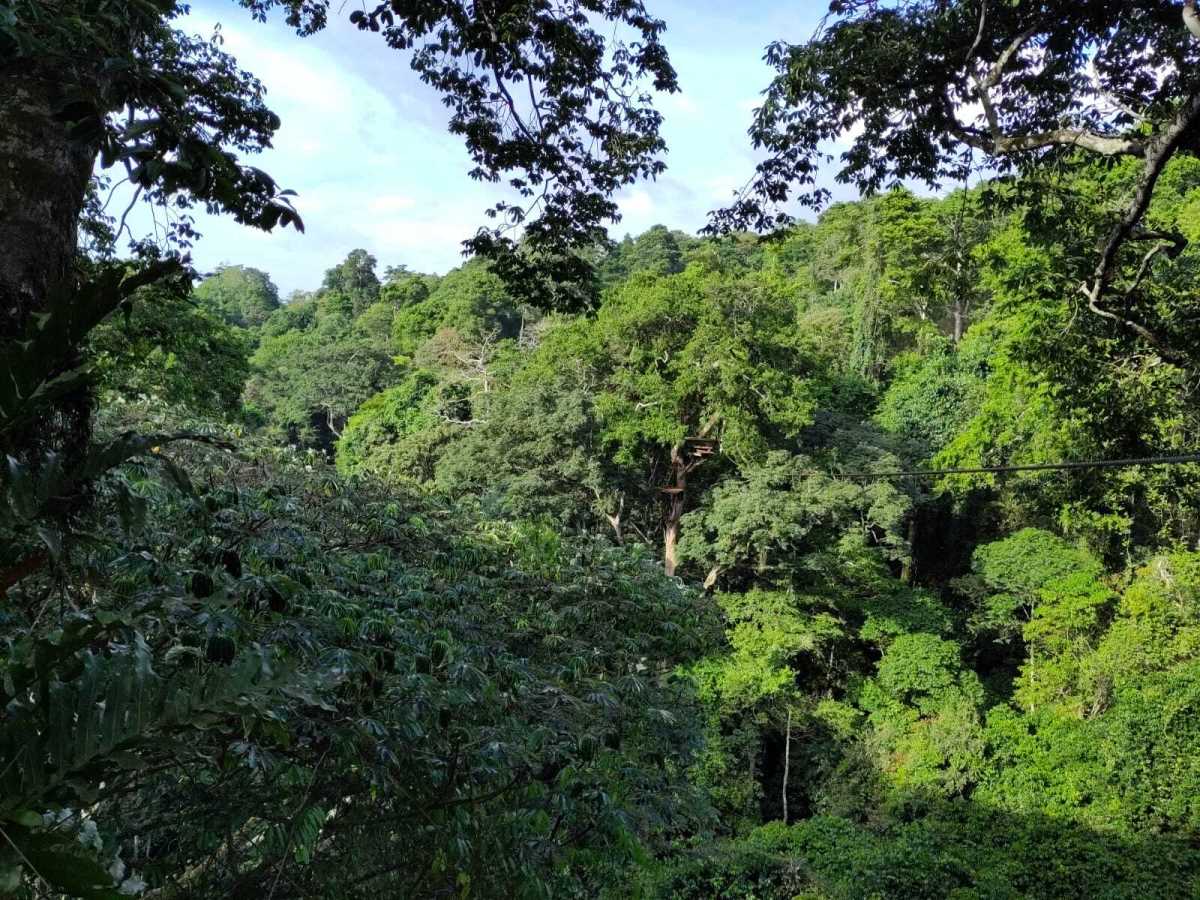
For visitors, however, the most immediate impression is simply the atmosphere: thick vegetation, towering trees, forest sounds and a sense of being far away from Uganda’s busy urban centers.
Griffin Falls
Griffin Falls is one of the most memorable attractions within the Mabira Forest landscape.
The waterfall is reached by following a forest trail through the rainforest. One current description places the walk to the falls at roughly 30 minutes from Griffin Falls Camp, although walking time naturally depends on the trail and pace.
As you approach the falls, the sound of rushing water becomes increasingly noticeable through the forest.
The waterfall, surrounding rocks and thick vegetation create a beautiful setting for photography and relaxation.
The Griffin Falls Forest Walk
Getting to Griffin Falls is part of the experience.
The trail takes visitors through the forest rather than simply delivering them directly to a viewpoint.
Along the way, you may encounter:
Tall rainforest trees
Vines and climbing plants
Monkeys
Birds
Butterflies
Forest streams
Interesting tree formations
A knowledgeable guide can also explain the ecological importance of the forest and help identify wildlife that would otherwise be easy to miss.
Wildlife in Mabira Forest
Mabira supports a diverse range of wildlife despite its proximity to major towns and highways.
The forest is particularly known for its primates, birds and butterflies.
Wildlife that visitors may encounter includes:
Red-tailed monkeys
Grey-cheeked mangabeys
Black-and-white colobus monkeys
Bushbucks
Small forest mammals
Butterflies
Reptiles
The forest also supports a range of other mammals, although sightings are naturally less predictable than in Uganda’s savannah national parks.
This is a forest nature experience, not a Big Five safari.
Bird Watching in Mabira
Bird watching is one of Mabira’s strongest attractions.
The forest supports hundreds of bird species, with tourism and government sources reporting more than 300 species.
Among the birds associated with Mabira are:
Great Blue Turaco
African Grey Parrot
Black-and-white-casqued Hornbill
Pied Hornbill
Nahan’s Francolin
African Fish Eagle
Various sunbirds
The Nahan’s Francolin is particularly significant because it is an important conservation species associated with the forest.
Birders should ideally explore with a local guide who knows the forest’s bird calls and preferred habitats.
The Great Blue Turaco
The Great Blue Turaco is one of the most spectacular birds visitors may encounter in Mabira.
Its striking blue coloration and large size make it a favorite among bird photographers.
The dense forest canopy can make sightings challenging, but hearing its distinctive call can alert experienced birders to its presence.
A good guide can make the difference between simply walking through the forest and actually discovering what lives in the canopy.
Butterflies of Mabira
Mabira is also known for its impressive butterfly diversity.
Tourism sources record hundreds of butterfly species within the forest.
The butterflies become particularly noticeable around forest clearings, flowers and sunny sections of the trail.
For photographers, these smaller creatures can provide excellent subjects when the forest is quiet and the light is good.
Forest Nature Walks
Walking is one of the easiest ways to experience Mabira.
The forest contains a network of trails suitable for different interests and levels of fitness.
Some walks are short and relaxed, while others allow visitors to spend several hours exploring deeper into the forest.
The National Forestry Authority lists forest walks as one of the principal tourism activities at Mabira.
A guided walk is recommended for first-time visitors because guides can identify wildlife, explain the forest ecosystem and help you navigate the trails.
Hiking in Mabira Forest
For travelers who want a more active experience, Mabira provides opportunities for longer forest hikes.
The terrain includes hills and valleys, so some sections require moderate effort.
One route from the Griffin Falls area can continue toward Namusa Hill, offering an opportunity for a longer forest experience or overnight adventure.
Mabira is therefore suitable for both casual nature walks and more energetic hiking.
Mountain Biking
Mabira also offers opportunities for mountain biking.
A cycling route through and around the forest provides a different way to experience the landscape.
One tourism source describes a 25-kilometre circular cycling trail linking the forest with surrounding plantations and countryside.
Mountain bikes are recommended for travelers choosing this option because sections of the terrain can be uneven.
Canopy Experiences and Zip-Lining
Mabira has also become known for canopy adventure activities, including zip-lining experiences through the forest.
The attraction gives travelers a different perspective of the rainforest, allowing them to move above sections of the forest floor and experience the canopy from a higher viewpoint.
Tourism Uganda has historically documented the Mabira Forest Canopy Super Skyway at the Griffin Falls area.
Because adventure facilities and operating arrangements can change, travelers should confirm current availability before building a trip around the activity.
Camping in Mabira Forest
Camping is another way to experience Mabira.
Spending a night in or near the forest gives travelers the opportunity to experience the environment after the day visitors have left.
At night, the character of the forest changes completely.
The sounds of insects, frogs, birds and nocturnal animals replace the daytime activity.
Camping facilities are available around the forest tourism sites, although travelers should confirm current facilities and arrangements before visiting.
Griffin Falls Camp
Griffin Falls Camp, also known as Mabira Forest Camp, is located within the forest landscape near the Griffin Falls trail system.
The camp is associated with the Mabira Forest Integrated Community Organisation (MAFICO) and follows a community-based conservation model.
According to the camp’s current information, proceeds support community development and environmental projects around Mabira.
This makes staying or participating in activities through community-run facilities an opportunity to contribute directly to local conservation efforts.
Community Tourism Around Mabira
Mabira’s tourism story is not only about the forest.
Communities living around the reserve are part of its conservation landscape.
Community-based tourism initiatives provide opportunities for local people through:
Guiding
Accommodation
Crafts
Cultural activities
Forest-related tourism services
The idea is simple: when surrounding communities can benefit from tourism, protecting the forest becomes economically meaningful.
This connection between tourism and conservation is an important part of Mabira’s appeal.
Mabira Forest and Local Culture
Travelers can also combine their forest experience with local cultural activities.
Depending on the operator and experience selected, visitors may encounter traditional food, storytelling, crafts and community activities.
The Mabira Collective, for example, currently offers craft experiences, traditional songs, storytelling, Ugandan food and guided rainforest walks through a women-led community tourism initiative.
This provides a useful way to experience the destination beyond wildlife.
The Forest’s Ancient Trees
One of Mabira’s most impressive features is its vegetation.
The forest contains hundreds of tree species, including large mature trees that form a dense canopy.
Some trees have extensive buttress roots, while others are covered by vines and climbing plants.
One of the interesting phenomena visitors may encounter is the presence of strangler plants, which begin growing around host trees and gradually develop into large structures of their own.
A guided walk is the best way to understand these relationships.
Mabira Forest for Photography
Mabira provides a completely different photographic environment from Uganda’s open savannah parks.
Instead of wide horizons and large mammals, photographers can focus on:
Waterfalls
Forest canopies
Primates
Birds
Butterflies
Tree roots
Vines
Streams
Forest trails
Community life
The changing light beneath the canopy can create dramatic images, particularly around Griffin Falls.
Mabira Forest for Families
Mabira can make an excellent family nature excursion.
Children can learn about:
Rainforest ecosystems
Birds
Monkeys
Trees
Butterflies
Waterfalls
Conservation
The relatively short distance from Kampala also means families can experience the forest without committing to a long safari journey.
Parents should ensure children remain with their guide, particularly around steep or slippery sections near the waterfall.
Mabira Forest for Couples
For couples, Mabira offers a peaceful escape from the city.
A forest walk followed by a visit to Griffin Falls creates a relaxed day surrounded by nature.
Couples who want a longer experience can add camping or accommodation near the forest.
The combination of rainforest scenery, waterfalls and quiet trails can make Mabira a good short nature getaway.
Mabira Forest and Jinja
Mabira works particularly well as part of a Kampala–Jinja itinerary.
Travelers heading toward Jinja can stop at the forest before continuing to the Nile and other attractions.
This makes Mabira particularly useful for visitors who want to break up the journey rather than spending the entire drive on the highway.
Uganda’s tourism authorities also identify Mabira as a natural stop along the route between Kampala and Jinja.
Mabira Forest and Sezibwa Falls
Another useful combination is Sezibwa Falls.
Both destinations provide forest and waterfall experiences, but each has its own character.
Mabira offers a much larger rainforest environment with extensive trails and wildlife.
Sezibwa provides a shorter cultural and natural excursion centered around the falls and their traditional significance.
Combining the two can create an interesting day trip from Kampala.
Best Time to Visit Mabira Forest
Mabira can be visited throughout the year.
Because it is a rainforest environment, rain is always possible.
The drier periods can make hiking and cycling more comfortable, while wetter periods produce particularly lush vegetation and stronger waterfall scenery.
For birding and nature walks, early morning is generally a good time to begin.
Travelers should carry rain protection regardless of the season.
How Long Should You Spend in Mabira?
A half-day visit can be enough for a short forest walk and Griffin Falls experience.
However, travelers who want to combine:
Forest hiking
Bird watching
Griffin Falls
Cycling
Canopy activities
Community experiences
may benefit from spending a full day.
An overnight stay is worthwhile for travelers who want a slower forest experience.
What Should You Bring?
For a Mabira Forest and Griffin Falls visit, pack:
- Comfortable hiking shoes
- Lightweight clothing
- Long trousers
- Rain jacket
- Insect repellent
- Sunscreen
- Hat
- Drinking water
- Binoculars
- Camera
- Small backpack
If you are hiking to Griffin Falls, proper footwear is especially important because forest trails can become slippery after rain.
Responsible Tourism in Mabira Forest
Mabira is an important conservation area, so responsible tourism matters.
Visitors should:
Stay on established trails.
Follow the instructions of forest guides.
Avoid feeding wildlife.
Do not disturb birds or primates.
Avoid littering.
Do not remove plants or other forest materials.
Keep noise levels low.
Respect local communities.
Use community-based services where possible.
The National Forestry Authority identifies Mabira as an important forest for conservation, research, education and eco-tourism.
Is Mabira Forest Worth Visiting?
Absolutely.
Mabira is particularly valuable because of its accessibility.
You do not need a week-long safari to experience Uganda’s rainforest environment.
Within a relatively short journey from Kampala, travelers can walk beneath a tropical canopy, search for monkeys and birds, hike to a waterfall and experience community-based conservation.
And Griffin Falls gives the forest visit a strong visual highlight.
For travelers heading between Kampala and Jinja, it is one of the easiest nature stops to add to an itinerary.
Who Should Visit Mabira Forest?
Mabira Forest and Griffin Falls are particularly suitable for:
Nature lovers
Bird watchers
Photographers
Hikers
Families
Couples
Adventure travelers
Cyclists
Eco-tourists
Weekend travelers
Travelers between Kampala and Jinja
Visitors looking for a short rainforest experience
Frequently Asked Questions
Where Is Mabira Forest?
Mabira Forest is located along the Kampala–Jinja highway in central Uganda, with the main tourism access around Najjembe.
What Is Mabira Forest Famous For?
It is known for rainforest scenery, biodiversity, bird watching, primates, forest walks, cycling, canopy activities and Griffin Falls.
Where Is Griffin Falls?
Griffin Falls is located within the Mabira Forest landscape and can be reached through forest trails.
How Long Does It Take to Reach Griffin Falls?
The walking time depends on the trail and starting point. From Griffin Falls Camp, the current camp information describes roughly a 30-minute forest walk to the falls.
Can I See Monkeys in Mabira?
Yes. Mabira supports several primate species, although wildlife sightings are never guaranteed.
Is Mabira Good for Bird Watching?
Yes. The forest supports hundreds of bird species and is an important birding destination in central Uganda.
Can I Visit Mabira on a Day Trip From Kampala?
Yes. Its location along the Kampala–Jinja highway makes it particularly suitable for a day trip.
Can I Combine Mabira With Jinja?
Yes. Mabira is naturally suited to an itinerary combining Kampala, Mabira Forest and Jinja.
Can I Camp at Mabira?
Yes, camping facilities are associated with the forest tourism sites, although current arrangements should be confirmed before travel.