








Overview
Mount Kadam – Travel Overview
Mount Kadam is one of the striking mountain destinations in northeastern Uganda, rising from the rugged landscapes of the Karamoja region. Less visited than Uganda’s famous Rwenzori Mountains and Mount Elgon, Kadam offers travelers a more remote and adventurous experience, combining mountain exploration with dramatic scenery and opportunities to experience the cultures and landscapes of northeastern Uganda.
The mountain is part of the wider mountain landscape of Karamoja, a region known for its dry plains, rocky hills, pastoral communities and distinctive cultural heritage. For travelers willing to venture beyond Uganda’s established tourism routes, Mount Kadam provides an opportunity to explore a side of the country that remains relatively undiscovered.
A visit to Mount Kadam is particularly suitable for hikers, adventure travelers, photographers, bird watchers, nature enthusiasts and cultural travelers.
Rather than approaching Kadam as a conventional safari destination, it is better understood as a mountain and cultural adventure within northeastern Uganda.
Where Is Mount Kadam?
Mount Kadam is located in eastern/northeastern Uganda, within the broader Karamoja mountain landscape.
It lies around the border areas associated with Nakapiripirit and neighboring Karamoja districts, forming part of the rugged highlands that rise above the surrounding semi-arid plains.
The mountain is considerably less developed for tourism than destinations such as Mount Elgon or the Rwenzori Mountains.
This means visitors should expect a more adventurous experience, with fewer established tourism facilities and a greater reliance on local knowledge and guides.
For travelers exploring northeastern Uganda, Mount Kadam can be incorporated into a broader journey through Karamoja.
What Makes Mount Kadam Special?
The attraction of Mount Kadam lies in its remote setting, rugged terrain and spectacular contrast between mountain and dryland landscapes.
From the surrounding plains, the mountain rises dramatically above the semi-arid environment.
As travelers move higher, the landscape changes, providing different vegetation zones and increasingly expansive views.
The remoteness is part of the appeal.
There are fewer tourists, fewer vehicles and less of the developed tourism infrastructure found in Uganda’s major national parks.
For travelers looking for a genuine off-the-beaten-path adventure, this can be one of Mount Kadam’s greatest strengths.
Hiking Mount Kadam
Hiking is the main activity for travelers interested in exploring Mount Kadam.
A mountain excursion provides an opportunity to experience the landscape at walking pace, moving from the lower dryland environment toward higher elevations.
The terrain can be challenging in places, and travelers should not underestimate the physical demands of hiking in a remote mountain environment.
The difficulty of a hike depends on the route, elevation gained, weather and the experience of the traveler.
A local guide is therefore strongly recommended.
The Karamoja Mountain Landscape
Mount Kadam forms part of a broader landscape where mountains rise from expansive semi-arid plains.
This creates one of the most distinctive visual environments in Uganda.
Instead of dense tropical forest surrounding the mountain, travelers encounter open landscapes, grasses, rocky slopes and scattered vegetation.
The contrast becomes particularly dramatic during the early morning and late afternoon when sunlight creates shadows across the mountains and plains.
For photographers, these landscapes can be more rewarding than conventional viewpoints because the mountain provides a powerful focal point against the open horizon.
Views From Mount Kadam
One of the major rewards of hiking Mount Kadam is reaching elevated viewpoints.
From higher sections, travelers can look across the surrounding Karamoja landscape and appreciate the scale of the region.
The open terrain allows views to extend considerable distances.
On clear days, distant hills and mountains become visible across the horizon.
This sense of space is one of the things that makes northeastern Uganda different from the densely vegetated landscapes found in other parts of the country.
Mount Kadam and Karamojong Culture
Mount Kadam should not be viewed separately from the people and communities living around it.
The wider Karamoja region is home to Karamojong communities, whose traditional livelihoods have historically been strongly associated with pastoralism.
Cattle, land, seasonal resources and community relationships have all played important roles in Karamojong society.
Travelers exploring Mount Kadam can therefore combine the mountain experience with opportunities to learn about the culture and daily life of surrounding communities.
This creates a richer experience than simply climbing the mountain.
Cultural Experiences Around Mount Kadam
Where suitable community tourism arrangements exist, visitors may be able to experience aspects of local culture through:
Traditional music
Dance
Storytelling
Local crafts
Traditional food
Community visits
Pastoral lifestyles
Traditional settlements
The exact experiences available depend on the local community and current tourism arrangements.
Visitors should use local guides and community-based initiatives where possible so that tourism contributes directly to the people living around the destination.
Traditional Karamojong Settlements
Traditional settlements are an important part of the cultural landscape of Karamoja.
A community visit can help travelers understand how households are organized and how people adapt to the region’s dry climate.
However, visitors should remember that these are people’s homes.
A cultural visit should therefore always be arranged with permission.
Travelers should not enter private areas, photograph people or handle belongings without being invited to do so.
Respectful interaction is essential.
Wildlife Around Mount Kadam
Mount Kadam is not primarily a wildlife safari destination.
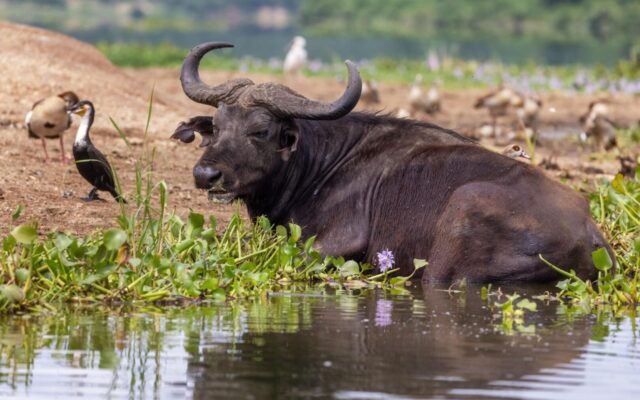
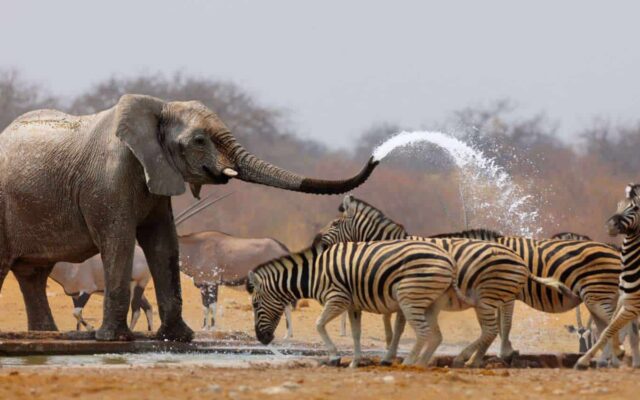
Visitors should not travel there expecting the large concentrations of elephants, lions, buffaloes or other major safari animals found in Uganda’s established wildlife parks.
The mountain and surrounding landscape nevertheless support biodiversity.
Travelers may encounter birds, insects, reptiles, smaller mammals and other wildlife adapted to the mountain and dryland environment.
The experience is more about observing the ecosystem as a whole than searching for large game.
Bird Watching on Mount Kadam
Bird watching can be an interesting addition to a Mount Kadam hike.
The changing habitats between the surrounding plains and higher mountain areas create opportunities for different bird species.
Birders should carry binoculars and allow plenty of time to stop and listen.
The best birding experience may come from traveling slowly rather than trying to cover large distances.
A local guide familiar with bird calls and habitats can greatly improve the experience.
Flora and Vegetation
One of the interesting aspects of Mount Kadam is the change in vegetation with elevation.
The lower landscape is strongly influenced by the semi-arid conditions of Karamoja.
As elevation increases, conditions become cooler and vegetation changes.
This creates a useful natural illustration of how altitude influences ecosystems.
Travelers interested in botany, ecology or conservation can therefore gain a lot from simply paying attention to the vegetation during the hike.
Mount Kadam for Photographers
Mount Kadam is particularly attractive for landscape photographers.
The combination of:
Mountain ridges
Dry savannah
Rocky terrain
Wide horizons
Traditional communities
Cattle
Sunrise
Sunset
can create powerful images.
The mountain’s remote setting also means photographers may have opportunities to capture landscapes without large crowds of tourists.
As always, permission should be requested before photographing local people or culturally sensitive activities.
Sunrise and Sunset at Mount Kadam
The open landscapes surrounding Mount Kadam make sunrise and sunset especially attractive.
Early morning light can reveal layers of mountains and plains, while evening light creates long shadows across the landscape.
If photography is your main goal, discuss the timing with your guide.
Mountain terrain can become difficult to navigate in low light, so safety should always come before getting the perfect photograph.
Best Time to Visit Mount Kadam
Mount Kadam can be explored at different times of the year, but weather should be considered carefully.
Rain can make mountain trails slippery and difficult, while dry periods can bring hotter conditions at lower elevations.
Travelers should consider both rainfall and temperatures when planning a hike.
The best time also depends on your purpose.
A photographer may prioritize clear skies.
A hiker may prioritize more manageable trail conditions.
A cultural traveler may be more flexible.
Because conditions can vary, obtaining local advice before departure is recommended.
How Difficult Is Mount Kadam?
The difficulty of climbing Mount Kadam depends on the route and the elevation you intend to reach.
It should be treated as a serious outdoor activity, particularly because the mountain is remote and infrastructure is limited.
Travelers should prepare with:
- Sturdy hiking boots
- Plenty of drinking water
- Sun protection
- A hat
- Snacks
- Rain protection
- Warm clothing for higher elevations
- Basic first-aid supplies
- A reliable local guide
Travelers who are not regular hikers should discuss their fitness level before choosing a demanding route.
How Long Does a Mount Kadam Hike Take?
There is no single hiking duration that applies to every Mount Kadam experience.
Shorter walks can explore lower sections of the mountain, while more ambitious climbs require considerably more time.
A full-day hike may be appropriate for some itineraries, while a longer mountain expedition may require overnight arrangements.
The route should be planned according to the traveler’s physical ability, weather and objectives rather than choosing an itinerary based only on a fixed number of hours.
Why Use a Local Guide?
A local guide is particularly valuable on Mount Kadam.
The mountain is less developed as a mainstream tourist destination, meaning visitors should not expect the same level of marked trails and tourism infrastructure available in heavily visited parks.
A local guide can assist with:
Navigation
Route selection
Weather awareness
Cultural etiquette
Community introductions
Wildlife identification
Safety
The guide also adds context to the landscape by explaining the communities and environment around the mountain.
Mount Kadam and Mount Moroto
Travelers interested in Karamoja’s mountains can consider combining Mount Kadam with Mount Moroto.
Both provide mountain adventures, but the surrounding landscapes and travel experiences can differ.
Mount Moroto is particularly well known as a major landmark of Karamoja, while Kadam offers a more remote and less commonly visited mountain experience.
Combining them allows adventurous travelers to explore more of the region’s mountain landscape.
Mount Kadam and Kidepo Valley National Park
Travelers who want both adventure and wildlife can combine Mount Kadam with Kidepo Valley National Park.
Kidepo provides classic game viewing, including safari drives across the park’s expansive landscapes.
Mount Kadam provides mountain hiking and cultural exploration.
The two experiences complement each other exceptionally well.
Instead of spending an entire trip inside safari vehicles, travelers can alternate between wildlife viewing, hiking and cultural experiences.
Mount Kadam and Pian Upe Wildlife Reserve
Pian Upe Wildlife Reserve can also form part of a wider northeastern Uganda journey.
Pian Upe provides an introduction to the savannah landscapes and wildlife of the region.
Travelers can then continue toward the mountains and communities farther north.
This creates an interesting overland journey through Uganda’s changing landscapes.
Mount Kadam and Matheniko Wildlife Reserve
Another possible combination is Matheniko Wildlife Reserve.
The reserve provides dryland wildlife and wilderness experiences, while Mount Kadam focuses more heavily on mountain scenery and hiking.
For travelers interested in exploring Karamoja comprehensively, combining different landscapes can make the journey much more varied.
Accommodation Near Mount Kadam
Accommodation options around Mount Kadam are more limited than in major Ugandan tourism destinations.
Travelers should plan their overnight stays in advance.
Depending on the route, accommodation may be based in nearby towns rather than directly on the mountain.
For travelers exploring several Karamoja destinations, Moroto or other regional centers can provide practical bases depending on the itinerary.
Remote mountain excursions may also require specially organized camping or community arrangements.
How to Get to Mount Kadam
Mount Kadam is primarily accessed by road from other parts of Uganda.
The journey from Kampala is long, so it makes little sense to visit the mountain as a short standalone excursion.
It is better incorporated into a multi-day northeastern Uganda itinerary.
Travelers can combine the mountain with other destinations in Karamoja and reduce unnecessary backtracking.
Because roads and local conditions can vary, current travel advice should be obtained before setting out.
Is Mount Kadam Suitable for Families?
Mount Kadam may be suitable for adventurous families, but the difficulty and remoteness of the destination require careful planning.
Younger children may find long or steep hikes challenging.
Families should choose shorter routes and work with local guides to determine what is appropriate.
For families interested in culture and landscapes, community visits can provide alternatives to strenuous mountain climbing.
Is Mount Kadam Worth Visiting?
For travelers seeking a conventional safari, Mount Kadam probably should not be at the top of the list.
For adventure travelers, hikers, photographers and cultural explorers, however, it can be a rewarding destination.
Its remote character is part of the experience.
The mountain offers the opportunity to slow down, explore a less-touristed part of Uganda and experience the landscapes and cultures of Karamoja.
That makes it particularly valuable for travelers who want to see a different side of Uganda.
Responsible Tourism on Mount Kadam
Responsible tourism is particularly important in remote areas.
Visitors should:
Stay on appropriate routes.
Avoid leaving litter.
Do not remove plants or rocks.
Respect community property.
Ask permission before taking photographs.
Avoid disturbing livestock.
Respect cultural sites.
Use local guides.
Support legitimate local businesses and community tourism initiatives.
Small actions can make a meaningful difference in places where tourism is still developing.
Who Should Visit Mount Kadam?
Mount Kadam is best suited to:
Adventure travelers
Mountain hikers
Landscape photographers
Bird watchers
Nature enthusiasts
Cultural travelers
Off-the-beaten-path explorers
Travelers exploring Karamoja
It is particularly attractive to people who prefer remote and less-commercialized destinations.
Frequently Asked Questions
Where Is Mount Kadam?
Mount Kadam is located in eastern/northeastern Uganda within the wider Karamoja mountain landscape.
Can Tourists Hike Mount Kadam?
Yes. Hiking and mountain exploration are among the main reasons adventurous travelers visit the area.
Is Mount Kadam a National Park?
No. It is a mountain destination rather than a national park.
Do I Need a Guide?
A local guide is strongly recommended because of the remote nature of the mountain and the importance of local knowledge.
Can I Combine Mount Kadam With Kidepo?
Yes. Mount Kadam and Kidepo can create an excellent combination of mountain adventure, culture and wildlife.
Can I Experience Karamojong Culture?
Yes. Community-based cultural experiences can be arranged in parts of the wider Karamoja region.
Is Mount Kadam Suitable for Beginners?
Some shorter excursions may be manageable, but travelers should discuss their fitness and route with a local guide before attempting a demanding climb.
What Should I Pack?
Bring sturdy hiking footwear, plenty of water, sun protection, rain protection, snacks, a hat, warm clothing and a basic first-aid kit.
How Long Should I Spend There?
Allow at least a full day for a meaningful mountain experience, with additional time if your itinerary includes longer hiking or cultural activities.