






Guided Uganda Safari Cost 2026: Complete Pricing Guide for Guided Safaris
Planning a guided Uganda safari usually starts with one simple question: how much will the trip actually cost? The answer is not a single fixed figure because a guided safari is made up of several different costs, including transportation, a professional driver-guide, accommodation, meals, park fees, activities and, where applicable, special permits such as gorilla or chimpanzee trekking. For 2026, broad market guides place budget Uganda safaris around US$150–300 per person per day, mid-range safaris around US$300–500 per person per day, and luxury experiences around US$600–1,500+ per person per day. These are useful planning ranges rather than fixed tour prices because your actual quotation will depend on the itinerary, number of travelers, season and accommodation selected.
A guided safari is also different from simply hiring a car and driving around Uganda. You are paying for someone who knows the roads, understands the parks, manages the daily logistics and can help you make sense of the wildlife you encounter. This becomes especially valuable when traveling between destinations such as Murchison Falls, Kibale, Queen Elizabeth and Bwindi, where distances can be significant and road conditions can vary. Instead of concentrating on navigation and driving, you can spend your time watching the scenery, photographing wildlife and enjoying the journey.
What Does a Guided Uganda Safari Actually Mean?
A guided Uganda safari normally means that your journey is organized around a professional safari vehicle and an experienced driver-guide who accompanies you throughout the road portion of your trip. The guide is responsible for driving between destinations, navigating the roads and helping coordinate the practical side of your safari.
But the guide’s role goes beyond simply sitting behind the steering wheel.
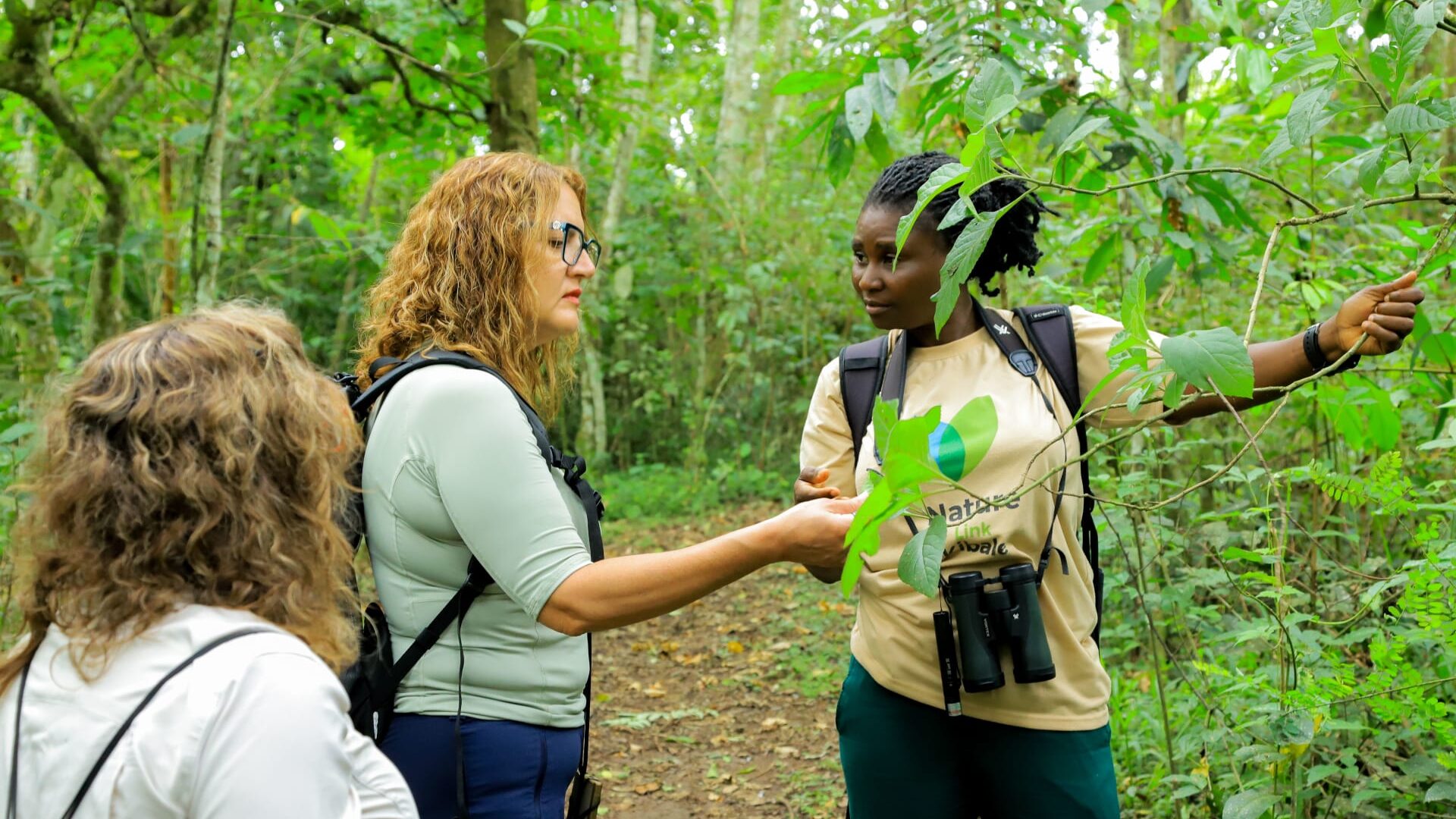
A knowledgeable guide can explain the animals you encounter, help you understand their behavior and provide information about the landscapes and communities you pass through. Inside national parks, their familiarity with the environment can also make your wildlife experience more rewarding.
This is one of the main reasons travelers choose guided safaris instead of self-driving. You are not simply paying someone to drive you from one lodge to another. You are paying for convenience, local knowledge, safety, experience and a smoother overall journey.
For a first-time visitor to Uganda, this can make a significant difference.
Imagine driving through a national park while constantly trying to follow directions, watching the road and wondering where you should stop. Compare that with sitting in a safari vehicle while your guide handles the road and tells you that there are elephants ahead or that a particular area is known for lions.
The second experience allows you to become much more present in the safari itself.
How Much Does a Guided Uganda Safari Cost in 2026?
There is no universal price for a guided Uganda safari because the final cost depends on the type of experience you choose.
For planning purposes, budget guided safaris can fall around US$150–300 per person per day, while mid-range safaris commonly fall around US$300–500 per person per day. Luxury guided experiences can begin around US$600 per person per day and rise beyond US$1,500, particularly when premium lodges, private guiding and domestic flights are involved.
These figures should not be interpreted as fixed package prices.
For example, a five-day safari for two people staying in simple lodges will have a completely different price from a five-day private safari using luxury accommodation. Similarly, a seven-day wildlife safari without gorilla trekking will normally cost much less than a seven-day itinerary that includes Bwindi and a gorilla permit.
The number of travelers is another major factor.
When four or six people share one safari vehicle, the fixed costs of transportation and guiding are spread across more travelers. A private safari for one or two people therefore tends to have a higher per-person cost.
This is why it is important to look beyond the advertised “cost per day” and understand exactly what the quotation includes.
What Determines the Cost of a Guided Uganda Safari?
The biggest mistake travelers can make when researching safari prices is assuming that the number of days is the main factor.
It isn’t.
Two travelers can book the same seven-day safari and pay completely different prices because of their accommodation, vehicle, group size and activities.
Accommodation is one of the biggest factors. Budget camps and simple lodges can keep the cost down, while high-end safari lodges with premium locations, private facilities and personalized services can increase the price substantially. Current 2026 market guides show a particularly wide range in accommodation prices around destinations such as Bwindi, where budget, mid-range and luxury properties can occupy very different price levels.
Transportation is another major factor. A guided safari normally requires a suitable 4×4 safari vehicle, fuel and a professional driver-guide. Longer itineraries naturally require more vehicle days and fuel, while destinations in remote areas may require more specialized transport.
Activities and permits can also change the budget dramatically. A normal game drive is one thing; adding chimpanzee trekking or gorilla trekking introduces additional permit costs. For foreign non-residents, the standard Uganda gorilla trekking permit is currently US$800 per person, making it one of the most significant fixed expenses on a gorilla itinerary.
Then there is group size.
A private safari for two people requires those two travelers to carry most of the fixed vehicle and guide costs. With a larger group, those expenses are shared.
This is why you should always ask for a quotation based on your exact number of travelers, rather than relying entirely on a generic online price.
Budget, Mid-Range or Luxury: Which Guided Safari Is Right for You?
The three main safari categories—budget, mid-range and luxury—are not simply different price tags. They represent different levels of accommodation, transportation, comfort and service.
A budget guided Uganda safari is designed for travelers who want to experience the country’s wildlife without spending heavily on accommodation. You may stay in simple lodges, camps or guesthouses, while still having access to professional guiding and the major wildlife activities included in your itinerary. Current 2026 planning guides generally place this category around US$150–300 per person per day.
A mid-range guided safari is often the sweet spot for travelers who want comfort without paying luxury prices. You can expect more comfortable lodges, a private 4×4 in many arrangements, full-board meals and professional guiding. Market estimates commonly place this level around US$300–500 per person per day, although some current guides use a slightly wider range.
A luxury guided Uganda safari is a completely different level of experience. Premium lodges, private guiding, high-end vehicles, domestic flights and highly personalized service can push the cost to US$600–1,500+ per person per day. There are also specialist luxury itineraries priced substantially above these broad planning ranges.
The important point is that expensive doesn’t automatically mean better.
The right category is the one that matches what you actually value.
If your priority is spending as much time as possible in the parks, a comfortable mid-range lodge may provide better value than spending thousands of dollars on accommodation that you barely experience because you are out on activities most of the day.
Why the Number of Travelers Changes the Price
Group size is one of the most overlooked factors when calculating guided Uganda safari costs.
Your safari vehicle, driver-guide and some operational expenses are essentially fixed costs. Whether there are two travelers in the vehicle or six, you still need the vehicle and guide.
With a larger group, those costs are divided among more people.
For example, a private safari designed for two travelers will normally cost more per person than a similar itinerary shared by four travelers. This is one reason group safaris can be attractive to budget-conscious travelers.
However, private travel offers something that group travel cannot always provide: freedom.
With a private vehicle, you can adjust the pace of your journey, spend longer at wildlife sightings and make changes according to your interests.
This can be particularly valuable for photographers, couples, families and travelers with specific wildlife interests.
Current safari pricing comparisons show this difference clearly, with private per-person rates generally higher than group rates across budget, mid-range and luxury categories.
How Much Does the Safari Vehicle Contribute to the Cost?
Transportation is one of the foundations of a guided Uganda safari.
Most classic safari itineraries are conducted using a 4×4 safari vehicle because Uganda’s national parks include rough tracks and varied terrain. The vehicle needs to provide enough space for travelers, luggage and safari equipment while being capable of handling the conditions encountered during game drives.
The cost of the vehicle is not simply the rental price.
A professional safari operator has to account for the vehicle, fuel, driver-guide, maintenance, insurance and the distance covered during the itinerary.
This is why a quotation from a professional safari company may look considerably higher than the price you see for simply renting a car online.
You are paying for an entire transportation service rather than just access to a vehicle.
For longer journeys, the route itself also becomes important.
A safari covering Murchison Falls, Kibale, Queen Elizabeth and Bwindi will naturally require more driving than a shorter itinerary focused on one region.
This is also where domestic flights can become useful.
For travelers with a larger budget, flying between distant destinations can reduce long road transfers and provide more time for wildlife experiences. Current luxury Uganda safari rates demonstrate how premium itineraries can incorporate higher-end accommodation and specialized transport to create a very different experience from a standard road safari.
Why Accommodation Has Such a Big Impact on Your Safari Cost
Accommodation can completely change the character of a guided Uganda safari.
A budget traveler might choose a simple lodge or tented camp that provides a comfortable place to sleep, meals and easy access to the park.
A mid-range traveler may prefer a lodge with better rooms, more facilities, stronger views and a more refined dining experience.
A luxury traveler may choose a property where the accommodation itself becomes part of the safari.
This difference becomes particularly noticeable in destinations such as Bwindi.
Because gorilla trekking is an experience that begins early in the morning, staying close to the relevant trekking sector can also be important. Paying slightly more for a convenient lodge may therefore provide greater practical value than choosing a cheaper property much farther away.
That is why a good safari company should not simply ask:
“What is your budget?”
They should also ask:
“What kind of experience do you want from that budget?”
Why Gorilla Trekking Changes the Guided Uganda Safari Cost
Gorilla trekking deserves special attention because it can dramatically change the price of a Uganda safari.
A normal wildlife safari might consist mainly of transportation, accommodation, park entry fees, game drives and meals.
Once gorilla trekking is added, a major permit cost enters the calculation.
For foreign non-residents, the standard Uganda gorilla trekking permit is currently , according to current 2026 tourism information.
That means a couple already has US$1,600 in gorilla permits alone before paying for accommodation, transportation, meals and the rest of the safari.
This is why travelers searching for “Guided Uganda Safari Cost” should never compare a wildlife-only package directly with a gorilla safari without checking the inclusions.
The gorilla permit isn’t simply another small activity fee.
It can represent one of the largest individual costs in the entire itinerary.
What About Chimpanzee Trekking and Other Activities?
Gorilla trekking isn’t the only activity that can change your budget.
Chimpanzee trekking in Kibale is another important consideration. Current 2026 planning information commonly lists the chimpanzee permit around US$250 per person, with lower seasonal rates reported for certain months.
Game drives, boat cruises, nature walks and cultural experiences can also add to the total depending on what your itinerary includes.
The important thing is to decide what experiences matter most before requesting your quotation.
If wildlife is your priority, you may want to invest more in the destinations and activities rather than luxury accommodation.
If comfort is your priority, you may choose premium lodges while keeping the activity schedule more focused.
Your safari budget should reflect your priorities, not someone else’s idea of the perfect trip.
Why Safari Season Can Affect the Price
Seasonality can influence Uganda safari costs, particularly accommodation and premium safari packages.
Some luxury operators publish significantly different high-season and low-season rates. For example, current 2026 published rates from Volcanoes Safaris show substantial differences between their high- and low-season Uganda itineraries.
However, seasonality should not be viewed simply as “cheap season versus expensive season.”
Different months can offer different advantages in terms of wildlife viewing, trekking conditions, lodge availability and overall travel experience.
If your dates are flexible, discussing different travel periods with your safari operator can help you identify better value.
Sometimes changing your travel dates by a few weeks can make a meaningful difference to accommodation costs without changing the overall experience dramatically.
Guided Uganda Safari Cost Is About More Than the Daily Rate
When you see a safari advertised at a particular price per person per day, it is important to understand what sits behind that number.
You are potentially paying for accommodation, meals, transportation, fuel, a professional driver-guide, park entry fees, logistics and selected activities.
Then there are the costs that may sit outside the advertised rate, such as international flights, visas, insurance, tips and personal expenses.
Gorilla and chimpanzee permits may or may not be included depending on the operator and itinerary, so they should always be confirmed before booking. Current Uganda safari cost guides specifically recommend checking whether permits are included because two quotations can appear similar while actually covering very different things.
This is why the cheapest quotation isn’t necessarily the cheapest safari.
A low initial price may simply mean that more costs have been left for you to pay later.
What You Should Have in Mind Before Requesting a Quote
Before contacting a safari company, it helps to have a basic idea of what you want.
You should know approximately how many people will travel, how many days you have available, whether you want budget, mid-range or luxury accommodation, and which experiences are most important to you.
You don’t necessarily need to know the exact itinerary.
That’s part of what the safari company should help you with.
A good operator can take your interests and budget and turn them into a practical route.
For example, if you tell them you have seven days and want wildlife plus gorillas, they can help determine whether the route should focus on Queen Elizabeth and Bwindi, Kibale and Bwindi, or another combination.
This makes the quotation much more meaningful than simply asking:
“How much is a Uganda safari?”
The better question is:
“What kind of Uganda safari can I create with my budget, travel dates and interests?”
And that is where the real planning begins.
Guided Uganda Safari Costs by Number of Days and Safari Style
Once you understand what goes into the price of a guided Uganda safari, the next question becomes much more practical: how much should you budget for the number of days you actually want to travel? The answer changes with the length of the safari, but it also depends on whether you are traveling privately or as part of a group, the standard of accommodation you choose and whether your itinerary includes major experiences such as gorilla or chimpanzee trekking.
A two-day wildlife trip and a ten-day Uganda adventure may both be described as guided safaris, but they are completely different experiences. A short itinerary usually focuses on one destination, while a longer journey gives you enough time to combine several national parks and experiences without constantly rushing between them. This is why the best way to understand guided safari pricing is to look at the journey according to its duration and style.
How Much Does a 2-Day Guided Uganda Safari Cost?
A two-day guided safari is ideal for travelers who have very limited time but still want to experience Uganda’s wildlife. Because there is little time available, the itinerary needs to focus on a destination that can be reached without spending most of the safari on the road.
For two travelers, a simple budget guided safari could potentially start around US$400–700 per person, while a more comfortable mid-range experience could move toward US$600–1,000+ per person. Luxury accommodation and private arrangements can increase the cost considerably.
Lake Mburo is one of the destinations that can work well for a short guided safari because of its relatively accessible location. A short itinerary might combine a game drive with a boat or nature experience, depending on the available time.
The biggest mistake with a two-day safari is trying to visit too many destinations. With only two days, the goal should be to maximize your experience rather than maximize the number of places you visit.
How Much Does a 3-Day Guided Uganda Safari Cost?
Three days gives you slightly more breathing room and can work particularly well for travelers who want a quick wildlife escape.
A broad planning range for a three-day guided safari could be around US$500–1,500+ per person, depending heavily on the destination, group size and accommodation.
A budget traveler sharing transportation and using simple accommodation could remain toward the lower end, while a private mid-range or luxury trip would be considerably higher.
Three days can work for Lake Mburo, Queen Elizabeth or another destination depending on where the safari starts and ends. The route should be planned carefully because Uganda’s road journeys can take longer than travelers expect.
If the safari begins in Entebbe or Kampala, your operator should calculate realistic driving times rather than simply looking at distances on a map.
How Much Does a 4-Day Guided Uganda Safari Cost?
Four days provides a useful middle ground for travelers who want more than a short wildlife trip but cannot commit to a full week.
A practical planning range could be around US$700–2,000+ per person, depending on the safari category and itinerary.
A four-day trip could focus on Queen Elizabeth National Park, combining game drives with a Kazinga Channel boat cruise. It could also be designed around Kibale for travelers more interested in primates.
The important thing is to avoid creating an itinerary that spends too much time traveling between distant destinations.
If you only have four days, choosing one major wildlife destination and experiencing it properly can often be more rewarding than trying to squeeze three or four parks into the trip.
How Much Does a 5-Day Guided Uganda Safari Cost?
Five days is where a guided Uganda safari begins to offer considerably more flexibility.
For planning purposes, budget travelers might spend approximately US$750–1,500 per person, while mid-range travelers could budget around US$1,500–2,500+ per person. Luxury itineraries can go substantially higher.
At five days, you can begin combining experiences instead of focusing exclusively on one park.
A wildlife-focused trip could include Queen Elizabeth National Park and the Kazinga Channel, while a primate-focused journey could include Kibale and another destination.
If you want to include gorilla trekking, however, the budget needs to be recalculated because the gorilla permit alone currently costs US$800 per foreign non-resident.
That means two travelers would already have US$1,600 in gorilla permits before accommodation, transport and meals are considered.
How Much Does a 7-Day Guided Uganda Safari Cost?
Seven days is one of the most practical lengths for travelers who want a more complete Uganda safari.
A budget guided trip could broadly fall around US$1,050–2,100 per person, while mid-range safaris may sit around US$2,100–3,500+ per person. Luxury travel can rise substantially beyond this depending on accommodation and transportation.
With seven days, you have the opportunity to combine different landscapes and wildlife experiences.
For example, you could design a route around Kibale, Queen Elizabeth and Bwindi, creating an itinerary that combines chimpanzee trekking, savannah wildlife and gorilla trekking.
Another traveler may prefer to concentrate on Murchison Falls and Kibale, particularly if gorilla trekking is not part of their plans.
The advantage of seven days is that the itinerary can breathe.
You can spend enough time in each destination rather than constantly packing your bags and getting back on the road.
How Much Does a 10-Day Guided Uganda Safari Cost?
Ten days opens up a much larger part of Uganda.
A budget traveler might plan around US$1,500–3,000+ per person, while mid-range travelers can expect the price to rise depending on accommodation and the number of destinations included. Luxury itineraries can easily move into several thousand dollars per person.
At ten days, you can combine Uganda’s savannah, forests and mountain landscapes into one journey.
A longer route might include Murchison Falls, Kibale, Queen Elizabeth and Bwindi, although the exact order depends on the starting and finishing points.
This is also where guided travel becomes particularly valuable. Long-distance routes can be tiring if you are responsible for driving yourself, while a professional driver-guide can handle the road as you concentrate on the scenery and experiences.
For travelers with a larger budget and limited patience for long road transfers, domestic flights can also be incorporated into a ten-day safari.
Guided Uganda Safari Cost by Safari Category
The number of days tells only part of the story. The other major question is what type of guided safari are you looking for?
A budget guided safari focuses on keeping accommodation and transportation costs manageable while still providing access to Uganda’s major wildlife experiences.
A mid-range safari places more emphasis on comfort, usually combining good-quality lodges with reliable 4×4 transportation and professional guiding.
A luxury safari treats the entire journey as a premium travel experience, with high-end lodges, private services, premium vehicles and, in some cases, domestic flights.
This means a seven-day budget safari and a seven-day luxury safari can have completely different prices even though they cover the same number of days.
Budget Guided Uganda Safari Cost
Budget guided safaris are designed for travelers who want to experience Uganda without spending heavily on accommodation.
A reasonable planning range is around US$150–300 per person per day, although the actual cost depends on the itinerary and group size.
You may stay in simple lodges, guesthouses or camps, while transportation is shared between several travelers.
The safari experience itself can still be excellent.
A lower accommodation budget does not mean you cannot see elephants, lions, hippos, chimpanzees or gorillas.
What changes is mainly the level of comfort around those experiences.
For travelers whose priority is wildlife rather than luxury accommodation, this can be an excellent way to explore Uganda.
Mid-Range Guided Uganda Safari Cost
Mid-range is often the most attractive category for travelers who want a balance between price and comfort.
A broad planning range is around US$300–500 per person per day, depending on the itinerary, group size and accommodation.
This level usually gives travelers comfortable accommodation, reliable transportation, good meals and professional guiding without the premium price of luxury safari lodges.
For many travelers, this is where the best value can be found.
You can spend money on the experiences that matter while still returning to a comfortable lodge after a day in the park.
Luxury Guided Uganda Safari Cost
Luxury guided safaris are designed for travelers who want the safari itself to feel exceptional from beginning to end.
Prices can begin around US$600 per person per day and rise beyond US$1,500, particularly when premium lodges, private guiding, domestic flights and exclusive experiences are involved.
Some luxury safari properties publish seasonal rates that can make the total cost vary significantly depending on the month of travel.
Luxury isn’t simply about having a larger room.
It can mean staying in exceptional locations, having highly personalized service, reducing road transfers through flights and enjoying a more private safari experience.
For honeymooners and travelers celebrating major occasions, this level of travel can be particularly attractive.
Private Guided Uganda Safari Cost
A private guided safari means your vehicle and guide are dedicated to your group.
This gives you much greater control over the itinerary.
If you want to spend longer watching a particular animal, take more photography stops or adjust the pace of the journey, you can discuss this directly with your guide.
The disadvantage is that the fixed cost of the vehicle and guide is shared among fewer people.
This is why private safaris normally have a higher per-person cost than group safaris.
For couples, families and photographers, however, the additional cost can be worthwhile because of the flexibility and privacy.
Group Guided Uganda Safari Cost
Group safaris can make Uganda considerably more affordable because the transportation and guide costs are divided among several travelers.
A group safari may use shared accommodation arrangements and a shared safari vehicle, reducing the cost per person.
The compromise is flexibility.
You may have less control over departure times, meal stops and how long you remain at certain wildlife sightings.
For travelers whose main priority is keeping the cost manageable, however, group travel can provide excellent value.
It also creates the possibility of sharing the experience with other travelers from different parts of the world.
Guided Uganda Safari Cost for Families
Family safaris need to balance price with comfort.
A family may need a larger vehicle, more spacious accommodation and an itinerary that avoids exhausting travel days.
The number and ages of children can also affect accommodation arrangements.
A well-designed family safari should not simply be a normal adult itinerary with children added.
It should consider how long children can comfortably spend in the vehicle, which activities are suitable for them and where the family can enjoy some downtime.
Guided Uganda Safari Cost for Honeymooners
Honeymoon safaris are often designed around privacy, comfort and memorable experiences rather than simply minimizing cost.
Couples may choose a private vehicle, romantic lodges and a slower itinerary that allows them to enjoy each destination.
A honeymoon itinerary might combine wildlife viewing in Queen Elizabeth with chimpanzee trekking in Kibale and gorilla trekking in Bwindi.
Luxury honeymooners can also incorporate domestic flights to reduce long road journeys.
The final cost depends heavily on accommodation and the level of privacy requested.
Guided Gorilla and Wildlife Safari Cost
One of the most valuable things about Uganda is the ability to combine traditional wildlife experiences with primate encounters in a single trip.
A traveler might begin with game drives in Queen Elizabeth National Park, continue to Kibale for chimpanzee trekking and then travel toward Bwindi for gorilla trekking.
But such a trip will naturally cost more than a basic wildlife safari because several activities and permits are involved.
The gorilla permit is the most significant additional cost for many travelers, currently US$800 per foreign non-resident. Chimpanzee trekking at Kibale is commonly listed around US$250 per person in current 2026 planning information.
This is why travelers interested in primates should tell their safari company about those interests from the beginning.
It allows the operator to build the permits, accommodation and transportation into the itinerary properly.
How Can You Get Better Value From a Guided Uganda Safari?
Getting a better price does not necessarily mean choosing the cheapest safari company.
Instead, think about where your money matters most.
If wildlife is your priority, you may choose comfortable mid-range accommodation rather than luxury lodges and use the difference to add another activity.
If comfort is important, you might reduce the number of destinations and stay in better lodges.
If your budget is tight, traveling with a small group can reduce transportation costs significantly.
Traveling during a less expensive season may also provide better accommodation value.
The biggest saving, however, often comes from planning the route intelligently.
Unnecessary long transfers consume fuel, time and energy.
A good itinerary places destinations in a logical order so that the safari flows naturally across the country.
What Should a Guided Uganda Safari Quote Look Like?
A professional quotation should make it easy for you to understand where your money is going.
You should be able to see the safari dates, number of travelers, accommodation, transportation, driver-guide services and activities.
If park fees, permits or boat cruises are included, they should be clearly identified.
The quotation should also explain exclusions such as international flights, visas, insurance, drinks and personal expenses.
This transparency matters because two safari quotations can have different prices simply because one company has included more services.
Before choosing the cheapest offer, compare the entire package, not just the final figure.
Why a Longer Safari Can Sometimes Offer Better Value
It might seem that a longer safari automatically means worse value because you are paying for more days.
But that isn’t always the case.
A longer itinerary can sometimes spread transportation costs across more experiences.
Instead of flying home after a short wildlife trip, you can add another destination while you are already in the country.
A seven- or ten-day safari may therefore provide considerably more variety than two separate short trips.
The key is to avoid adding destinations simply to make the safari longer.
Every additional destination should add something meaningful to the experience.
How to Plan, Compare and Book the Right Guided Uganda Safari
Knowing the approximate price of a guided Uganda safari is only the beginning. The more important question is whether the safari you are being quoted for actually gives you good value for the money you are spending. A quotation can look attractive at first glance, but once you start checking accommodation, park fees, permits, meals, transportation and activities, you may discover that two apparently similar safaris are offering very different experiences.
This is why planning your guided Uganda safari should not be based on price alone. Your budget, travel dates, preferred accommodation, number of travelers and the experiences you want to have should all work together. A good safari is not necessarily the cheapest one or the most expensive one. It is the one that uses your budget intelligently and gives you an itinerary that feels comfortable, realistic and worthwhile.
What Is Normally Included in a Guided Uganda Safari?
When you receive a guided Uganda safari quotation, the first thing you should check is what has actually been included.
Most professionally organized guided safaris will include transportation in a suitable safari vehicle, a professional driver-guide, accommodation according to the selected category and meals as specified in the itinerary. Depending on the package, park entry fees and activities such as game drives or boat cruises may also be included.
Fuel is another important consideration. A safari covering several national parks can involve hundreds of kilometers of driving, so fuel represents a meaningful operational cost. You should therefore confirm whether fuel is already incorporated into the quoted price.
Your guide’s services should also be clearly included. On a guided safari, the driver-guide is an important part of the experience, not simply an additional driver.
If your itinerary includes gorilla or chimpanzee trekking, the relevant permits should be clearly listed rather than left ambiguous.
The most important thing is to ask the operator for a complete list of inclusions and exclusions before making your booking.
What Is Usually Excluded From the Safari Price?
Not every cost associated with traveling to Uganda will be part of your safari package.
International flights are generally booked separately. Visa costs, travel insurance, personal shopping, alcoholic drinks, laundry and expenses of a personal nature are also commonly excluded.
Tips for guides, lodge staff and other service providers may also be separate.
Some activities can be excluded if they were not part of the original itinerary. This is particularly important when comparing safari quotations because one company may include a boat cruise while another may only quote for game drives.
Gorilla and chimpanzee permits should receive special attention.
Never assume that a safari quotation includes a permit simply because the itinerary says “gorilla trekking.” Ask the operator to confirm whether the permit has already been secured and whether its price is included in the total.
This one question can prevent a major surprise later.
Gorilla Permits and Other Activity Costs
For travelers planning a guided safari that includes gorilla trekking, the permit is one of the most important costs to understand.
For foreign non-residents, Uganda’s standard gorilla trekking permit is currently US$800 per person. This means two travelers would require US$1,600 in permits alone.
Chimpanzee trekking is another popular addition, particularly around Kibale National Park. Current 2026 planning information commonly places the Kibale chimpanzee trekking permit at approximately US$250 per person, although applicable rates can vary by season and visitor category.
Other activities, such as boat cruises, nature walks and cultural experiences, can also affect the final cost.
The lesson is simple: build your safari around the experiences you want first, then calculate the cost.
If gorillas are your main priority, there is little point choosing a cheaper wildlife-only package and then discovering that adding the gorilla experience pushes you far beyond your budget.
How Park Fees Affect Your Guided Uganda Safari Cost
National park entrance fees are another important part of safari pricing.
When you travel through multiple national parks, the operator has to account for the applicable entry fees for the travelers and, depending on the regulations and package structure, the vehicle and other operational requirements.
This means an itinerary visiting several parks will naturally have more park-related costs than a trip concentrated in one destination.
A safari company should clearly indicate whether park entrance fees are included in the quotation.
If they are not, you need to know exactly how much you will be expected to pay separately.
This is particularly important when comparing budget quotations.
A very low price may look attractive until you discover that park fees, activities or other essential services have been left outside the advertised rate.
How to Avoid Hidden Costs on a Guided Uganda Safari
One of the smartest things you can do before booking is ask for a detailed quotation rather than a single total figure.
You should be able to understand what you are paying for.
Ask:
Is the safari vehicle included?
Is fuel included?
Is the driver-guide included?
Are park entrance fees included?
Are meals included?
Are game drives included?
Are boat cruises included?
Are gorilla or chimpanzee permits included?
Are airport transfers included?
Are accommodation taxes and service charges included?
You don’t need to interrogate your safari operator unnecessarily, but these questions make the quotation much easier to understand.
A professional operator should be comfortable explaining the costs.
If a company cannot clearly explain what is included in the price, that should encourage you to ask more questions before making a payment.
How to Compare Two Uganda Safari Quotations
Imagine you receive two quotations.
Company A offers a seven-day safari for US$2,000.
Company B offers a similar itinerary for US$2,400.
At first, Company A appears to be the obvious choice.
But then you discover that Company A’s price excludes a boat cruise, some park fees and several meals, while Company B has already included them.
Suddenly, the US$400 difference doesn’t tell the whole story.
This is why safari quotations should be compared line by line.
Look at the accommodation first.
Are both companies offering similar lodges?
Then look at the vehicle.
Are you getting a private 4×4 or sharing?
Check the activities.
Are game drives and boat cruises included?
Then check permits and park fees.
Finally, compare the payment terms, cancellation conditions and other booking requirements.
The cheapest quotation can sometimes be the best option—but only after you confirm that the two packages are genuinely comparable.
How to Choose the Right Accommodation for Your Budget
Accommodation is one of the easiest places to adjust your safari budget.
If you are working with a limited budget, you can choose comfortable budget lodges and camps.
If you have more room in your budget, mid-range accommodation can provide better facilities and more comfort without pushing the price into luxury territory.
Luxury travelers can choose premium safari lodges where the accommodation itself becomes part of the experience.
The important thing is to consider how much time you will actually spend at the lodge.
If you are spending most of your day on game drives and activities, you may decide that a comfortable mid-range lodge provides better value than an ultra-luxury property.
On the other hand, if relaxation and lodge experiences are an important part of your holiday, investing in premium accommodation may make perfect sense.
Your safari should be designed around your priorities.
Should You Choose a Private or Group Guided Safari?
This is one of the biggest decisions you will make when planning your trip.
A private safari provides your own vehicle and guide, giving you greater flexibility over the itinerary.
You can decide when to leave, where to stop and how long to remain at wildlife sightings.
A group safari spreads the cost of transportation and guiding among several travelers, making it more affordable.
The compromise is that you have less control over the schedule.
Neither option is automatically better.
A solo traveler or couple trying to minimize costs may prefer joining a group.
A honeymoon couple, family or wildlife photographer may find that the additional cost of private travel is worth paying for the flexibility.
Guided Safari vs Self-Drive: Which Gives Better Value?
Self-drive safaris can appear cheaper because you are not paying for a professional driver-guide.
However, the comparison isn’t always straightforward.
With self-drive, you are responsible for vehicle rental, fuel, navigation, park procedures and the practical challenges of driving through unfamiliar areas.
A guided safari bundles much of that responsibility into the service.
You can also benefit from the guide’s knowledge of the parks and wildlife.
For a traveler who enjoys independence and is comfortable driving in Uganda, self-drive can be a rewarding option.
For someone who wants a relaxed holiday where the logistics are handled by professionals, guided travel may provide better overall value even if the initial price is higher.
When Is the Best Time to Book a Guided Uganda Safari?
Booking early can be particularly important when your itinerary includes gorilla trekking.
The reason is simple: gorilla trekking permits are limited, and your preferred trekking date and sector may not always be available if you wait until the last minute.
Early planning can also give you a wider choice of accommodation.
This becomes particularly useful during popular travel periods when desirable lodges can fill up.
Luxury accommodation can also have seasonal pricing, with published rates showing significant differences between high and low seasons.
If your dates are flexible, ask your safari company whether shifting your travel dates could provide better accommodation value.
How to Save Money Without Ruining Your Uganda Safari
Saving money doesn’t mean you need to turn your safari into a basic trip where you sacrifice every comfort.
One of the best strategies is to identify what you care about most.
If gorilla trekking is your dream, prioritize the permit and the quality of the trekking experience rather than spending excessively on accommodation.
If wildlife photography is your priority, invest in a private vehicle and guide rather than paying for unnecessary luxury facilities.
If you are traveling with friends, consider sharing a private vehicle.
If you have flexible dates, ask about shoulder or low-season travel.
And most importantly, choose an itinerary that makes geographical sense.
Spending a large part of your safari driving unnecessarily between destinations isn’t good value, even if the package price looks affordable.
A good itinerary should make every day contribute something meaningful to the experience.
What Is the Best Guided Uganda Safari for Different Budgets?
If your budget is limited, a short budget safari focused on one accessible destination can give you an introduction to Uganda’s wildlife without requiring a large financial commitment.
If you have a moderate budget, a five- to seven-day mid-range safari can provide an excellent balance of wildlife, comfortable accommodation and professional guiding.
If you have a larger budget, a private luxury safari can combine premium accommodation, exclusive guiding, domestic flights and multiple wildlife destinations.
And if gorillas are your primary goal, your budget should begin with the permit cost and then build the rest of the itinerary around it.
There is no single “best” safari.
There is only the safari that best matches your time, budget and interests.
Why the Cheapest Safari Isn’t Always the Best Choice
Price matters, but safari quality matters too.
An extremely cheap package may involve long driving days, basic accommodation, shared transportation and fewer included activities.
That may be perfectly suitable for a backpacker or budget traveler.
But if you are celebrating a honeymoon or traveling thousands of kilometers to experience gorillas, you may want to invest more in comfort and logistics.
The goal isn’t to spend as much as possible.
The goal is to avoid spending money in the wrong places.
A professional safari operator should help you understand where upgrading will genuinely improve the experience and where you can save without making much difference.
How to Choose a Reliable Guided Uganda Safari Company
Before booking, look beyond the price.
Check whether the company clearly identifies itself, provides detailed itineraries and explains its inclusions and exclusions.
Look at traveler reviews and testimonials where available.
Check whether the company responds professionally to questions.
A good safari company should be able to explain why an itinerary costs what it does rather than simply giving you a number.
You should also feel comfortable asking questions about permits, accommodation, transportation and cancellation policies.
Remember that you’re not only purchasing a vehicle and hotel rooms.
You are trusting someone with your holiday.
That relationship matters.
Frequently Asked Questions About Guided Uganda Safari Cost
How much does a guided Uganda safari cost per person?
As a broad 2026 planning guide, budget safaris can be around US$150–300 per person per day, mid-range around US$300–500, and luxury experiences around US$600–1,500+ per person per day. Actual prices vary according to itinerary, accommodation, group size and activities.
Is a guided Uganda safari expensive?
It depends on the style of travel. Uganda offers budget, mid-range and luxury options, allowing travelers to build a safari around different budgets.
What is the cheapest way to do a guided Uganda safari?
Joining a group, choosing budget accommodation and focusing on fewer destinations can significantly reduce the per-person cost.
Is a private guided safari worth the extra money?
For travelers who value flexibility, privacy and personalized guiding, it often is. The additional cost can be particularly worthwhile for couples, families and photographers.
Does a guided safari include accommodation?
Most organized safari packages include accommodation, but you should confirm the exact lodges and accommodation category before booking.
Does the safari price include gorilla trekking?
Not necessarily. Ask whether the gorilla permit and trekking arrangements are included in your quotation.
How much is a Uganda gorilla trekking permit?
For foreign non-residents, the standard gorilla trekking permit is currently US$800 per person.
Can I combine gorilla trekking with a normal safari?
Yes. Uganda is particularly well suited to combined itineraries involving gorillas, chimpanzees and traditional wildlife experiences.
Is a guided safari better than self-drive?
For travelers who want convenience, local knowledge and someone else to handle the driving, a guided safari is usually the easier option. Self-drive is better suited to travelers who strongly value independence and are comfortable managing the logistics themselves.
How many days are ideal for a guided Uganda safari?
There is no single answer, but 5–10 days gives travelers considerably more flexibility than a very short trip. It allows you to combine destinations without rushing through the country.
How to Get a Personalized Guided Uganda Safari Cost
The most accurate way to determine the price of your safari is to build the quotation around your actual travel plans.
Start with your travel dates and number of travelers.
Then decide whether you prefer budget, mid-range or luxury accommodation.
Think about whether you want a private or shared vehicle.
Finally, identify the experiences that matter most to you—whether that is game drives, chimpanzee trekking, gorilla trekking, boat cruises or a combination of several activities.
Once those details are known, a safari company can create a quotation that reflects your actual trip instead of giving you a generic online estimate.
And that is important because your Uganda safari should be designed around you, not around an average traveler.
Final Thought: The Right Guide Can Change the Way You See Uganda
A guided Uganda safari is more than having someone take you from one destination to another. It is having someone beside you who understands the roads, reads the landscape, knows where wildlife may be hiding and helps turn moments you might otherwise miss into memories you will carry home. Your budget will determine the style of safari you choose, but your planning should determine the quality of the journey. Take time to compare what is included, choose an itinerary that suits your interests and work with a safari company that is transparent about the cost from the beginning. When the planning is right and the guide is experienced, you don’t simply travel through Uganda—you begin to see the country through the eyes of someone who knows it.