








Part One: Why Road Safaris Are the Best Way to Experience Uganda
Introduction: Discover Uganda One Scenic Journey at a Time
Uganda is often called the Pearl of Africa, not only because of its incredible wildlife but also because of the breathtaking journey between destinations. While mountain gorillas, lions, elephants, chimpanzees, and spectacular waterfalls attract visitors from around the world, many travelers soon discover that the road itself becomes an unforgettable part of the adventure. “Road Safari in Uganda”
Unlike some safari destinations where travelers move quickly between parks, Uganda rewards those who take their time. Every highway, village road, and mountain pass reveals something new. Rolling green hills stretch toward the horizon, tea plantations blanket the countryside, roadside fruit markets overflow with tropical produce, and friendly communities offer a glimpse into everyday Ugandan life.
A is more than transportation between national parks.
It is a journey through changing landscapes, cultures, and ecosystems that tells the complete story of the country.
As travelers leave Entebbe and head toward western Uganda, the scenery changes dramatically. The busy city streets gradually disappear behind fertile farmland before giving way to forests, crater lakes, mountain ranges, and wide savannah plains filled with wildlife.
Every kilometer introduces a new perspective.
This gradual transformation is one of the greatest advantages of choosing a road safari.
Rather than simply arriving at a destination, travelers experience the transition from one region to another, appreciating how Uganda’s remarkable diversity unfolds naturally throughout the journey.
What Is a Road Safari?
A road safari is a guided or self-drive journey that uses specially designed safari vehicles to travel between Uganda’s national parks, wildlife reserves, cultural attractions, and scenic destinations.
Unlike fly-in safaris, where domestic aircraft reduce travel time, road safaris allow visitors to experience the country from ground level.
The journey itself becomes part of the adventure.
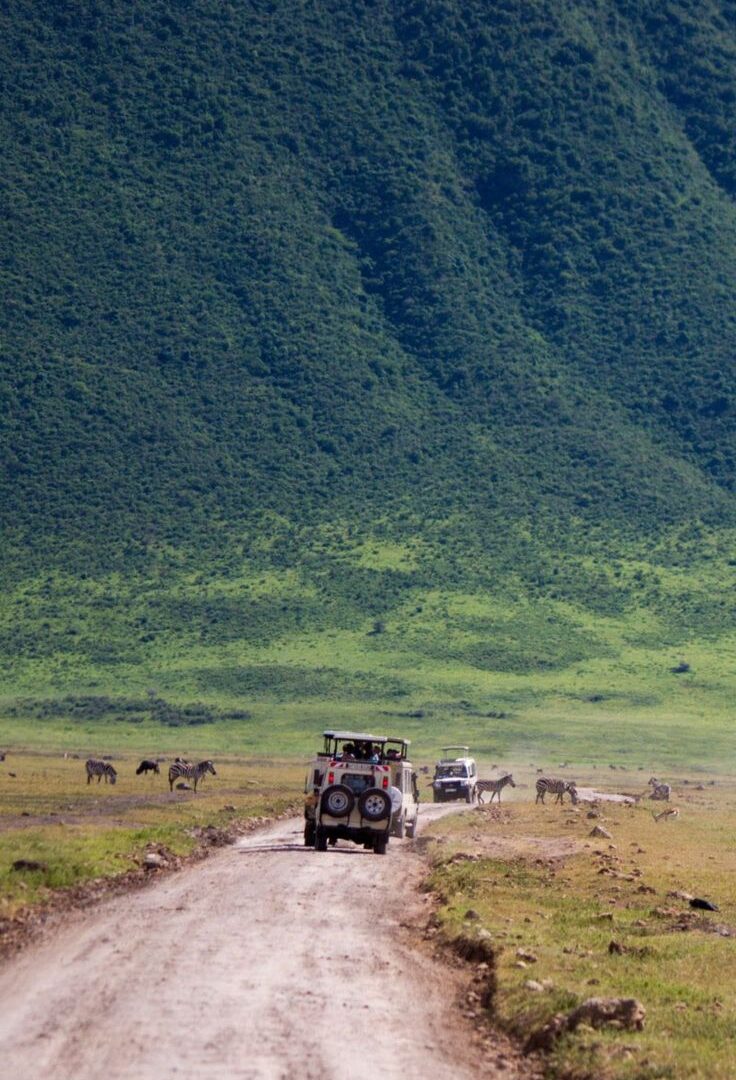
Professional safari guides frequently stop along the way to point out interesting wildlife, local markets, spectacular viewpoints, cultural landmarks, and photography opportunities.
These unplanned moments often become some of the most memorable parts of the safari.
Many travelers arrive expecting only wildlife encounters.
They leave remembering the smiling children waving from villages, roadside coffee farms, mountain viewpoints, and conversations with local communities.
Road safaris provide a deeper connection to Uganda than simply moving between attractions.
Why Road Safaris Remain the Most Popular Way to Explore Uganda
Although fly-in safaris continue to grow in popularity, road safaris remain the preferred choice for many international visitors.
One reason is flexibility.
Travel schedules can be adjusted according to weather, wildlife sightings, or traveler interests.
If elephants are feeding beside the road or a beautiful viewpoint appears unexpectedly, the guide can safely stop and allow guests to enjoy the moment.
This flexibility creates a more relaxed and personalized safari experience.
Road safaris also allow visitors to appreciate Uganda’s incredible geographical diversity.
Within a single journey, travelers may drive through bustling towns, quiet farming communities, rolling tea estates, tropical forests, mountain landscapes, wetlands, and open savannah.
The changing scenery ensures that long drives rarely feel repetitive.
For first-time visitors, this variety provides a far richer understanding of Uganda than flying directly between destinations.
Uganda’s Scenic Roads Are Part of the Adventure
Many visitors are surprised by just how beautiful Uganda’s road journeys can be.
The route from Kampala toward western Uganda is especially spectacular.
Travelers pass through fertile agricultural regions where bananas, coffee, tea, and other crops are grown.
The countryside is dotted with traditional homesteads, churches, schools, and lively trading centers that reflect Uganda’s rich cultural heritage.
As the journey continues, rolling hills become more dramatic.
Tea plantations near Fort Portal create striking green landscapes that seem to stretch endlessly across the hillsides.
Further south, volcanic mountains begin to dominate the skyline, while the roads toward Bwindi Impenetrable National Park offer breathtaking panoramic views of valleys and terraced farmland.
For photographers, every section of the journey presents opportunities to capture authentic images of Uganda beyond its wildlife.
The road itself becomes a photographic destination.
Road Safaris Create Meaningful Cultural Experiences
One of the greatest differences between road and fly-in safaris is the opportunity to interact with local communities.
Throughout the journey, travelers pass villages where everyday life unfolds naturally.
Women carry baskets of fresh produce to markets.
Children walk to school in brightly colored uniforms.
Coffee farmers harvest ripe beans.
Craftsmen display handmade baskets, wood carvings, and traditional artwork.
With guidance from an experienced safari guide, travelers can stop at selected cultural sites and community projects to learn more about Uganda’s traditions and hospitality.
These encounters add depth to the safari by showing that Uganda’s greatest treasures include not only wildlife but also its people.
Responsible tourism ensures that these interactions benefit local communities while providing visitors with genuine cultural experiences.
Road Safaris Make Gorilla Trekking More Rewarding
For many visitors, the highlight of a Uganda safari is trekking to see endangered mountain gorillas in Bwindi Impenetrable National Park.
Although domestic flights provide quicker access, many travelers deliberately choose to drive.
The journey through western Uganda builds anticipation.
As roads climb into higher elevations, forests become denser and mountain scenery more dramatic.
Stopping at viewpoints overlooking the Virunga Volcanoes or the rolling hills of southwestern Uganda creates memorable moments before the gorilla trek has even begun.
By the time visitors reach Bwindi, they already feel connected to the landscapes surrounding the rainforest.
The road journey adds context to the gorilla experience, making the encounter even more meaningful.
Exploring Uganda’s National Parks by Road
Uganda’s road network connects travelers to many of East Africa’s finest wildlife destinations.
A single itinerary can include:
Murchison Falls National Park.
Queen Elizabeth National Park.
Bwindi Impenetrable National Park.
Each destination offers completely different wildlife, scenery, and experiences.
Unlike air travel, road safaris allow visitors to appreciate how these ecosystems gradually change throughout the journey.
The result is a richer understanding of Uganda’s incredible natural diversity.
The Classic Uganda Road Safari Circuit
One of the reasons Uganda has become one of Africa’s leading safari destinations is that its national parks are connected by scenic roads that naturally create exciting safari circuits.
Unlike destinations where travelers return to the same location after each activity, Uganda allows visitors to travel through completely different regions while constantly discovering new landscapes, cultures, and wildlife.
The classic road safari circuit begins in Entebbe or Kampala before heading north toward Murchison Falls National Park, then continues west to Kibale Forest National Park, south to Queen Elizabeth National Park, onward to Bwindi Impenetrable National Park, and finally to Lake Mburo National Park before returning to Entebbe.
Rather than feeling like separate holidays, these destinations combine to tell one continuous story.
Each park introduces new ecosystems, different wildlife species, changing climates, and unique cultural experiences.
The journey itself becomes part of the safari.
Murchison Falls National Park: Where Every Road Leads to Adventure
The first major stop for many road safaris is , Uganda’s largest and oldest conservation area.
The drive toward the park introduces travelers to rural Uganda before gradually transitioning into open savannah landscapes where wildlife begins appearing even before entering the protected area.
Game drives inside Murchison Falls provide opportunities to photograph:
Elephants crossing the plains.
Rothschild’s giraffes browsing among acacia trees.
Lions resting beneath shrubs.
Large buffalo herds.
Uganda kobs grazing peacefully.
The highlight for many visitors is the famous waterfall itself.
Watching the River Nile squeeze through a narrow rocky gorge before plunging dramatically below creates one of Africa’s most impressive natural spectacles.
The journey to the top of the falls, combined with the boat cruise from below, offers photographers and nature lovers countless opportunities to appreciate Uganda’s remarkable beauty.
Because road safaris allow flexible timing, visitors can arrive early for morning game drives or stay until sunset without worrying about flight schedules.
Kibale Forest National Park: Into Uganda’s Ancient Rainforest
Leaving the open plains of Murchison behind, road safaris continue toward western Uganda where the landscape changes dramatically.
Rolling hills become greener.
Tea plantations begin covering entire valleys.
Cooler temperatures replace the dry northern climate.
Eventually, travelers arrive at , one of Africa’s finest tropical rainforests.
The drive itself is breathtaking.
Roads wind through picturesque farming communities where tea estates stretch across the hillsides and colorful villages welcome passing travelers.
Kibale offers a completely different safari experience.
Instead of searching for large mammals from a vehicle, visitors enter the rainforest on foot in search of wild chimpanzees.
Tracking chimpanzees requires patience and careful observation.
The reward comes when visitors encounter energetic primates swinging through the forest canopy while communicating loudly with one another.
For many travelers, the transition from open savannah to dense rainforest becomes one of the most memorable parts of the entire road safari.
Queen Elizabeth National Park: Uganda’s Most Diverse Safari Destination
Continuing south, travelers reach Queen Elizabeth National Park, a destination famous for combining wildlife, spectacular scenery, and remarkable biodiversity.
Road safaris reveal why this park is considered one of Uganda’s greatest natural treasures.
Within a relatively small area, visitors encounter:
Open grasslands.
Volcanic crater lakes.
Wetlands.
Acacia woodlands.
Tropical forests.
The Kazinga Channel.
Each habitat supports different wildlife species, making every game drive unique.
Morning safaris often reveal elephants feeding peacefully while buffalo graze across wide plains.
Leopards occasionally appear in the early hours before disappearing into thicker vegetation.
Birdlife flourishes around wetlands where African fish eagles, pelicans, kingfishers, and herons create outstanding photographic opportunities.
One unforgettable experience is the Kazinga Channel boat cruise.
Unlike a game drive, the cruise brings visitors remarkably close to hippos, crocodiles, elephants, and countless bird species gathering along the shoreline.
Later, travelers exploring the Ishasha sector may be fortunate enough to discover the park’s famous tree-climbing lions resting high among giant fig trees.
This remarkable behavior attracts photographers and wildlife enthusiasts from around the world.
Bwindi Impenetrable National Park: The Road to the Gorillas
The drive from Queen Elizabeth National Park to Bwindi Impenetrable National Park is widely regarded as one of Uganda’s most scenic road journeys.
As travelers climb into southwestern Uganda, the landscape changes once again.
Mountain roads wind through fertile valleys where neatly terraced farms cover the hillsides.
Small villages overlook deep valleys while mist frequently drifts across the mountains during the early morning hours.
Every bend in the road offers breathtaking panoramic views.
Rather than simply transporting visitors to the gorillas, the drive builds excitement.
Guests begin appreciating the rugged environment that has protected mountain gorillas for generations.
By the time they arrive at their lodge, many already feel immersed in Bwindi’s extraordinary surroundings.
The following day’s gorilla trek becomes even more meaningful because travelers have witnessed the landscapes and communities surrounding this remarkable rainforest.
For many visitors, the road journey and the gorilla encounter become inseparable parts of one unforgettable adventure.
Lake Mburo National Park: The Perfect Final Stop
Many Uganda road safaris conclude with a visit to Lake Mburo National Park, located conveniently between western Uganda and Entebbe.
After several days exploring forests and larger wildlife reserves, Lake Mburo provides a slower, more relaxed safari experience.
The park is known for its peaceful atmosphere and beautiful rolling landscapes dotted with acacia trees and lakes.
Wildlife frequently encountered includes:
- Zebras
- Giraffes
- Impalas
- Elands
- Buffalo
- Topi
- Hippos
Unlike many other parks, Lake Mburo offers guided walking safaris and horseback safaris.
These activities provide visitors with a completely different perspective of African wildlife while creating memorable photography opportunities.
Because of its location, Lake Mburo serves as the ideal final destination before returning to Entebbe, allowing travelers to finish their safari at a comfortable pace.
The Comfort of Modern Safari Vehicles
An enjoyable road safari depends not only on the destinations but also on the quality of transportation.
Professional safari operators use specially designed 4×4 vehicles built to handle Uganda’s varying road conditions while providing comfort throughout the journey.
Most safari vehicles feature large pop-up roofs that give guests panoramic views during game drives.
Wide windows allow photographers to capture wildlife from different angles, while spacious seating ensures everyone has a comfortable view.
Many vehicles also include charging ports for cameras and phones, onboard refrigerators or cool boxes for drinking water, and enough luggage space for longer itineraries.
Experienced safari guides further enhance the journey by sharing their knowledge of wildlife, conservation, local history, and Ugandan culture.
Their ability to interpret animal behavior often transforms an ordinary game drive into an unforgettable wildlife experience.
Road Conditions and Travel Times
Uganda’s main highways connecting major towns are generally in good condition, while roads within national parks are designed for safari vehicles and may become rougher, particularly after rainfall.
Rather than viewing travel time as an inconvenience, many visitors discover it becomes part of the overall experience.
Every journey passes through different communities, agricultural regions, forests, rivers, and scenic viewpoints that reveal the country’s incredible diversity.
Regular comfort stops, photography breaks, and visits to local attractions make the distances feel much shorter than expected.
A well-planned road safari balances driving with meaningful experiences along the way, ensuring that every day offers something new to discover.
Popular Uganda Road Safari Itineraries
One of the greatest advantages of choosing a road safari is flexibility. Whether you have only a few days available or two weeks to explore the country, Uganda offers countless itinerary options that combine wildlife, primates, landscapes, and cultural experiences.
Unlike destinations where visitors are limited to one national park, Uganda’s excellent safari circuit allows travelers to experience completely different ecosystems during one journey.
Every itinerary can be customized according to personal interests, travel dates, budget, and available time.
3-Day Road Safari: A Short Wildlife Escape
A three-day road safari is perfect for travelers with limited time who still want an authentic African safari experience.
One of the most popular options includes a journey to Murchison Falls National Park, where visitors enjoy game drives across the northern savannah before taking a memorable boat cruise along the River Nile to the base of the falls.
Another excellent choice is Lake Mburo National Park, located closer to Entebbe.
Here, guests enjoy wildlife viewing, guided walking safaris, horseback safaris, and peaceful boat cruises while observing zebras, giraffes, buffalo, and numerous bird species.
Although short, these itineraries introduce visitors to Uganda’s incredible landscapes and wildlife while leaving plenty of reasons to return for a longer adventure.
5-Day Road Safari: Wildlife and Primates
Five days allow travelers to combine classic wildlife experiences with one of Uganda’s greatest attractions.
A popular itinerary begins in Queen Elizabeth National Park, where game drives and the Kazinga Channel boat cruise introduce visitors to elephants, lions, buffalo, hippos, crocodiles, and countless bird species.
The journey then continues to Bwindi Impenetrable National Park, where travelers spend an unforgettable day trekking mountain gorilla through ancient rainforest.
This combination perfectly showcases Uganda’s unique ability to offer both traditional safari experiences and close encounters with endangered great apes within a single holiday.
For many visitors, this itinerary becomes the ideal introduction to Uganda.
7-Day Classic Uganda Road Safari
A week-long road safari allows visitors to experience several of Uganda’s iconic destinations without feeling rushed.
Many seven-day itineraries include:
Murchison Falls National Park.
Kibale Forest National Park.
Queen Elizabeth National Park.
Bwindi Impenetrable National Park.
Each destination contributes something unique.
Murchison Falls introduces classic savannah wildlife.
Kibale offers chimpanzee tracking in tropical rainforest.
Queen Elizabeth provides diverse ecosystems and boat safaris.
Bwindi delivers one of the world’s greatest wildlife encounters through gorilla trekking.
The changing landscapes between these parks make the road journey equally rewarding.
Travelers experience Uganda’s forests, tea plantations, crater lakes, mountain scenery, and rural communities while moving naturally between destinations.
10-Day Uganda Road Safari
Ten days provide the opportunity to explore Uganda at a more relaxed pace.
Instead of rushing between activities, visitors have time to enjoy extended game drives, additional nature walks, photography stops, and cultural experiences.
A comprehensive itinerary often includes:
Murchison Falls National Park.
Kibale Forest.
Queen Elizabeth National Park.
Bwindi Impenetrable National Park.
Lake Bunyonyi.
Lake Mburo National Park.
This route combines nearly every major safari experience Uganda has to offer while allowing travelers to appreciate the country’s extraordinary diversity.
14-Day Ultimate Uganda Road Expedition
For travelers seeking the complete Uganda experience, a fourteen-day road safari is difficult to surpass.
The journey may include:
Entebbe.
Ziwa Rhino Sanctuary.
Murchison Falls National Park.
Kibale Forest National Park.
Queen Elizabeth National Park.
Bwindi Impenetrable National Park.
Mgahinga Gorilla National Park.
Lake Bunyonyi.
Lake Mburo National Park.
This itinerary introduces visitors to nearly every ecosystem found in Uganda.
Rainforests gradually transition into open savannah.
Mountain landscapes replace wetlands.
Remote wilderness contrasts with vibrant local communities.
Every destination contributes a different chapter to the story of Uganda.
For photographers, birdwatchers, wildlife enthusiasts, and adventure travelers, it represents one of Africa’s most rewarding road journeys.
The Best Time for a Road Safari in Uganda
Uganda enjoys a favorable climate throughout the year, making road safaris possible in every season.
However, the experience changes depending on rainfall and wildlife movements.
The dry seasons, from June to September and December to February, are particularly popular because roads are generally easier to navigate, vegetation is shorter, and wildlife gathers around water sources, making animals easier to observe during game drives.
The green seasons bring their own advantages.
Rain transforms the countryside into vibrant shades of green, waterfalls become more powerful, forests appear even more beautiful, and birdlife reaches its peak as migratory species arrive.
Photographers often appreciate the dramatic skies and lush landscapes created during these months.
Regardless of the season, Uganda consistently offers memorable safari experiences.
What to Pack for a Uganda Road Safari
Packing well contributes significantly to a comfortable safari.
Neutral-colored clothing helps visitors blend naturally into wildlife environments while lightweight fabrics remain comfortable during warm afternoons.
Travelers should also include:
Comfortable walking shoes.
A lightweight waterproof jacket.
A wide-brimmed hat.
Sunscreen.
Binoculars.
Camera equipment.
Extra batteries.
Power bank.
Reusable water bottle.
Personal medications.
For gorilla and chimpanzee trekking, long trousers, long-sleeved shirts, gardening gloves, and waterproof hiking boots are strongly recommended.
Preparing properly allows visitors to enjoy every activity without unnecessary discomfort.
Guided Road Safaris vs. Self-Drive Adventures
Some visitors consider renting a vehicle and exploring Uganda independently.
While self-drive safaris offer flexibility, guided road safaris provide significant advantages, especially for first-time visitors.
Experienced safari guides understand animal behavior and know where wildlife is most likely to be found.
They communicate with other guides during game drives, increasing the chances of locating elusive species such as leopards or lions.
Guides also share fascinating information about Uganda’s history, conservation efforts, geography, birds, and local cultures throughout the journey.
In addition, travelers can relax and enjoy the scenery without worrying about navigation, road conditions, or park regulations.
For many visitors, the knowledge and experience of a professional guide greatly enrich the safari.
Why Road Safaris Offer Outstanding Value
Road safaris remain one of the most cost-effective ways to explore Uganda.
They allow travelers to experience multiple destinations while maintaining flexibility in accommodation choices and itinerary design.
Unlike domestic flights, road travel also creates opportunities to visit attractions that are often overlooked.
Stops at roadside craft markets, tea plantations, local restaurants, community projects, scenic viewpoints, and the Equator Crossing all become memorable experiences that add character to the journey.
Rather than simply connecting destinations, the road itself becomes part of the adventure.
This combination of wildlife, scenery, culture, and authentic local experiences gives road safaris exceptional value for money.
Frequently Asked Questions About Road Safaris in Uganda
Are road safaris suitable for families?
Yes.
Many families choose road safaris because they offer flexibility, comfortable travel, and opportunities to stop whenever needed.
Children often enjoy observing villages, wildlife, and changing landscapes throughout the journey.
How long are the driving distances?
Driving times vary depending on the itinerary.
Professional safari operators carefully plan each day to balance travel with wildlife activities, sightseeing, and regular comfort breaks.
Are Uganda’s roads safe for tourists?
Yes.
The main highways connecting safari destinations are generally in good condition, and guided safaris are conducted by experienced drivers familiar with local routes and park regulations.
Can I combine a road safari with domestic flights?
Absolutely.
Many travelers combine scenic road journeys with domestic flights, especially for longer distances such as Bwindi or Kidepo Valley National Park.
This creates a balanced itinerary that offers both comfort and authentic exploration.
Suggested Internal Links:
Final Thoughts: Discover the True Spirit of Uganda by Road
A road safari is more than a holiday.
It is an opportunity to experience Uganda gradually, allowing every destination, every landscape, and every community to become part of a larger story.
From the thunder of Murchison Falls to the quiet forests of Bwindi, from chimpanzees in Kibale to lions in Queen Elizabeth National Park, every stage of the journey reveals another side of the Pearl of Africa.
Road travel allows visitors to witness not only Uganda’s famous wildlife but also its vibrant culture, welcoming people, fertile countryside, and spectacular scenery.
Every road leads to a new discovery.
Every stop creates another memory.
Every kilometer deepens your appreciation for one of Africa’s most extraordinary safari destinations.
For travelers who believe that the journey is just as important as the destination, there is no better way to explore Uganda.
Start Your Uganda Road Safari with Adventure in the Wild Safaris
At Adventure in the Wild Safaris, we create tailor-made Road Safaris in Uganda designed around your interests, travel style, and budget.
Whether you dream of:
🦍 Gorilla trekking in Bwindi Impenetrable National Park.
🦁 Big game safaris in Murchison Falls and Queen Elizabeth National Park.
🐒 Chimpanzee tracking in Kibale Forest.
📸 Wildlife photography adventures.
🌍 A complete journey across Uganda’s most spectacular national parks.
Our experienced safari guides ensure every road trip is comfortable, informative, and filled with unforgettable wildlife encounters.
Contact Adventure in the Wild Safaris today and let us design a road safari that allows you to experience the Pearl of Africa one incredible journey at a time.
Drive Further. Discover More. Experience Uganda Beyond the Destination.