



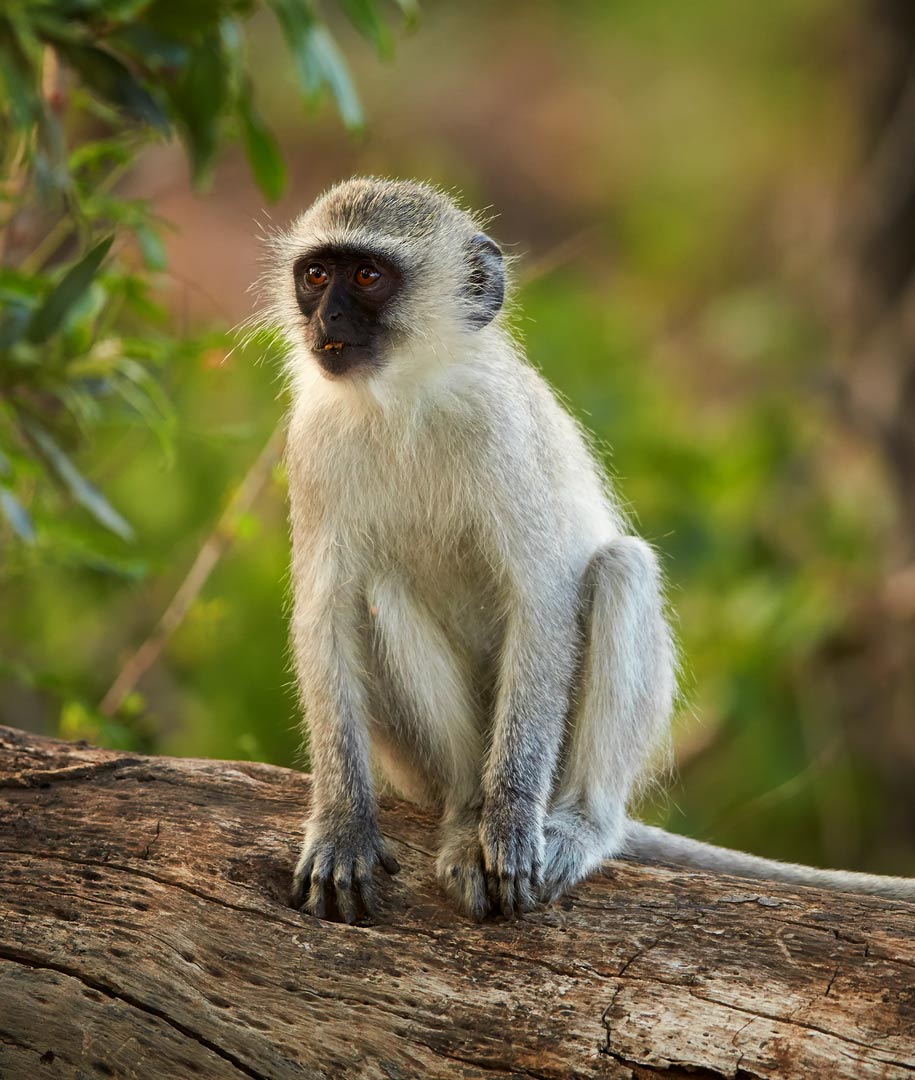
Vervet Monkey: Facts, Habitat, Behavior & Where to See Them in Uganda
The vervet monkey (Chlorocebus pygerythrus) is one of Africa’s most recognizable and widely distributed monkeys. Often seen moving through woodland, savannah and forest-edge habitats, vervet monkeys are small, agile and highly social primates with fascinating communication systems and complex family relationships.
Their grayish coat, black face and distinctive pale underside make them relatively easy to identify on safari. But there is much more to these monkeys than their appearance. Vervet monkeys have sophisticated social structures, communicate using different alarm calls, recognize threats in their environment and demonstrate remarkable adaptability.
For travelers exploring Uganda, vervet monkeys can be encountered in several national parks and wildlife areas. They are not usually the primary reason tourists book a safari, but their presence adds another fascinating layer to the wildlife experience.
A traveler watching a troop beside a safari road may see mothers carrying infants, juveniles playing, adults grooming one another or individuals suddenly racing into trees after detecting danger.
Understanding the vervet monkey can therefore turn what might seem like an ordinary primate sighting into a much more interesting wildlife encounter.
Quick Facts About Vervet Monkeys
| Common name | Vervet monkey |
|---|---|
| Scientific name | Chlorocebus pygerythrus |
| Animal group | Old World monkey |
| Family | Cercopithecidae |
| Diet | Omnivorous |
| Habitat | Savannah, woodland, riverine forest and forest edges |
| Distribution | Eastern and southern Africa |
| Social structure | Troops |
| Main foods | Fruits, leaves, seeds, flowers, insects and other available foods |
| Conservation status | Least Concern |
| Major threats | Habitat loss, human-wildlife conflict and persecution in some areas |
What Does a Vervet Monkey Look Like?
Vervet monkeys are relatively small compared with baboons and many other African primates.
They typically have grayish or greenish-gray fur, darker limbs and a distinctive black face.
Their bodies are slender and athletic, with long limbs and a long tail that helps with balance when moving through trees.
One of their most recognizable features is the contrasting coloration around the face.
Adult males are generally larger than females and have prominent canine teeth. Males can also display more pronounced physical characteristics than females.
Young vervet monkeys are smaller and tend to remain close to their mothers, especially during their early development.
Their lightweight bodies make them extremely agile climbers, allowing them to move quickly through branches when escaping predators or searching for food.
Where Do Vervet Monkeys Live?
Vervet monkeys occupy a broad range across eastern and southern Africa.
They are adaptable animals and can live in different environments, including:
- Open woodland
- Savannah
- Riverine forests
- Forest edges
- Bushland
- Grassland with nearby trees
- Areas surrounding water sources
Their dependence on trees for sleeping, feeding and escaping predators means they are particularly successful in landscapes where woodland and open areas occur together.
In Uganda, they can be encountered in several protected areas and wildlife landscapes.
They may be seen during game drives in places such as Queen Elizabeth National Park, Murchison Falls National Park, Lake Mburo National Park and Kidepo Valley National Park, among other suitable habitats.
This broad distribution means tourists don’t usually need a special trip just to find vervet monkeys.
Instead, they are often encountered naturally while exploring Uganda’s wider wildlife ecosystems.
What Do Vervet Monkeys Eat?
Vervet monkeys have a flexible diet that helps them survive in changing environments.
They feed on:
- Fruits
- Leaves
- Seeds
- Flowers
- Shoots
- Tree bark
- Insects
- Bird eggs
- Small animals
- Other available foods
The exact diet varies depending on habitat and seasonal food availability.
Fruit can be particularly attractive when available, while leaves, seeds and other plant materials provide alternative food sources.
Their omnivorous nature gives them an advantage because they aren’t completely dependent on one type of food.
During a safari, visitors may see vervet monkeys feeding on vegetation, searching through grass or moving through trees in search of fruit.
Vervet Monkey Social Life
Vervet monkeys are highly social.
They live in groups called troops, which may contain multiple adult males, females and young animals.
Living in a troop provides several advantages.
More individuals means more eyes looking for predators.
It also provides opportunities for grooming, cooperation, play and protection of young.
However, group living also creates competition.
Individuals have to negotiate relationships, access to resources and social status.
This creates a surprisingly complex society.
A troop may look like a group of monkeys simply moving around together, but individual members recognize one another and maintain relationships over time.
Vervet Monkey Communication
One of the most fascinating characteristics of vervet monkeys is their communication.
They produce different vocalizations in response to different situations.
Researchers have documented alarm calls associated with particular predators, meaning vervet monkeys can provide different warnings depending on the type of threat they detect.
For example, a troop may respond differently to a predator approaching on the ground compared with a threat coming from above.
This is extremely useful because different predators require different escape strategies.
A leopard may encourage monkeys to move higher into trees, while an aerial predator may cause them to seek cover or move differently.
When one monkey raises an alarm, other members of the troop can respond almost immediately.
This communication system can therefore mean the difference between life and death.
Vervet Monkeys and Predators
Vervet monkeys are relatively small compared with many of Africa’s predators.
Potential predators include:
- Leopards
- Lions
- African wild dogs in some areas
- Large snakes
- Crocodiles
- Eagles and other large birds of prey
Young monkeys are particularly vulnerable.
Predator detection is therefore extremely important.
Different members of the troop may remain alert while others feed, creating a form of collective vigilance.
If danger is detected, the troop can respond quickly.
Some monkeys may climb trees while others move away from the threat.
Why Trees Are Important to Vervet Monkeys
Trees are essential to vervet monkeys.
They provide:
- Food
- Sleeping locations
- Shade
- Escape routes
- Protection from some predators
At night, monkeys often seek elevated sleeping places.
Being above the ground can reduce the risk from terrestrial predators.
During the day, however, they may spend considerable time on the ground searching for food.
This combination of terrestrial and arboreal behavior makes them well suited to woodland and savannah environments.
Reproduction and Young Vervet Monkeys
Female vervet monkeys develop strong relationships with their offspring.
A newborn remains dependent on its mother during its early development.
The infant may cling to its mother as she moves through trees or travels across the ground.
As it grows older, it begins exploring its environment and interacting more with other young monkeys.
Young vervets spend a lot of time playing.
They may chase each other, wrestle, climb and practice social behaviors.
Play helps them develop coordination and learn how to interact with other members of the troop.
For safari travelers, infants and juveniles can be some of the most entertaining members of a troop to watch.
Female Relationships and Family Bonds
Social relationships among female vervet monkeys can be particularly important.
Females often remain within their birth groups, allowing relationships between mothers, daughters and other relatives to persist over time.
These relationships can influence social status and interactions within the troop.
Grooming is one way individuals strengthen these bonds.
It helps maintain relationships and can also reduce tension after conflicts.
This demonstrates that vervet monkey society isn’t simply based on survival.
It involves long-term relationships and social cooperation.
Vervet Monkey Intelligence
Vervet monkeys demonstrate considerable behavioral flexibility.
They can remember locations, recognize individuals and respond differently to different environmental threats.
Their communication system is particularly impressive.
Instead of producing a single generalized alarm call, they can provide information that helps other troop members determine what kind of danger they face.
Their ability to adapt to different environments also demonstrates considerable intelligence.
They can exploit different food sources and adjust their behavior depending on the surroundings.
Vervet Monkeys and Humans
Vervet monkeys are sometimes found close to human settlements.
Their adaptability allows them to exploit environments altered by humans, particularly where food and water are easily available.
However, this can create conflict.
Monkeys may raid crops or enter gardens searching for food.
People may respond by chasing or trapping them.
This can create difficult conservation challenges, especially where natural habitat has been reduced.
The long-term solution is not simply removing animals but finding ways for people and wildlife to coexist.
Are Vervet Monkeys Dangerous?
Vervet monkeys are wild animals and should be treated accordingly.
They are generally not aggressive toward people when left alone, but problems can occur when humans feed them.
Once animals learn to associate people with food, they may become bold and begin approaching tourists, lodges or vehicles.
This can create unsafe situations.
Visitors should therefore:
- Never feed monkeys
- Avoid approaching them
- Keep food secured
- Follow lodge instructions
- Never attempt to touch a monkey
- Give animals space
Responsible behavior helps prevent wildlife from becoming dependent on human food.
Vervet Monkeys on Safari
Vervet monkeys are excellent safari subjects because they are active and expressive.
A troop can provide several minutes of interesting behavior.
You might watch:
- Mothers caring for infants
- Juveniles playing
- Adults grooming
- Monkeys feeding
- Individuals giving alarm calls
- Troops crossing roads
- Monkeys climbing trees
- Adults watching for predators
Because they are often active during daylight, they can be encountered during both morning and afternoon game drives.
They also frequently occur around water sources and woodland edges.
Where to See Vervet Monkeys in Uganda
Queen Elizabeth National Park
Queen Elizabeth National Park supports a remarkable variety of wildlife and primates.
Vervet monkeys can be encountered in suitable woodland and savannah habitats while travelers are exploring the park.
Murchison Falls National Park
Murchison Falls offers extensive woodland and savannah environments where vervet monkeys can occur.
A game drive can combine sightings of vervet monkeys with elephants, buffaloes, giraffes, lions and other wildlife.
Lake Mburo National Park
Lake Mburo’s mixture of woodland, grassland and water environments provides suitable habitat for several primate species, including vervet monkeys.
Kidepo Valley National Park
The diverse landscapes of Kidepo support a variety of wildlife, and vervet monkeys can be encountered in suitable habitats.
Where Else Can You See Vervet Monkeys?
Vervet monkeys occur widely across eastern and southern Africa.
They can therefore be encountered during safaris in several countries, including Kenya and Tanzania.
Their widespread distribution means they are often part of a broader safari rather than a species for which tourists organize a specialized trip.
For visitors traveling through the Maasai Mara, Serengeti and other East African ecosystems, keeping an eye on woodland areas can reveal troops moving between trees and open ground.
Best Time to See Vervet Monkeys
Vervet monkeys can be encountered throughout much of the year.
Because they are adaptable and remain active across different seasons, their presence isn’t as strongly tied to seasonal migrations as some other wildlife species.
The best time for a broader safari depends on the other wildlife you want to see.
For photography and general wildlife viewing, early mornings and late afternoons often provide attractive light and cooler temperatures.
How Difficult Is It to See Vervet Monkeys?
Unlike gorilla or chimpanzee trekking, seeing vervet monkeys generally doesn’t require a specialized hike.
They are often encountered during conventional game drives.
This makes them an excellent example of the smaller wildlife encounters that happen naturally during a safari.
You don’t necessarily need to search specifically for them.
Sometimes your guide may spot a troop while traveling between larger wildlife sightings.
Photography Tips
Vervet monkeys can be surprisingly challenging to photograph because they move quickly.
A telephoto lens helps you capture animals without approaching them.
Instead of photographing only a stationary monkey, look for behavior.
Great opportunities include:
- Infants clinging to mothers
- Juveniles playing
- Grooming
- Feeding
- Alarm responses
- Tree climbing
- Troops moving through grassland
Try to capture the environment around the animal as well.
A photograph showing a vervet monkey in a large African landscape can tell more of a story than a tightly cropped portrait.
Conservation of Vervet Monkeys
The vervet monkey is currently classified as Least Concern, reflecting its broad distribution and relatively adaptable nature.
However, this does not mean that every local population is secure.
Habitat loss, agricultural expansion, human-wildlife conflict and persecution can still affect populations in particular areas.
Protecting natural habitats remains important.
Wildlife tourism can also help support protected areas and communities around conservation landscapes.
For travelers, responsible behavior is another important contribution.
Avoiding feeding, respecting wildlife boundaries and supporting legitimate conservation tourism all help reduce negative human-wildlife interactions.
Interesting Facts About Vervet Monkeys
They have different alarm calls.
Their communication can provide information about the type of predator approaching.
They are excellent climbers.
Trees provide food, shelter and escape routes.
They are omnivores.
Their flexible diet allows them to exploit many different food sources.
They are highly social.
Troop members maintain complex relationships.
They are adaptable.
They can survive in several different habitat types.
Young monkeys learn through play.
Playing helps them develop physical and social skills.
They can live close to humans.
But this can create conflict when monkeys raid crops or become dependent on human food.